
Loading, please wait...
LOT 1284
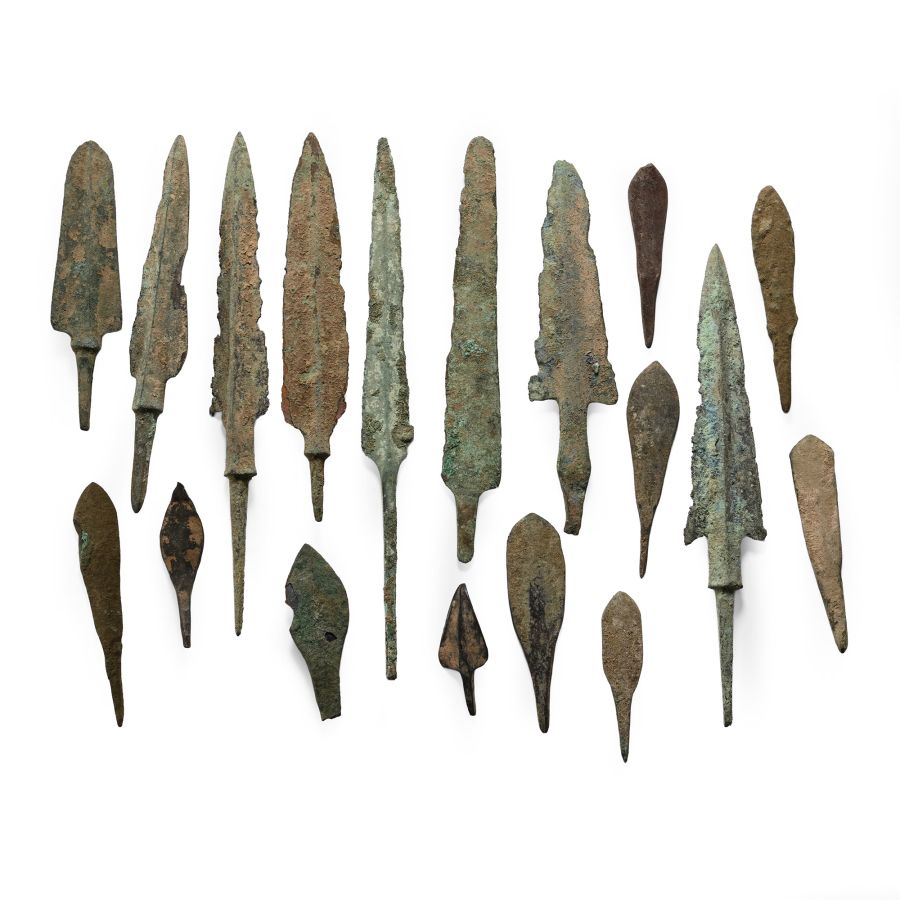
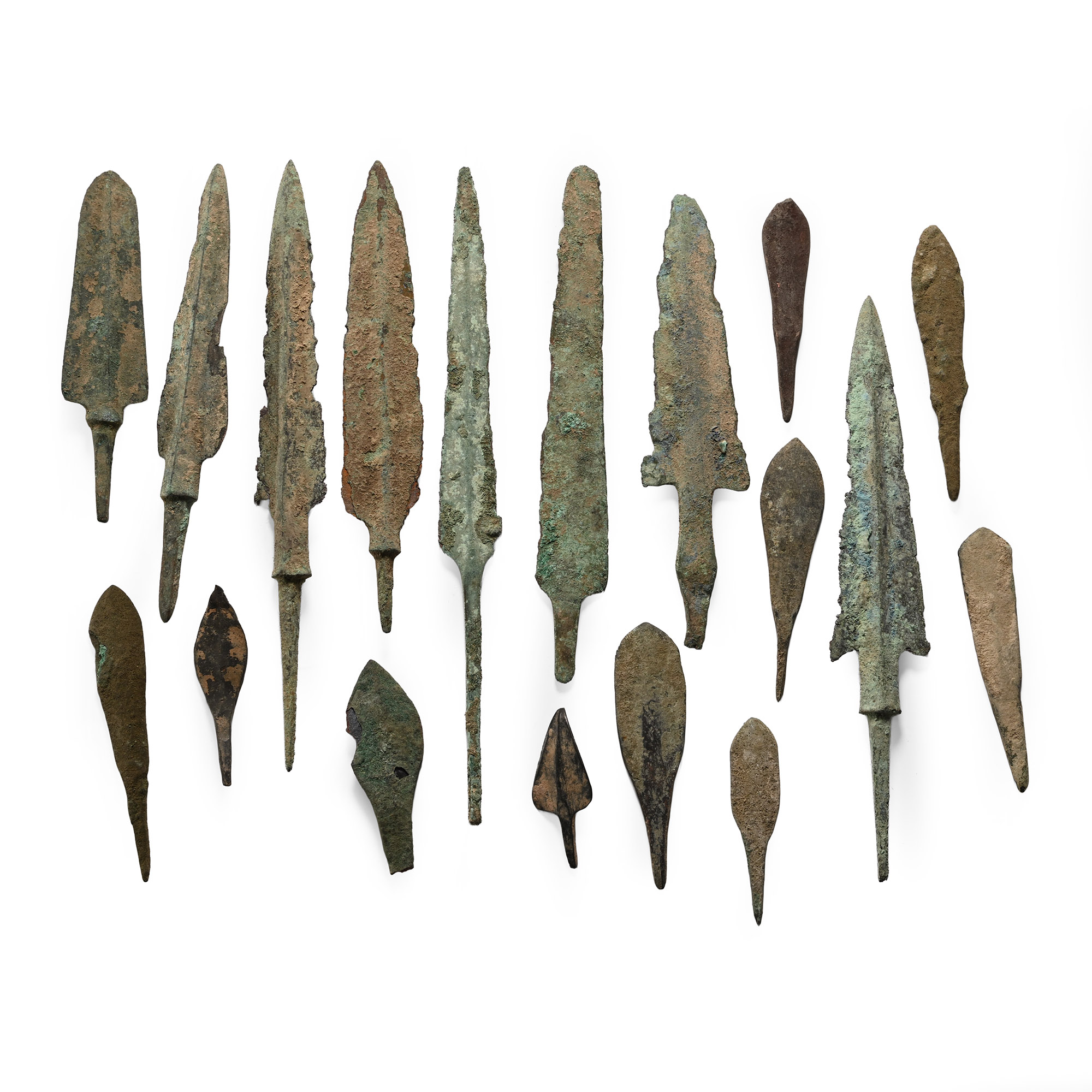
Western Asiatic Bronze Arrowhead Collection
2ND-1ST MILLENNIUM B.C.
1 3/8 - 6 1/8 in. (234 grams total, 3.6-15.7 cm).
Comprising: two large tanged arrowheads, mainly of triangular type with mid-rib; other two of the same typology, but with rounded shoulders; six triangular, leaf-shaped, barbed, and paddle-shaped arrowheads with a flat, comparatively wide mid-rib; one small triangular arrowhead with rounded shoulders; two arrowheads with foliate shape and short tang; a triangular type with flat mid-rib and raised corners; a long narrow triangular arrowhead with raised shoulders and long tang; one triangular blade with flat midrib and short tang; a long and narrow paddle-shaped arrowhead. [18, No Reserve]
ProvenanceFrom the London art market, 1990s.
This lot has been cleared against the Art Loss Register database, and is accompanied by an illustrated lot declaration signed by the Head of the Antiquities Department, Dr Raffaele D'Amato.
Cf. for similar arrow-points Gorelik, M., Weapons of Ancient East, IV millennium BC-IV century BC, Saint Petersburg, 2003, in Russian, (plate XLIII, nos.26-27, 76, 92-93, 116, 157, 181, 250); Muscarella, O.W., Bronze and Iron Ancient Near Eastern Artifacts in the Metropolitan Museum of Art, New York, 1988, pp.289ff, for similar arrowheads (nos.396, 407); Khorasani, M.M., Arms and Armour from Iran. The Bronze Age to the End of the Qajar Period, Tübingen, 2006, figure 60.
FootnotesA number of arrowheads of this type have been excavated in Luristan and in the South-Caspian region. Many parallels are from a burial context, but a large hoard of them was found in a non-funerary context. This type of arrowhead was in use from the late 2nd millennium B.C.
CONDITIONTimeLine Auctions follows a vetting process to ensure the authenticity and legality of all items, reinforcing our commitment to integrity and responsible trading. Each antiquity, antique, and coin lot undergoes thorough examination by a vetting committee of at least ten external specialists, professional trade association members, scientists, and archaeologists: Our Vetting Process
AUCTIONS:
TimeLine is a leading auction house specialising in antiquities, ancient art, collectables, natural history, coins, medals, and books. Our auctions offer museums, collectors, historians, and enthusiasts the opportunity to acquire unique and historically significant pieces.
-
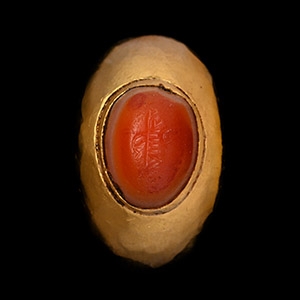
Western Asiatic Inscribed Carnelian Gemstone in Gold Ring
12th-13th century A.D.Estimate: £1,000 - 1,400 (+bp*)
Opening Bid: £500
Incised Kufic inscription in high cut oval gemstone, set into a later hollow-formed ring with central stud to the bezel. 12.92 grams, 28.32 mm overall, 19.55 mm internal diameter (approximate size British O, USA 7, Europe 14.98, Japan 14)
Private collection of Mr K.A., acquired in the 1990s-early 2000s. This lot has been cleared against the Art Loss Register database, and is accompanied by an illustrated lot declaration signed by the Head of the Antiquities Department, Dr Raffaele D'Amato. -
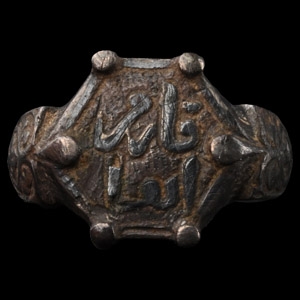
Western Asiatic Silver Ring with Niello
12th-13th century A.D. or laterEstimate: £500 - 700 (‡+bp*)
Opening Bid: £250
With carinated hoop, heater-shaped plaques to the shoulders, hexagonal bezel with pellet to each angle and reserved calligraphic legend. 9.03 grams, 23.84 mm overall, 19.40 mm internal diameter (approximate size British P, USA 7 1/2, Europe 16.23, Japan 15)
From a central European collection. Mr S.A., acquired in 1992. Thence by descent, family collection, since the late 1990s. This lot has been cleared against the Art Loss Register database, and is accompanied by an illustrated lot declaration signed by the Head of the Antiquities Department, Dr Raffaele D'Amato. -
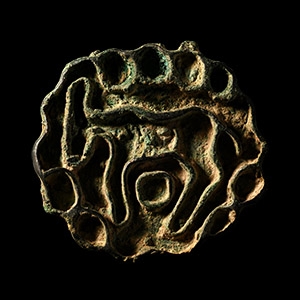
West Central Asian Bronze Stamp Seal with Quadruped
Circa 2300-2000 B.C.Sold for (Inc. bp): £143
Discoid stamp seal with segmented face and central horned animal (ibex?) ;loop handle to the reverse. 37.8 grams, 46 mm
Acquired in the late 1980s-early 1990s. Ex property of a West London businessman. Academically researched by the late Professor Lambert in the early 1990s. This lot has been cleared against the Art Loss Register database, and is accompanied by an illustrated lot declaration signed by the Head of the Antiquities Department, Dr Raffaele D'Amato.
