
Loading, please wait...
LOT 0868
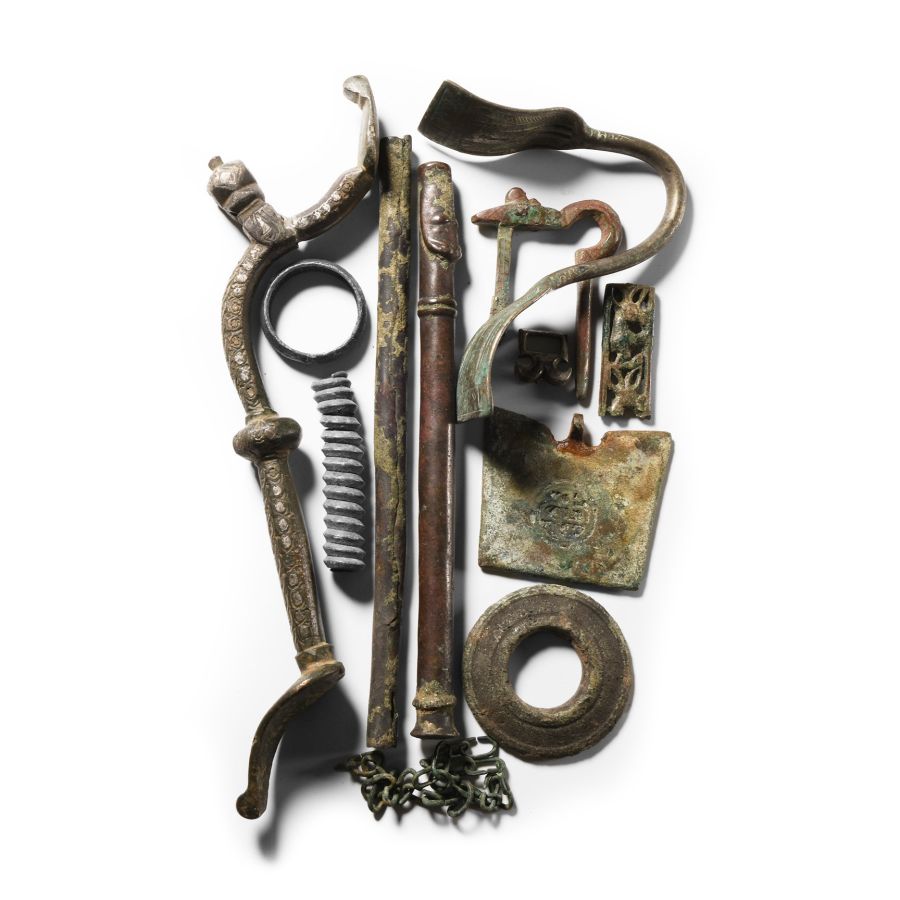
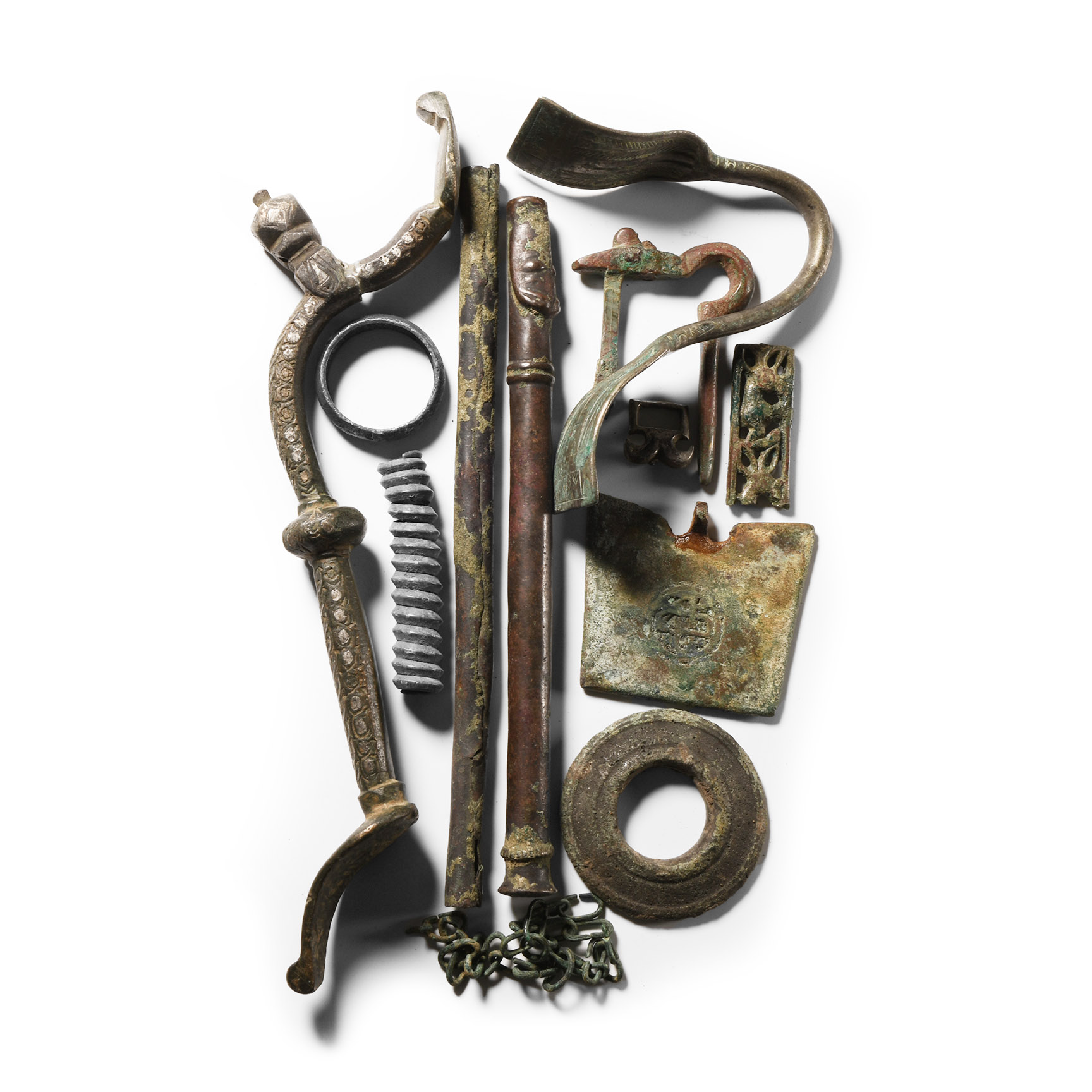
Western Asiatic Bronze and Silver Artefact Group
1ST MILLENNIUM B.C.
5/8 - 7 7/8 in. (509 grams total, 1.7-20 cm).
Including a ewer handle with thumb-pad, coiled spring, tubular fitting with beast-head detail and other items. [11, No Reserve]
ProvenanceFrom a UK private collection, before 1980.
CONDITIONTimeLine Auctions follows a vetting process to ensure the authenticity and legality of all items, reinforcing our commitment to integrity and responsible trading. Each antiquity, antique, and coin lot undergoes thorough examination by a vetting committee of at least ten external specialists, professional trade association members, scientists, and archaeologists: Our Vetting Process
AUCTIONS:
TimeLine is a leading auction house specialising in antiquities, ancient art, collectables, natural history, coins, medals, and books. Our auctions offer museums, collectors, historians, and enthusiasts the opportunity to acquire unique and historically significant pieces.
-
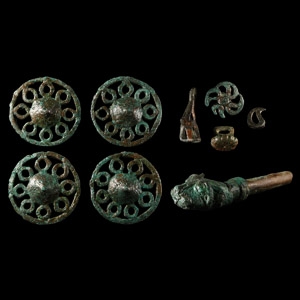
Luristan Bronze Horse Attachment Collection
1st millennium B.C.Sold for (Inc. bp): £260
Comprising: four openwork rosette style mounts with conical centres and strap junction to reverse; a whorl-shaped mount with mounting lug to reverse; an openwork comma-shaped fitting with loop to reverse; a rosette with domed head and rectangular lug to reverse; fitting with openwork geometric design and circular suspension loop; cylindrical bar terminating in a stylised feline head. 317 grams total, 2.5-10.7 cm
with a London, UK gallery 1971-early 2000s. -
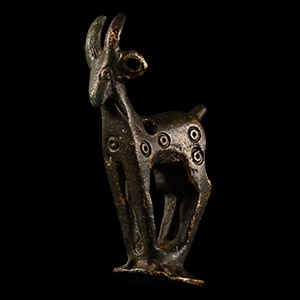
Western Asiatic Bronze Ibex Statuette
1st millennium B.C.Sold for (Inc. bp): £156
Standing on a D-shaped base with perforations to the outer edge, ring-and-dot motifs to the flanks, pierced ears and perforation to the shoulders. 21.2 grams, 44 mm
Acquired London art market, 1960s-1980s. Ex property of a Hertfordshire, UK collector. Acquired on the UK art market in 2016. Property of a Kent lady collector. -
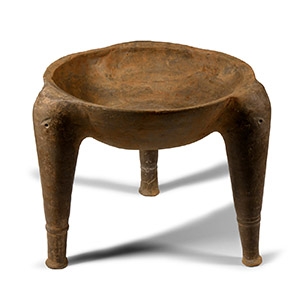
Western Asiatic Terracotta Tripod Vessel
2nd millennium B.C. or laterEstimate: £700 - 900 (+bp*)
Opening Bid: £389
An Indus period shallow dish or bowl with gently rounded and tapering sidewalls, three integral tapering legs formed as stylised elephant heads and trunks with simple facial detailing and splayed feet. 2.9 kg, 35 cm wide
London, UK, gallery, 1971-early 2000s. Accompanied by an original thermoluminescence analysis report no.N123k2 from Oxford Authentication.
