
Loading, please wait...
LOT 1599
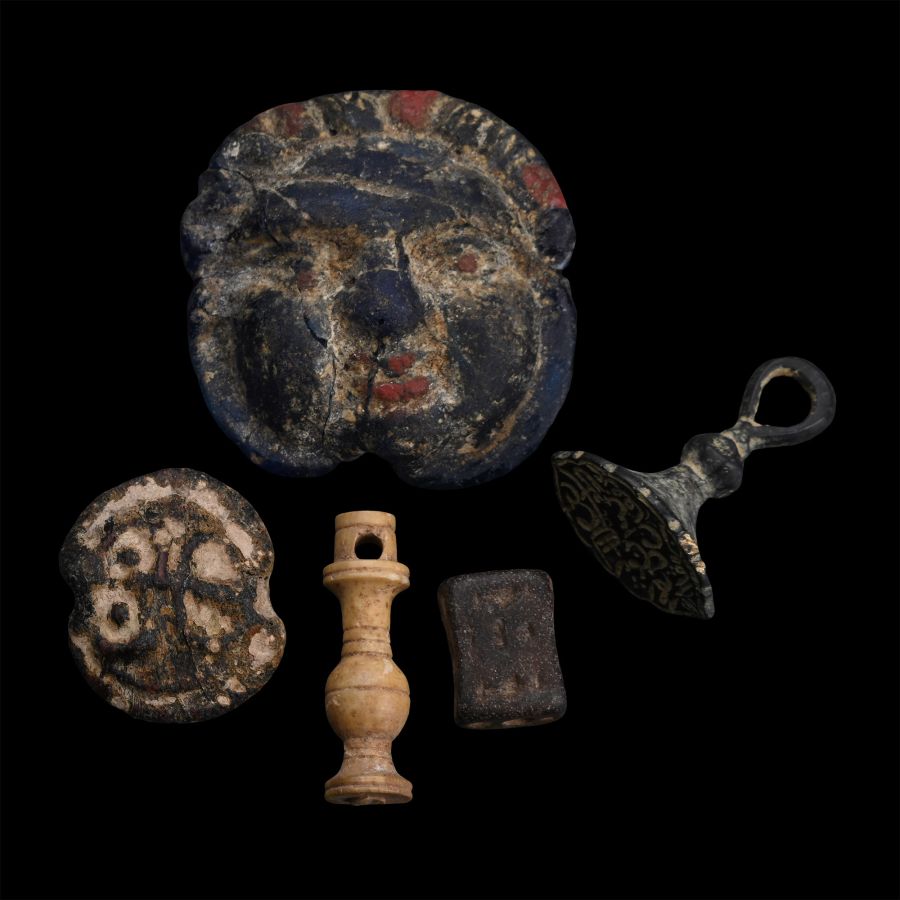
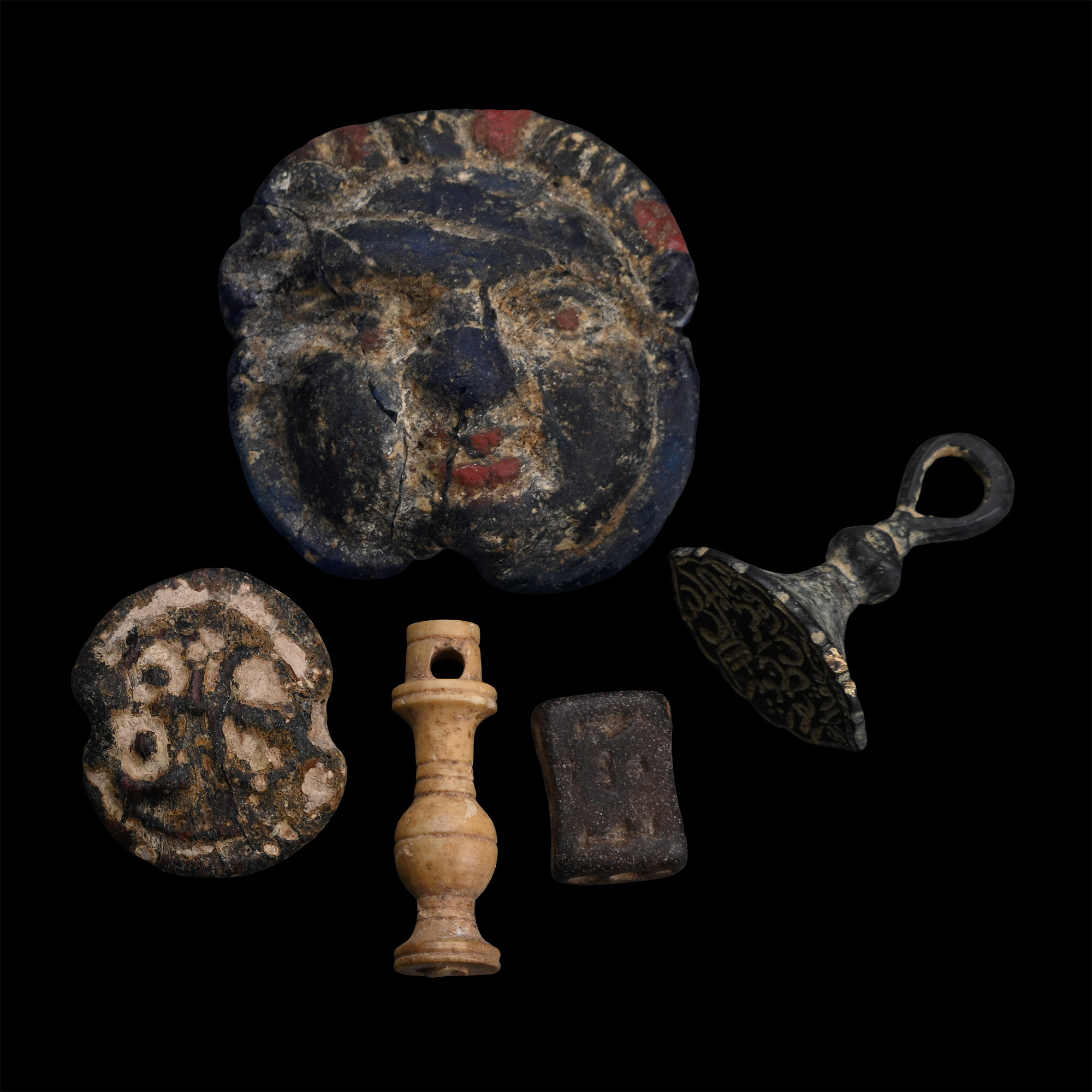
Western Asiatic Bronze and Other Artefact Collection
1ST MILLENNIUM B.C.-17TH CENTURY A.D.
3/8 - 1 1/4 in. (15.7 grams total, 11-31 mm).
Including a blue glass mask with applied red detailing, a turned bone baluster, cuboid bead with holes to all four sides and other items. [5, No Reserve]
ProvenanceFrom the collection of a gentleman, acquired on the London art market in the 1990s.
CONDITIONTimeLine Auctions follows a vetting process to ensure the authenticity and legality of all items, reinforcing our commitment to integrity and responsible trading. Each antiquity, antique, and coin lot undergoes thorough examination by a vetting committee of at least ten external specialists, professional trade association members, scientists, and archaeologists: Our Vetting Process
AUCTIONS:
TimeLine is a leading auction house specialising in antiquities, ancient art, collectables, natural history, coins, medals, and books. Our auctions offer museums, collectors, historians, and enthusiasts the opportunity to acquire unique and historically significant pieces.
-
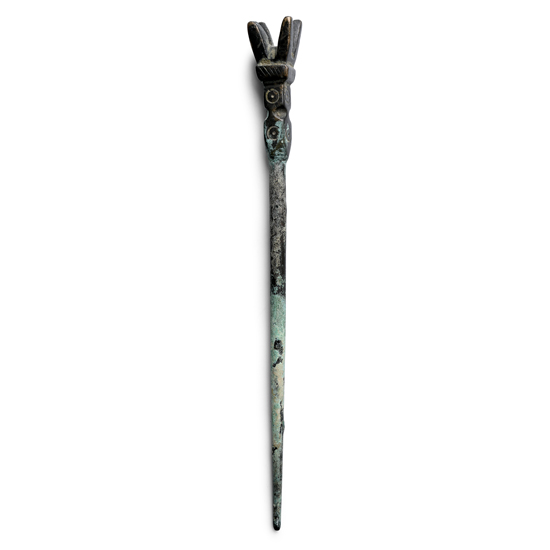
Western Asiatic Bronze Cloak Pin
Bronze Age, 2nd-1st millennium B.C.Sold for (Inc. bp): £65
Comprising a round-section tapering pin, columnar finial with ring-and-dot decoration, and four vertical projections at the top. 29.2 grams, 14.5 cm
From the private collection of a European gentleman (1942-2024), formed since the 1970s. -
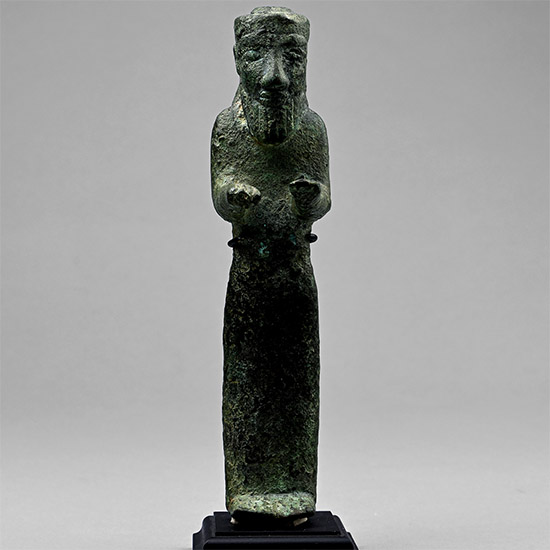
Old Babylonian Tall Copper Statuette of a Priest
Circa 1894-1595 B.C.Sold for (Inc. bp): £5,980
Modelled in the round standing figure wearing a floor-length robe; the head surmounted by a pillbox hat with thick shoulder-length hair to the rear, prominent triangular nose flanked by incised lentoid eyes, thick lips and a strong segmented bead; the arms bent forwards at the elbow to support a dish or patera; ellipsoid-section body and D-shaped flange for the feet; small lug to the underside; mounted on a custom-made stand. 540 grams total, 20.5 cm including stand
Moussaieff collection, Israel, formed from 1948. This lot has been checked against the Interpol Database of stolen works of art and is accompanied by search certificate number no.13287-251143. -
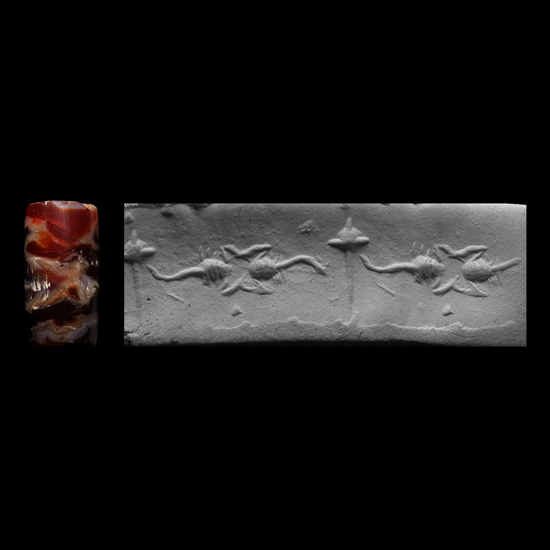
Western Asiatic Marbled Agate Cylinder Seal with Scorpions
2nd-1st millennium B.C.Sold for (Inc. bp): £195
Frieze depicting two scorpions advancing towards each other, starburst to the rear; supplied with a museum-quality impression. 1.02 grams, 13.24 mm
From the private collection of a European gentleman (1942-2024), formed since the 1970s.
