
Loading, please wait...
LOT 1449
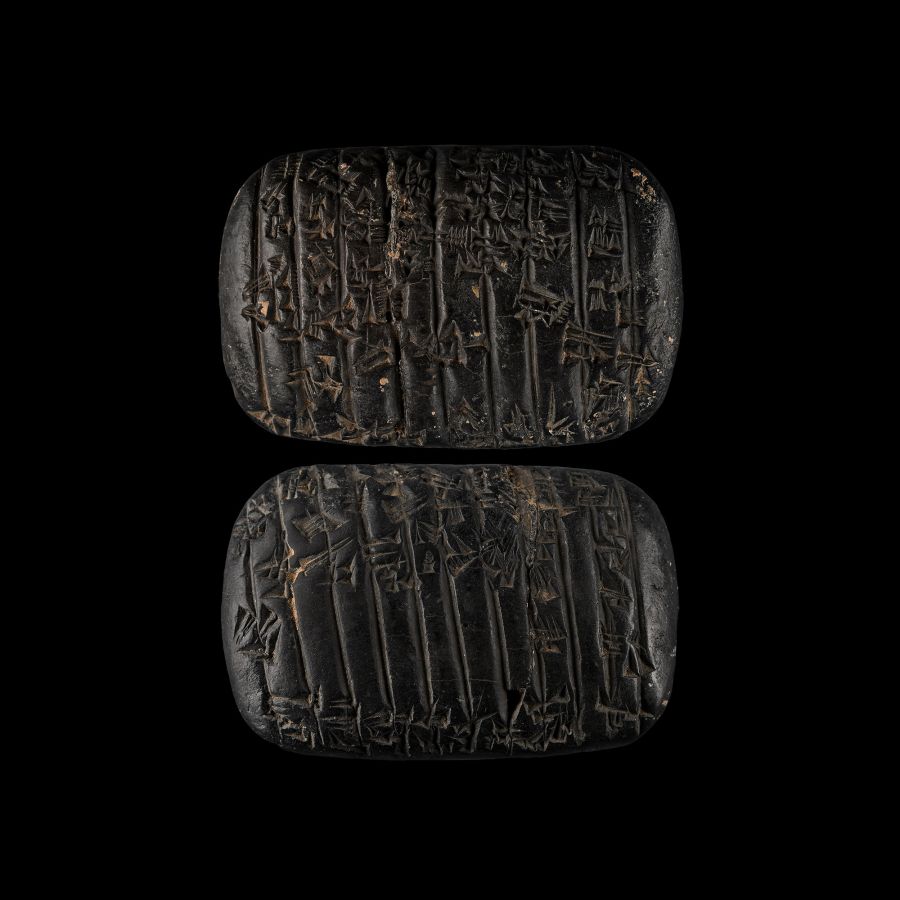
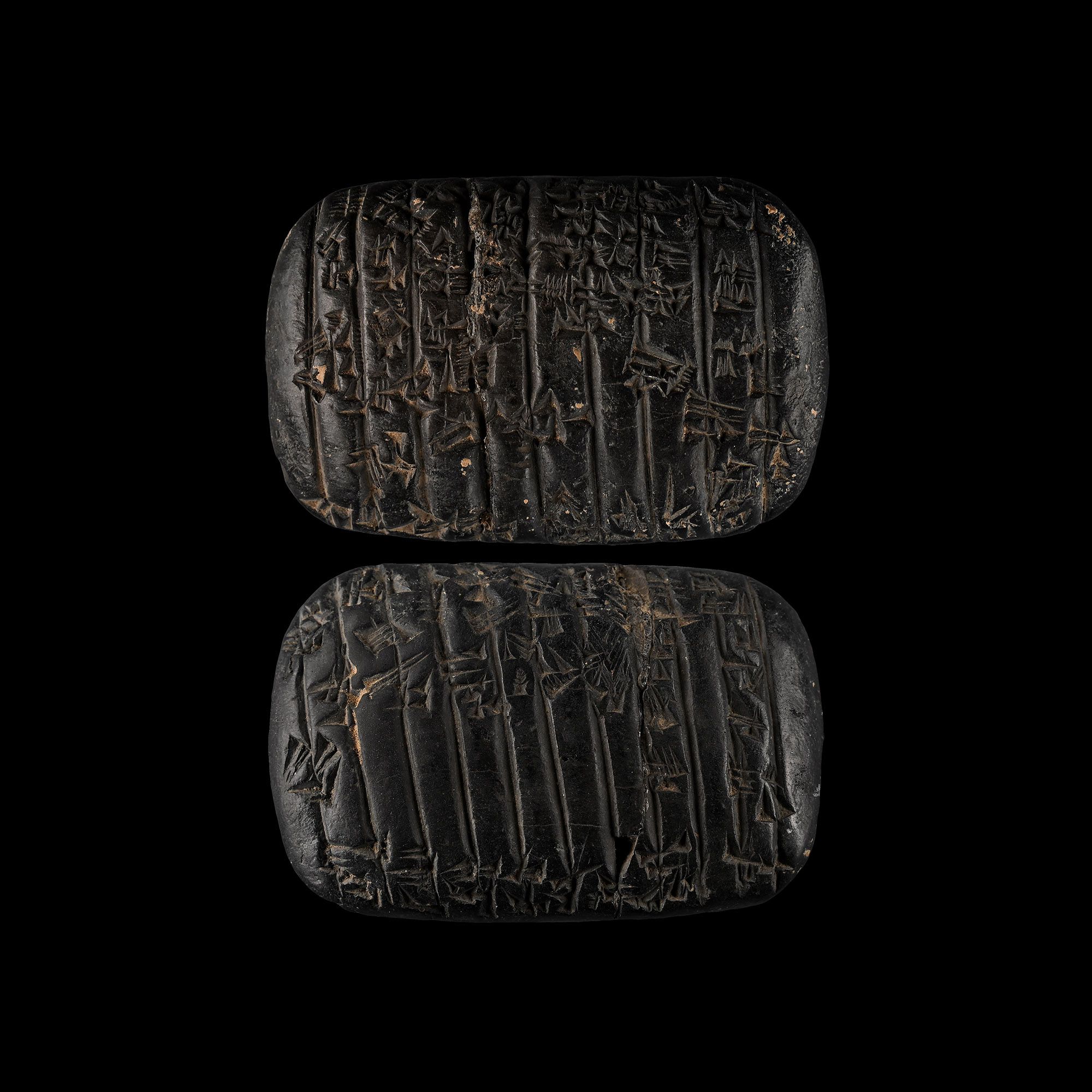
Western Asiatic Black Terracotta Cuneiform Tablet
2ND MILLENNIUM B.C.
2 1/2 in. (57.2 grams, 63 mm).
Pillow-shaped with columnar ribbing to the broad faces, dense cuneiform text in the columns.
ProvenancePrivate collection of Mr K., Maryland, USA.
Private collection, Switzerland, acquired in 2000.
This lot has been checked against the Interpol Database of stolen works of art and is accompanied by a search certificate number no.12893-241757.
The 2nd millennium B.C. (about 2000–1000 B.C.) was an important period in the ancient Near East, when major civilisations such as the Babylonians, Assyrians, Hittites, and Egyptians grew in power and influence. It was a time of progress in trade, government, law, and writing, helping us understand how people lived and worked. Cuneiform tablets, which are small clay tablets written in one of the earliest writing systems, were widely used to record business, legal matters, letters, and stories. When these tablets are found outside their place of origin, it can show connections through trade, travel, or official communication, offering insight into both the ancient world and how such objects later moved through collections.
CONDITIONTimeLine Auctions follows a vetting process to ensure the authenticity and legality of all items, reinforcing our commitment to integrity and responsible trading. Each antiquity, antique, and coin lot undergoes thorough examination by a vetting committee of at least ten external specialists, professional trade association members, scientists, and archaeologists: Our Vetting Process
AUCTIONS:
TimeLine is a leading auction house specialising in antiquities, ancient art, collectables, natural history, coins, medals, and books. Our auctions offer museums, collectors, historians, and enthusiasts the opportunity to acquire unique and historically significant pieces.
LOT 1449
Western Asiatic Black Terracotta Cuneiform Tablet
Estimate £1,200 - 1,700€1,390 - 1,970 (for guidance only)$1,620 - 2,300 (for guidance only)
-
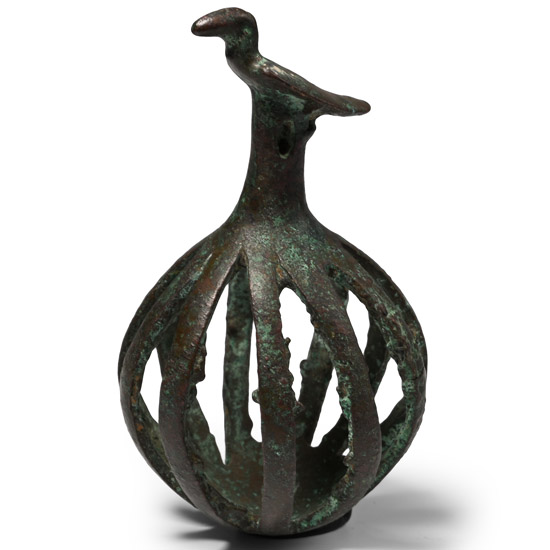
Luristan Bird-Headed Bell Harness Decoration
2nd-1st millennium B.C.Sold for (Inc. bp): £169
Comprising a bulb with a sidewall formed from vertical strips, surmounted by a perching bird; possibly a rumbler-bell. 65.75 grams, 80.24 mm
Ex Abelita family collection, 1980s-2000s. -
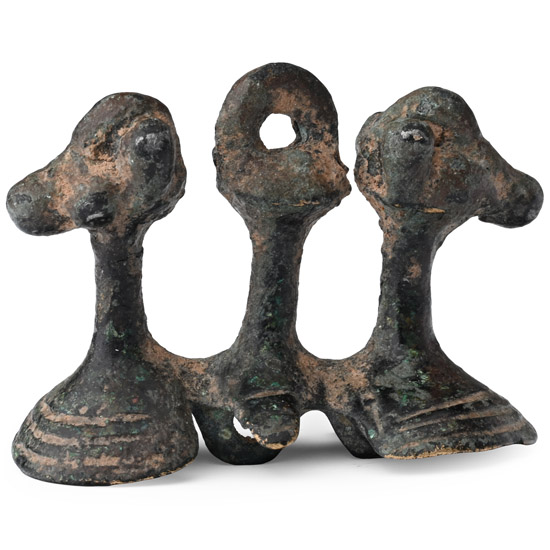
Western Asiatic Bronze Double Animal Mount
1st millennium B.C.Sold for (Inc. bp): £20
Comprising a short stem with pierced lug finial flanked by two addorsed beast-heads; mounted on a cupped base with attachment loops beneath. 22.47 grams, 44.29 mm
From the private collection of a European gentleman (1942-2024), formed since the 1970s. -

Sumerian Green Stone Eye Idol
3rd millennium B.C.Estimate: £2,500 - 3,500 (‡+bp*)
Opening Bid: £1,250
Carved in the round as a rectangular block with a slit to the upper edge, vertical spike with two annulet 'eyes'; pierced for suspension. 13.2 grams, 41 mm
with M. Petropoulos, Zurich, early 1990s. with Rhéa gallery. Private collection, acquired in 1999. This lot has been checked against the Interpol Database of stolen works of art and is accompanied by a search certificate number no.12897-241753.
Idols were an important part of religious life in South Arabia and across the ancient Near East. They were made as images of gods, spirits, or protective powers, and helped people feel a closer connection to the divine. These figures might be placed in temples, shrines, or even in the home, where they could have a protective or devotional role. Their shapes were often simple and stylised, with more importance placed on their meaning than on making them look fully realistic.
