
Loading, please wait...


LOT 1806
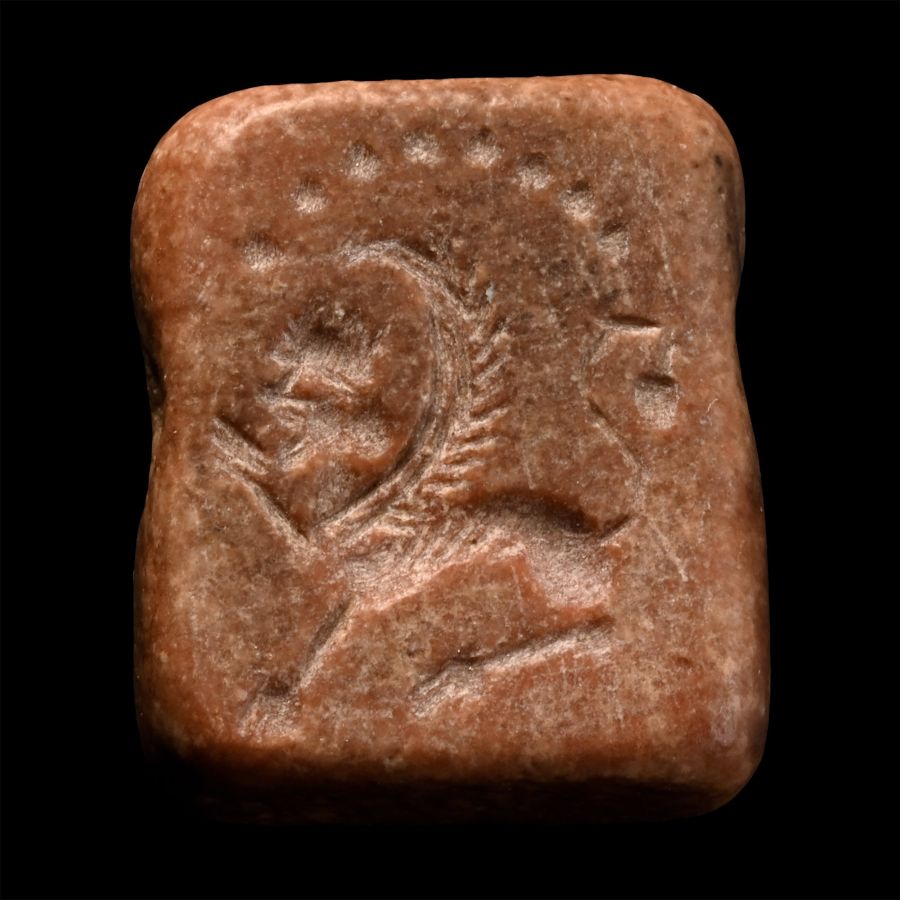
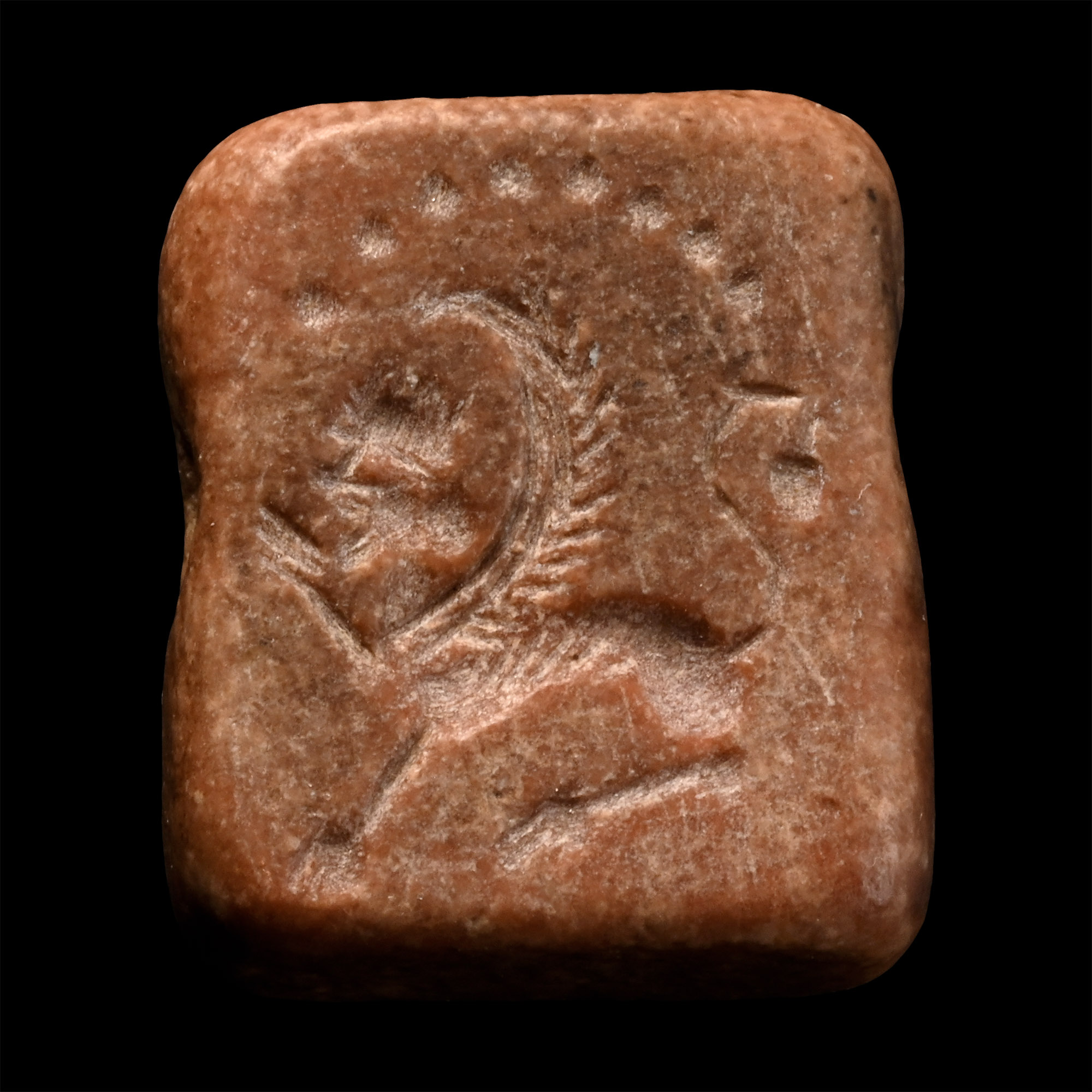
Western Asiatic Bifacial Jasper Amuletic Bead with Human-Head Winged Lion
CIRCA 2ND-1ST MILLENNIUM B.C.
3/4 in. (5.31 grams, 20 mm).
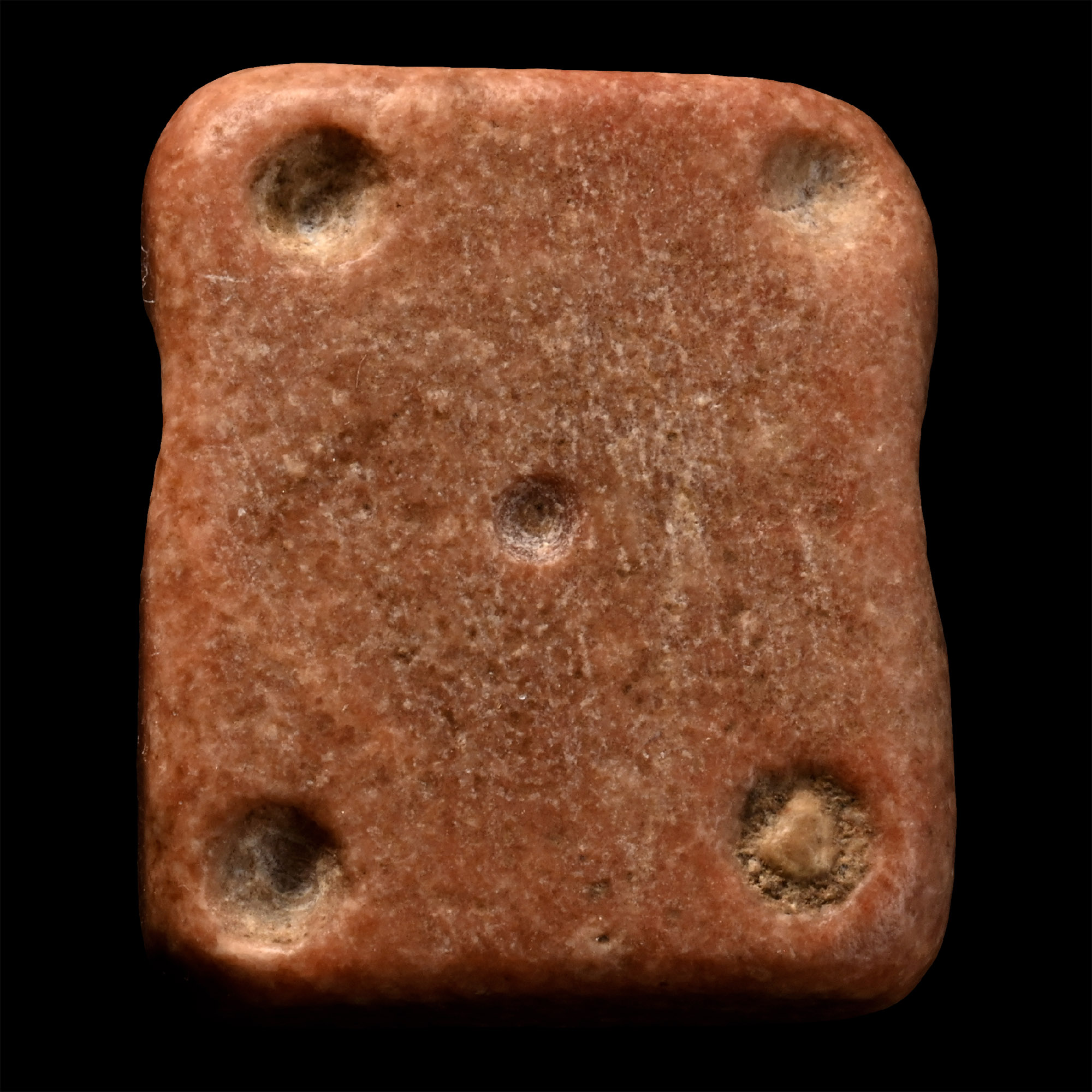
Rectangular in plan with five pellets to the underside, one retaining a yellow fill; obverse with incised crouching winged lion with human head in profile, one foreleg raised. [No Reserve]
ProvenanceFrom the deceased estate of a specialist collector of seals, Woodbury, Connecticut, USA.
From a private collection acquired in 2006.
TimeLine Auctions follows a vetting process to ensure the authenticity and legality of all items, reinforcing our commitment to integrity and responsible trading. Each antiquity, antique, and coin lot undergoes thorough examination by a vetting committee of at least ten external specialists, professional trade association members, scientists, and archaeologists: Our Vetting Process
AUCTIONS:
TimeLine is a leading auction house specialising in antiquities, ancient art, collectables, natural history, coins, medals, and books. Our auctions offer museums, collectors, historians, and enthusiasts the opportunity to acquire unique and historically significant pieces.
LOT 1806
Western Asiatic Bifacial Jasper Amuletic Bead with Human-Head Winged Lion
Estimate £80 - 100€93 - 116 (for guidance only)$108 - 135 (for guidance only)
Opening Bid
£5 (EUR 6; USD 7) +BP*
-
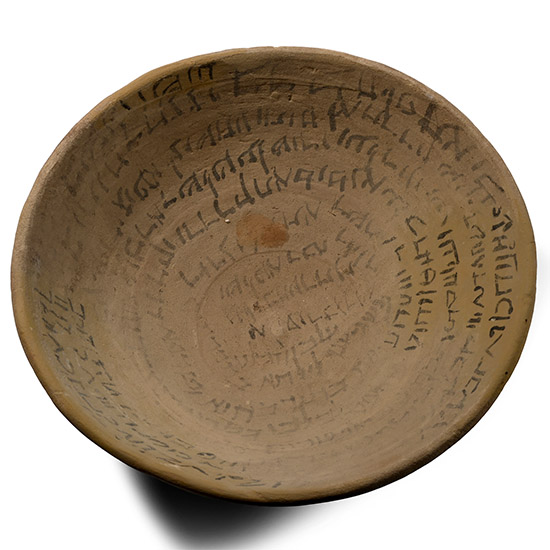
Aramaic Terracotta Magical Incantation Bowl
Circa 4th-8th century A.D.Estimate: £500 - 700 (+bp*)
Opening Bid: £250
With conical body, the inner face bearing the remains of concentric rings of inked magical Aramaic text. 369 grams, 16.9 cm
Private collection, 1980s. Acquired on the UK art market. Private collection, London, UK
Aramaic incantation bowls are particular to the Sasanian period and have been found in the regions of modern Iraq. These simple ceramic bowls, also known as magic bowls, each contain an Aramaic inscription, written in ink, which spirals from the centre. The bowls seem to have played an important part in domestic life. For example, during excavation in Nippur in 1889, one or more incantation bowls were found in each house together with domestic artefacts, most often in doorways or under floorboards in the corner of rooms. The bowls are predominantly apotropaic, and the inscriptions tend to protect their owners from misfortunes such as childbirth, illness and evil spirits. -
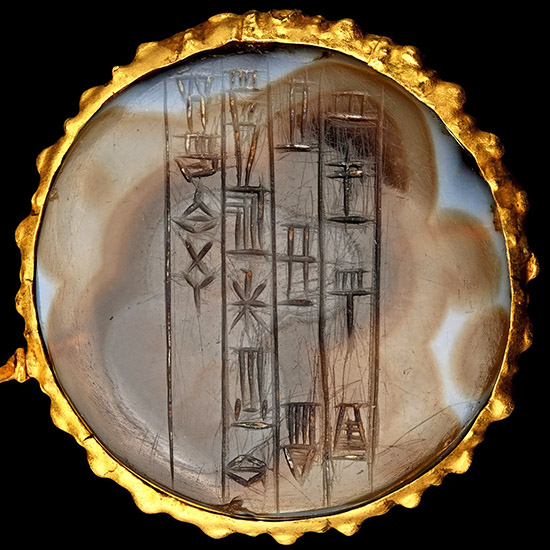
Kassite Agate Eye Bead with Cuneiform Inscription for King Kurigalzu II in Gold Mount
1400-1000 B.C.Estimate: £60,000 - 80,000 (‡+bp*)
Opening Bid: £33,333
Polished cabochon in a gold frame with radiating bosses, integral loop; reverse with four incised columns of cuneiform text naming Kurigalzu II. 18.30 grams, 42 mm
Private collection, Mrs M.V., circa 1980s. Kept in Switzerland since the late 1980s. Accompanied by an old developed photograph, 22 August 1998. This lot has been checked against the Interpol Database of stolen works of art and is accompanied by search certificate no.13202-249238.
The cuneiform inscription names Kurigalzu II (c.1332-1308 B.C.), 'strong man, King of Babylon, son of Burnaburiaš.' Kurigalzu II was one of the most powerful Kassite rulers, known for his military campaigns and extensive building projects, including the foundation of the city of Dur-Kurigalzu. Inscribed Kassite agate eye beads are rare and are generally understood to have served amuletic or votive functions, combining royal titulary with protective symbolism. -
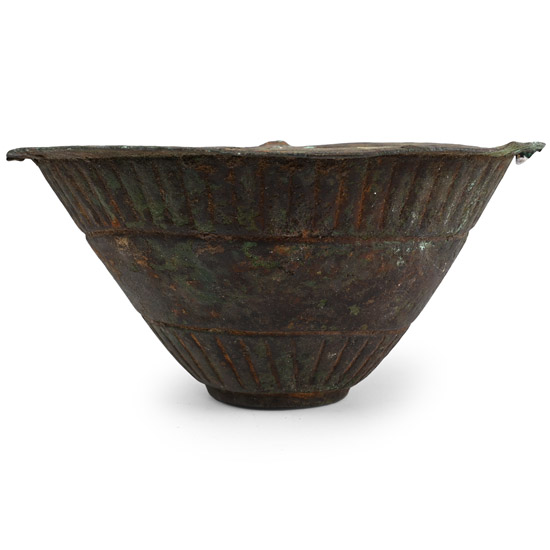
Luristan Bronze Decorated Conical Vessel
Bronze Age, 2nd-1st millennium B.C.Estimate: £120 - 170 (+bp*)
Opening Bid: £5
Conical in profile with three horizontal bands: vertical ribs above and slashes below. 616 grams, 17.5 cm wide
Acquired on the UK art market since the 1990s. From the property of a late Lincolnshire, UK, gentleman; thence by descent.
