
Loading, please wait...
LOT 0981
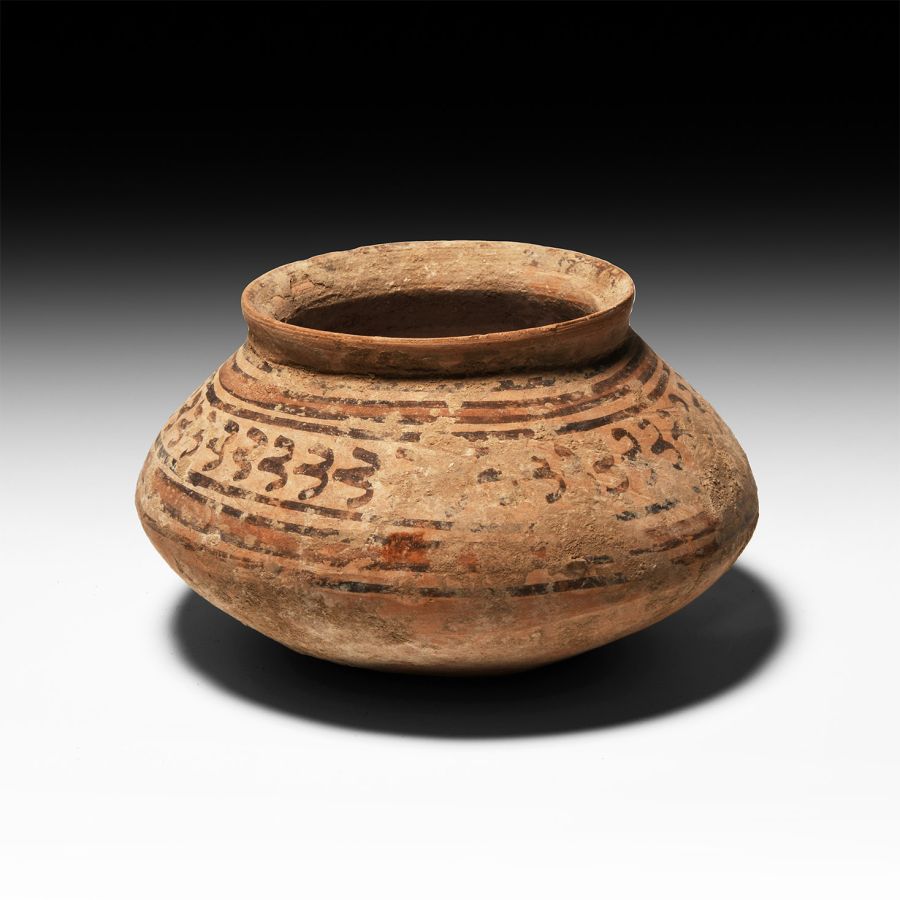
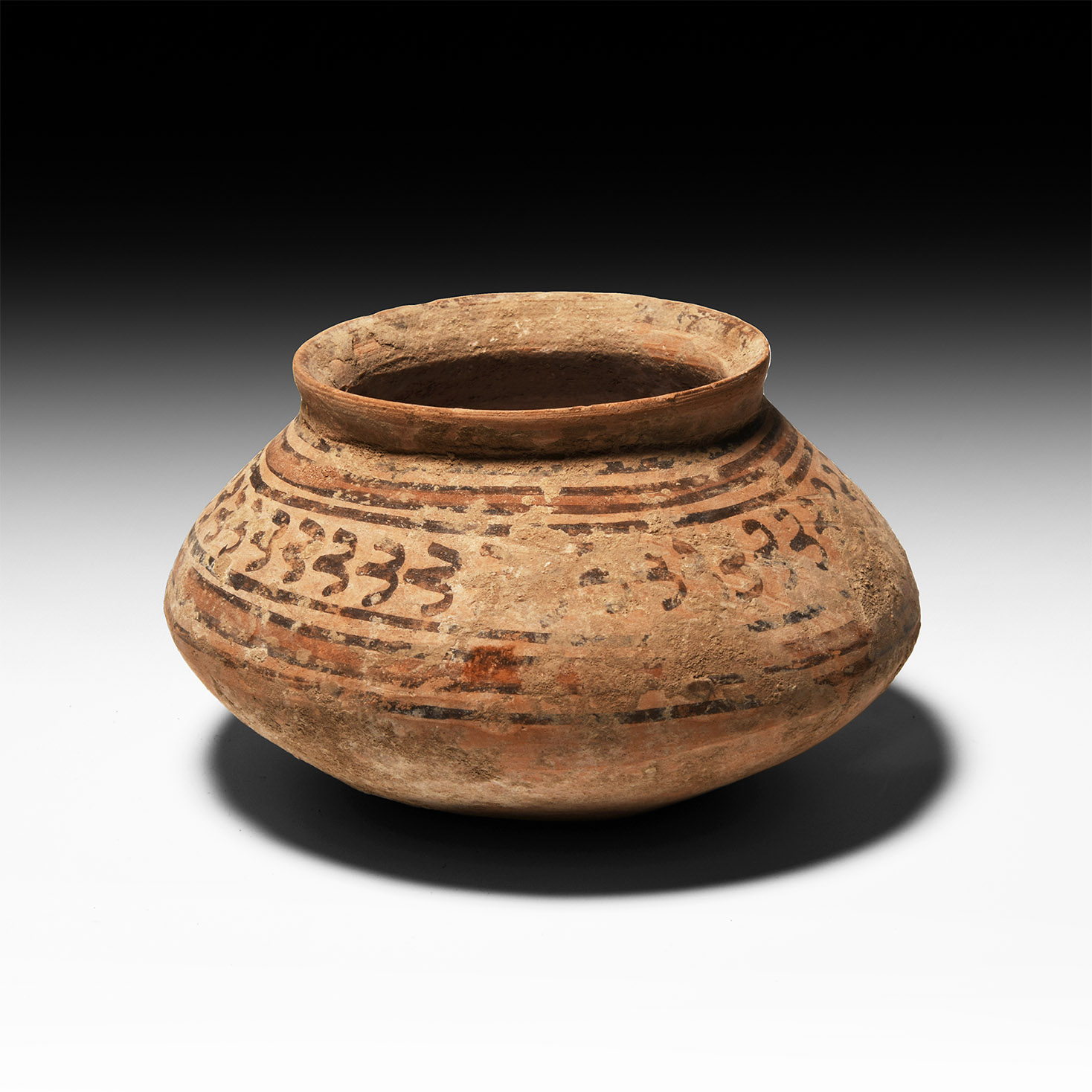
Western Asiatic Biconvex Painted Jar
4TH-3RD MILLENNIUM B.C.
4 5/8 in. (248 grams, 11.8 cm wide).
A squat ceramic biconical pot with basal ring and slightly everted rim, bands of painted geometric designs to the upper face. [No Reserve]
ProvenanceAcquired 1980-2015.
Ex Abelita family collection.
TimeLine Auctions follows a vetting process to ensure the authenticity and legality of all items, reinforcing our commitment to integrity and responsible trading. Each antiquity, antique, and coin lot undergoes thorough examination by a vetting committee of at least ten external specialists, professional trade association members, scientists, and archaeologists: Our Vetting Process
AUCTIONS:
TimeLine is a leading auction house specialising in antiquities, ancient art, collectables, natural history, coins, medals, and books. Our auctions offer museums, collectors, historians, and enthusiasts the opportunity to acquire unique and historically significant pieces.
-
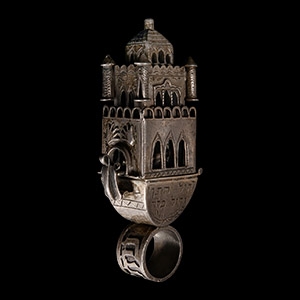
Jewish Silver Architectural Wedding Ring
19th-20th century A.D.Sold for (Inc. bp): £598
An architectural silver wedding ring composed of a rectangular-section hoop bearing the words ‘mazel tov’ (good fortune) in Hebrew characters; roughly cushion-shaped bezel with large openwork building above, likely representing Solomon’s temple or a synagogue, hinge and clasp at the base, opening to a model of what is likely a representation of the marriage contract which lifts out of its setting to reveal a void; incised stylised detailing to the building with two handprints placed over the arched doorway; Hebrew text to both principal faces of the bezel with wreaths below reading 'קול חתן וקול כלה' to one side and 'קול ששון וקול שמחה' to the other, together forming a quotation from Jeremiah 33:10-11: 'The voice of joy and the voice of gladness, the voice of the bridegroom and the voice of the bride'. 107 grams, 10.4 cm overall, 19.08 mm internal diameter (approximate size British S, USA 9, Europe 20, Japan 19)
From a UK private collection.
A Jewish wedding consists of the signing of a marriage contract (ketubah) and the gift of a token, usually a ring. The ring was generally worn only during the ceremony and is often made in the form of a miniature building, signifying the new household as well as the Temple in Jerusalem. Traditionally, the ring had to belong to the groom and to be made of a precious metal not set with any gemstones. The Earliest Jewish wedding rings were found in the medieval treasure hoards of Erfurt in Germany and Colmar in France. The description of a wedding in 1400 by Rabbi Jakob hal Lewi Mölln (or Mishagin) made the importance of the ring clear: 'After the blessing, the Rabbi called two witnesses. He showed them the wedding ring and made them bear witness that it was worth at least a heller. Then he enjoined them to make sure that the groom fulfilled his marriage vow by saying the words 'By this ring let thou be given to me by the laws of Moses and of Israel'. He then put the ring on the bride's finger next to the thumb.' -
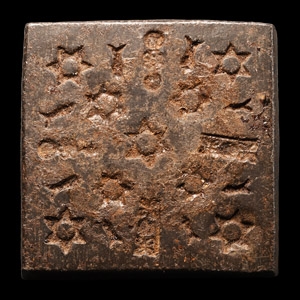
Western Asiatic Jeweller's Matrix
1st millennium A.D.Sold for (Inc. bp): £117
A square-shaped copper-alloy jeweller's matrix with recessed moulds to one face, comprising various motifs including stylised stars, fish and others. 104 grams, 39 mm
Acquired 1969-1999. London collection of the late Mr S.M., thence by descent. -
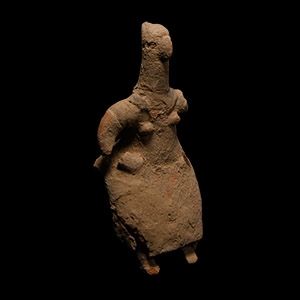
Chalcolithic Female Figurine
Circa 3rd millennium B.C.Estimate: £800 - 1,000 (+bp*)
Opening Bid: £444
A ceramic figure of a seated female with applied facial features, applied collar, arms bent and hands on the hips, flared skirt with separately moulded legs protruding. 135 grams, 12.5 cm
Collection of a deceased London gentleman, 1979-1999, by descent. Accompanied by a copy of a thermoluminescence analysis report no.N122k32 from Oxford Authentication.
