
Loading, please wait...
LOT 1341
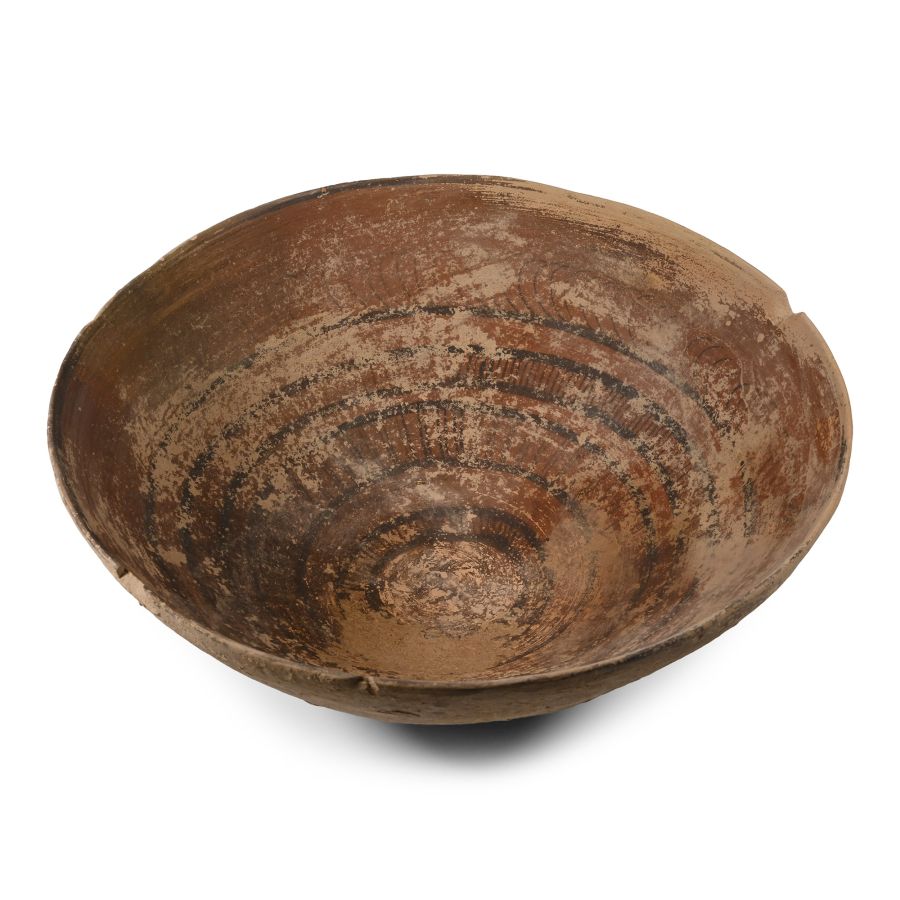
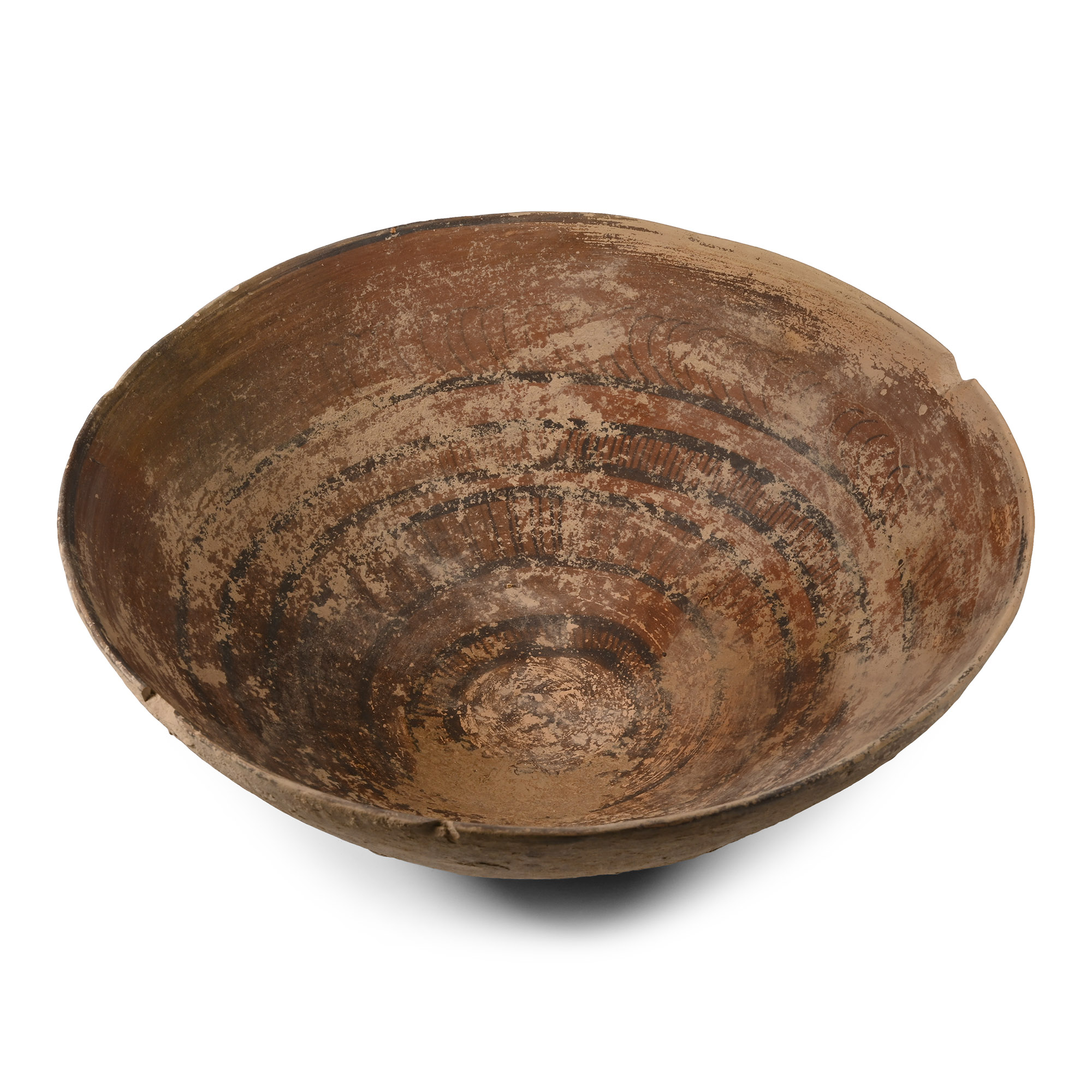
Western Asiatic Bichrome Terracotta Dish
1ST MILLENNIUM B.C.
11 1/4 in. (1.13 kg, 28.5 cm wide).
Hemispherical in profile with circumferential painted bands to the inner face. [No Reserve]
ProvenanceEx West London, UK, collection, 1990s.
CONDITIONTimeLine Auctions follows a vetting process to ensure the authenticity and legality of all items, reinforcing our commitment to integrity and responsible trading. Each antiquity, antique, and coin lot undergoes thorough examination by a vetting committee of at least ten external specialists, professional trade association members, scientists, and archaeologists: Our Vetting Process
AUCTIONS:
TimeLine is a leading auction house specialising in antiquities, ancient art, collectables, natural history, coins, medals, and books. Our auctions offer museums, collectors, historians, and enthusiasts the opportunity to acquire unique and historically significant pieces.
-
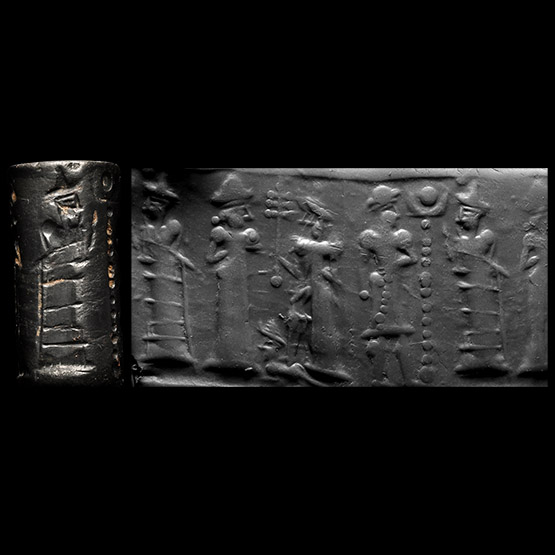
Old Babylonian Haematite Cylinder Seal with Lamma Goddess
Circa 1700-1600 B.C.Sold for (Inc. bp): £546
With four standing figures; accompanied by a copy of an old scholarly note, typed and signed by W.G. Lambert, late Professor of Assyriology, University of Birmingham, 1970-1993, which states: 'Cylinder seal of Hematite, 25.5 x 13 mm. The design consists of two pairs of facing figures. In the one a deity on the right wears horned tiara and long robe open at the front, from which one leg projects with foot resting on a small quadruped with human head. The deity holds up a standard with seven globes at its top. Facing is a worshipper, in long plain robe with hands clasped. The other pair has a standing raising both hands --the Lamma goddess--and she faces the god with mace, in nat with brim, a kilt to the knees, and holding the mace at his waist. Between these two is a tall pole surmounted by lunar crescent and solar disc. This is a Late Old Babylonian seal, c.1700-1600 B.C., from Babylonia or south-west Iran. it is engraved with drill and cutting wheel, and is in good condition, though there is a little scratching of the surface.'; accompanied by a museum quality impression and a pair of red stone beads. 11.86 mm, 25 mm
Private collection, London, UK. Accompanied by a copy of an old scholarly note, typed and signed by W.G. Lambert, late Professor of Assyriology, University of Birmingham, 1970-1993. -
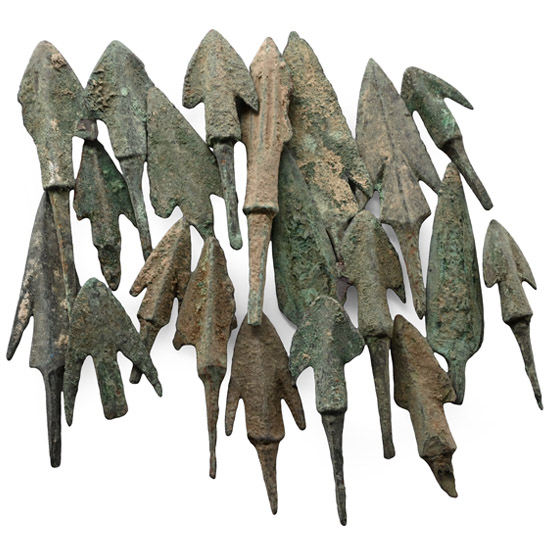
Western Asiatic Bronze Arrowhead Collection
1st millennium B.C.Sold for (Inc. bp): £130
Each a small barbed-and-tanged type with thick midrib. 120 grams total, 30-69 mm
Ex London, UK, collection, 1990s. -
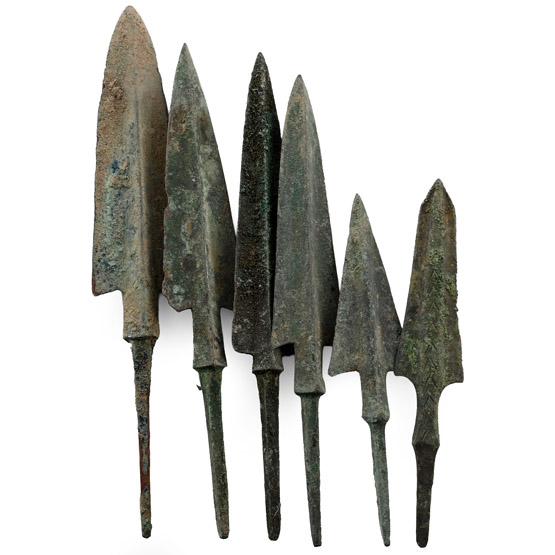
Western Asiatic Bronze Arrowhead Collection
1st millennium B.C.Sold for (Inc. bp): £130
Each a narrow barbed-and-tanged type with a thick midrib. 180 grams total, 10.2-15.7 cm
Ex London, UK, collection, 1990s.
