
Loading, please wait...
LOT 1080
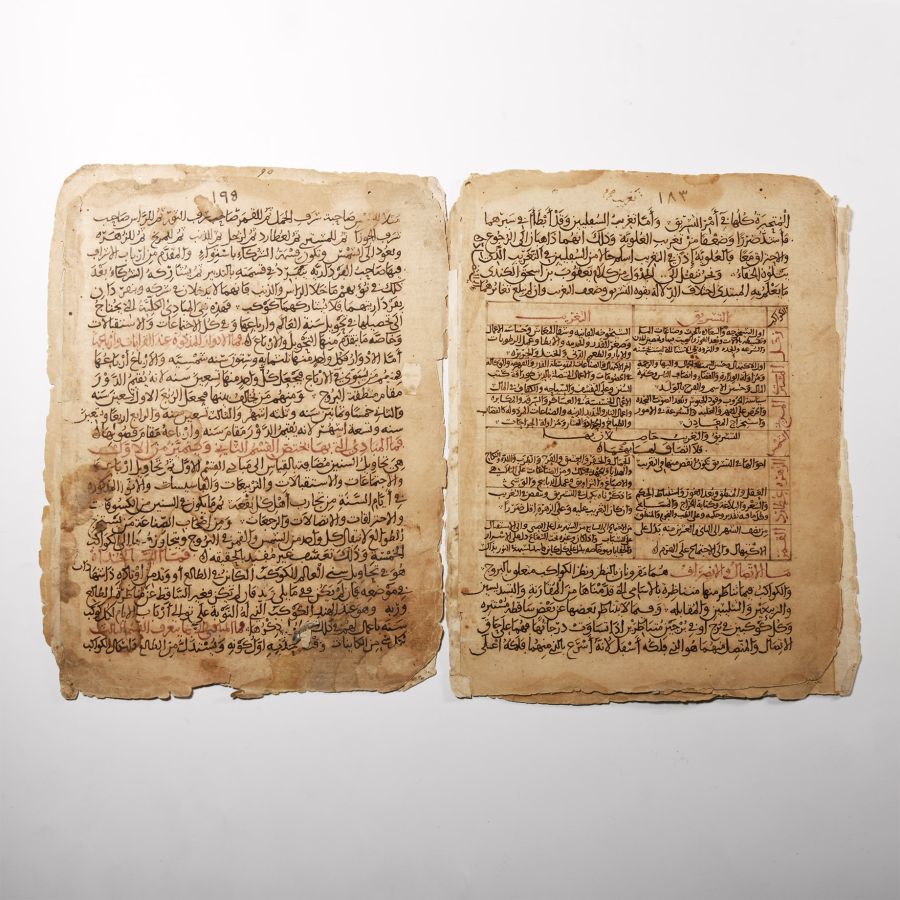
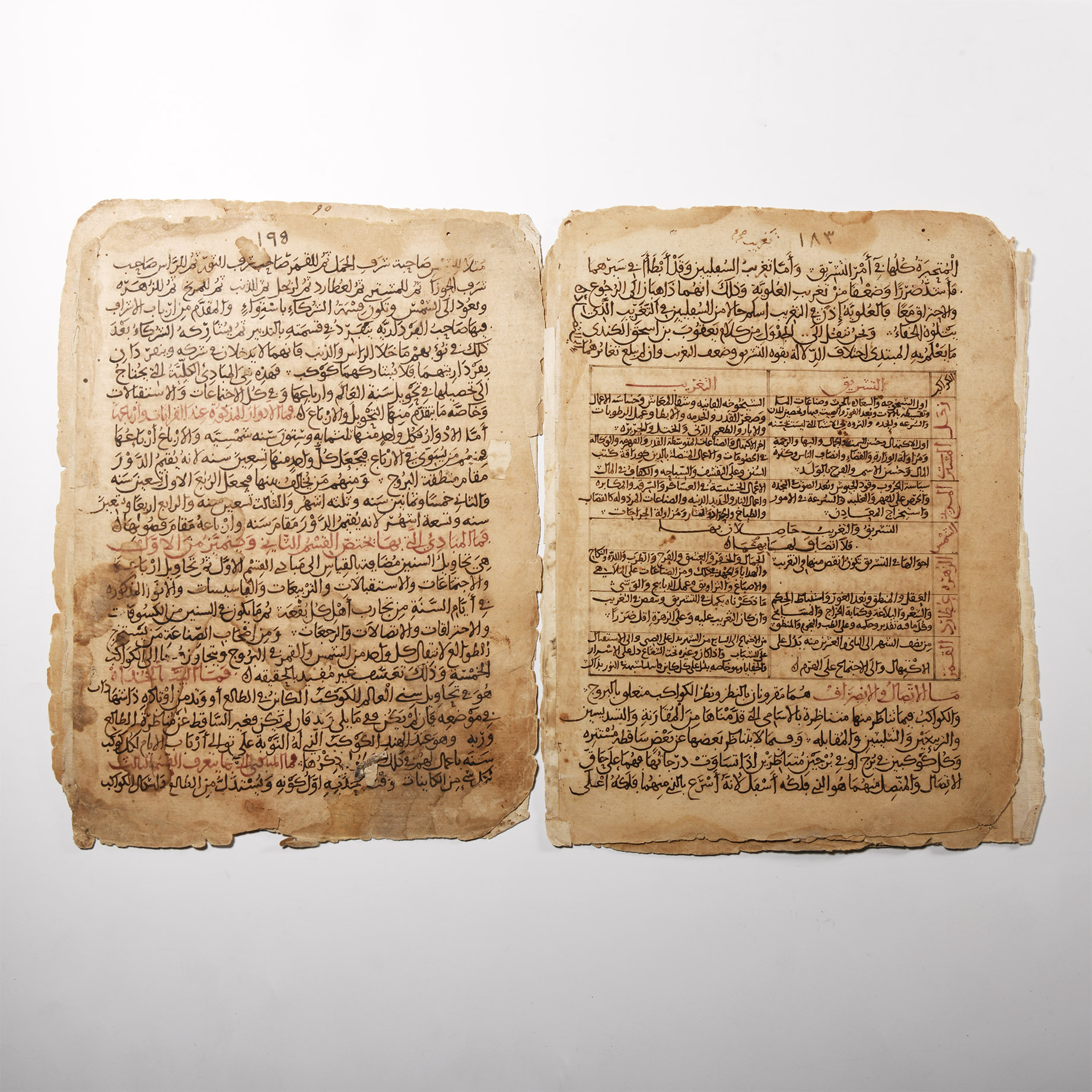
Western Asiatic Astrological Manuscript Page Group
17TH-18TH CENTURY A.D.
9 1/2 x 7 1/8 in. (61 grams, 24 x 18 cm).
Group of six paper leaves with black cursive Naskh script in blocks of 25 lines; red ink headings and sub-headings; numeral to the head of each side; one tabulation grid with listings and vertical headers; some minor repairs. [6, No Reserve]
ProvenanceAcquired 1970s-1996.
Property of a North American collector.
London collection, 2016.
TimeLine Auctions follows a vetting process to ensure the authenticity and legality of all items, reinforcing our commitment to integrity and responsible trading. Each antiquity, antique, and coin lot undergoes thorough examination by a vetting committee of at least ten external specialists, professional trade association members, scientists, and archaeologists: Our Vetting Process
AUCTIONS:
TimeLine is a leading auction house specialising in antiquities, ancient art, collectables, natural history, coins, medals, and books. Our auctions offer museums, collectors, historians, and enthusiasts the opportunity to acquire unique and historically significant pieces.
-
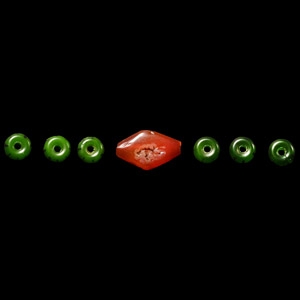
Western Asiatic Carnelian Triangular Bead will Galley
1st millennium B.C.Estimate: £200 - 300 (+bp*)
Opening Bid: £100
Composed of a polished flat diamond-shaped carnelian bead, with pricked design in the form of a galley, drilled for suspension; sold together with six translucent green glass doughnut-shaped beads displaying decorative vertical dashes around the external faces. 4.51 grams total, 8-20 mm
From a family collection formed 1900-1950; by descent circa 1980. -
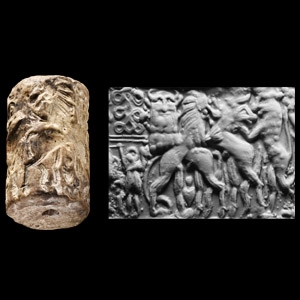
Large Akkadian White Stone Cylinder Seal
Circa 2nd-1st millennium B.C.Sold for (Inc. bp): £1,300
Displaying a frieze composed of human and animal figures; drilled vertically for suspension. 57 grams, 45 mm
From an important London, UK, collection, 1970-1990. Examined by Professor Wilfrid George Lambert FBA (1926-2011), historian, archaeologist, and specialist in Assyriology and Near Eastern archaeology, in the late 1980s and early 1990s. -
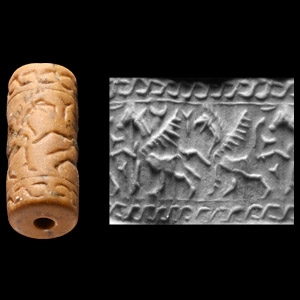
Western Asiatic Orange Jasper Cylinder Seal with Animals
2nd-1st millennium B.C.Sold for (Inc. bp): £195
With incised frieze of birds and animals in a landscape, guilloche borders above and below. 4.6 grams, 24 mm
Acquired 1970s-1996. Property of a North American collector; collection no.015. London collection, 2016.
