
Loading, please wait...
LOT 1732
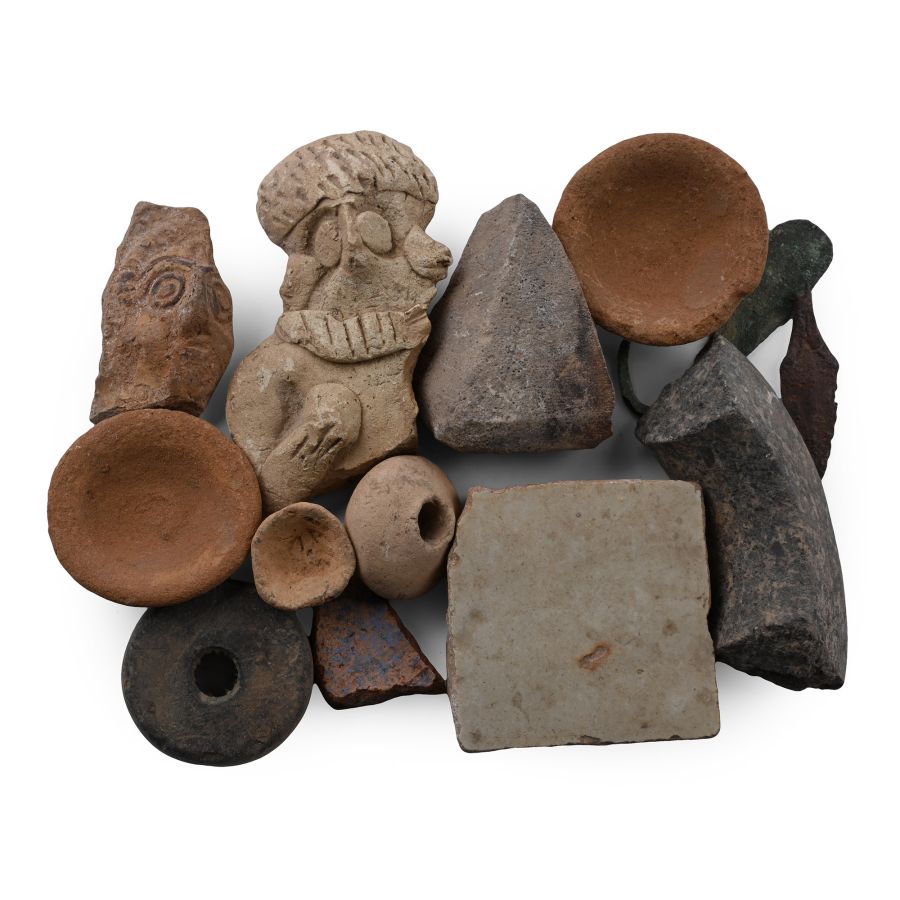
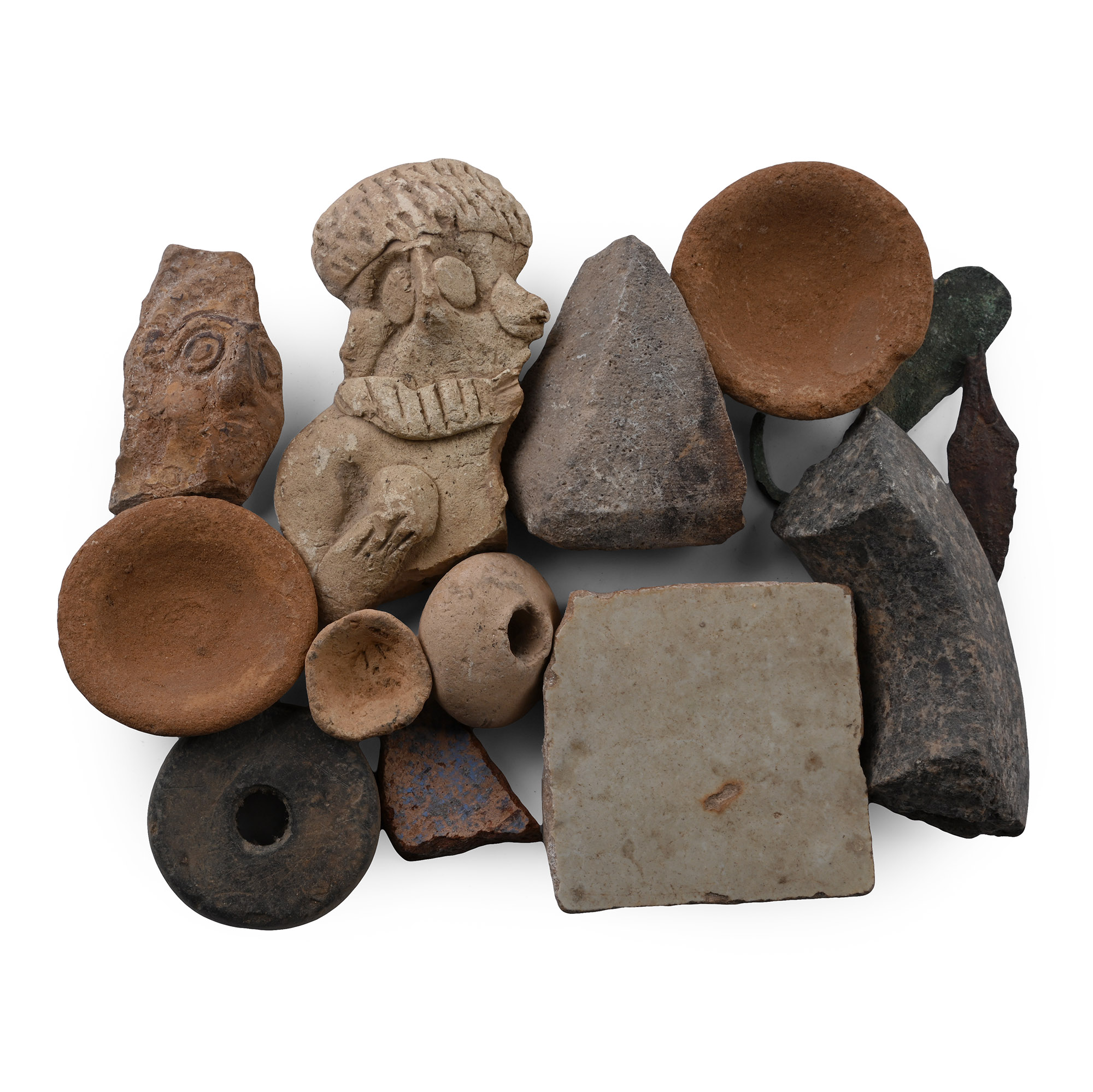
Western Asiatic Artefact Group
CIRCA 1ST MILLENNIUM B.C.
3/4 - 2 3/4 in. (254 grams total, 20-71 mm).
Mixed group of ceramic, bronze and stone items, including two small dishes, a spindle whorl and an idol fragment. [13, No Reserve]
ProvenanceFrom the late collection of a Cornish couple, formed from the early 1990s.
CONDITIONTimeLine Auctions follows a vetting process to ensure the authenticity and legality of all items, reinforcing our commitment to integrity and responsible trading. Each antiquity, antique, and coin lot undergoes thorough examination by a vetting committee of at least ten external specialists, professional trade association members, scientists, and archaeologists: Our Vetting Process
AUCTIONS:
TimeLine is a leading auction house specialising in antiquities, ancient art, collectables, natural history, coins, medals, and books. Our auctions offer museums, collectors, historians, and enthusiasts the opportunity to acquire unique and historically significant pieces.
-
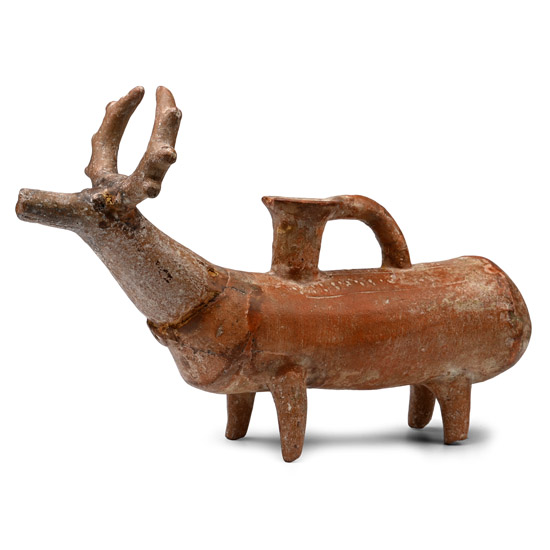
Amlash Terracotta Stag Rhyton
1st millennium B.C.Sold for (Inc. bp): £910
Comprising a tubular body with a domed rump and four stub legs, an angled neck to accept a separate neck and head with applied domed eyes and antlers with lateral spurs; a trumpet-shaped filler tube to the upper face and a strap handle to the rear; impressed longitudinal lines; and a pouring hole at the throat. 841 grams, 30.5 cm
with a London, UK gallery, 1971-early 2000s. Accompanied by an original thermoluminescence analysis report and photograph by Oxford Authentication with sample no.281z20 dated 16 June 1981. -
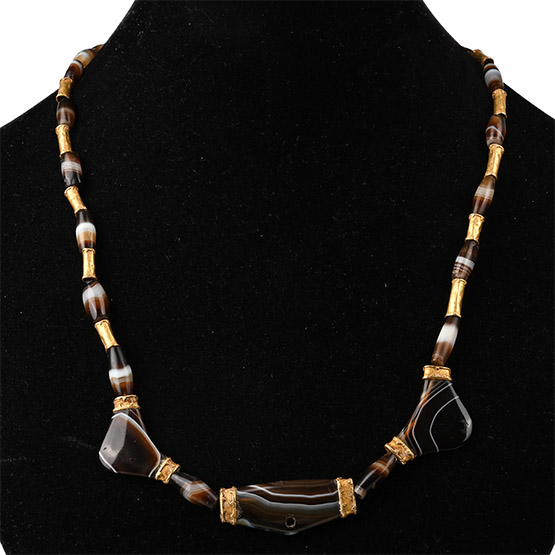
Babylonian Agate Bead Necklace with Gold Beads
9th century B.C.Sold for (Inc. bp): £7,150
Restrung necklace of tubular and fusiform beads with interstitial gold tubular beads, three D-shaped plaques with granulated gold caps, one pierced to accept a pendant. 43.24 grams, 31 cm
Private collection, acquired in the late 1980s-early 1990s; thence by descent. This lot has been checked against the Interpol Database of stolen works of art and is accompanied by search certificate number no.13207-249239.
Texts from Neo-Babylonian times in various archives, such as that of Eanna, concern the smelting of metals for the construction or repair of specific objects, including necklaces. One example from the archive (NCBT 184 - Npl 9 III 1) obv. 3 recites: '3 minas 26 shekels of gold (were) put into the kiln for the necklace of dubkåtu (beads) of Nanåya. It (the gold) is (now) at the disposal of Sadûni. (It was weighed) according to the 3 mina weight of bronze and (smaller) weights of iron.' The jewellers were responsible for cutting the precious stones and beads that were set in the jewellery and other ornamentation produced by the goldsmiths. In this capacity, they were issued beads and unworked pieces (takkassu, sibirtu) of various semiprecious stones, including agate (pappardilû), carnelian (samtu), eye stones (na igiII.mes), lapis lazuli (uqnû), and turquoise (asgikû). -
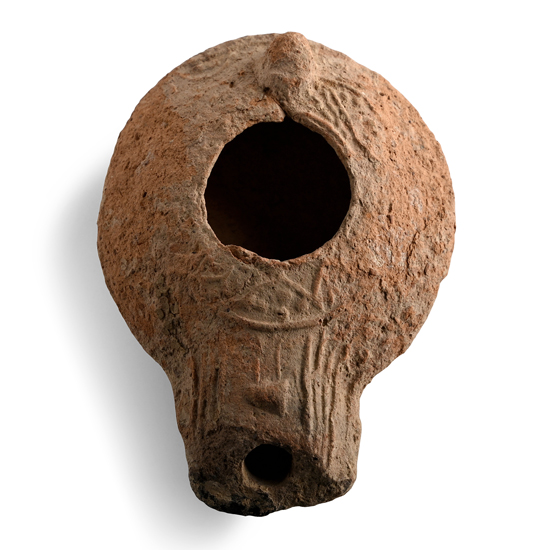
Judaean Terracotta Slipper Oil Lamp
Circa 1st century B.C.-2nd century A.D.Sold for (Inc. bp): £65
Discoid body with broad stub nozzle, lug handle, low-relief running tendrils to the shoulder. 51 grams, 91 mm
From a collection of lamps from a late Scottish gentleman, 1970-1990s.
