
Loading, please wait...
LOT 1544
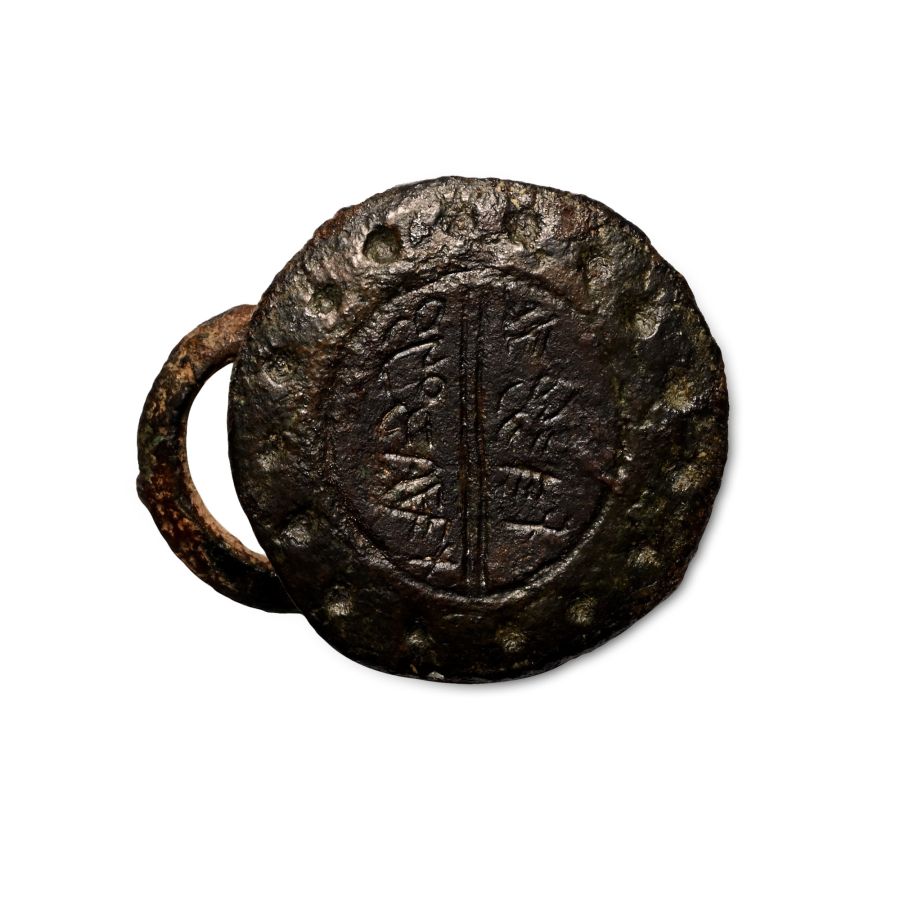
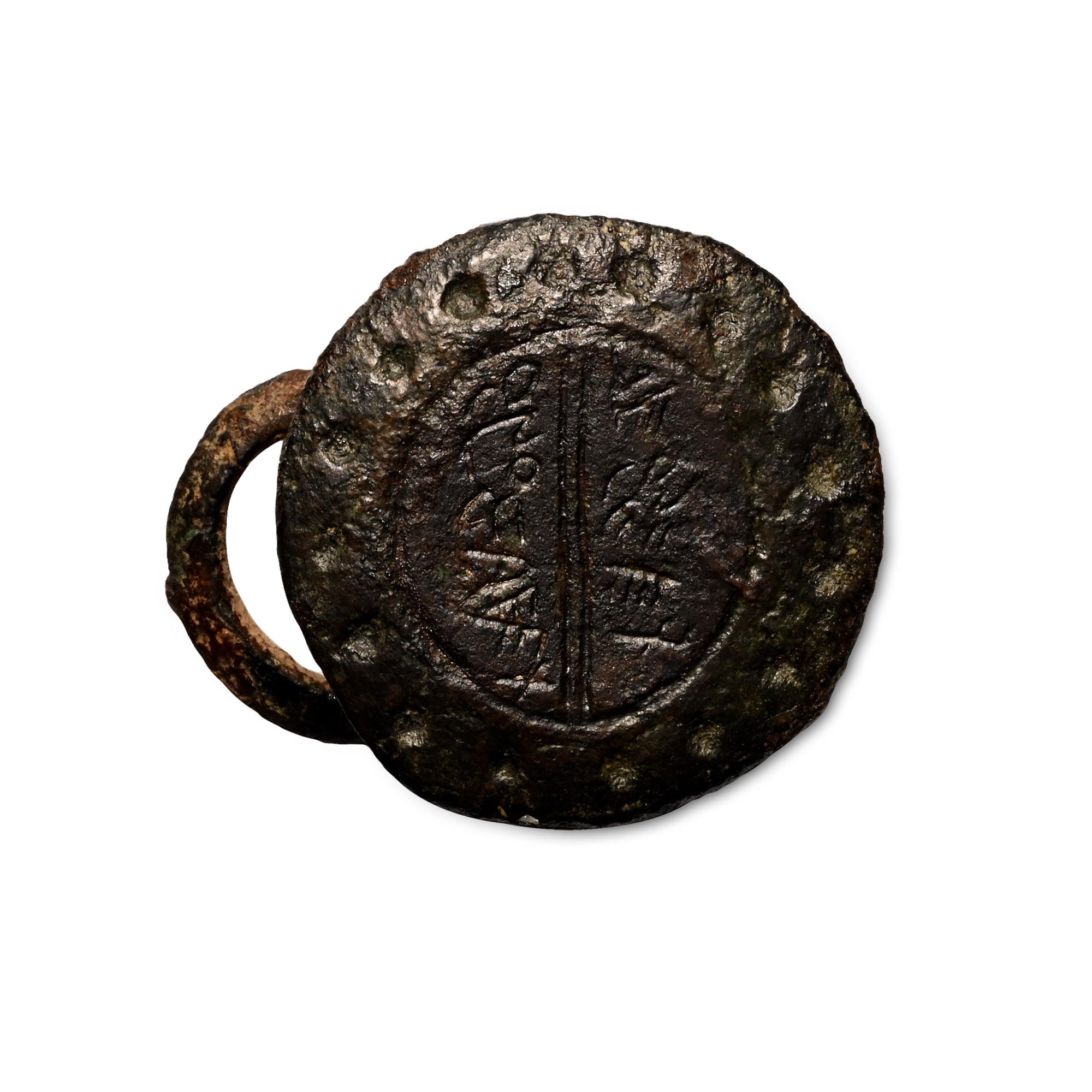
Western Asiatic Aramaic Pendant Seal Matrix
MID 1ST MILLENNIUM A.D.
1 in. (10.77 grams, 24 mm).
Discoid in plan with lug to upper face and suspension loop; underside with incuse pellets to the rim surrounding a tondo with two lines of incised text.
ProvenanceFrom the collection of a gentleman, acquired on the London art market in the 1990s.
This lot has been checked against the Interpol Database of stolen works of art and is accompanied by a search certificate number no.12717-233043.
TimeLine Auctions follows a vetting process to ensure the authenticity and legality of all items, reinforcing our commitment to integrity and responsible trading. Each antiquity, antique, and coin lot undergoes thorough examination by a vetting committee of at least ten external specialists, professional trade association members, scientists, and archaeologists: Our Vetting Process
AUCTIONS:
TimeLine is a leading auction house specialising in antiquities, ancient art, collectables, natural history, coins, medals, and books. Our auctions offer museums, collectors, historians, and enthusiasts the opportunity to acquire unique and historically significant pieces.
LOT 1544
Western Asiatic Aramaic Pendant Seal Matrix
Estimate £1,500 - 1,700€1,740 - 1,970 (for guidance only)$2,030 - 2,300 (for guidance only)
-
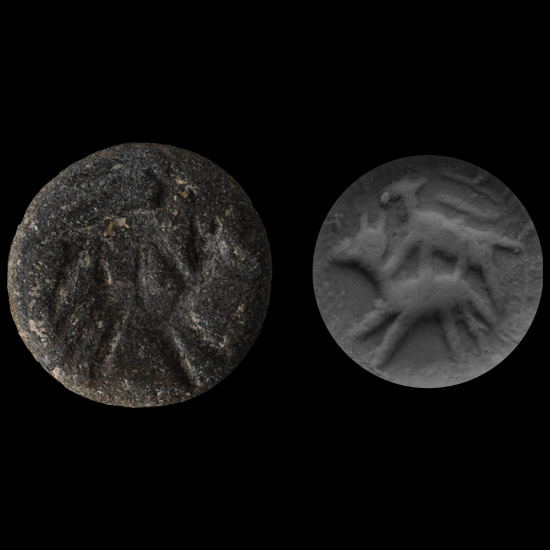
Western Asiatic Stone Stamp Seal with Mating Animals
1st millennium B.C.Sold for (Inc. bp): £20
Conical seal pierced through the body, underside with two copulating quadrupeds. 3.9 grams, 19 mm
From a late Warwickshire numismatic collector, his collection formed from the early 1980s. -
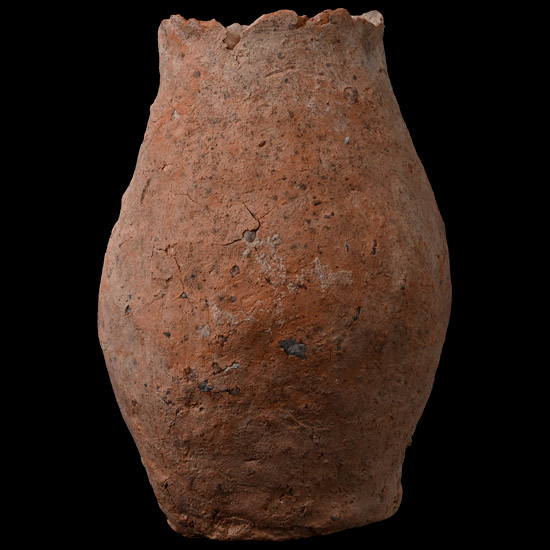
Levantine Terracotta Vessel
Early Bronze Age, circa 2000-1500 B.C.Sold for (Inc. bp): £59
Bulbous body with narrow foot and flared mouth. 238 grams, 10 cm
From the collection of a Yorkshire, UK gentleman, items collected in the Holy Land in the 1960s. -
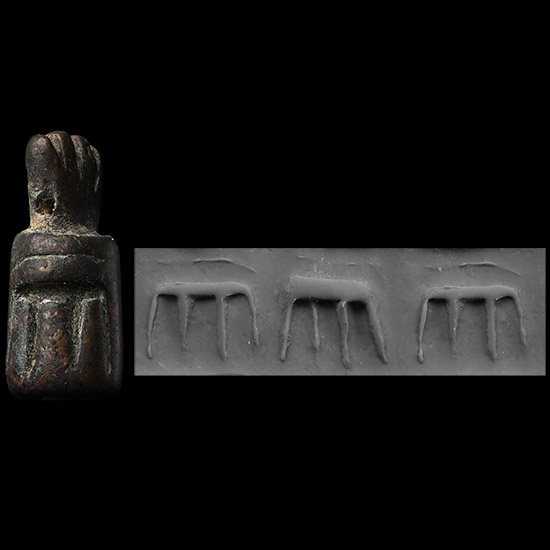
Western Asiatic Bronze Pendant Cylinder Seal
2nd-1st millennium B.C.Sold for (Inc. bp): £91
The shank formed as a drum with ring-and-dot motif to the underside, two comb motifs to the sidewall, knop finial formed as a fist; supplied with a museum-quality impression. 34.9 grams, 36.8 mm
From the private collection of a European gentleman (1942-2024), formed since the 1970s.
