
Loading, please wait...


LOT 1340
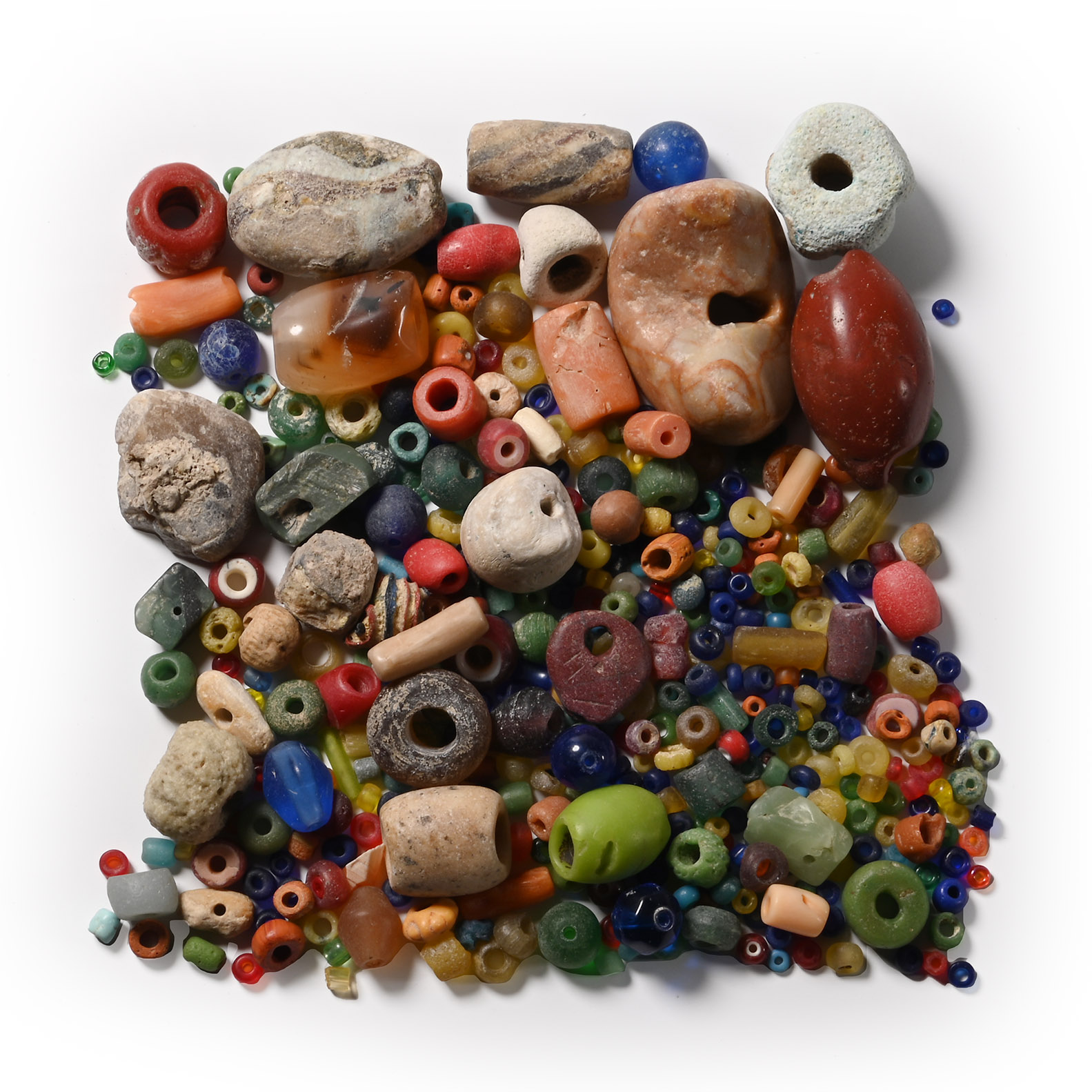
Western Asiatic and Other Mixed Bead Group
1ST MILLENNIUM B.C. AND LATER
1/8 - 1 in. (58 grams total, 1-25 cm).
An assorted colourful mix of glass, stone and faience beads, including some larger feature beads. [No Reserve]
ProvenanceEx London, UK, collection, 1990s.
This lot has been cleared against the Art Loss Register database, and is accompanied by an illustrated lot declaration signed by the Head of the Antiquities Department, Dr Raffaele D'Amato.
TimeLine Auctions follows a vetting process to ensure the authenticity and legality of all items, reinforcing our commitment to integrity and responsible trading. Each antiquity, antique, and coin lot undergoes thorough examination by a vetting committee of at least ten external specialists, professional trade association members, scientists, and archaeologists: Our Vetting Process
AUCTIONS:
TimeLine is a leading auction house specialising in antiquities, ancient art, collectables, natural history, coins, medals, and books. Our auctions offer museums, collectors, historians, and enthusiasts the opportunity to acquire unique and historically significant pieces.
-
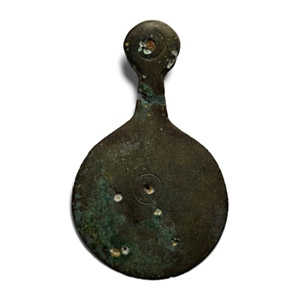
Western Asiatic Bronze Pendant Idol
2nd millennium B.C.Sold for (Inc. bp): £169
Formed as a disc with ring-and-dot to one face, narrow neck, lobe above with pierced lug to reverse. 5.45 grams, 50 mm
UK private collection before 2000. Acquired on the UK art market. Property of a London gentleman. This lot has been cleared against the Art Loss Register database, and is accompanied by an illustrated lot declaration signed by the Head of the Antiquities Department, Dr Raffaele D'Amato. -
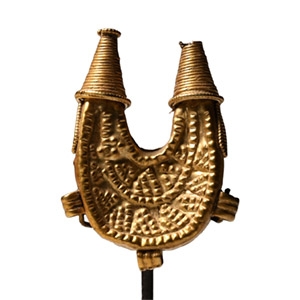
Sarmatian Gold Decorated Earring
9th-early 11th century A.D.Sold for (Inc. bp): £520
Hollow-formed U-shaped body with spiral-wound finial wire cones and granulated collars, repoussé pounced finial with beaded wire lateral loops, ribbed loops to the outer face; complete with custom-made stand. 8.87 grams, 41 mm (20.04 grams total, 68 mm including stand)
Acquired on the London art market, 1990s. Private collection, London. This lot has been cleared against the Art Loss Register database, and is accompanied by an illustrated lot declaration signed by the Head of the Antiquities Department, Dr Raffaele D'Amato. -
.jpg)
Aramaic Lead Magical Text Scroll Fragment
2nd-8th century A.D.Sold for (Inc. bp): £351
The remains of a bifacial magical lead scroll with letters written in a form of Aramaic and Greek, incised on a lead tablet preserved in a sub-rectangular fragment. 8.13 grams, 73 mm
Fine condition.
Acquired 1979-1999. London collection of the late Mr S.M., thence by descent. This lot has been cleared against the Art Loss Register database, and is accompanied by an illustrated lot declaration signed by the Head of the Antiquities Department, Dr Raffaele D'Amato.
