
Loading, please wait...
LOT 1488
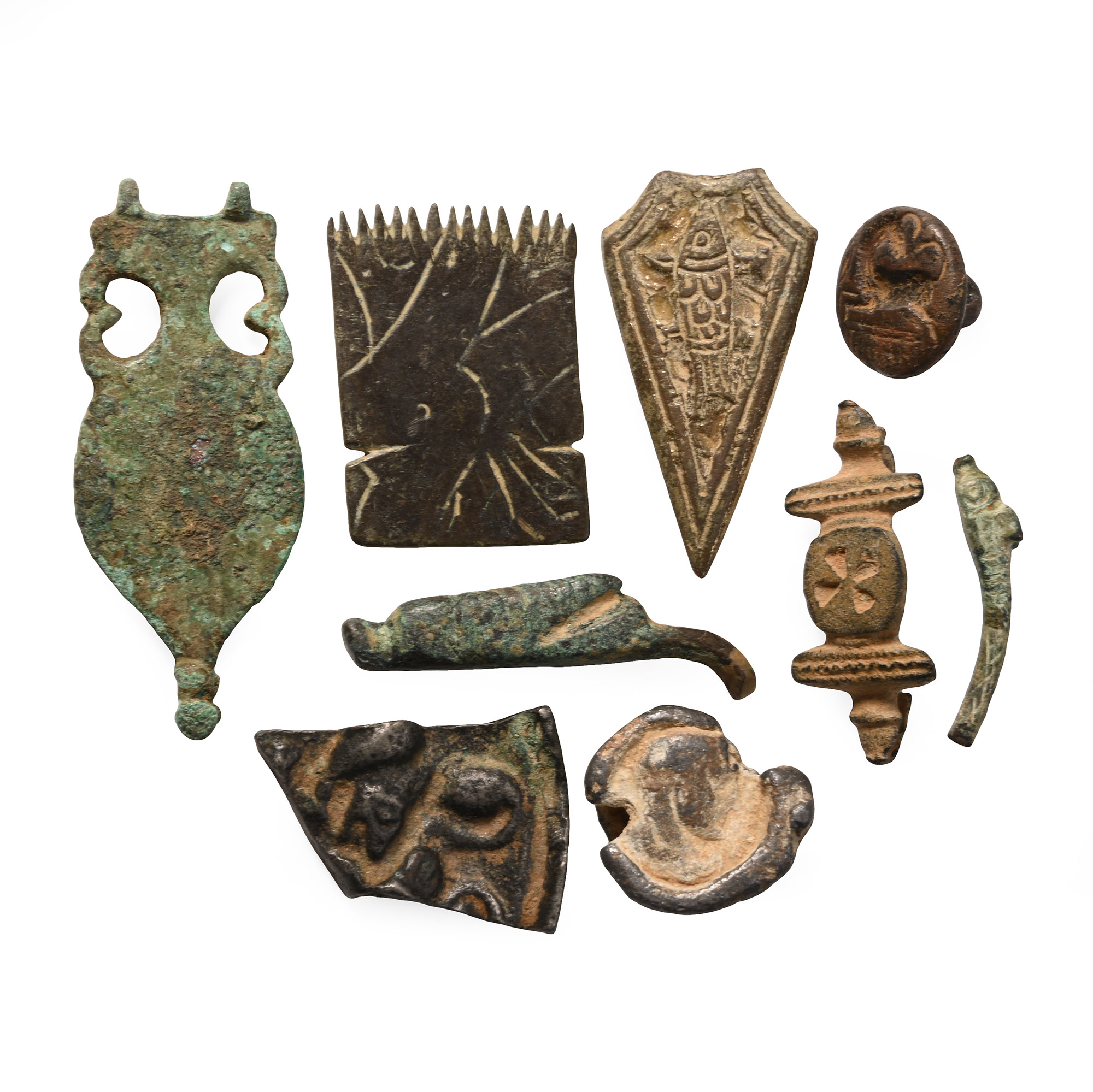
Western Asiatic and Other Bronze Artefact Group
CIRCA 1ST MILLENNIUM A.D. AND LATER
5/8 - 2 in. (76 grams total, 16-52 mm).
Comprising: the body of a bow brooch, a kite-shaped mount with a fish, a beast-head mount or finial, a late Roman military belt strap end of 'amphora' type; a stamp seal with an ibex, and others. [9, No Reserve]
ProvenanceFrom the collection of a gentleman, acquired on the London art market in the 1990s.
LiteratureCf. for the late Roman strap end Feugere, M., Tra Costantino e Teodosio (IV-V secolo d.C.). Osservazioni sui militaria di Aquileia’ in Aquileia Nostra Anno LXXXIII-LXXXIV, 2012-2013, tav.VI., no.90.
FootnotesAmphora strap ends were common in the late Roman army and have been found in great numbers in Roman Britain. They are so-called because their shape resembles an amphora with handles on either side. In reality, they might represent phallic symbols, in keeping with the widespread use of such imagery in the Roman military.
CONDITIONTimeLine Auctions follows a vetting process to ensure the authenticity and legality of all items, reinforcing our commitment to integrity and responsible trading. Each antiquity, antique, and coin lot undergoes thorough examination by a vetting committee of at least ten external specialists, professional trade association members, scientists, and archaeologists: Our Vetting Process
AUCTIONS:
TimeLine is a leading auction house specialising in antiquities, ancient art, collectables, natural history, coins, medals, and books. Our auctions offer museums, collectors, historians, and enthusiasts the opportunity to acquire unique and historically significant pieces.
-
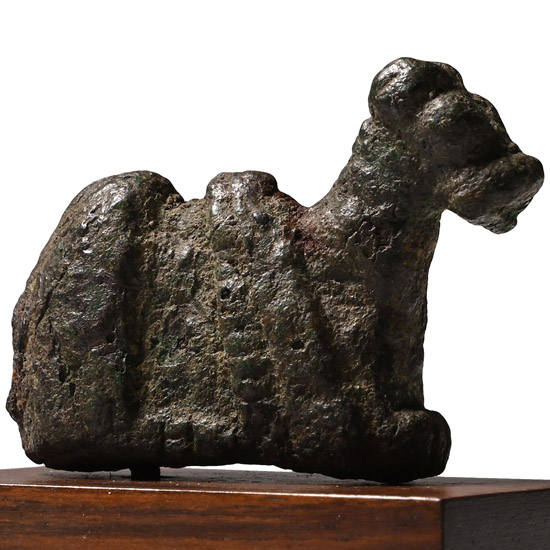
South Arabian Bronze Camel Statuette
Circa 1st century B.C.-1st century A.D.Sold for (Inc. bp): £111
Modelled in the round in a resting position with raised head; mounted on a custom-made display stand. 118 grams total, camel: 50.8 mm long
From the private collection of a European gentleman (1942-2024), formed since the 1970s. -
.jpg)
Sasanian Silver Footed Rib Bowl
6th century A.D.Estimate: £2,500 - 3,500 (+bp*)
Opening Bid: £1,375
Fluted bowl composed of a D-section body and splayed pedestal foot. 146 grams, 13.4 cm
Acquired in the late 1980s-early 1990s. Private collection, London. This lot has been checked against the Interpol Database of stolen works of art and is accompanied by search certificate number no.13284-253353. -
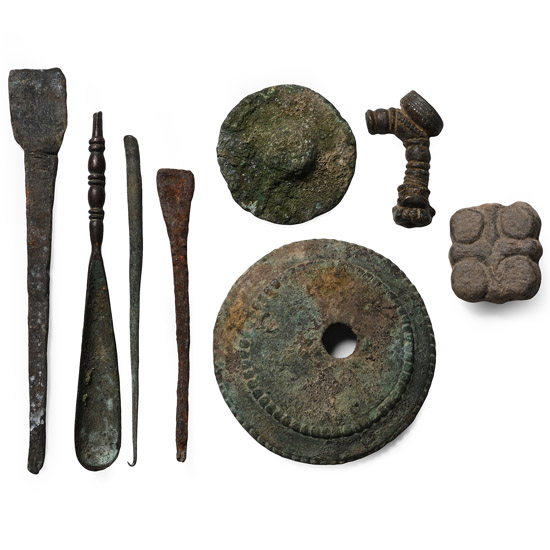
Western Asiatic Bronze Artefact Group
1st millennium A.D. or laterSold for (Inc. bp): £39
A mixed group of artefacts, including a stylus, the bowl of a spoon, a domed mount, and others. 65 grams total, 20.4-70.3 mm
From the private collection of a European gentleman (1942-2024), formed since the 1970s.
