
Loading, please wait...
LOT 0228
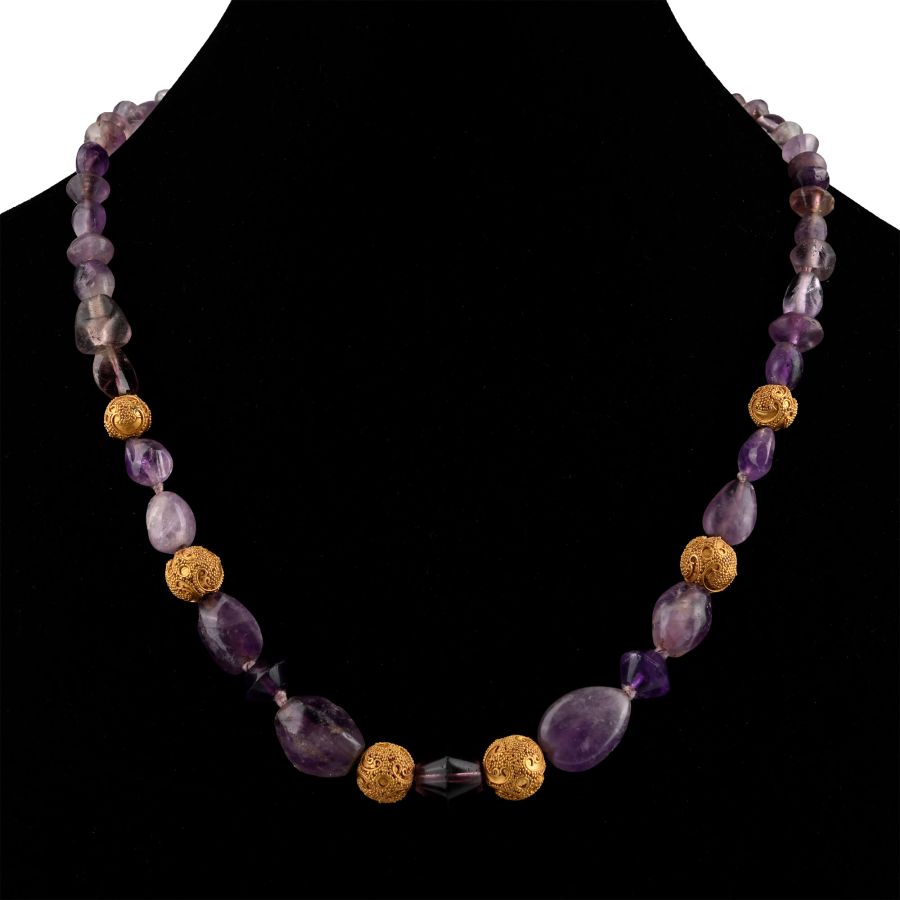
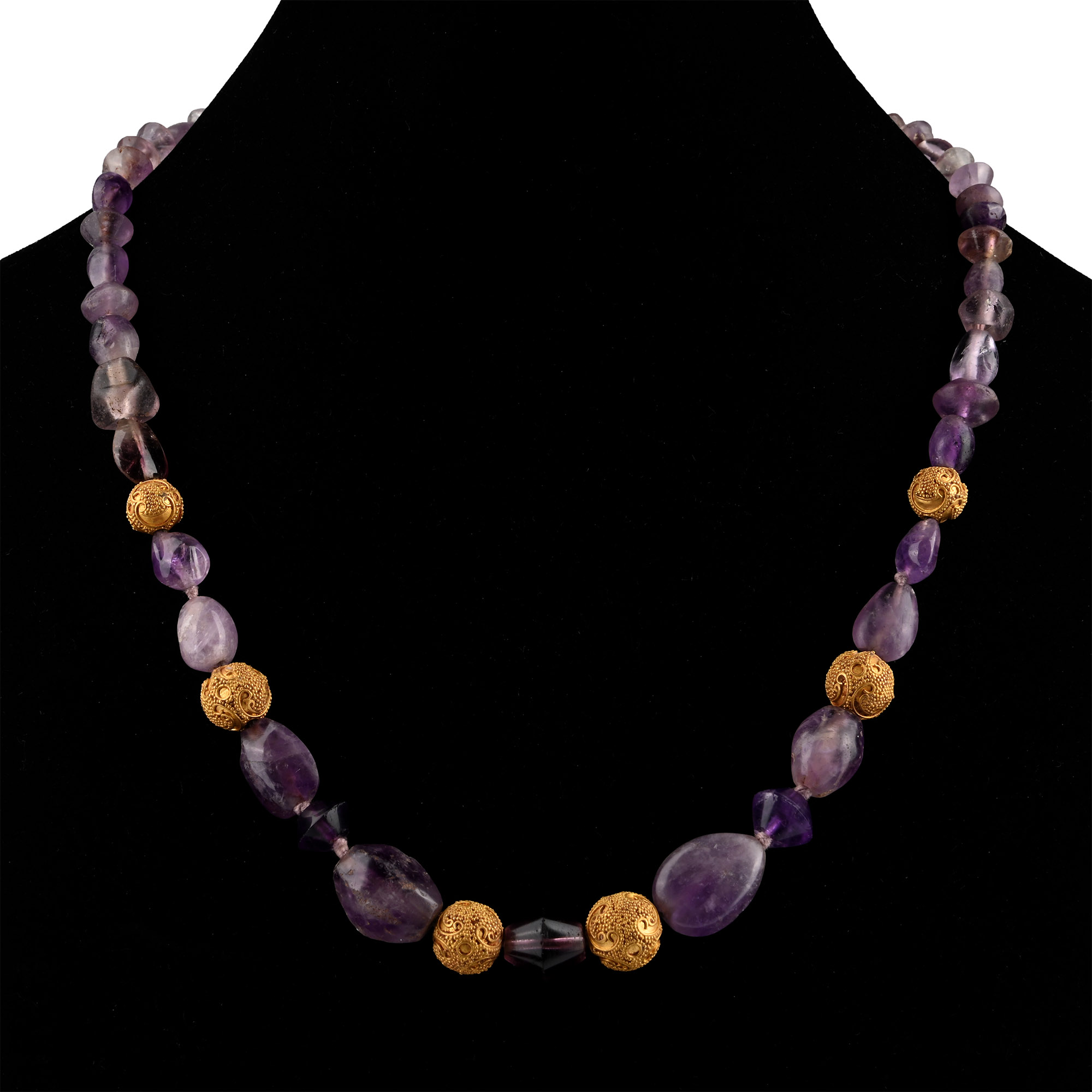
Western Asiatic Amethyst Bead Necklace with Gold Beads
CIRCA 4TH-2ND CENTURY B.C.
20 3/4 in. (69.6 grams, 52.5 cm).
A designer necklace composed of forty amethyst beads of various shapes and six gold spheres, decorated with granulation and spirals, forming opposed pelta patterns; with later openwork clasp.
ProvenanceAcquired on European art market, 1990s.
Private collection of Mr K.A., France.
with Kallos Gallery, London.
This lot has been checked against the Interpol Database of stolen works of art and is accompanied by a search certificate number no.13012-246749.
Cf. Marshall, F.H., Catalogue of the Jewellery, Greek, Etruscan and Roman, in the Department of Antiquities, British Museum, London, 1911.no.2044, for a necklace of similar gold spheres.
FootnotesAmethyst was widely used in Graeco-Roman Egypt. We know that the amethyst mines of Abu Diyeiba, near Semna, were in use from the time of Ptolemy VI through to the Roman era. Pliny says that Indian amethysts were the best, but he also refers to amethysts from Egypt. The Egyptian amethysts are typically flawed and of a pale, almost pink, hue. They were seldom set in gold and were most usually made into beads. Ptolemaic and Roman inscriptions and artefacts have been found at amethyst mines in Egypt’s eastern deserts.
CONDITIONTimeLine Auctions follows a vetting process to ensure the authenticity and legality of all items, reinforcing our commitment to integrity and responsible trading. Each antiquity, antique, and coin lot undergoes thorough examination by a vetting committee of at least ten external specialists, professional trade association members, scientists, and archaeologists: Our Vetting Process
AUCTIONS:
TimeLine is a leading auction house specialising in antiquities, ancient art, collectables, natural history, coins, medals, and books. Our auctions offer museums, collectors, historians, and enthusiasts the opportunity to acquire unique and historically significant pieces.
LOT 0228
Western Asiatic Amethyst Bead Necklace with Gold Beads
Estimate £2,500 - 3,500€2,900 - 4,060 (for guidance only)$3,380 - 4,730 (for guidance only)
-
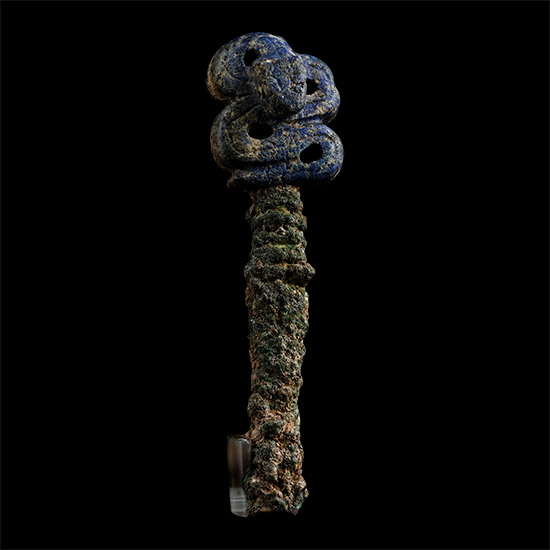
Bactrian Lapis Lazuli Snake Pin-Head and Encrusted Bead
3rd millennium B.C.Sold for (Inc. bp): £650
Comprising: a lapis lazuli bead with a high-relief figure of a snake in sinuous coils, head poised to strike, with eyes formed as turquoise annular beads; a bronze columnar handle; a tabular banded agate bead; all three bound together by the bronze corrosion products. 50.6 grams, 10 cm
with Gallery Rosen Ancient Art, Tel Aviv, 1968. Ex London, UK gallery, 1971-early 2000s. Accompanied by a copy of the original 1968 invoice. -
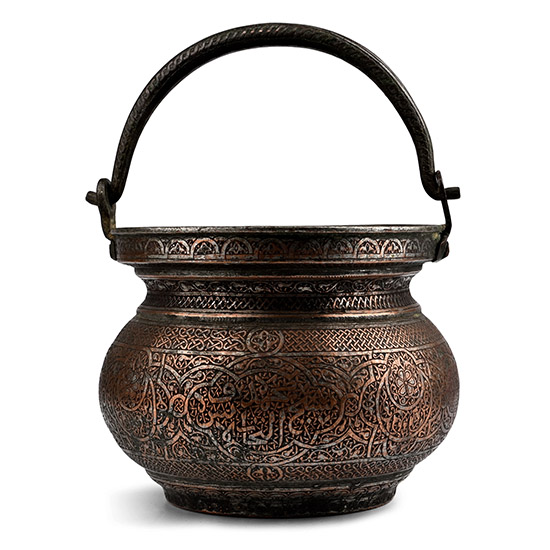
Western Asiatic Mamluk Style Copper Handled Calligraphic Vessel
20th century A.D.Sold for (Inc. bp): £234
Squat and with a low foot, broad carinated mouth; raised rim with brackets supporting a strap handle; dense knotwork and arcaded borders, rosettes and tendrils. 945 grams, 18 cm wide
Private collection, UK. -
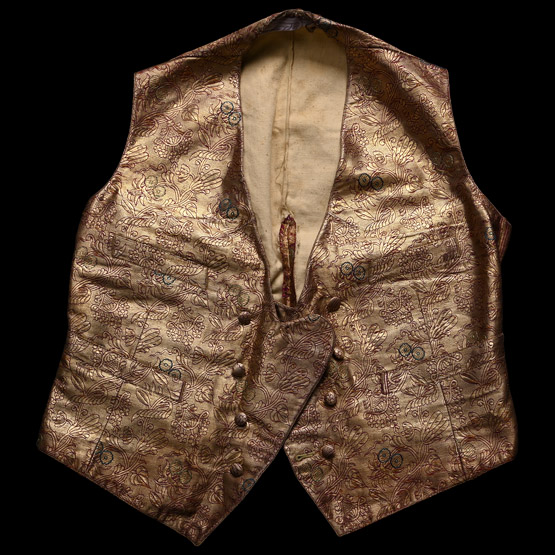
Uzbek Waistcoat with Floral Design
20th century A.D.Sold for (Inc. bp): £98
Sleeveless waistcoat with four external pockets, two vertical rows of covered buttons; some flowers outlined in blue or green; half-belt to rear. 326 grams, 54 cm high
Private collection, UK.
