
Loading, please wait...
LOT 0813
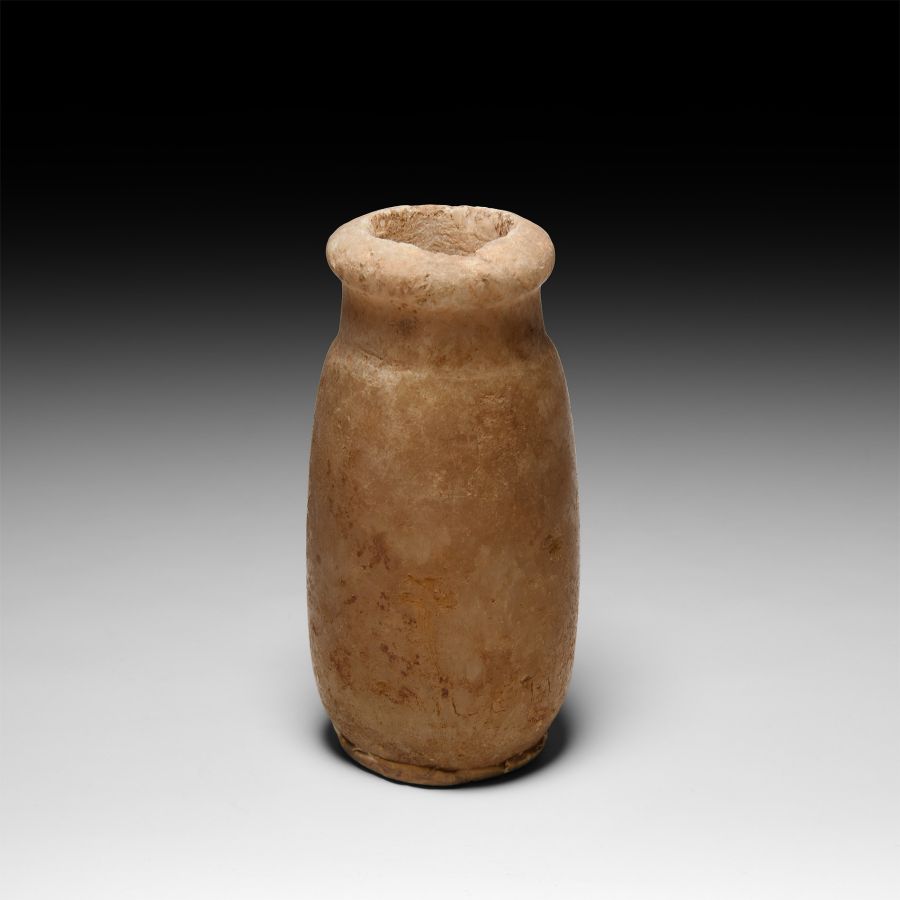
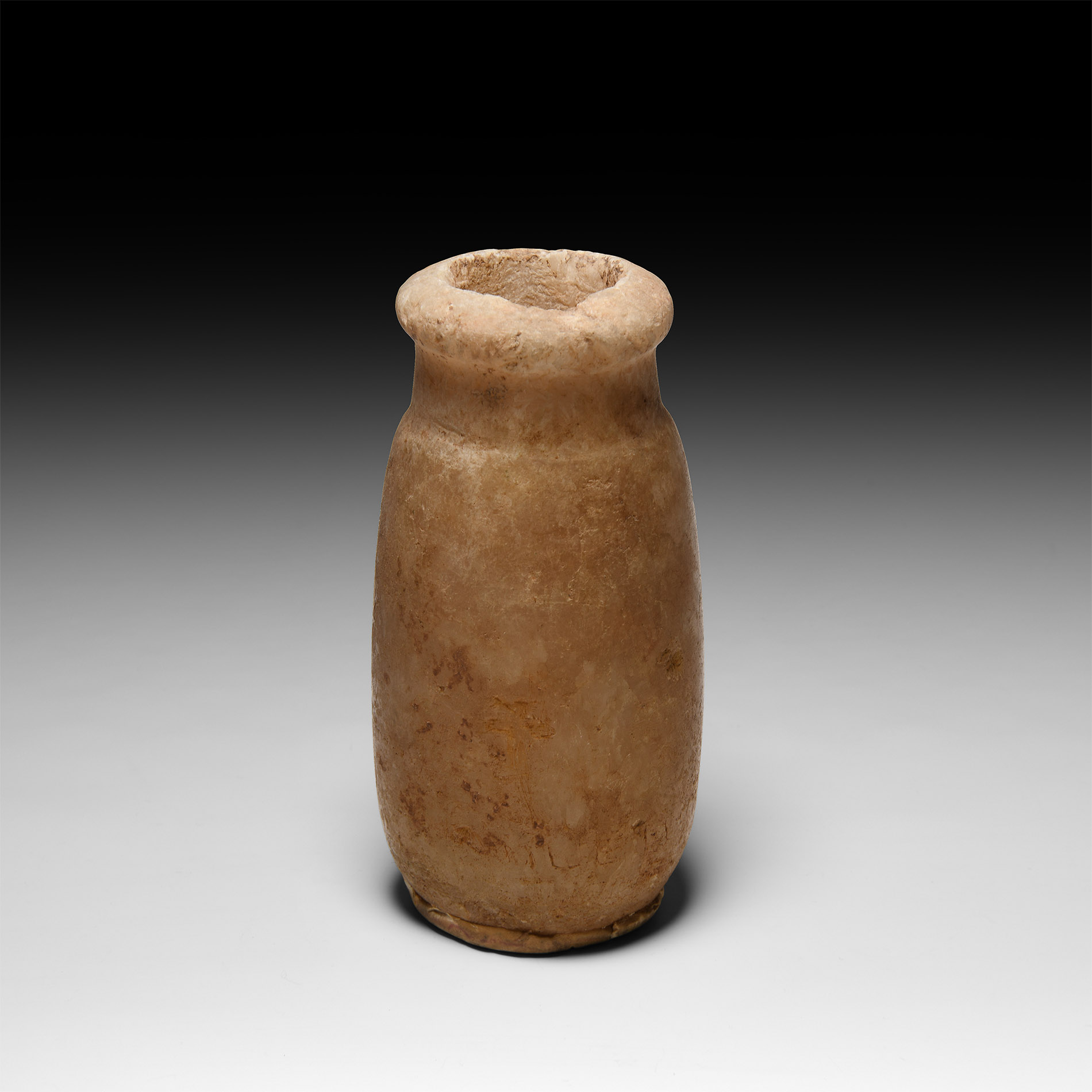
Western Asiatic Alabaster Jar
1ST MILLENNIUM B.C. AND LATER
5 1/8 in. (647 grams, 13 cm high).
A carved alabaster jar with broad neck and rounded rim; two later incised low-relief crosses to the lower body, potentially medieval in date; later wax base. [No Reserve]
ProvenanceAcquired before 1965.
From a deceased estate, Herefordshire, UK.
TimeLine Auctions follows a vetting process to ensure the authenticity and legality of all items, reinforcing our commitment to integrity and responsible trading. Each antiquity, antique, and coin lot undergoes thorough examination by a vetting committee of at least ten external specialists, professional trade association members, scientists, and archaeologists: Our Vetting Process
AUCTIONS:
TimeLine is a leading auction house specialising in antiquities, ancient art, collectables, natural history, coins, medals, and books. Our auctions offer museums, collectors, historians, and enthusiasts the opportunity to acquire unique and historically significant pieces.
-
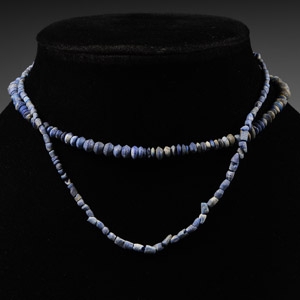
Bactrian Lapis Lazuli Bead Necklaces
Circa 1st millennium B.C. or laterSold for (Inc. bp): £52
A pair of lapis lazuli necklaces: one composed mainly of squat, biconical beads, the other of annular, biconical and various other types. 13.9 grams total, 47-55 cm long
Acquired 1980-2015. Ex Abelita family collection. -
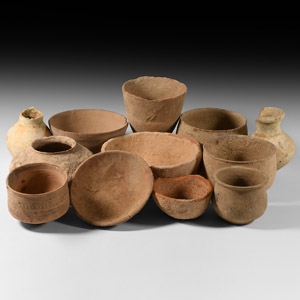
Western Asiatic Ceramic Vessel Collection
1st millennium B.C.Sold for (Inc. bp): £234
A mixed group of ceramic vessels including bowls, jars and cups, including examples painted with geometric motifs. 2.5 kg total, 7.9-15 cm
Acquired 1980-2015. Ex Abelita family collection. -
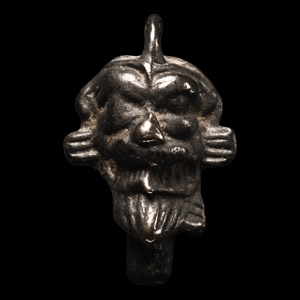
Western Asiatic Silver Pazuzu Head Amulet
Circa 8th-6th century B.C.Sold for (Inc. bp): £364
A silver Pazuzu head amulet with grotesque facial features and integral suspension loop. 4.33 grams, 20 mm
Acquired before the early 1970s. Ex London, UK, gallery. Property of a London gentleman.
