
Loading, please wait...
LOT 0287
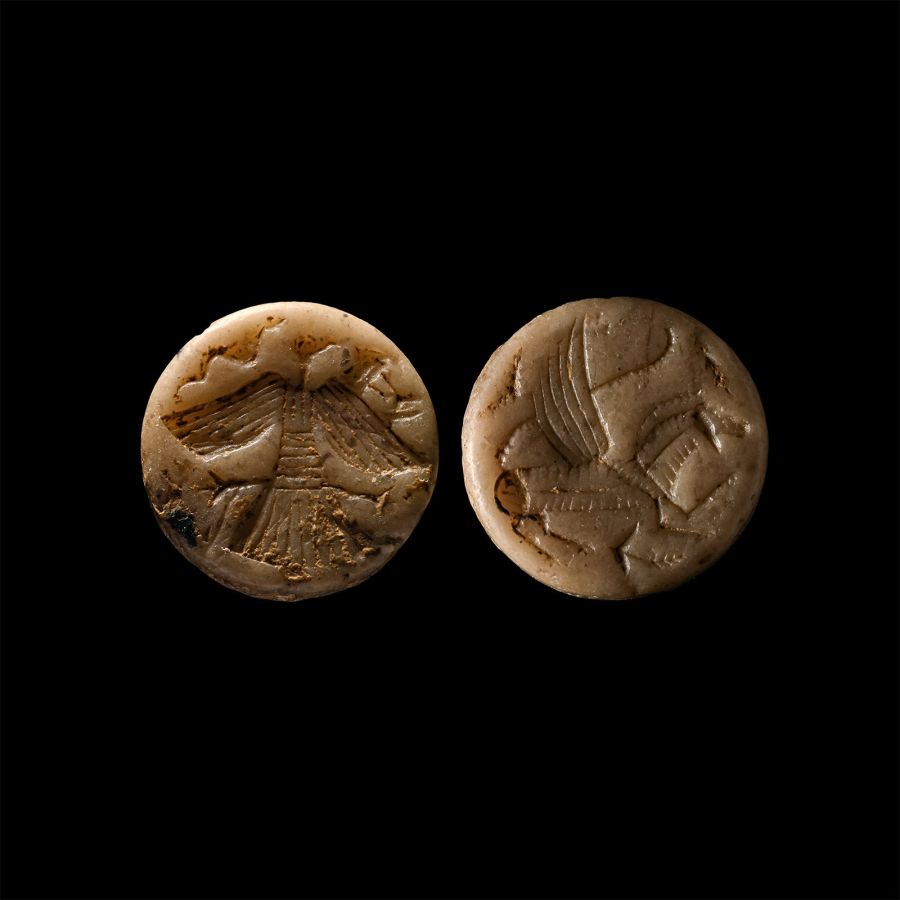
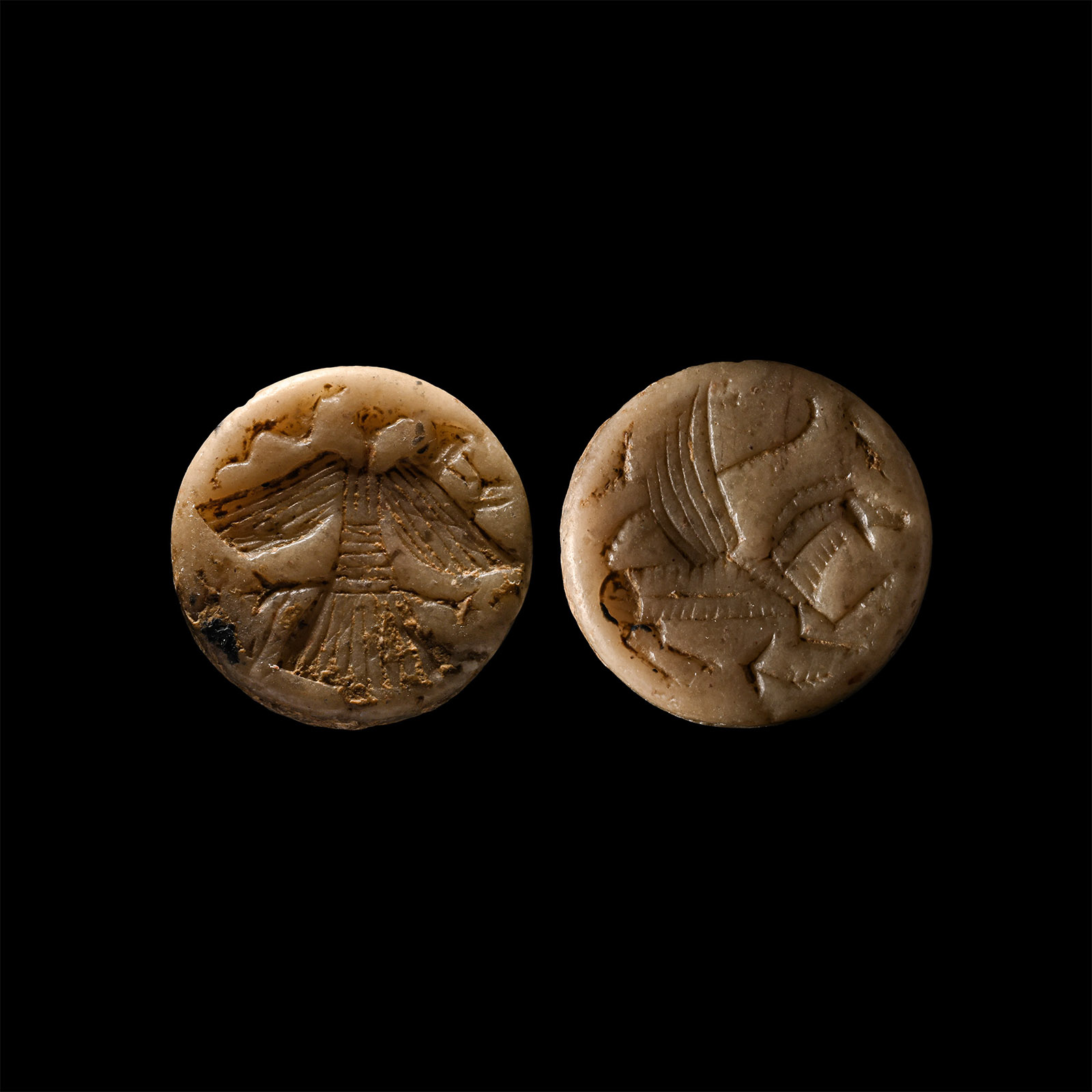
Western Asiatic Alabaster Bifacial Stamp Seal with Vulture, Snake and Winged Lion
SUSA II, CIRCA 3000 B.C.
1 1/8 in. (11.5 grams, 29 mm wide).
Discoid with transverse piercing; one side with incuse profile image of a winged quadruped; the other side with a bird in flight flanked by a fish and serpent; supplied with a museum-quality impression of each face.
ProvenanceEx S Collection, London, UK, 1970-1990s.
CONDITIONTimeLine Auctions follows a vetting process to ensure the authenticity and legality of all items, reinforcing our commitment to integrity and responsible trading. Each antiquity, antique, and coin lot undergoes thorough examination by a vetting committee of at least ten external specialists, professional trade association members, scientists, and archaeologists: Our Vetting Process
AUCTIONS:
TimeLine is a leading auction house specialising in antiquities, ancient art, collectables, natural history, coins, medals, and books. Our auctions offer museums, collectors, historians, and enthusiasts the opportunity to acquire unique and historically significant pieces.
LOT 0287
Western Asiatic Alabaster Bifacial Stamp Seal with Vulture, Snake and Winged Lion
Sold for (Inc. bp): £572
-
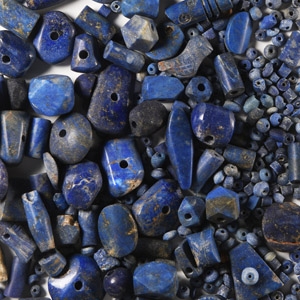
Western Asiatic Lapis Lazuli Necklace Bead Collection
20th century A.D. and earlierSold for (Inc. bp): £39
Comprising a large quantity of beads including oblate seed beads, large tubular, facetted and discoid beads, and one shaped as a bird. 89 grams total, 2-21 mm
UK gallery, early 2000s. -
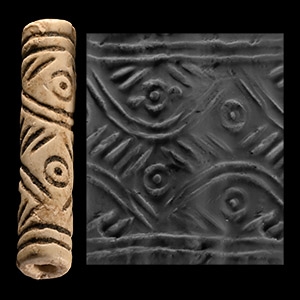
Western Asiatic Stone Geometric Cylinder Seal
Circa 3rd millennium B.C.Sold for (Inc. bp): £130
With geometric pattern of concentric lines and pellets. 8.12 grams, 52 mm
Acquired 1970s-1996. Property of a North American collector, collection no.073. London collection, 2016. -
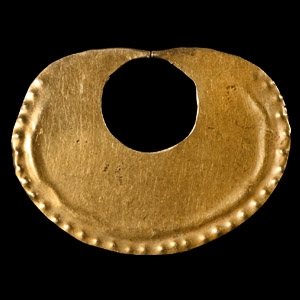
Large Western Asiatic Gold Lunar Pendant
Circa 2nd-1st millennium B.C.Sold for (Inc. bp): £546
Shaped as a crescent moon with pearled border. 5.08 grams, 45 mm
Acquired 1980-2015. Ex Abelita family collection.
The gold lunula was a characteristic type of necklace, collar, or crescent-shaped pendant of the late Neolithic, Chalcolithic, and most often early Bronze Age. The crescent appears in various forms in the material culture of the southern Levant. It also appears in Mesopotamian and Egyptian iconography. It is most frequently associated with the crescent moon and its related deity. Such pendants were worn at the neck, in contact with the body, as protective amulets.
