
Loading, please wait...
LOT 1855
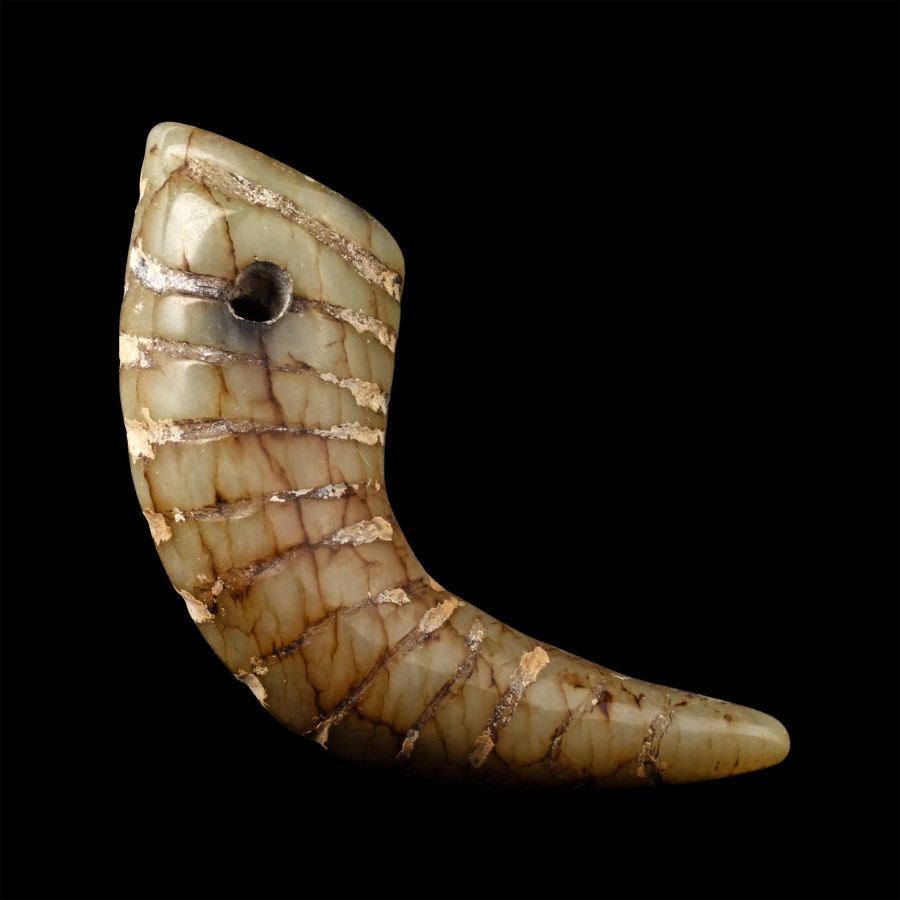
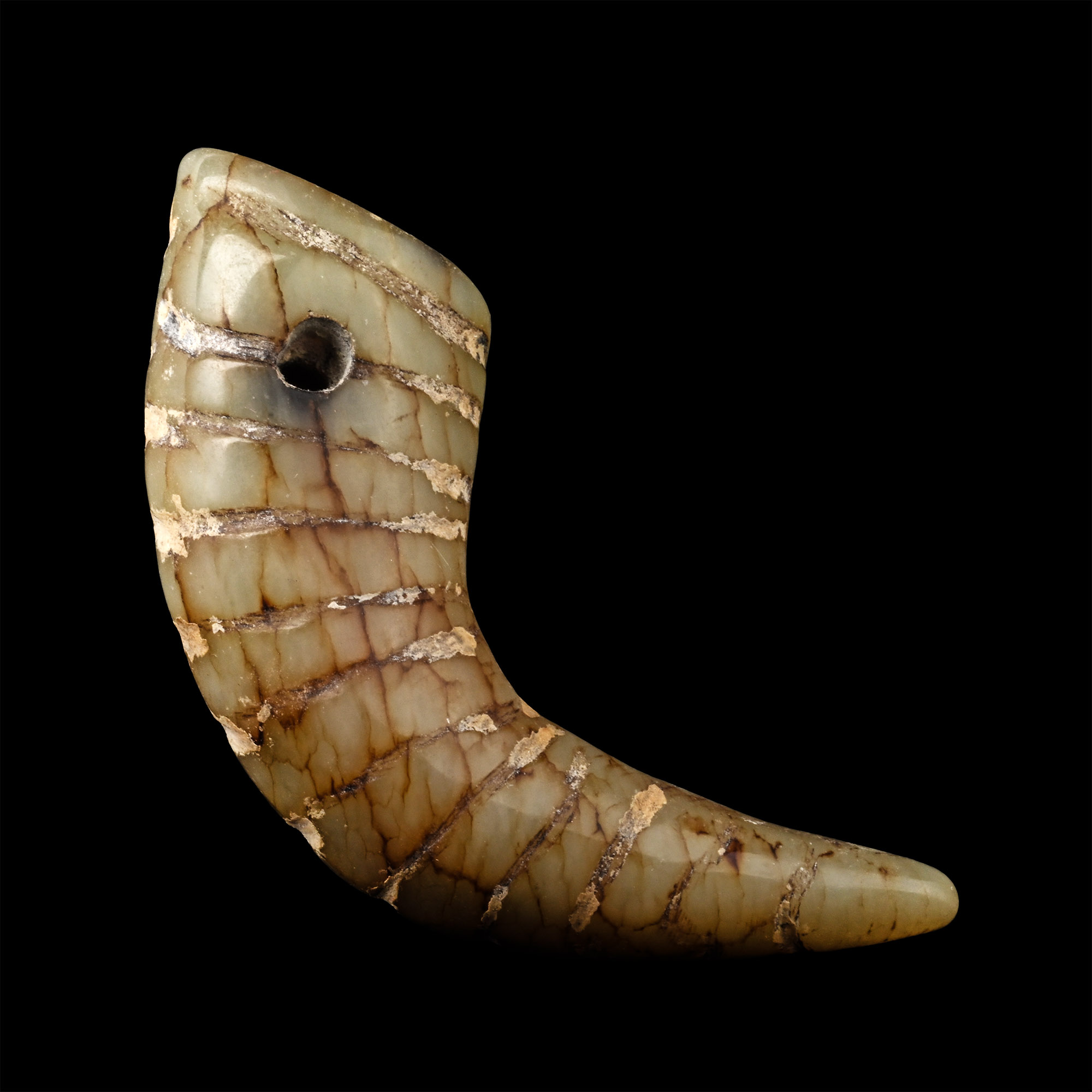
Western Asiatic Agate Horn Amulet
1ST MILLENNIUM B.C. OR LATER
2 1/8 in. (16.9 grams, 54 mm).
Carved in the round with a segmented body and vesica-shaped motif to the flat upper edge. [No Reserve]
ProvenanceFrom the private collection of a European gentleman (1942-2024), formed since the 1970s.
CONDITIONTimeLine Auctions follows a vetting process to ensure the authenticity and legality of all items, reinforcing our commitment to integrity and responsible trading. Each antiquity, antique, and coin lot undergoes thorough examination by a vetting committee of at least ten external specialists, professional trade association members, scientists, and archaeologists: Our Vetting Process
AUCTIONS:
TimeLine is a leading auction house specialising in antiquities, ancient art, collectables, natural history, coins, medals, and books. Our auctions offer museums, collectors, historians, and enthusiasts the opportunity to acquire unique and historically significant pieces.
LOT 1855
Western Asiatic Agate Horn Amulet
Estimate £40 - 60€46 - 70 (for guidance only)$54 - 81 (for guidance only)
Opening Bid
£5 (EUR 6; USD 7) +BP*
-
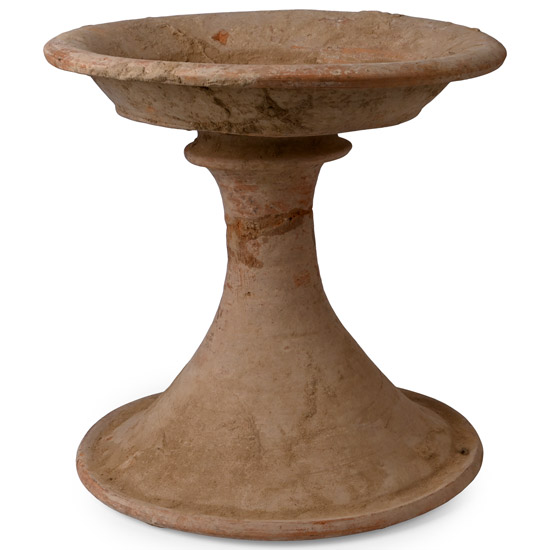
Large Bactrian Terracotta Chalice
1st millennium B.C.Estimate: £100 - 140 (+bp*)
Opening Bid: £50
Comprising a broad shallow bowl with carination, supported by a sturdy shank on a conical base. 6.15 kg. 32 cm wide
From a London, UK, collection, 1990s. -
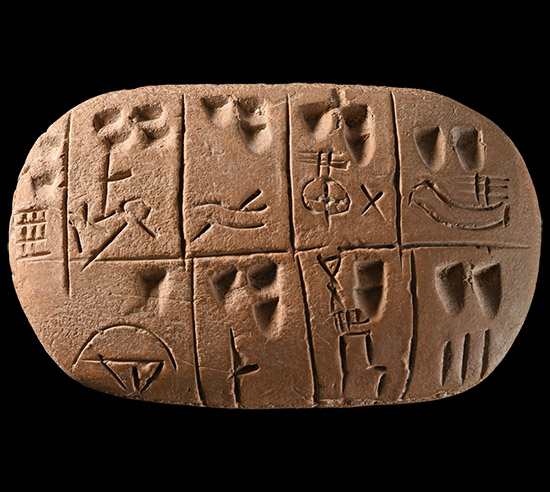
Sumerian Proto-Cuneiform Tablet with Symbols
Jemdet Nasr Period, Uruk III, 3200-3000 B.C.Estimate: £4,000 - 6,000 (+bp*)
Opening Bid: £2,000
Pillow-shaped with incised grid to the broad faces, dense cuneiform pictographic text in the columns with impressed pellet numerals. 45.6 grams, 63 mm
Percy Barnevik, Sweden. Private collection, UK, acquired June 2000. with Sam Fogg, London. Acquired by the current owner from the above, 2015. Accompanied by a copy of Professor Lambert’s notes and two-page cataloguing report. This lot has been checked against the Interpol Database of stolen works of art and is accompanied by search certificate no.13429-259930.
Various collections of cuneiform tablets form a corpus of texts mainly of administrative nature, from the Uruk III and Ur III periods. The proto-cuneiform, as a system of proto-writing, emerged in Mesopotamia ca.3500-3200 BC, during the Uruk period. -
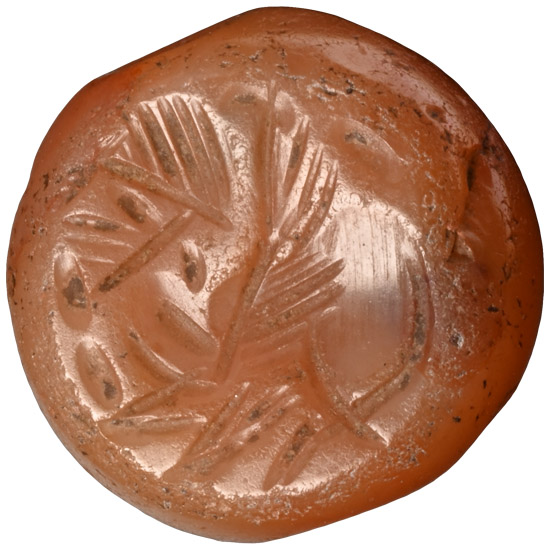
Sasanian Carnelian Stamp Seal with Gryphon
3rd-7th century A.D.Estimate: £30 - 40 (+bp*)
Opening Bid: £5
Plano-convex type with profile crouching gryphon, billets to the border; supplied with a museum-quality impression. 2.45 grams, 13 mm
From the private collection of a European gentleman (1942-2024), formed since the 1970s.
