
Loading, please wait...
LOT 1217
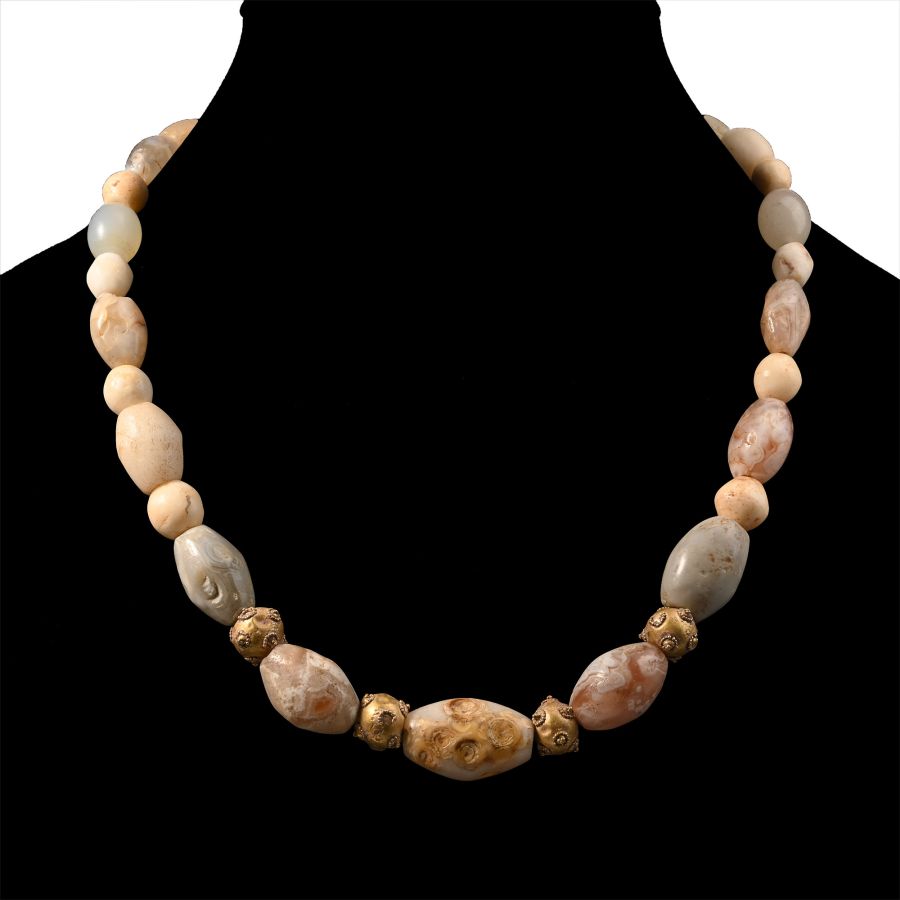
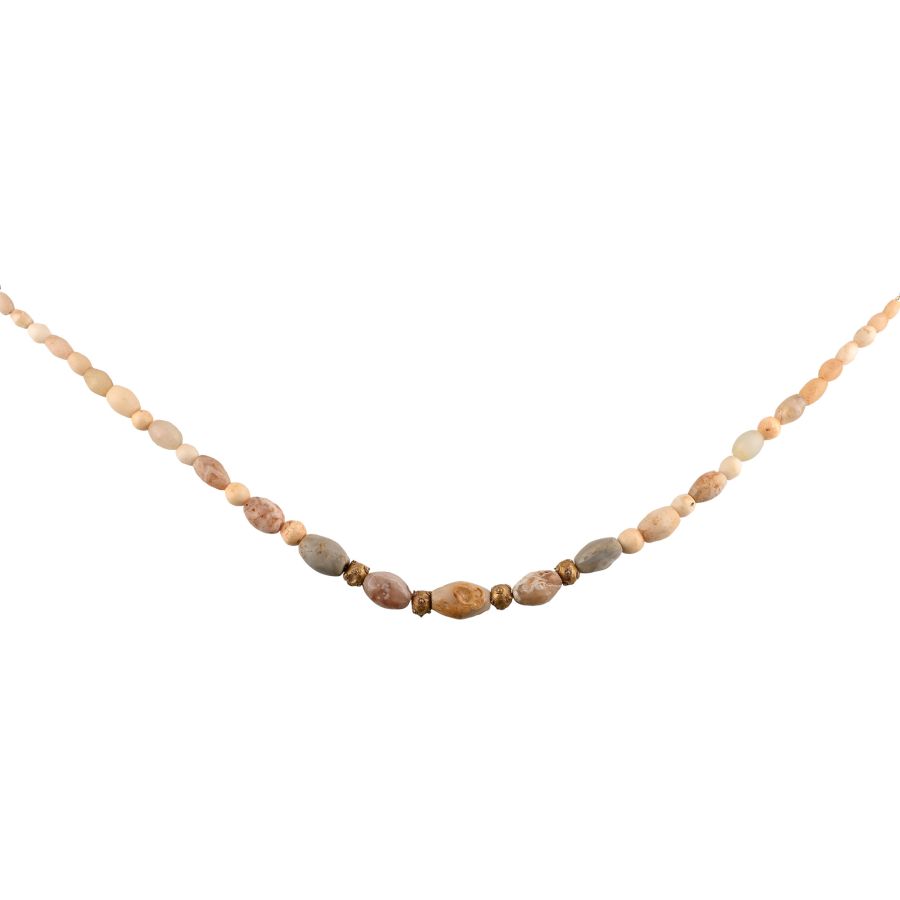
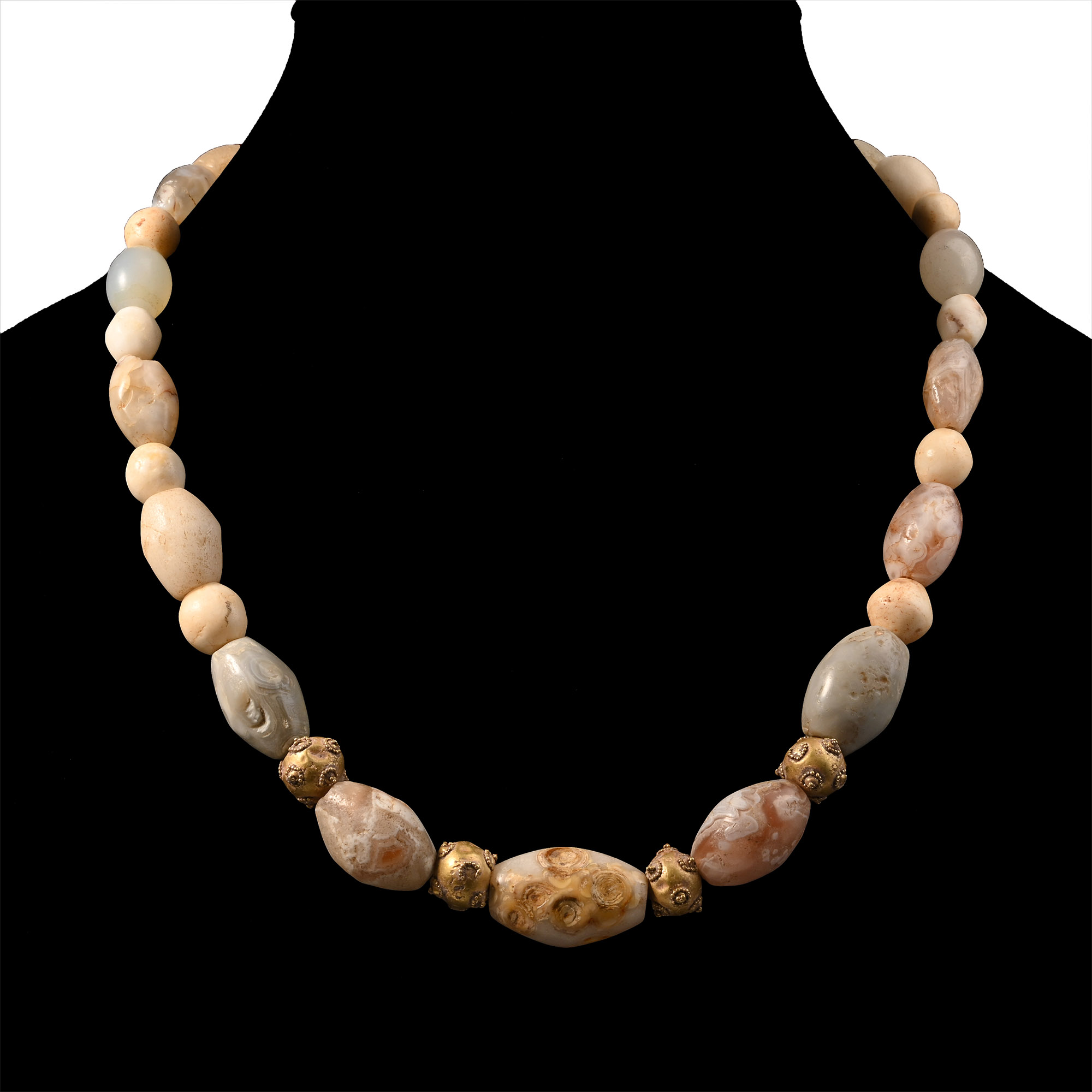
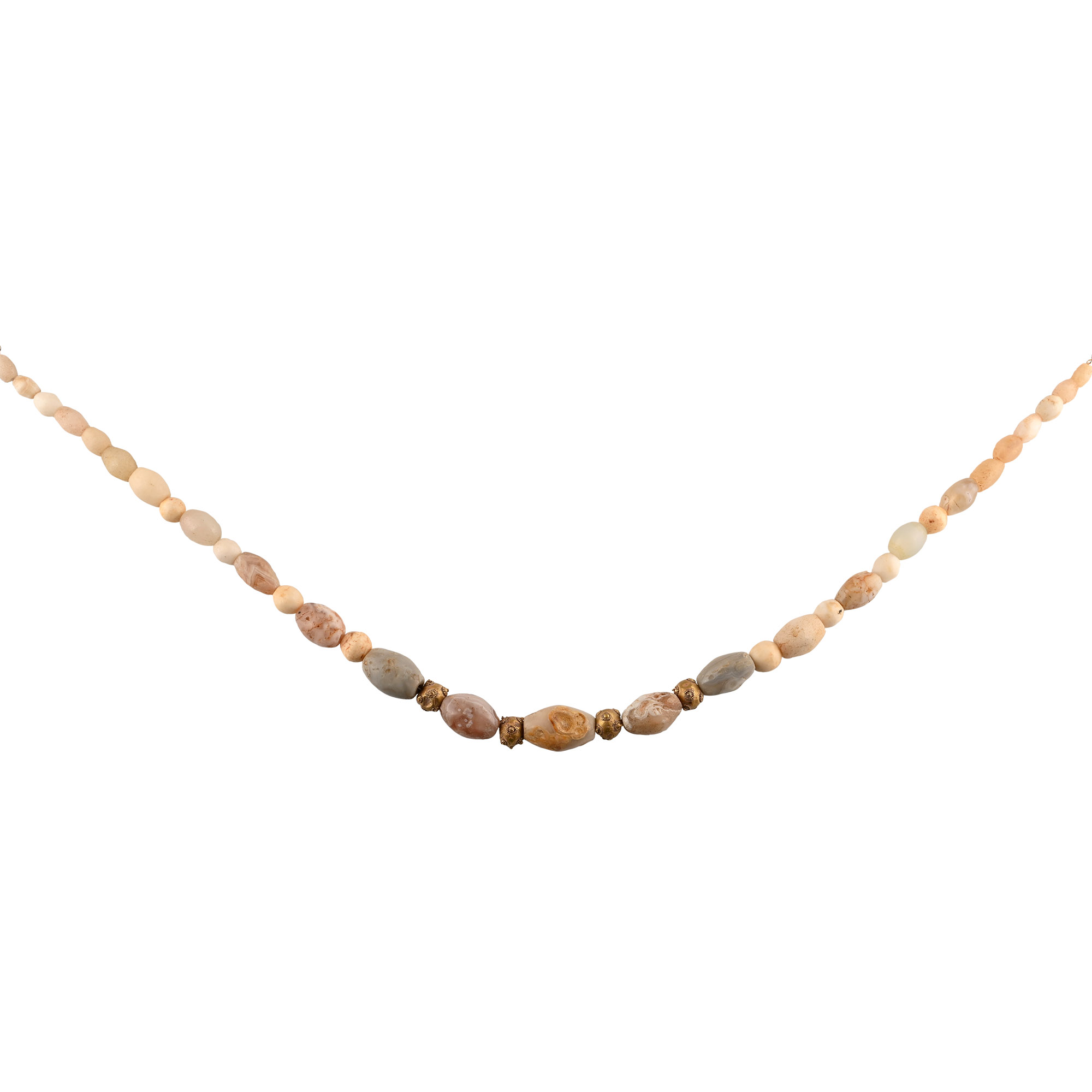
Western Asiatic Agate and Gold Bead Necklace
1ST MILLENNIUM B.C. AND LATER
20 5/8 in. (96.6 grams, 52.5 cm).
Restrung group of oval and other agate beads with interstitial spherical gold beads with granule clusters.
ProvenanceFrom the collection of a late Japanese gentleman, 1970s onwards.
CONDITIONTimeLine Auctions follows a vetting process to ensure the authenticity and legality of all items, reinforcing our commitment to integrity and responsible trading. Each antiquity, antique, and coin lot undergoes thorough examination by a vetting committee of at least ten external specialists, professional trade association members, scientists, and archaeologists: Our Vetting Process
AUCTIONS:
TimeLine is a leading auction house specialising in antiquities, ancient art, collectables, natural history, coins, medals, and books. Our auctions offer museums, collectors, historians, and enthusiasts the opportunity to acquire unique and historically significant pieces.
-
.jpg)
Sumerian Cylinder Seal with Fish
3rd millennium B.C.Sold for (Inc. bp): £182
With geometric 'stylised fish' motif; supplied with a museum-quality impression. 2.49 grams, 14.09 mm
Acquired in the 1996. Private collection, Switzerland, thence by descent. Private collection, since the late 1990s. -
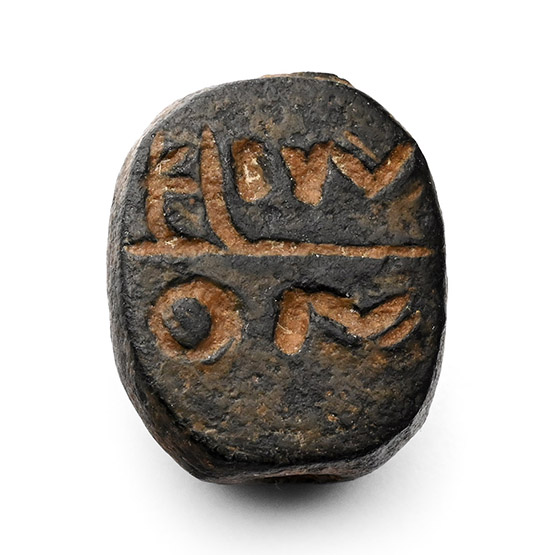
Western Asiatic Bronze Scaraboid Seal with Aramaic Inscription
1st millennium B.C.Estimate: £450 - 650 (+bp*)
Opening Bid: £235
Scaraboid bead with incised legend in two lines to the underside. 3.37 grams, 11 mm
From the collection of a gentleman, acquired on the London art market in the 1990s. -
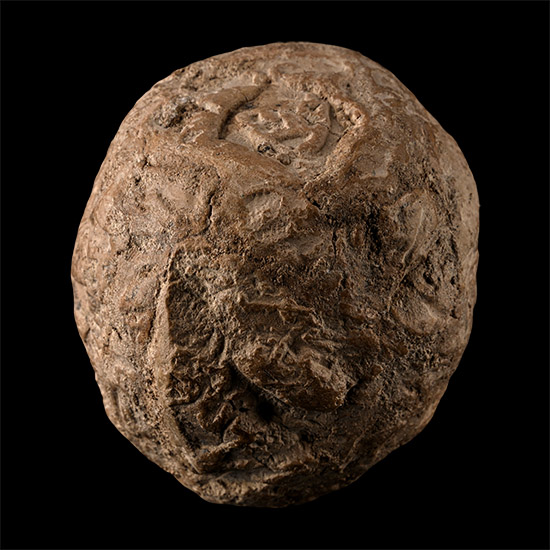
Sumerian Terracotta Bulla
4th millennium B.C.Sold for (Inc. bp): £468
A bulla with oval stamped impression of two animals. 147 grams, 60 mm
Specialised collection of cuneiform texts, the property of a London gentleman and housed in London before 1988. Thence by descent to family members. Examined by Professor Wilfrid George Lambert FBA (1926-2011), historian, archaeologist, and specialist in Assyriology and Near Eastern archaeology, in the late 1980s and early 1990s. The collection is exceptional for the variety of types, including some very rare and well preserved examples. Accompanied by a copy of a previous catalogue page.
Small globular and hollowed clay balls are defined as 'bulla'. They are also known as ‘bulla-envelopes', some of which are plain and some displaying epigraphic, zoomorphic and/or figural decoration, impressed by either cylinder or stamp seals. Bulla first emerged in Mesopotamia and their earliest occurrence can be traced to circa 8000 B.C. Most know decorated bullae come from the Uruk area and offer an insight into its culture. This bulla represents a religious scene, indicated by the combination of the pyramid-shaped byre and the 'sacred herd', which are seen on the early Uruk seals. The symbol of the Mother-Goddess, presented in conjunction with the representations of sheep herd and byre, gave such imagery symbolic significance. The impression with two sheep depicted under the byre, might have been impressed by a stamp seal of the early Uruk period.
