
Loading, please wait...
LOT 1334
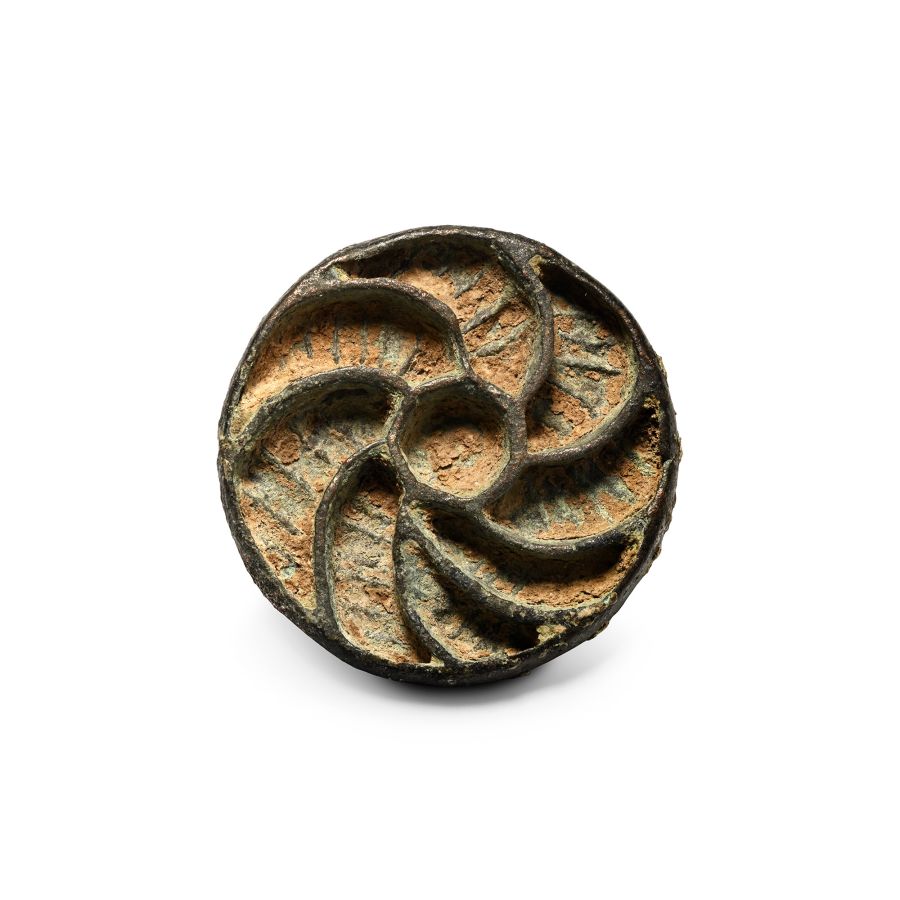
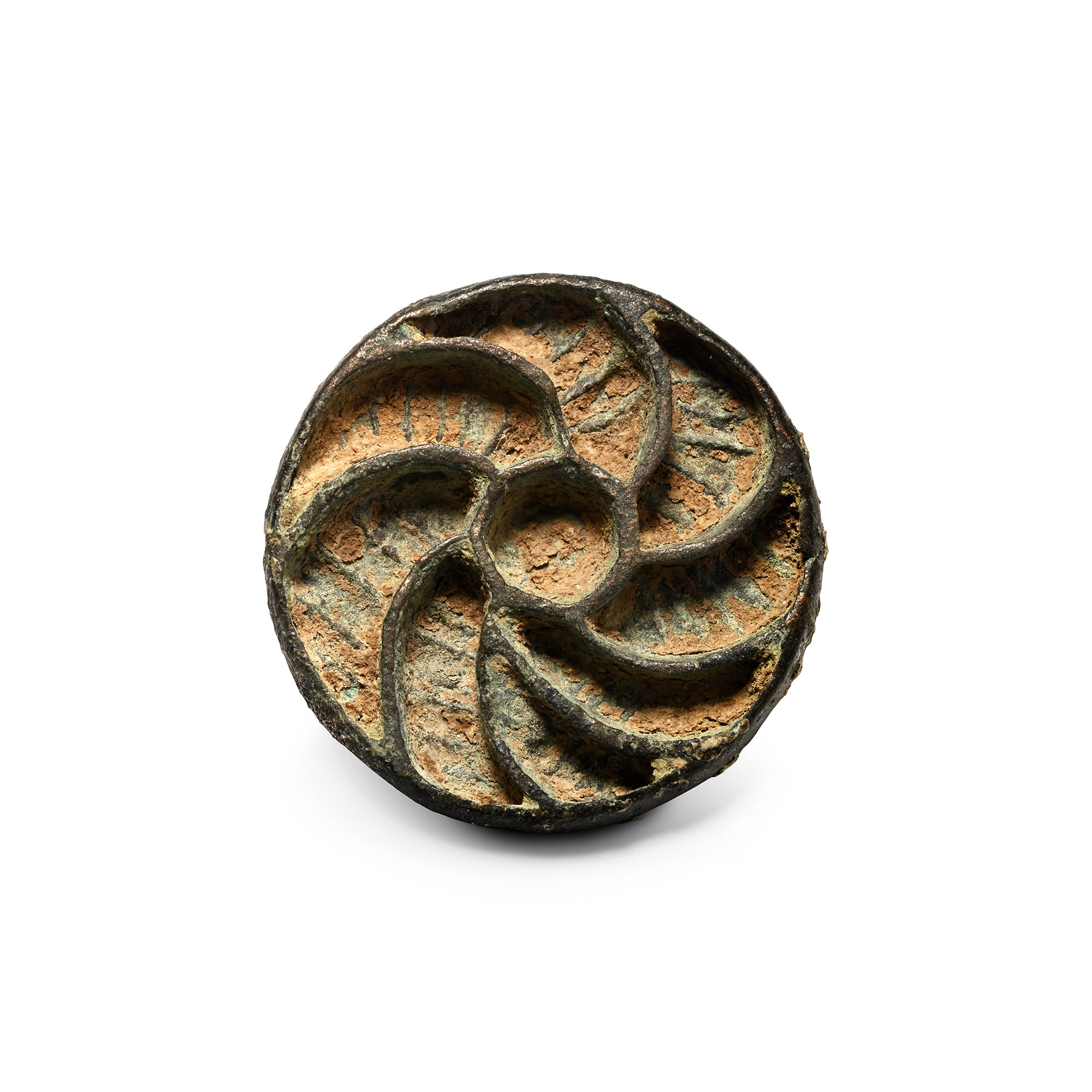
West Central Asian Bronze Stamp Seal with Sun-Whorl
CIRCA 2300-2000 B.C.
1 1/2 in. (24.5 grams, 39 mm).
Discoid stamp seal with segmented face; accompanied by an old scholarly note, typed and signed by W.G. Lambert, late Professor of Assyriology, University of Birmingham, 1970-1993, which states: 'Stamp Seal of Bronze. 39x39x12 mm. This is round with flat compartmented face and flat back on which is mounted a broad handle of inverted U-shape. The design consists of a central circle from which eight curving bands spread to the edge, creating a whorl, the bands being hatched. This comes from west central Asia and dates to c. 2300-2000 B.C. It is in very good condition and the hatching on the base of the compartments is unusual.'
ProvenanceAcquired in the late 1980s-early 1990s.
Ex property of a West London businessman.
Academically researched and catalogued by the late Professor Lambert in the early 1990s.
TimeLine Auctions follows a vetting process to ensure the authenticity and legality of all items, reinforcing our commitment to integrity and responsible trading. Each antiquity, antique, and coin lot undergoes thorough examination by a vetting committee of at least ten external specialists, professional trade association members, scientists, and archaeologists: Our Vetting Process
AUCTIONS:
TimeLine is a leading auction house specialising in antiquities, ancient art, collectables, natural history, coins, medals, and books. Our auctions offer museums, collectors, historians, and enthusiasts the opportunity to acquire unique and historically significant pieces.
-
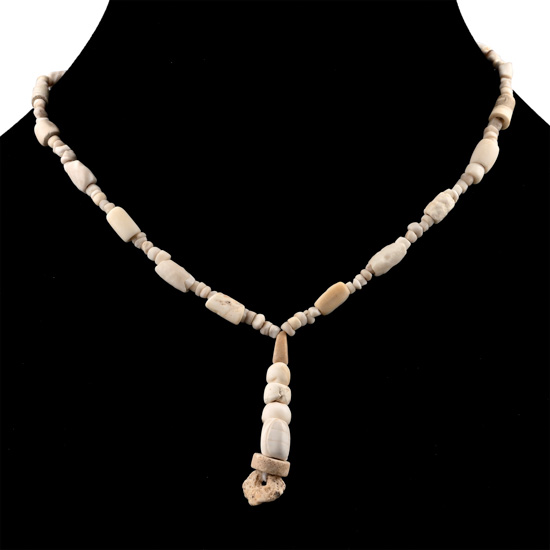
Western Asiatic Pale Stone Bead Necklace String
1st millennium B.C. and laterSold for (Inc. bp): £26
Composed mainly of annular beads interspersed with barrel-shaped beads, restrung to a Y-shape. 12.27 grams, 30.6 cm
From London, UK, gallery collection, 1990s. -
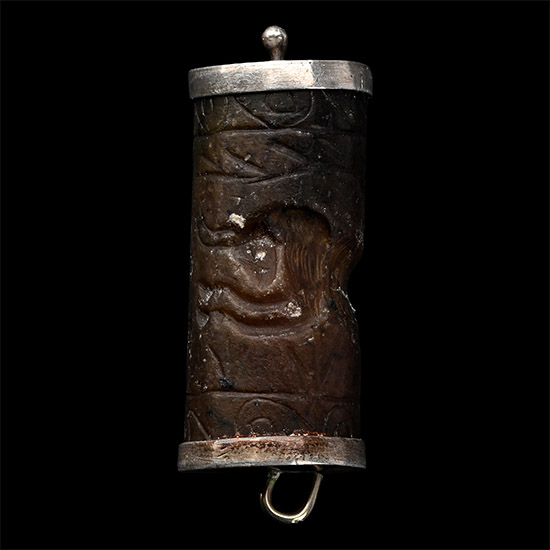
Early Achaemenid Stone Cylinder Seal with Later Silver Casing
600-500 B.C. or laterSold for (Inc. bp): £468
With incuse frieze depicting a leaping bull between tendrils, wave pattern to borders, set into a later silver casing with pendant loop. 19.79 grams, 43 mm
Acquired on the USA art market. Private collection, England. -
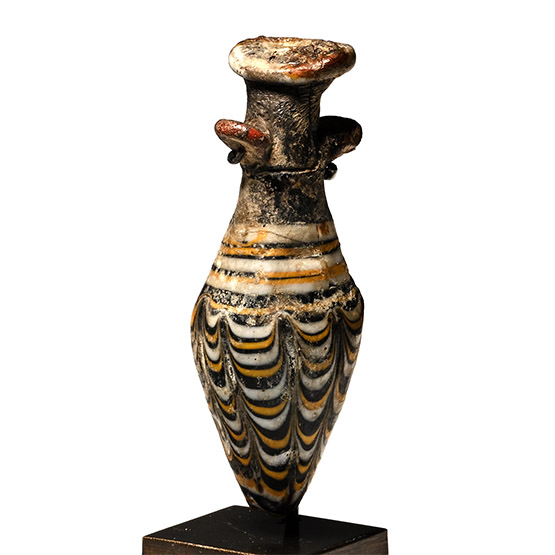
Achaemenid Miniature Core-Formed Glass Alabastron
Circa 5th century B.C.Sold for (Inc. bp): £416
Biconical in profile with narrow base, lateral ledge handles, flared rim; marvered trail detailing to the neck, marvered dragged trails to the body; mounted on a custom-made stand. 12.54 grams, 53 mm
From a London, UK, collection of glass, 1970-2000s.
