
Loading, please wait...
LOT 1283
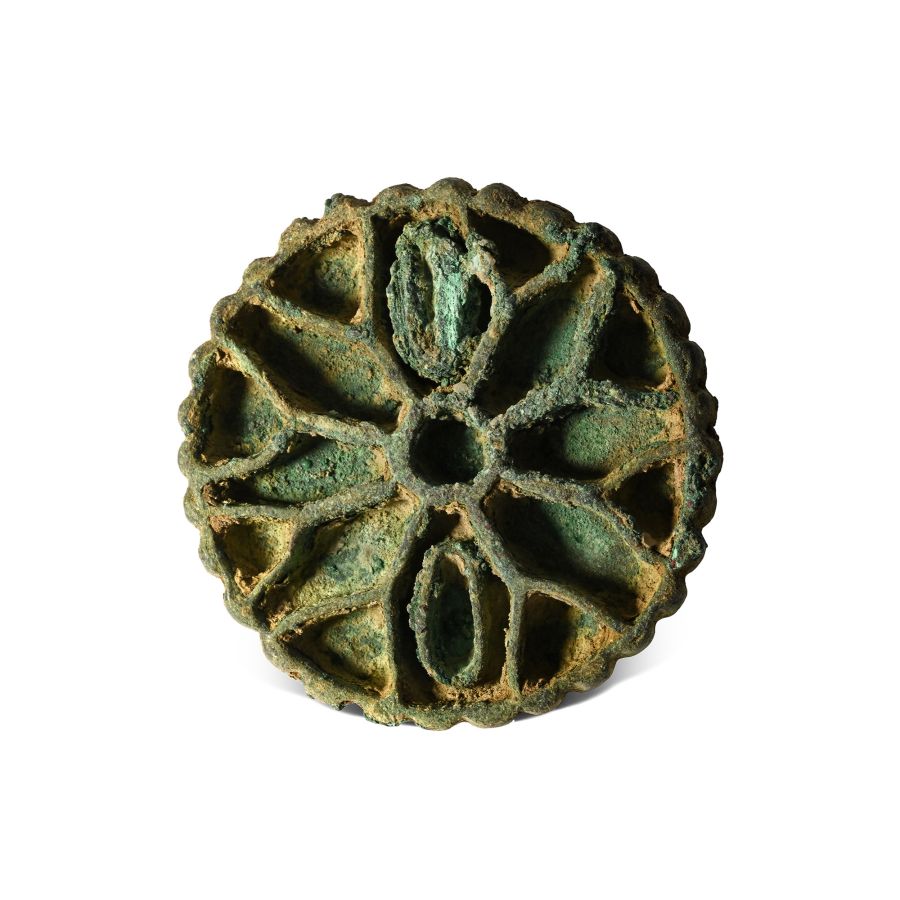
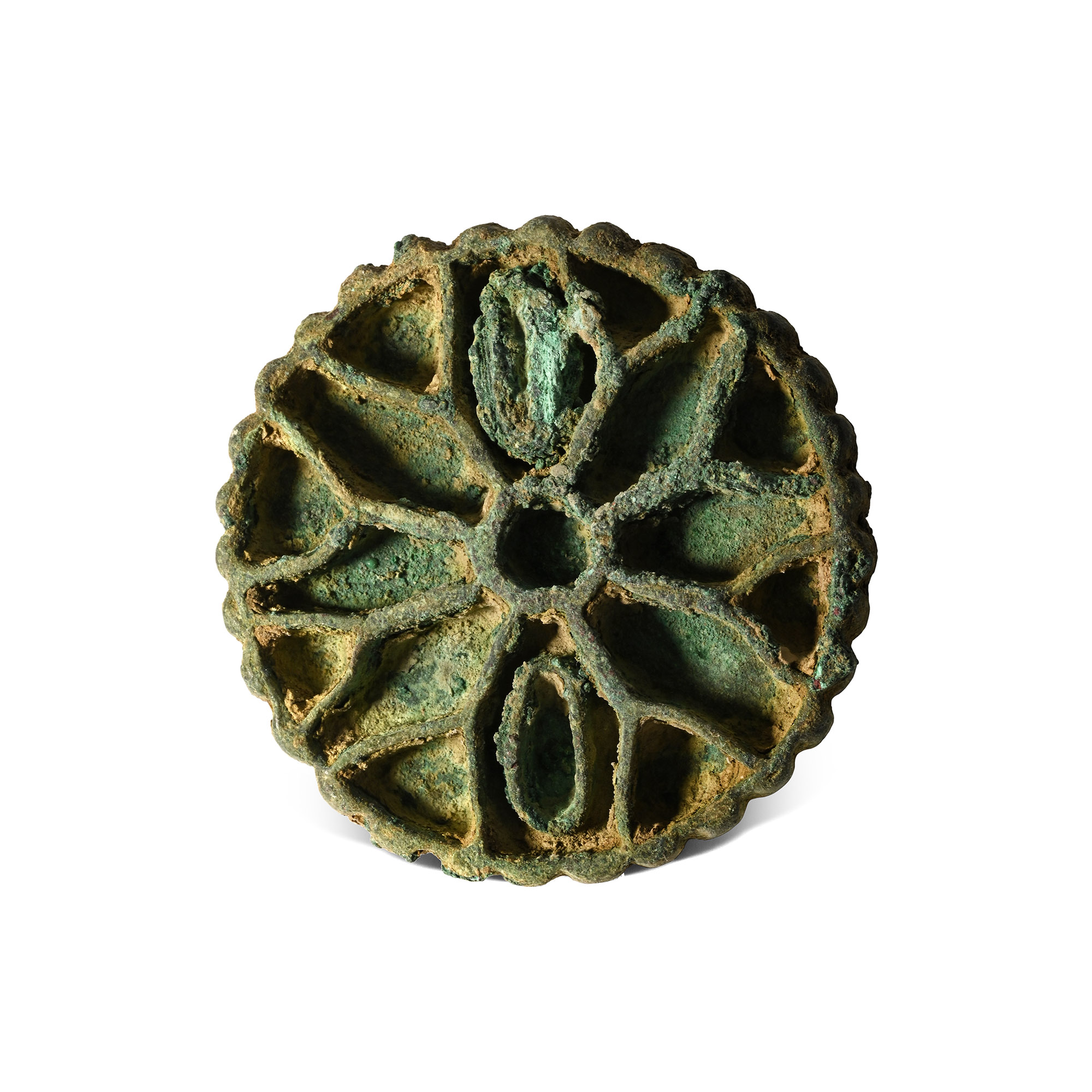
West Central Asian Bronze Stamp Seal with Quadrate Cross
CIRCA 2300-2000 B.C.
2 in. (68.2 grams, 52 mm).
Discoid stamp seal with segmented face; accompanied by an old scholarly note, typed and signed by W.G. Lambert, late Professor of Assyriology, University of Birmingham, 1970-1993, which states: 'Stamp Seal of Bronze. 51x51x16 mm. This is round with zig-zag outer edge, flat face and flat back in the centre of which is a loop handle on inverted U-shape. the design, which is both compartmented and open-work, consists of a quadrate cross within an outer band which as loops on its inner side, and the zig-zag on its outer side. This comes from west central Asia and dates to c.2300-2000 B.C. It is covered with incrustation, which could be removed. The metal appears to be in good condition.'
ProvenanceAcquired in the late 1980s-early 1990s.
Ex property of a West London businessman.
Academically researched and catalogued by the late Professor Lambert in the early 1990s.
TimeLine Auctions follows a vetting process to ensure the authenticity and legality of all items, reinforcing our commitment to integrity and responsible trading. Each antiquity, antique, and coin lot undergoes thorough examination by a vetting committee of at least ten external specialists, professional trade association members, scientists, and archaeologists: Our Vetting Process
AUCTIONS:
TimeLine is a leading auction house specialising in antiquities, ancient art, collectables, natural history, coins, medals, and books. Our auctions offer museums, collectors, historians, and enthusiasts the opportunity to acquire unique and historically significant pieces.
LOT 1283
West Central Asian Bronze Stamp Seal with Quadrate Cross
Sold for (Inc. bp): £91
-
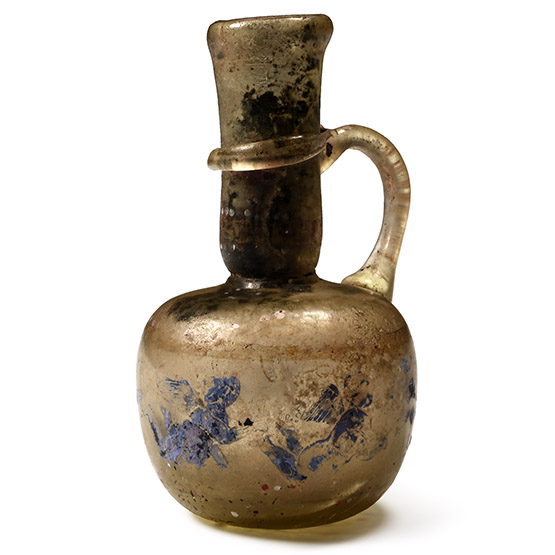
Western Asiatic Single-Handled Flask
12th-14th century A.D.Estimate: £180 - 240 (+bp*)
Opening Bid: £100
With wheel-cut frieze of animals to the body, traces of pigment remaining. 33.59 grams, 72 mm
Ex Parisian gallery, France, 1980s. -
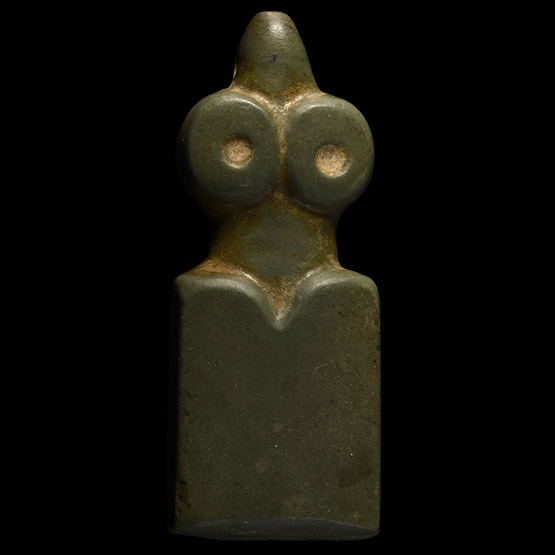
Sumerian Green Stone Eye Idol
3rd millennium B.C.Estimate: £3,000 - 4,000 (‡+bp*)
Opening Bid: £1,500
Carved in the round as a rectangular block with a slit to the upper edge, vertical spike with two annulet 'eyes'; pierced for suspension. 13.2 grams, 41 mm
with M. Petropoulos, Zurich, early 1990s. with Rhéa gallery. Private collection, acquired in 1999. This lot has been checked against the Interpol Database of stolen works of art and is accompanied by a search certificate number no.12897-241753. -

Amlash Terracotta Horse Rhyton
10th century B.C.Estimate: £6,000 - 8,000 (+bp*)
Opening Bid: £2,778
Hollow-formed rhyton with four splayed legs, curved neck with tall mane, loop handle forming the tail; filler hole to the middle of the back, spout to the chest; incised hatched bands to the mane and flank. 2.1 kg, 37 cm
Sakae Art Gallery, Nagoya, Japan, 1982. with Aaron Gallery, acquired from the above. Accompanied by thermoluminescence analysis report no.N121q65 by Oxford Authentication. This lot has been checked against the Interpol Database of stolen works of art and is accompanied by search certificate number no.12822-241329.
Amlash terracotta rhytons, significant objects of this culture, are ancient Near Eastern terracotta vessels, dating back to around 1000 BC, often in the shape of animals, particularly zebu bulls. Rhytons were used for holding and drinking wine or other liquids, and characterised by their detailed animal forms and often featuring incised details.
