
Loading, please wait...
LOT 1370
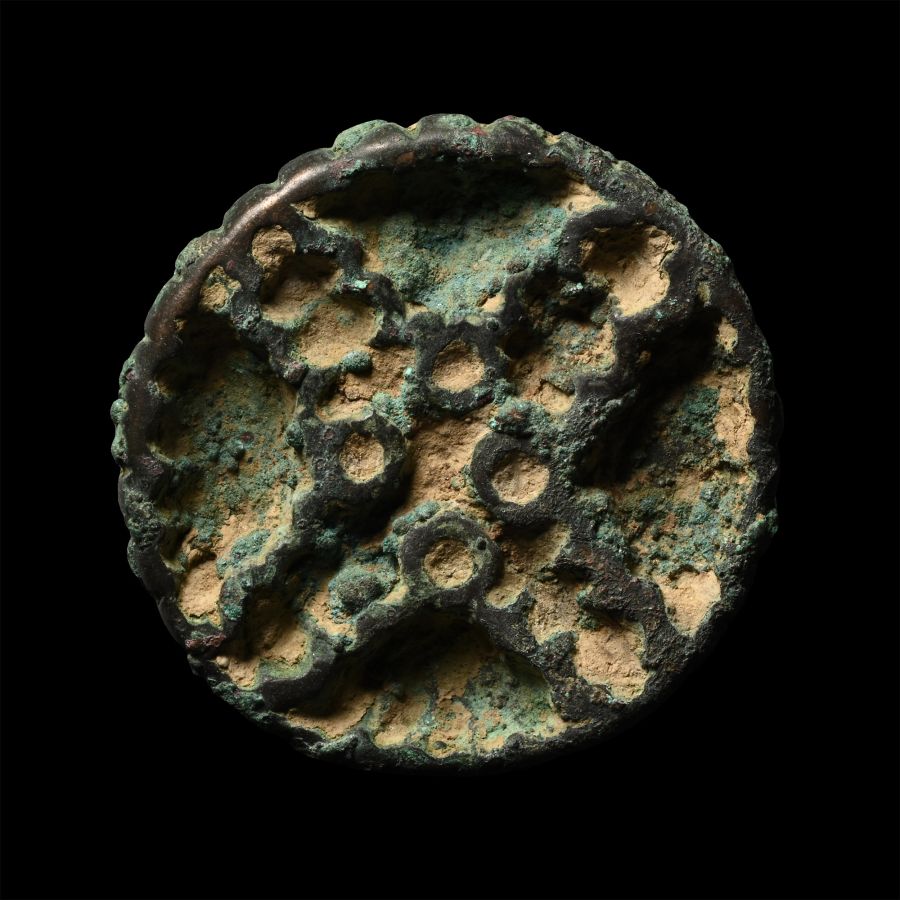
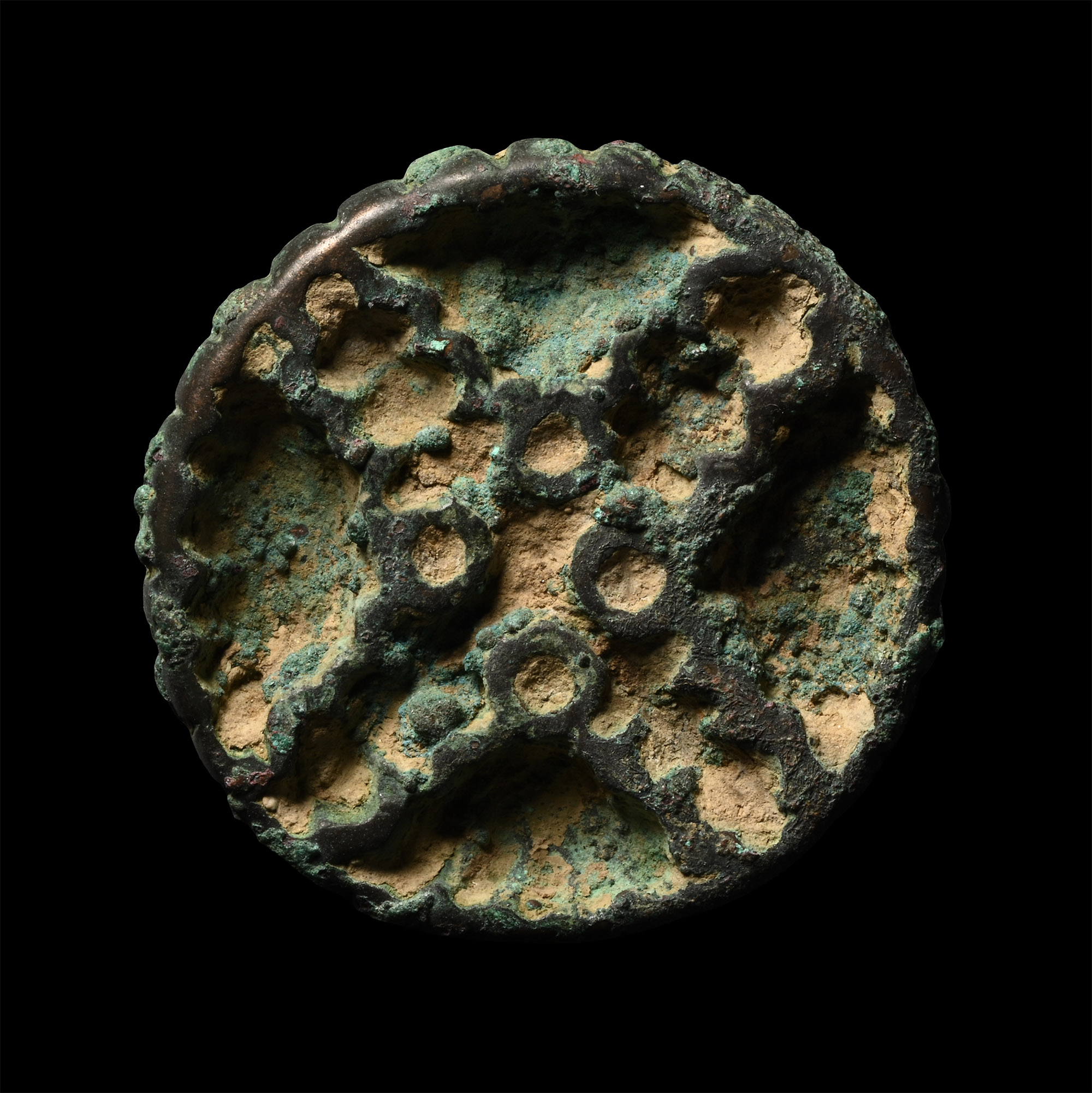
West Central Asian Bronze Stamp Seal with Cross
CIRCA 2300-2000 B.C.
1 3/4 in. (67.1 grams, 45.5 mm).
Circular stamp seal with segmented face; accompanied by an old scholarly note, typed and signed by W.G. Lambert, late Professor of Assyriology, University of Birmingham, 1970-1993, which states: 'Stamp Seal of Silver 45 x 45 x 19 mm. This is round with notched outer edge, flat face and flat back on which is mounted a handle of inverted U-shape. The design is compartmented and consists of kind of four-armed cross with four small circles at its centre and more (drilled) circles along the arms, which diminish in width toward the edges. This comes from West Central Asia and dates to c. 2300-2000 B.C. It is heavy and generally in good condition. The incrustation on the surface could be removed.' [No Reserve]
ProvenanceEx London, UK, collection, 1990s.
Accompanied by an old scholarly note, typed and signed by Professor W.G. Lambert with reference no.W.861.
TimeLine Auctions follows a vetting process to ensure the authenticity and legality of all items, reinforcing our commitment to integrity and responsible trading. Each antiquity, antique, and coin lot undergoes thorough examination by a vetting committee of at least ten external specialists, professional trade association members, scientists, and archaeologists: Our Vetting Process
AUCTIONS:
TimeLine is a leading auction house specialising in antiquities, ancient art, collectables, natural history, coins, medals, and books. Our auctions offer museums, collectors, historians, and enthusiasts the opportunity to acquire unique and historically significant pieces.
-
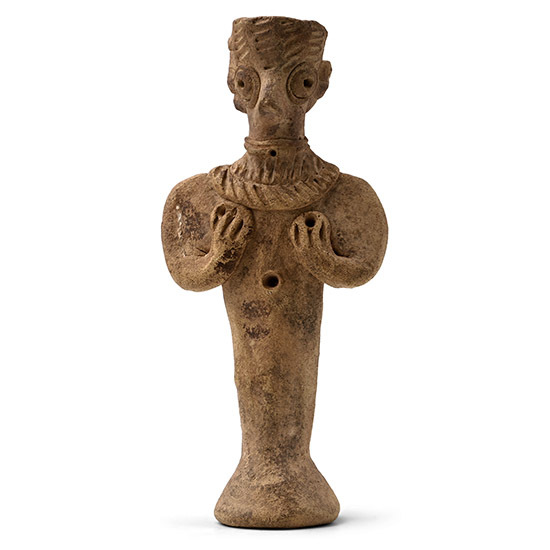
Syro-Hittite Terracotta Idol
2nd millennium B.C.Estimate: £1,200 - 1,700 (‡+bp*)
Opening Bid: £600
Modelled in the round with columnar body and flared base, arms bent and hands placed flat on the chest holding the nipples, herringbone pattern to the collar, hatched headdress, socket to rear of head. 102 grams, 14.5 cm
Collection T. Arakji, Hamburg, Germany. Private collection, Switzerland, acquired in 1994; thence by descent. -
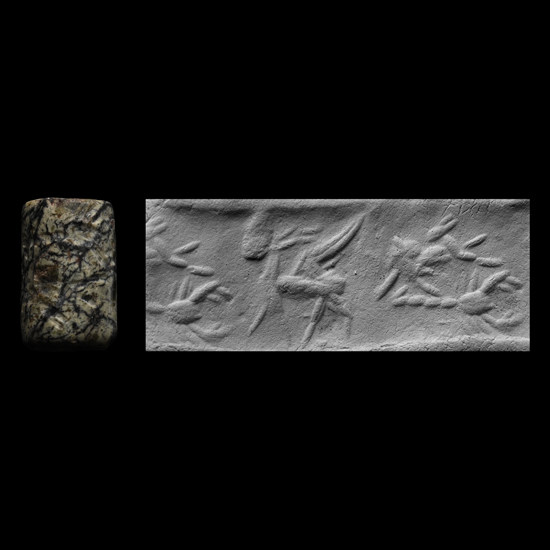
Western Asiatic Veined Stone Cylinder Seal with Animals
2nd-1st millennium B.C.Sold for (Inc. bp): £111
Frieze depicting an advancing gryphon, scorpion and bird; supplied with a museum-quality impression. 1.64 grams, 13.5 mm
From the private collection of a European gentleman (1942-2024), formed since the 1970s. -
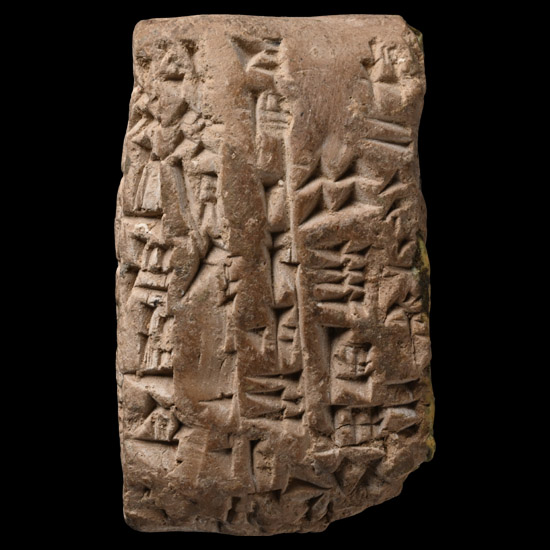
Old Babylonian Terracotta Cuneiform Tablet Section
2nd millennium B.C.Sold for (Inc. bp): £416
The narrow end of a pillow-shaped tablet with rows of cuneiform text on four sides. 33.5 grams, 44.5 mm
From the private collection of a European gentleman (1942-2024), formed since the 1970s.
