
Loading, please wait...
LOT 1127
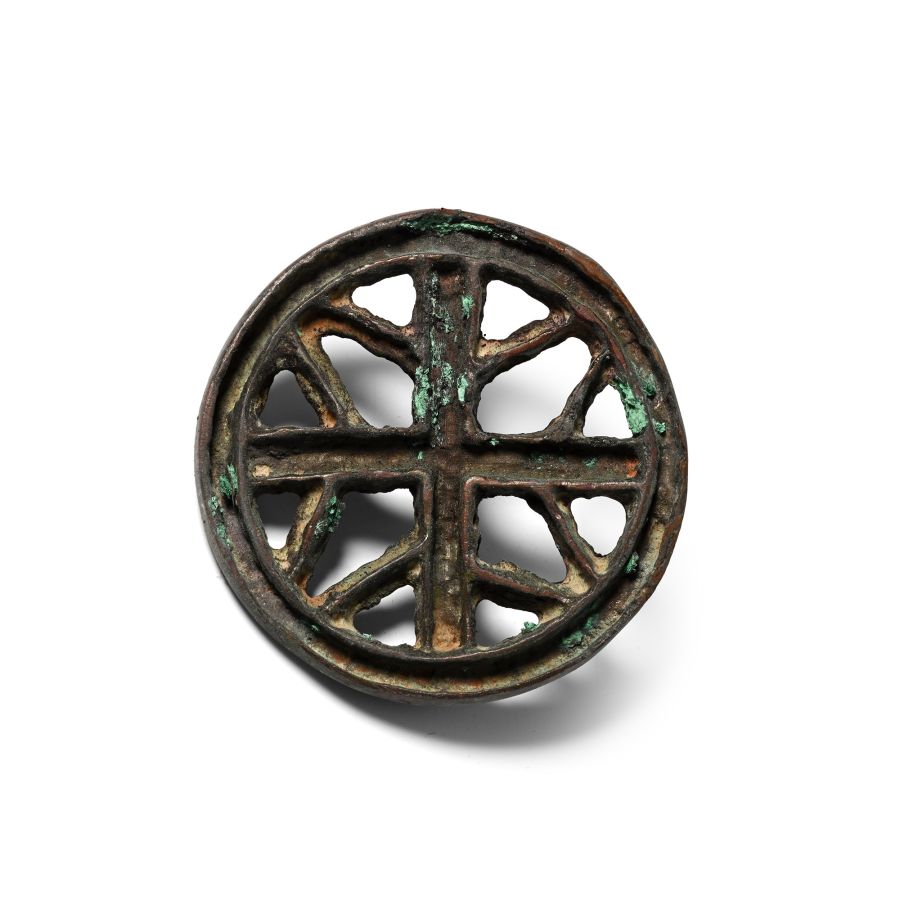
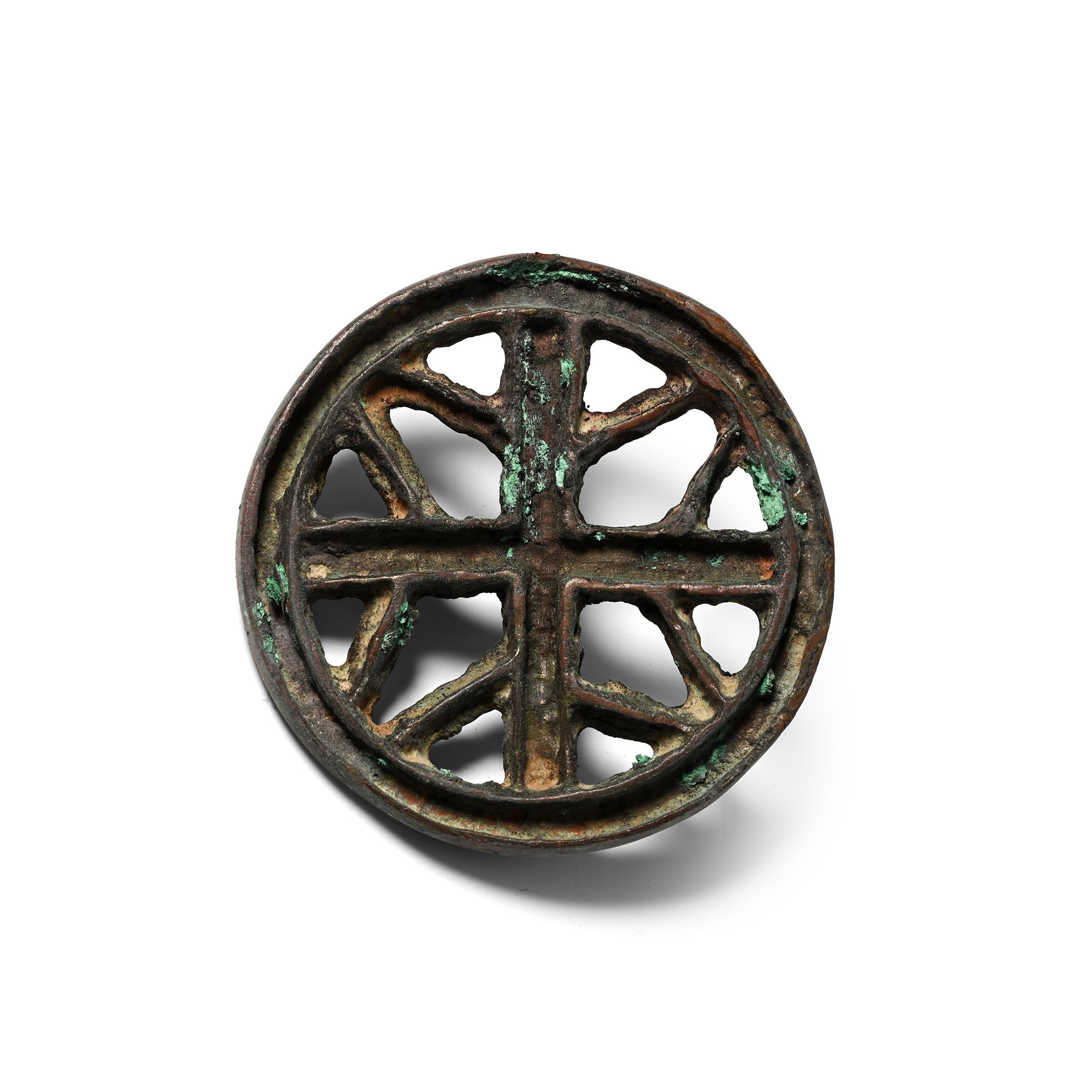
West Central Asian Bronze Stamp Seal with Cross
CIRCA 2300-2000 B.C.
2 in. (23 grams, 50 mm).
Openwork stamp with loop handle; accompanied by an old scholarly note, typed and signed by W.G. Lambert, late Professor of Assyriology, University of Birmingham, 1970-1993, which states: 'Stamp Seal of Bronze, 50x49x15 mm. This is round with flat face and flat back, on which is mounted a handle of inverted V-shape. The design, which is both compartmented and open-work, consists of a plain cross within a plain outer band, and between the arms of the cross two struts at angles creating the impression of a start with four points beneath the cross. This comes from west central Asia and dates to c. 2300-2000 B.C. It is in very good condition and has been conserved.'
ProvenanceAcquired in the late 1980s-early 1990s.
Ex property of a West London businessman.
Academically researched and catalogued by the late Professor Lambert in the early 1990s.
This lot has been cleared against the Art Loss Register database, and is accompanied by an illustrated lot declaration signed by the Head of the Antiquities Department, Dr Raffaele D'Amato.
TimeLine Auctions follows a vetting process to ensure the authenticity and legality of all items, reinforcing our commitment to integrity and responsible trading. Each antiquity, antique, and coin lot undergoes thorough examination by a vetting committee of at least ten external specialists, professional trade association members, scientists, and archaeologists: Our Vetting Process
AUCTIONS:
TimeLine is a leading auction house specialising in antiquities, ancient art, collectables, natural history, coins, medals, and books. Our auctions offer museums, collectors, historians, and enthusiasts the opportunity to acquire unique and historically significant pieces.
-
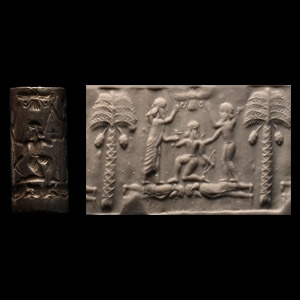
Achaemenid Silver Cylinder Seal Case with Battle Scene
5th century B.C.Estimate: £2,500 - 3,500 (+bp*)
Opening Bid: £1,250
Depicting a combat scene comprising of a standing richly dressed royal figure with a bow-case, one hand holding wrist and other piercing shoulder of a kneeling soldier; standing helmetted archer holding his other shoulder; two bearded men lying face down beneath; winged sun disc above and date palm behind; supplied with a museum-quality impression. 17.4 grams, 32 mm
From the collection of the late S, London, UK, 1970-2000. Examined by Professor Wilfrid George Lambert FBA (1926-2011), historian, archaeologist, and specialist in Assyriology and Near Eastern archaeology, in the 1990s. This lot has been checked against the Interpol Database of stolen works of art and is accompanied by search certificate number no.12821-240845. This lot has been cleared against the Art Loss Register database, and is accompanied by an illustrated lot declaration signed by the Head of the Antiquities Department, Dr Raffaele D'Amato. -
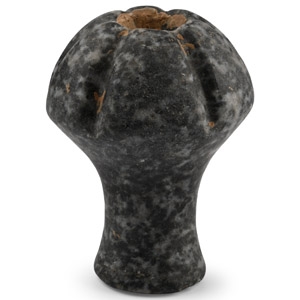
Western Asiatic Stone Macehead
3rd millennium B.C.Sold for (Inc. bp): £117
Piriform in profile with flared tubular socket, flat rim, carination to the bulb and segmented upper face. 448 grams, 92 mm
From a London, UK, collection, 2000s. This lot has been cleared against the Art Loss Register database, and is accompanied by an illustrated lot declaration signed by the Head of the Antiquities Department, Dr Raffaele D'Amato. -
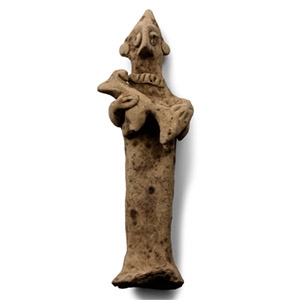
Syro-Hittite Terracotta Figurine with Animal
Circa 2nd millennium B.C.Sold for (Inc. bp): £845
An abstract figure modelled standing, carrying a small animal in its arms, possibly a kid, with a pinched head, large circular eyes, conical headpiece, discoid ear ornaments and a neck ornament. 56 grams, 12.6 cm high
Collection of a deceased London gentleman, 1979-1999, by descent. From the private collection of John Meredith, acquired since the 1990s; thence by descent. Accompanied by an original thermoluminescence analysis report no. N122e89 from Oxford Authentication. This lot has been cleared against the Art Loss Register database, and is accompanied by an illustrated lot declaration signed by the Head of the Antiquities Department, Dr Raffaele D'Amato.
The Syro-Hittite states rose to prominence in northern Syria and southern Anatolia (modern Turkey) following the collapse of the Hittite Empire, during which time many such figures were produced and widely distributed for domestic use. Such figures, later pejoratively referred to as 'idols', depicted deities carrying or standing with animals.
