
Loading, please wait...
LOT 1250
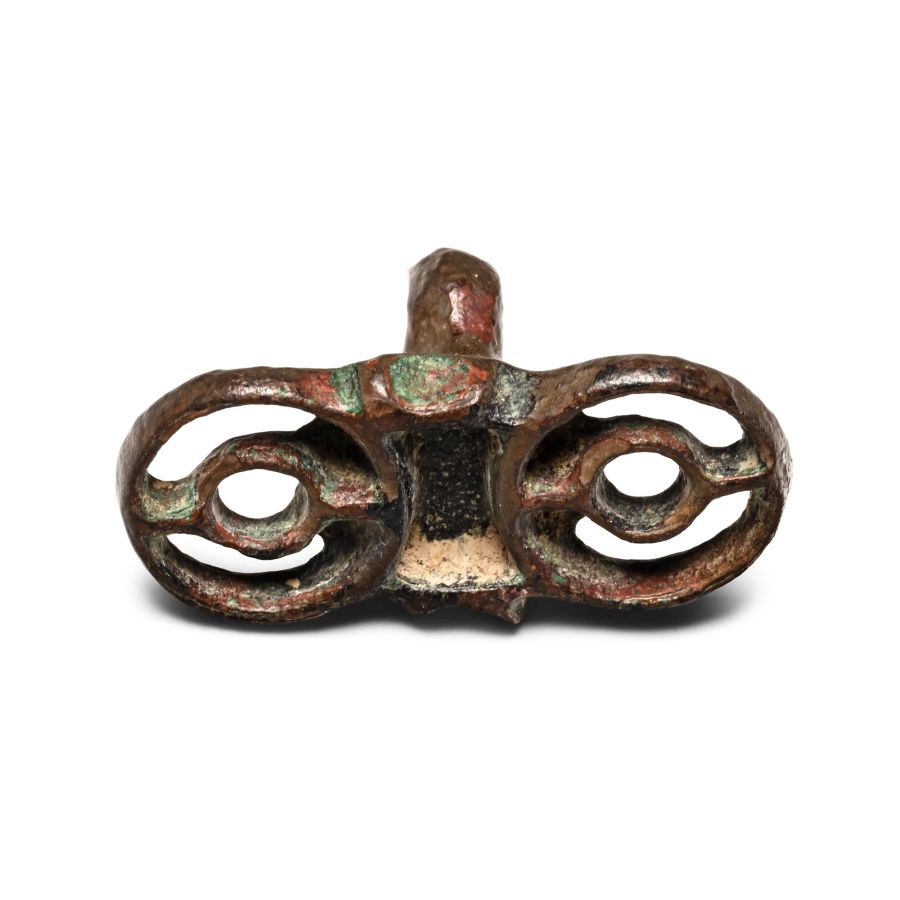
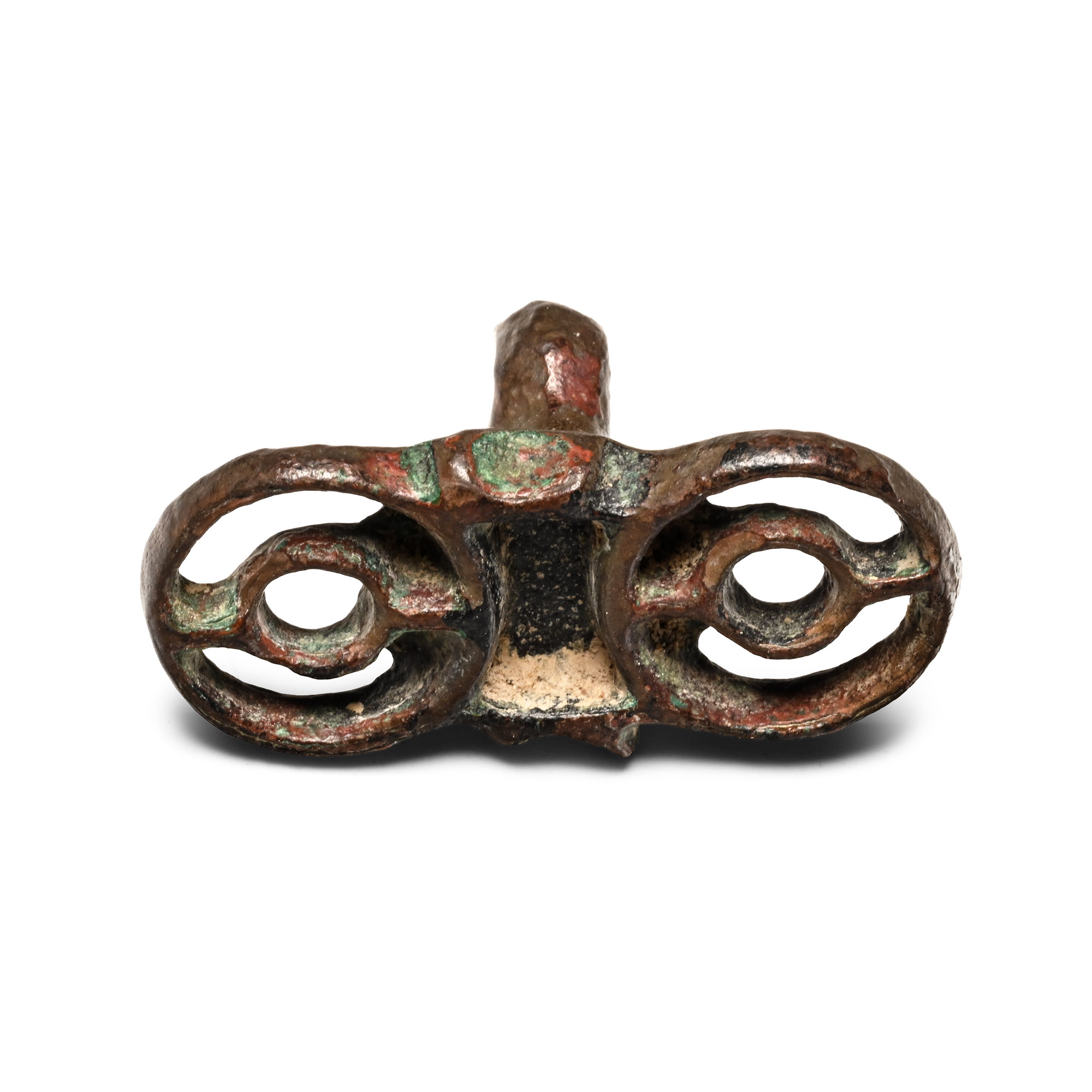
West Central Asian Bronze Seal Matrix with 'Eyes'
CIRCA 2000-1500 B.C.
1 3/8 in. (12.8 grams, 36 mm).
Openwork seal with a tall handle, accompanied by an old scholarly note, typed and signed by W.G. Lambert, late Professor of Assyriology, University of Birmingham, 1970-1993, which states: 'Stamp Seal of Bronze, 26 x 26 x 17 mm. This has a round flat engraved face, and the back rises steeply to the pierced loop handle. The design appears as abstract, that is it does nor depict anything from nature.This comes from west central Asia and dates to c. 2000-1500 B.C. It is in very good condition.' [No Reserve]
ProvenanceAcquired in the late 1980s-early 1990s.
Ex property of a West London businessman.
Academically researched and catalogued by the late Professor Lambert in the early 1990s.
Accompanied by a copy of a scholarly report, numbered D-5, typed and signed by Professor Wilfrid George Lambert.
TimeLine Auctions follows a vetting process to ensure the authenticity and legality of all items, reinforcing our commitment to integrity and responsible trading. Each antiquity, antique, and coin lot undergoes thorough examination by a vetting committee of at least ten external specialists, professional trade association members, scientists, and archaeologists: Our Vetting Process
AUCTIONS:
TimeLine is a leading auction house specialising in antiquities, ancient art, collectables, natural history, coins, medals, and books. Our auctions offer museums, collectors, historians, and enthusiasts the opportunity to acquire unique and historically significant pieces.
-
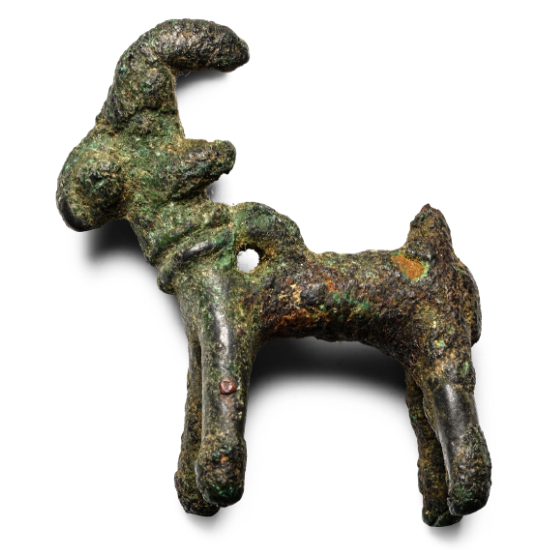
Luristan Bronze Goat Statuette
Circa 9th-7th century B.C.Sold for (Inc. bp): £156
Modelled standing with its legs splayed, long curving horns and projecting eyes, a collar around the neck and pierced through the shoulders. 13.5 grams, 36 mm
Ex A.H.B. collection, 1970s-1990s. Accompanied by a previous dealer's sales ticket. -
.jpg)
Western Asiatic Style Lapis Lazuli Bead Necklace String
20th century A.D.Sold for (Inc. bp): £13
Composed of irregular beads interspersed with small spherical glass beads; restrung. 18.7 grams, 40.5 cm
Ex London, UK, art market 1990s. -
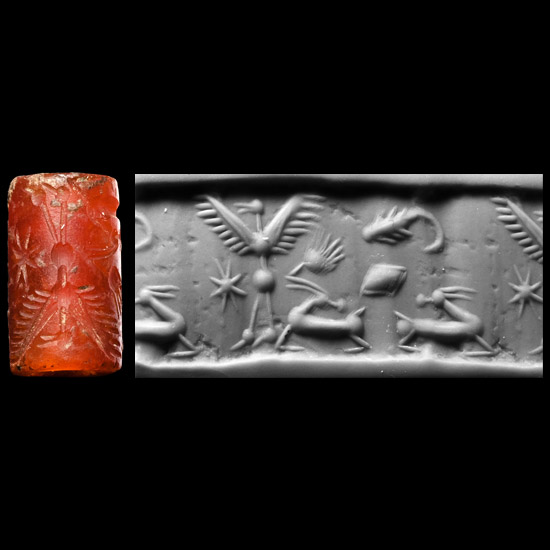
Western Asiatic Carnelian Cylinder Seal with Animals
1450-1300 B.C.Sold for (Inc. bp): £286
Frieze with two ibexes on the baseline each with its head turned away from a tall bird or winged demon with spread wings; star, scorpion and other objects in the field; supplied with a museum-quality impression. 1.34 grams, 13 mm
From the private collection of a European gentleman (1942-2024), formed since the 1970s.
