
Loading, please wait...
LOT 1377
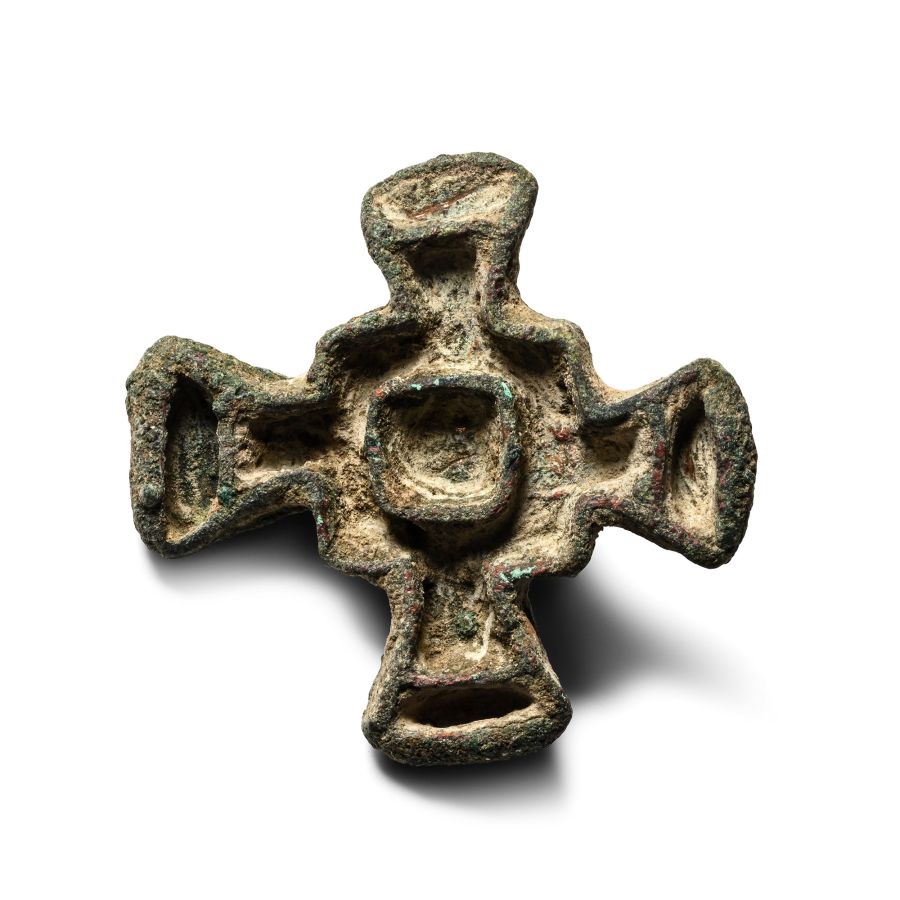
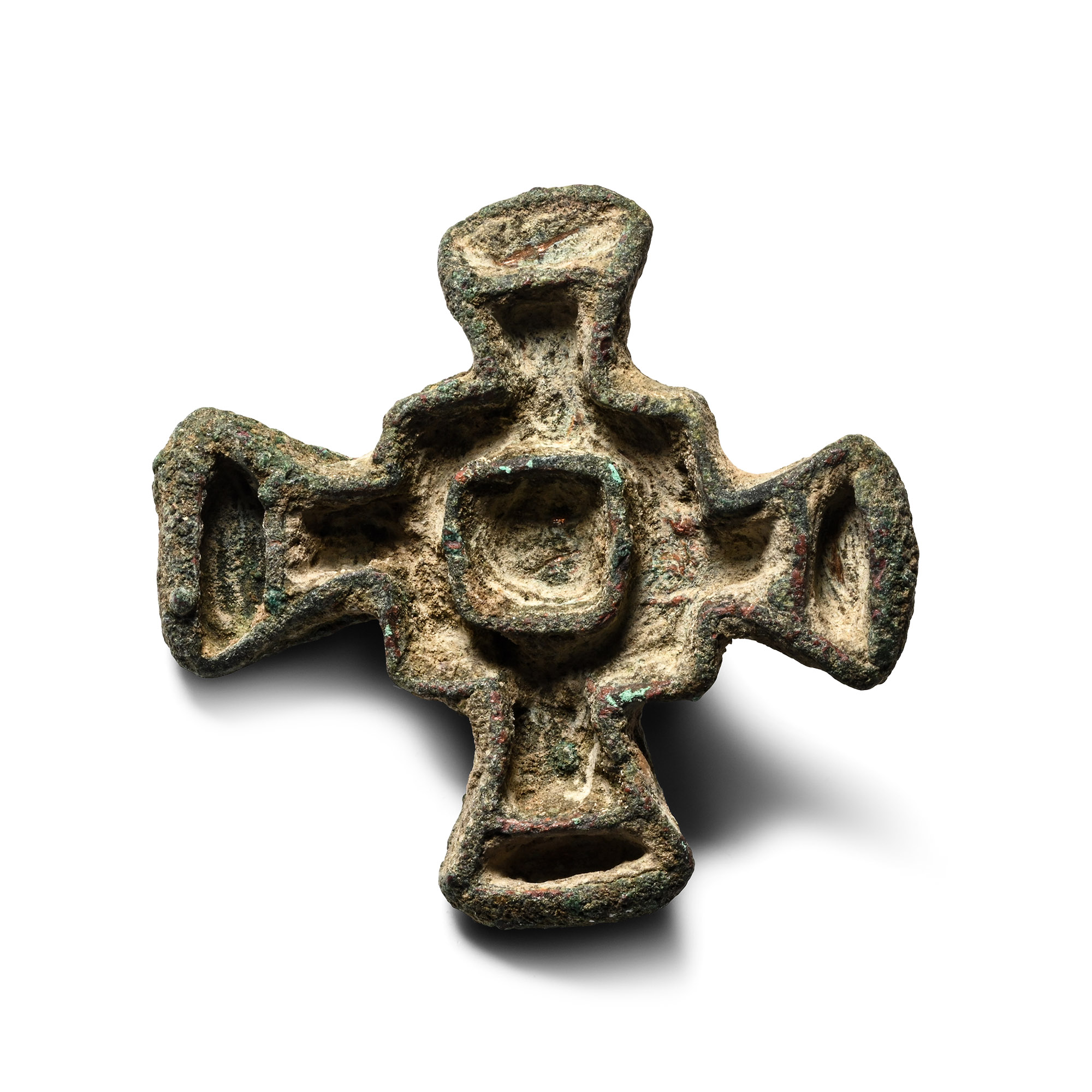
West Central Asian Bronze Quadrate Cross Seal Matrix
CIRCA 2300-2000 B.C.
1 1/2 in. (17.1 grams, 39 mm).
Comprising a cross-shaped body with a small loop on the reverse, accompanied by an old scholarly note, typed and signed by W.G. Lambert, late Professor of Assyriology, University of Birmingham, 1970-1993, which states: 'Stamp Seal of Bronze, 39 x 38 x 12 mm. This bears the shape of the design, with flat compartmented face and flat back on which is mounted a loop handle for suspension. The design is a quadrate cross with small square in the middle, and to the end of each arm is added a rough oblong shape. This comes from west central Asia and dates to c. 2300-2000 B.C. It is generally in good condition, only the handle is worn and the outer edges are also a little worn in two places.' [No Reserve]
ProvenanceAcquired in the late 1980s-early 1990s.
Ex property of a West London businessman.
Academically researched and catalogued by the late Professor Lambert in the early 1990s.
Accompanied by a copy of a scholarly report, numbered U-388, typed and signed by Professor Wilfrid George Lambert.
TimeLine Auctions follows a vetting process to ensure the authenticity and legality of all items, reinforcing our commitment to integrity and responsible trading. Each antiquity, antique, and coin lot undergoes thorough examination by a vetting committee of at least ten external specialists, professional trade association members, scientists, and archaeologists: Our Vetting Process
AUCTIONS:
TimeLine is a leading auction house specialising in antiquities, ancient art, collectables, natural history, coins, medals, and books. Our auctions offer museums, collectors, historians, and enthusiasts the opportunity to acquire unique and historically significant pieces.
-
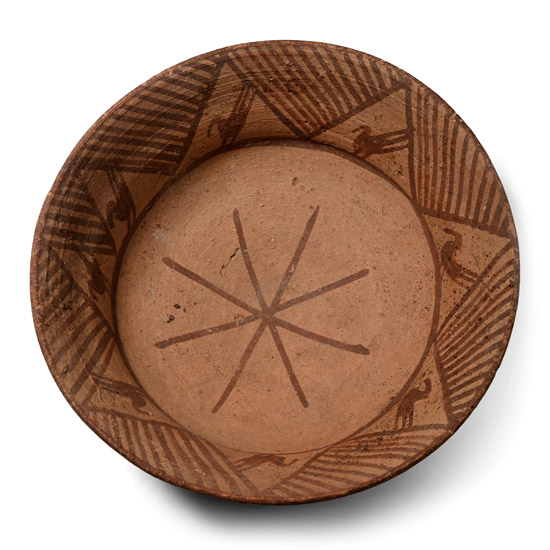
Western Asiatic Terracotta Bowl with Painted Birds
4th-3rd millennium B.C.Estimate: £600 - 800 (+bp*)
Opening Bid: £333
With a rounded underside and flared rim; painted asterisk to centre, hatched chevrons to mouth with profile birds in the voids; early Iranian workmanship. 298 grams, 16 cm wide
Ex London, UK, gallery, 1971-early 2000s. London, UK, collection. -
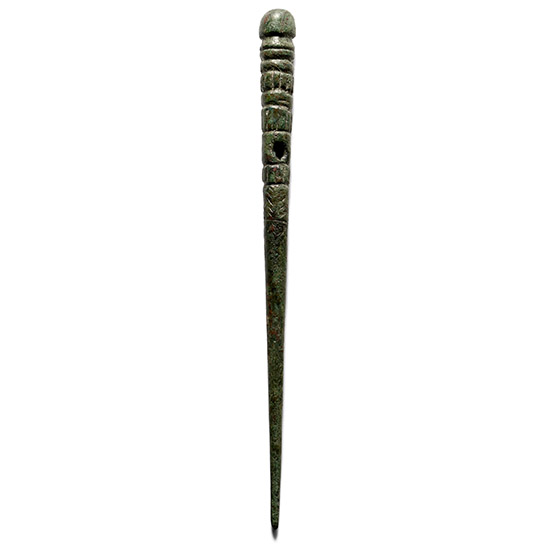
Luristan Bronze Cloak Pin
2nd-1st millennium B.C.Sold for (Inc. bp): £46
With tapering shank and segmented head, bands of hatched and other ornament, pierced to accept a ring. 60.6 grams, 16.6 cm
From the private collection of Mr Brian Edwards, New Malden, Surrey, UK, formed from the late 1970s-early 1980s; thence by descent. -
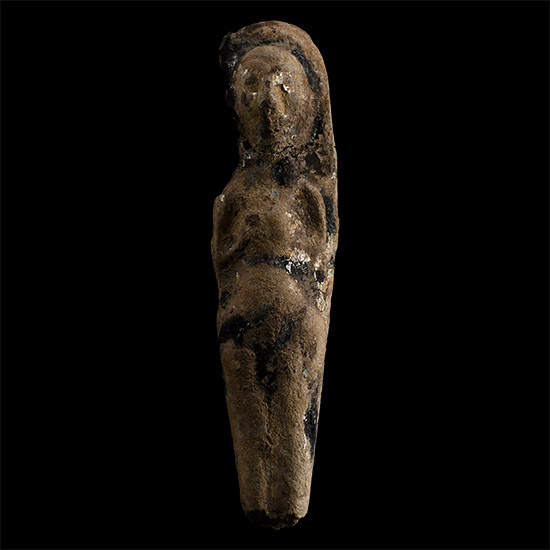
Western Asiatic Glazed Terracotta Fertility Figure
Late 1st millennium B.C.Estimate: £100 - 140 (+bp*)
Opening Bid: £56
Modelled in the half-round; D-shaped in section with applied black pigment detailing to hair and midriff; some iridescence. 23.2 grams, 92 mm
Ex private collection, London, UK, 1969-1999.
