
Loading, please wait...
LOT 1297
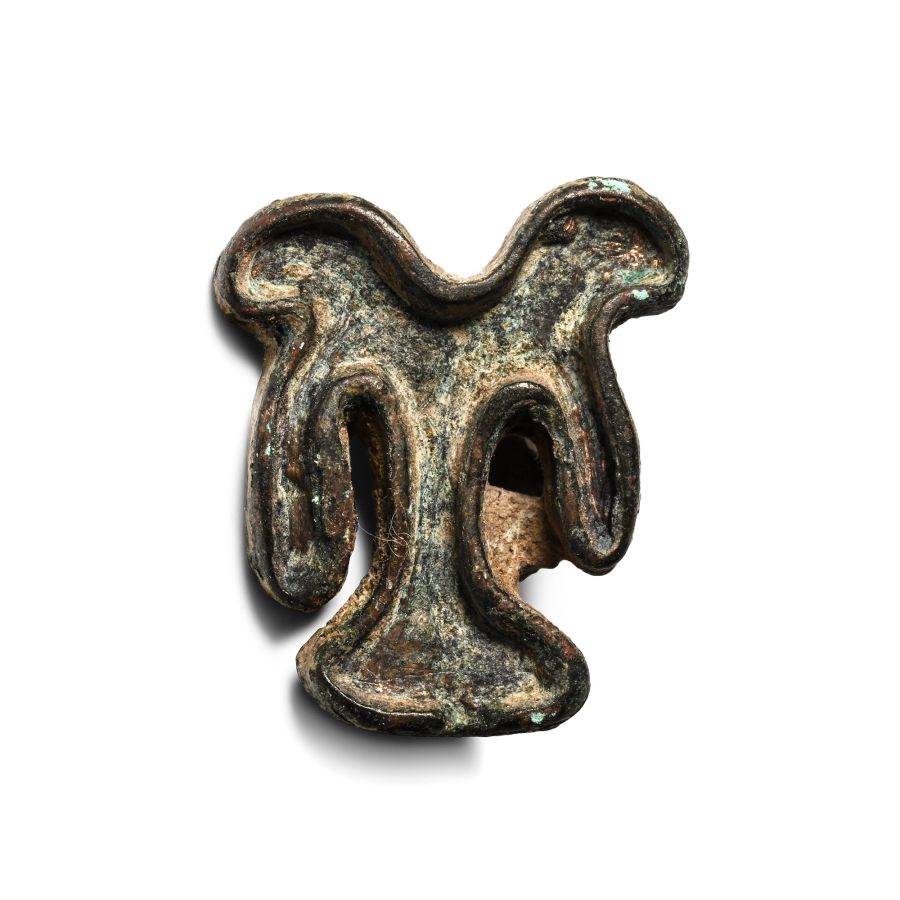
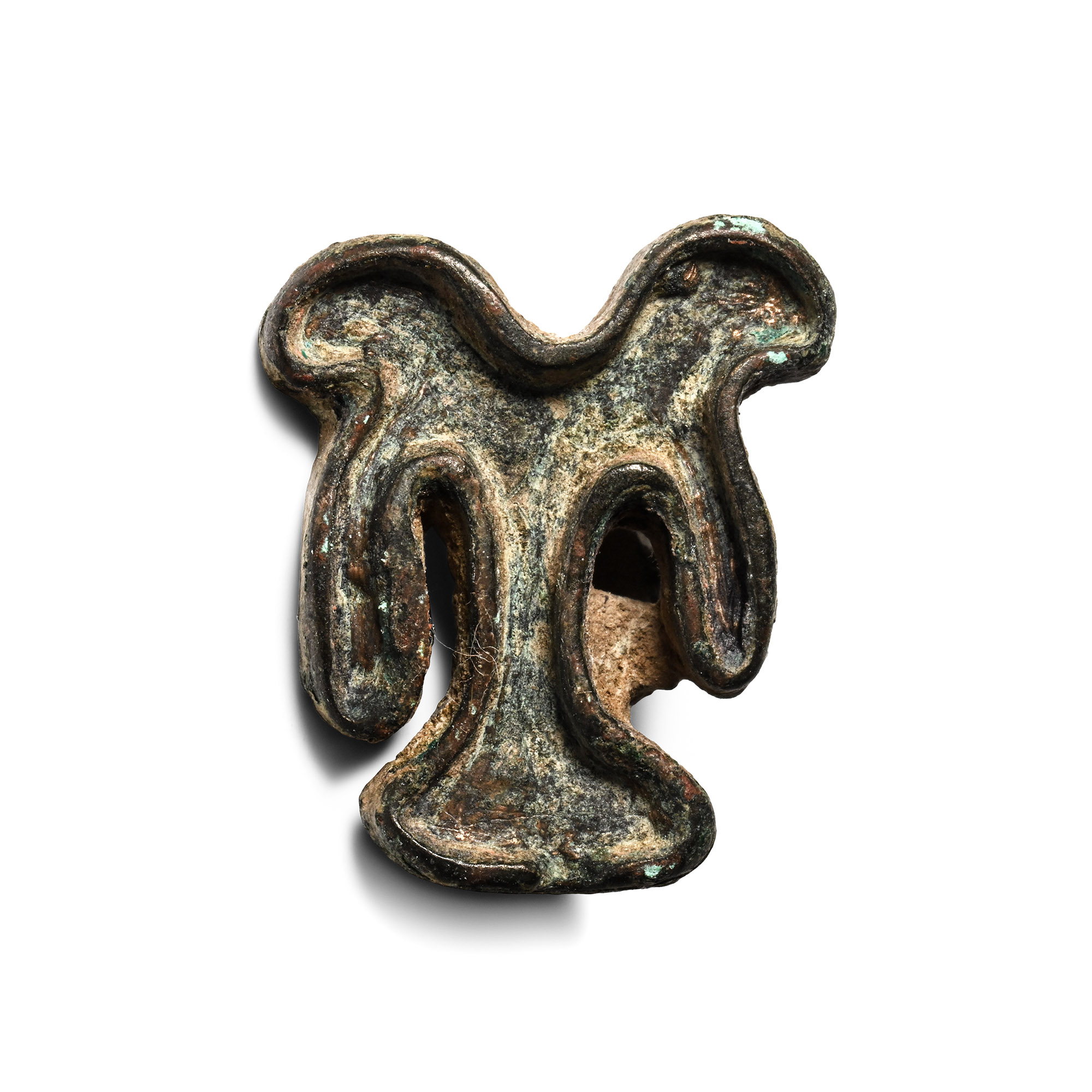
West Central Asian Bronze Double-Headed Heraldic Eagle Seal Matrix
CIRCA 2300-2000 B.C.
1 in. (9.51 grams, 25 mm).
Eagle-shaped seal matrix with a large loop on the back, accompanied by an old scholarly note, typed and signed by W.G. Lambert, late Professor of Assyriology, University of Birmingham, 1970-1993, which states: 'Stamp Seal of Bronze, 25 x 21.5 x 1mm. This bears the shape of the design, with flat compartmented face and flat back of which is mounted a loop handle of metal rod. The design shows a heraldic eagle with two heads: heads at the top sideways, wings hanging beneath, and tail feathers spread at the bottom. This comes from west central Asia and dates to c. 2300-2000 B.C. It is a rare type (the double-headed eagle) and in very good condition save for a nick at the bottom.'
ProvenanceAcquired in the late 1980s-early 1990s.
Ex property of a West London businessman.
Academically researched and catalogued by the late Professor Lambert in the early 1990s.
Accompanied by a copy of a scholarly report, numbered V-850, typed and signed by Professor Wilfrid George Lambert.
TimeLine Auctions follows a vetting process to ensure the authenticity and legality of all items, reinforcing our commitment to integrity and responsible trading. Each antiquity, antique, and coin lot undergoes thorough examination by a vetting committee of at least ten external specialists, professional trade association members, scientists, and archaeologists: Our Vetting Process
AUCTIONS:
TimeLine is a leading auction house specialising in antiquities, ancient art, collectables, natural history, coins, medals, and books. Our auctions offer museums, collectors, historians, and enthusiasts the opportunity to acquire unique and historically significant pieces.
LOT 1297
West Central Asian Bronze Double-Headed Heraldic Eagle Seal Matrix
Sold for (Inc. bp): £117
-
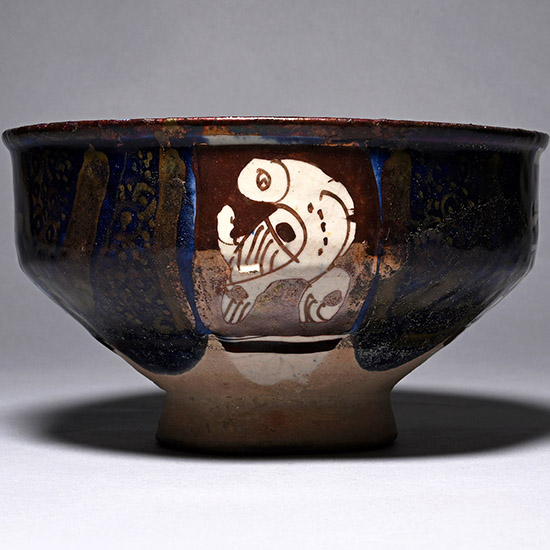
Western Asiatic Cobalt-Blue Footed Ceramic Bowl
9th century A.D.Estimate: £3,000 - 4,000 (+bp*)
Current Winning Bid: £2,000
With a carinated sidewall, rolled and everted rim, shallow foot, partial lustre-glaze to the surface with four trapezoidal panels: two with a reserved regardant bird and two with a tracery motif; restored. 498 grams, 18.5 cm
Private collection, Japan, acquired prior to 1982. Private collection, UK. This lot has been checked against the Interpol Database of stolen works of art and is accompanied by a search certificate number no.12724-235155. -
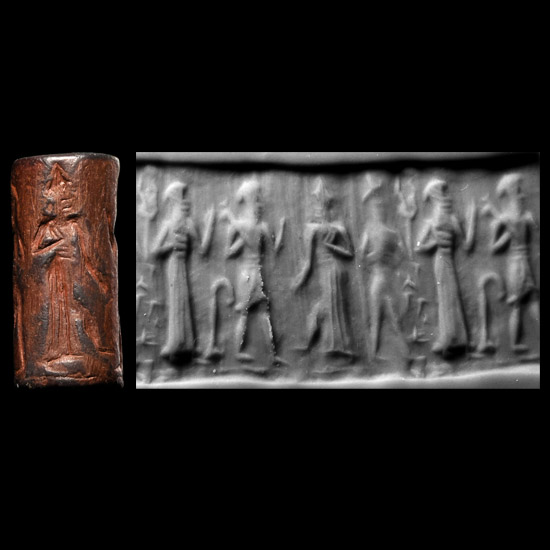
Western Asiatic Grey Stone Cylinder Seal with Processional Scene
2nd millennium B.C.Sold for (Inc. bp): £234
Frieze with standing figures wearing floor-length robes and a kilted figure carrying a wand or mace; supplied with a museum-quality impression. 2.3 grams, 15 mm
From the private collection of a European gentleman (1942-2024), formed since the 1970s. -
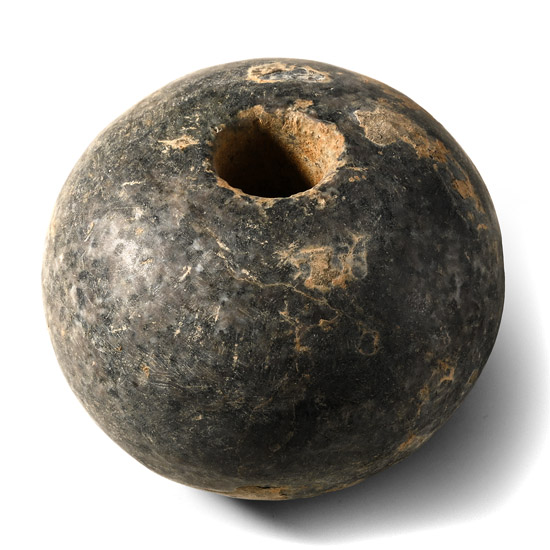
Western Asiatic Polished Stone Macehead
3rd-2nd millennium B.C.Sold for (Inc. bp): £104
Doughnut-shaped body and a round socket. 431 grams, 73 mm
From the collection of a London, UK, gentleman, 1990s.
