
Loading, please wait...
LOT 1200
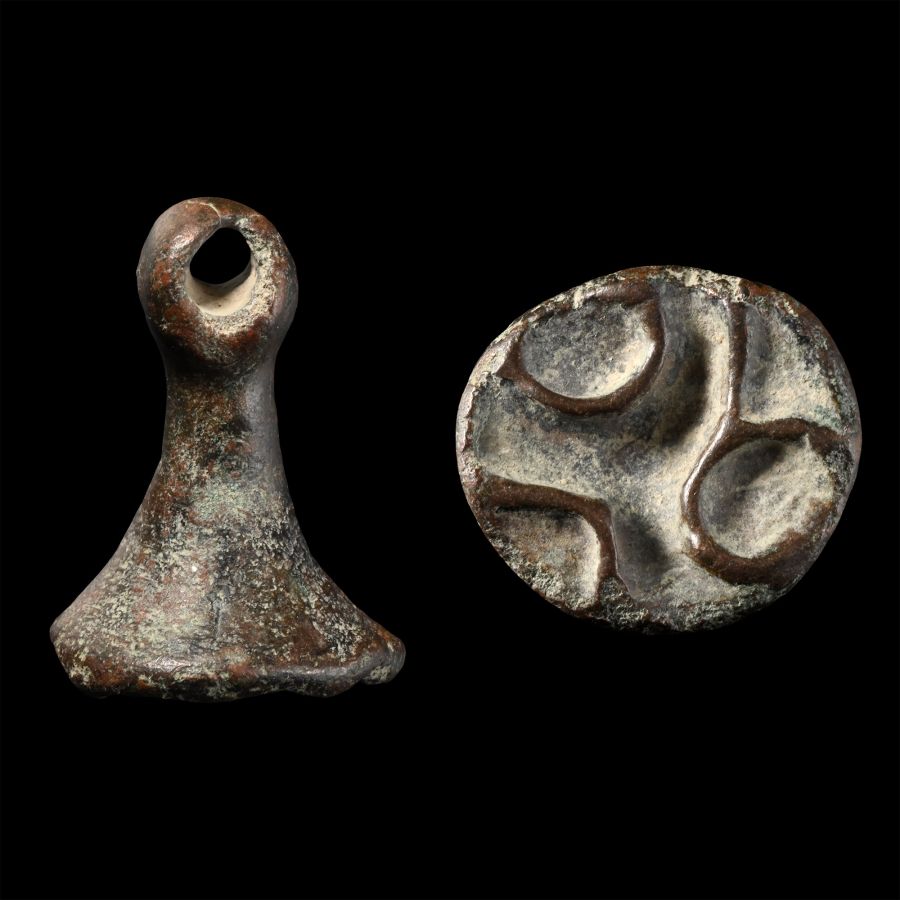
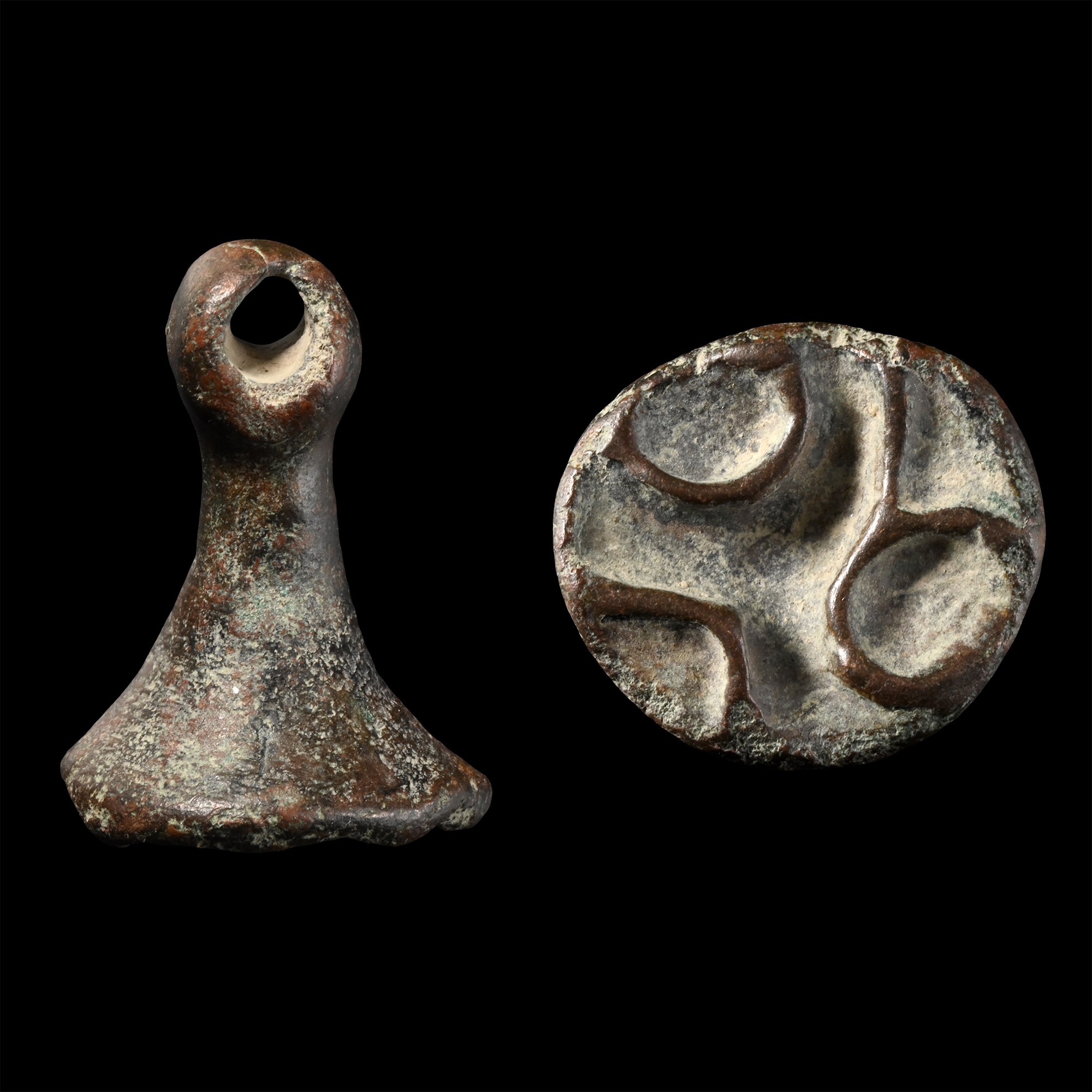
West Central Asian Bronze Chess Piece Type Seal Matrix with Interlocking Design
CIRCA 2200-1800 B.C.
1 in. (9.76 grams, 23 mm).
Discoid stamp seal with segmented face and tall handle; accompanied by an old scholarly note, typed and signed by W.G. Lambert, late Professor of Assyriology, University of Birmingham, 1970-1993, which states: 'Stamp Seal of Bronze 19 x 18 x 34 mm. This was originally round, with flat face and slightly convex back on which is mounted a tall stalk handle with ridges around it and an oval loop on the top. The design, done in raised lines, consists of two interlocking pairs of strokes, each with a curve in it, and some short strokes act as fillers. This comes from west central Asia and dates to c. 2200-1800 B.C. About two thirds of the rim are now missing, and the handle is worn down, but a fair amount remains and is in good condition.' [No Reserve]
ProvenanceAcquired in the late 1980s-early 1990s.
Ex property of a West London businessman.
Academically researched and catalogued by the late Professor Lambert in the early 1990s.
Accompanied by a copy of a scholarly report, numbered T-849, typed and signed by Professor Wilfrid George Lambert.
TimeLine Auctions follows a vetting process to ensure the authenticity and legality of all items, reinforcing our commitment to integrity and responsible trading. Each antiquity, antique, and coin lot undergoes thorough examination by a vetting committee of at least ten external specialists, professional trade association members, scientists, and archaeologists: Our Vetting Process
AUCTIONS:
TimeLine is a leading auction house specialising in antiquities, ancient art, collectables, natural history, coins, medals, and books. Our auctions offer museums, collectors, historians, and enthusiasts the opportunity to acquire unique and historically significant pieces.
LOT 1200
West Central Asian Bronze Chess Piece Type Seal Matrix with Interlocking Design
Sold for (Inc. bp): £33
-
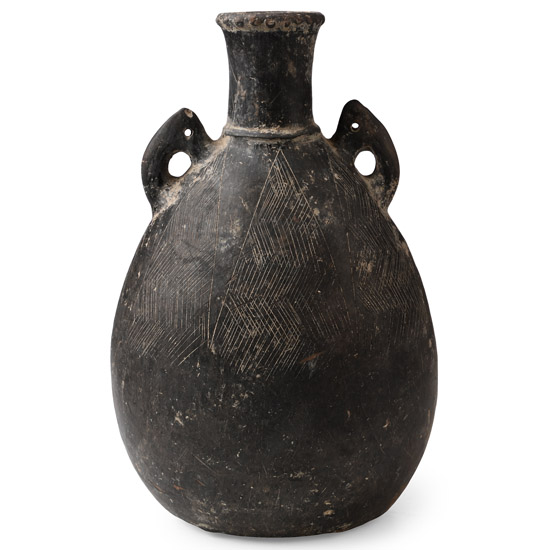
Eastern Mediterranean Terracotta Handled Vase with Engraved Zig-Zag Panels
1st millennium B.C.Sold for (Inc. bp): £260
Ovoid body with tall tubular neck with rolled rim, two pierced handles on the shoulder, and a raised collar beneath the neck, the upper body decorated with triangular panels with hatched decoration, and a vertical band of herringbone design beneath one of the handles. 1.31 kg, 27.5 cm
Ex Abelita collection, 1990s. -
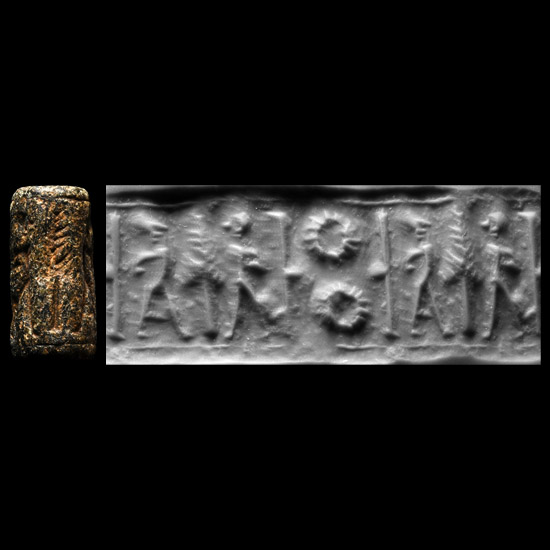
Syrian Steatite Cylinder Seal
Circa 1500-1400 B.C.Sold for (Inc. bp): £52
Cylinder seal with star motifs and a knobbly staff, two opposing figures flanking a tree; supplied with a museum-quality impression. 2 grams, 16 mm
From the private collection of a European gentleman (1942-2024), formed since the 1970s. Accompanied by a previous typed catalogue slip with collection no.53. -
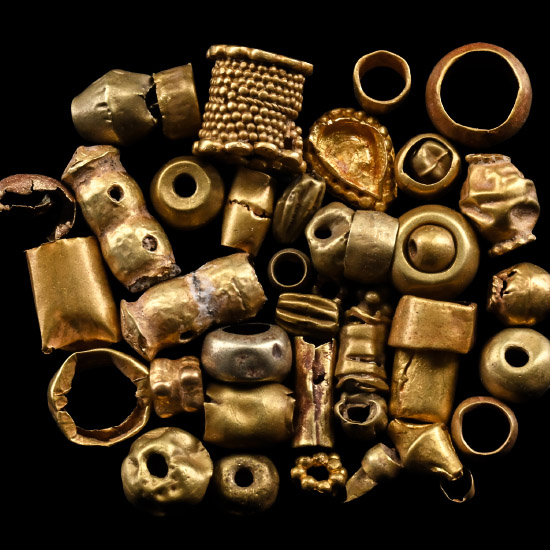
Western Asiatic and Other Ancient Gold Beads
1st millennium B.C. and laterSold for (Inc. bp): £572
Mixed group of beads, including granulated, oblate, tubular, and other types. 7.17 grams total, 2-9 mm
Ex late Japanese gentleman's collection, 1970-2010.
