
Loading, please wait...
LOT 2094
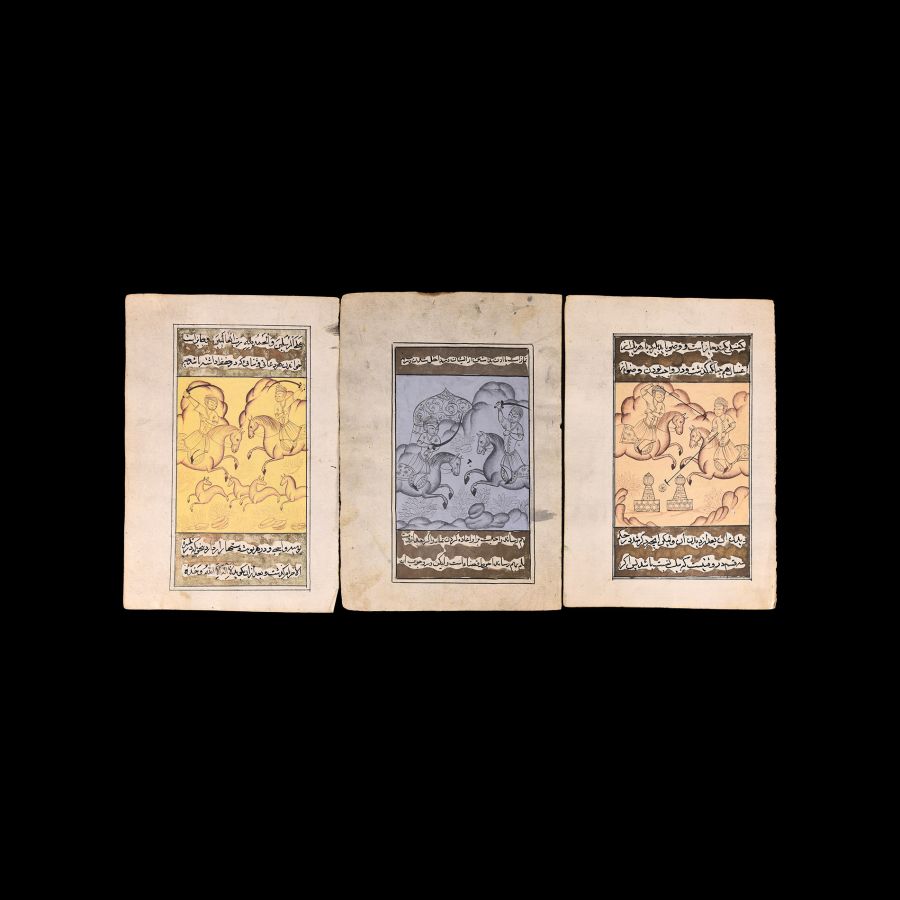
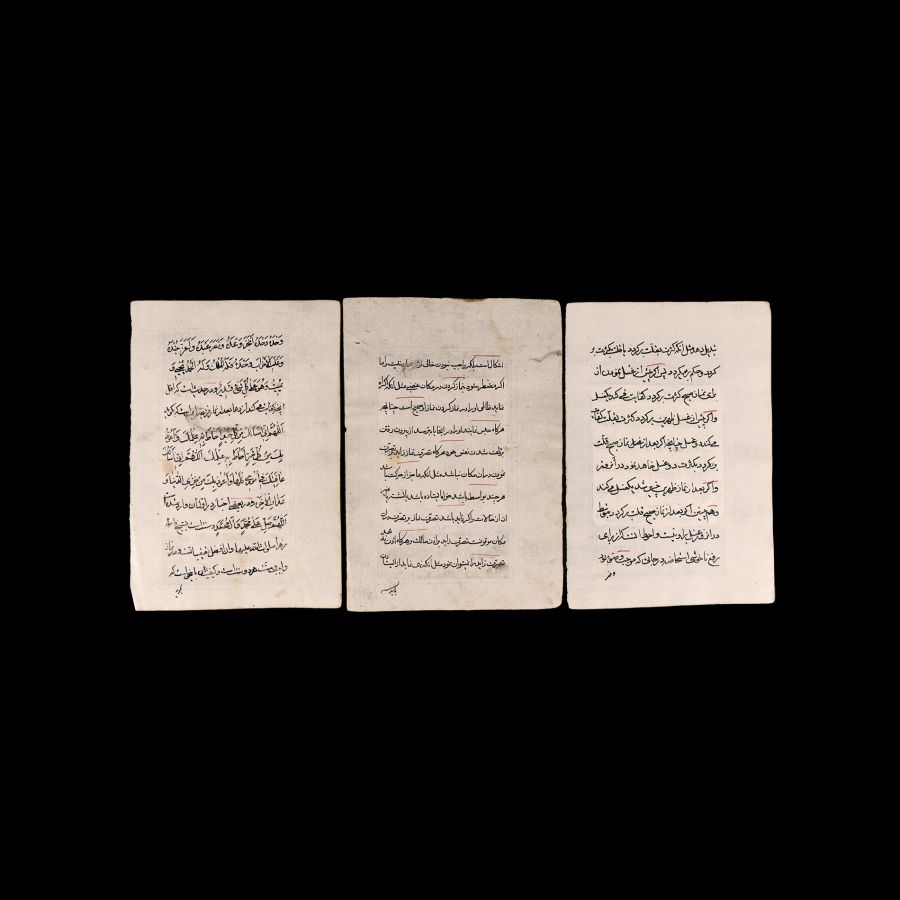
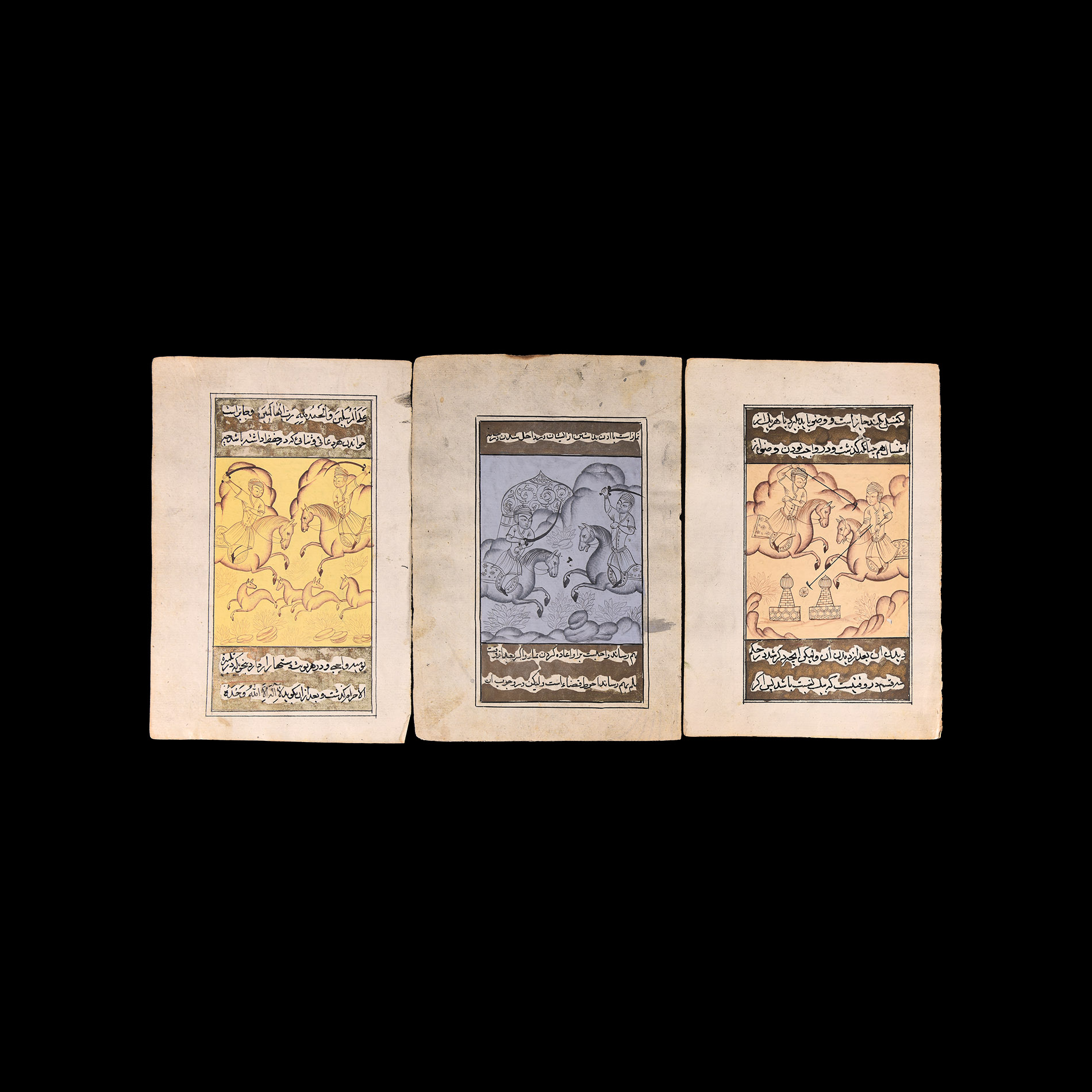
Watercolour Painting Group
PERSIA, 19TH CENTURY A.D.
5 3/4 x 3 3/4 in. (4 grams total, 15 x 10 cm).
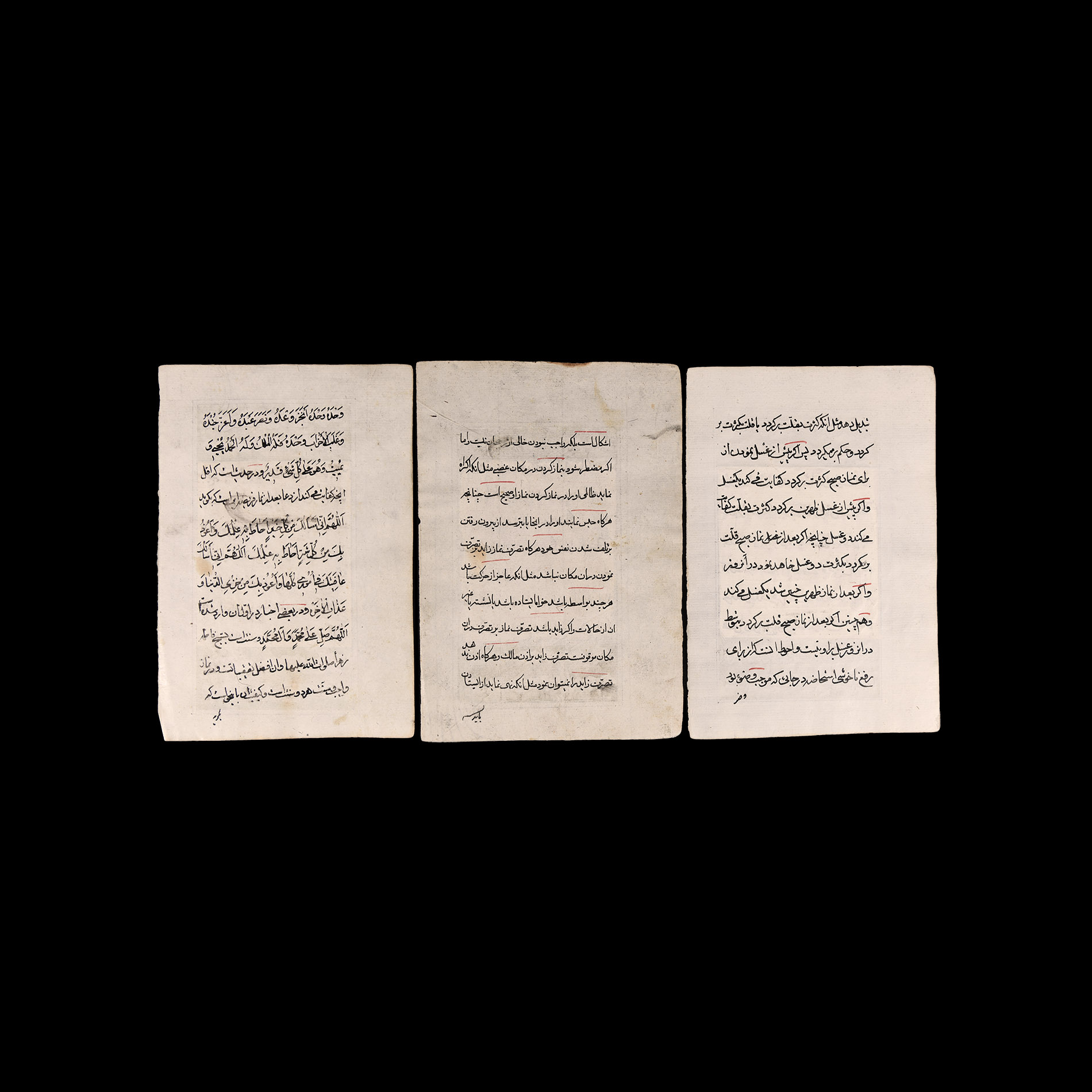
Three bifacial pages, each with recto with multiple lines of text and verso with watercolour painting between panels of text, including mounted riders in hunting, sports and battle scenes. [3, No Reserve]
ProvenanceAcquired on the UK art market, 1980s-1990s.
The Woodbridge collection of Indo-Persian art.
This lot is accompanied by an illustrated lot declaration signed by the Head of the Antiquities Department, Dr Raffaele D’Amato.
TimeLine Auctions follows a vetting process to ensure the authenticity and legality of all items, reinforcing our commitment to integrity and responsible trading. Each antiquity, antique, and coin lot undergoes thorough examination by a vetting committee of at least ten external specialists, professional trade association members, scientists, and archaeologists: Our Vetting Process
AUCTIONS:
TimeLine is a leading auction house specialising in antiquities, ancient art, collectables, natural history, coins, medals, and books. Our auctions offer museums, collectors, historians, and enthusiasts the opportunity to acquire unique and historically significant pieces.
-

Tudor Period Lead 'Hornbook' Writing Aid
Circa 1500-1633 A.D.Sold for (Inc. bp): £520
A Tudor or Stuart period lead-alloy 'hornbook': incomplete rectangular plaque with small rectangular handle; bearing raised, moulded text on the obverse with hatched forms between four registers, which frame the letters of the alphabet 'ABCDE/FG[reversed]HIKL/MNOPq/RST[VW]XYZ'; low-relief octofoil in centre to the reverse. 51 grams, 75 mm
Found Yorkshire, UK. This lot is accompanied by an illustrated lot declaration signed by the Head of the Antiquities Department, Dr Raffaele D’Amato.
The letter 'U' has been omitted from the alphabet as is common with such objects, as has the letter 'J', suggesting that the book was produced prior to the publication of Charles Butler's English Grammar (1633) which first distinguished between I and J. The letter Z is reversed. Hornbooks were employed as learning aids and commonly made from paper mounted onto wood together with a transparent sheet of horn. Smaller, more portable lead-alloy examples such as this one are generally believed to have been mass produced, whilst still falling within the genre of 'hornbooks'. Interestingly, some scholars have argued that the mistakes and inconsistencies found on lead examples rendered them less effective learning tools, used as children's toys in families with low levels of literacy, or possibly serving as dolls' accessories. -

Post Medieval Glass Cameo Portrait
18th century A.D.Sold for (Inc. bp): £26
Cloison with impressed relief bust of a youthful male with laurel wreath to his brow; surface accretions. 1.26 grams, 17 mm
From the Fadel family collection, London, UK, 1970s. This lot is accompanied by an illustrated lot declaration signed by the Head of the Antiquities Department, Dr Raffaele D’Amato. -
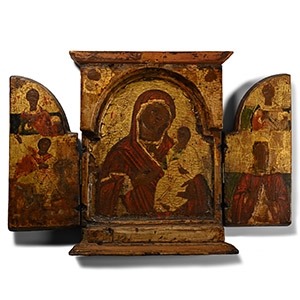
Greek Triptych Icon with Mother of God and Christ, Saint George and Other Saints
18th century A.D.Sold for (Inc. bp): £234
Executed in oil and tempera and gold leaf; the central panel with the veiled head of Mary with her head inclined towards the infant Jesus supported by her left hand, wearing a red maphorion mantle with elaborate golden borders, over an off-white robe, with gold cuffs; the infant facing to left, dressed in blue tunic and wrapped in a yellow shawl, right hand extended in blessing gesture, Greek inscriptions ΜΡ ΘΥ (Μήτηρ (τοῦ) Θεοῦ = Mother of God) flanking Mary's head, and 'ΙϹ ΧϹ' (ΙΗϹΟΥϹ ΧΡΙϹΤΟϹ = Jesus Christ) beside the infant; the side panels with icons of Saints Kosmas and Damianos (upper sections) and Saint George killing the dragon and Saint Barbara (lower sections). 425 grams, 20.5 cm
Property of a London, UK, gentleman collector. This lot is accompanied by an illustrated lot declaration signed by the Head of the Antiquities Department, Dr Raffaele D’Amato.
Even after the fall of Constantinople, icons painted on wood remained the principal object of devotion for Orthodox Christians wherever the commonwealth of the Eastern Roman Empire left its traces. The painted icons are still used by the Orthodox for personal devotion, for display in churches on feast days, and to decorate the iconostasis (partition) of the church. This icon is a portable one, for domestic or travel prayers.
