
Loading, please wait...
LOT 2029
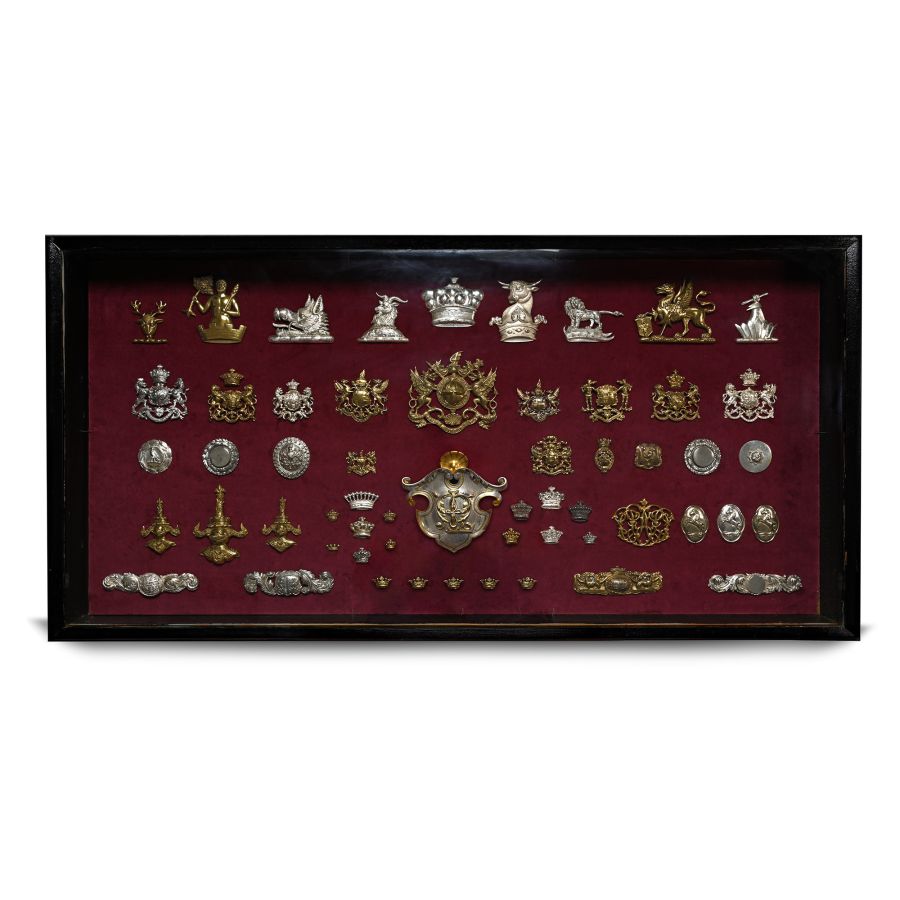
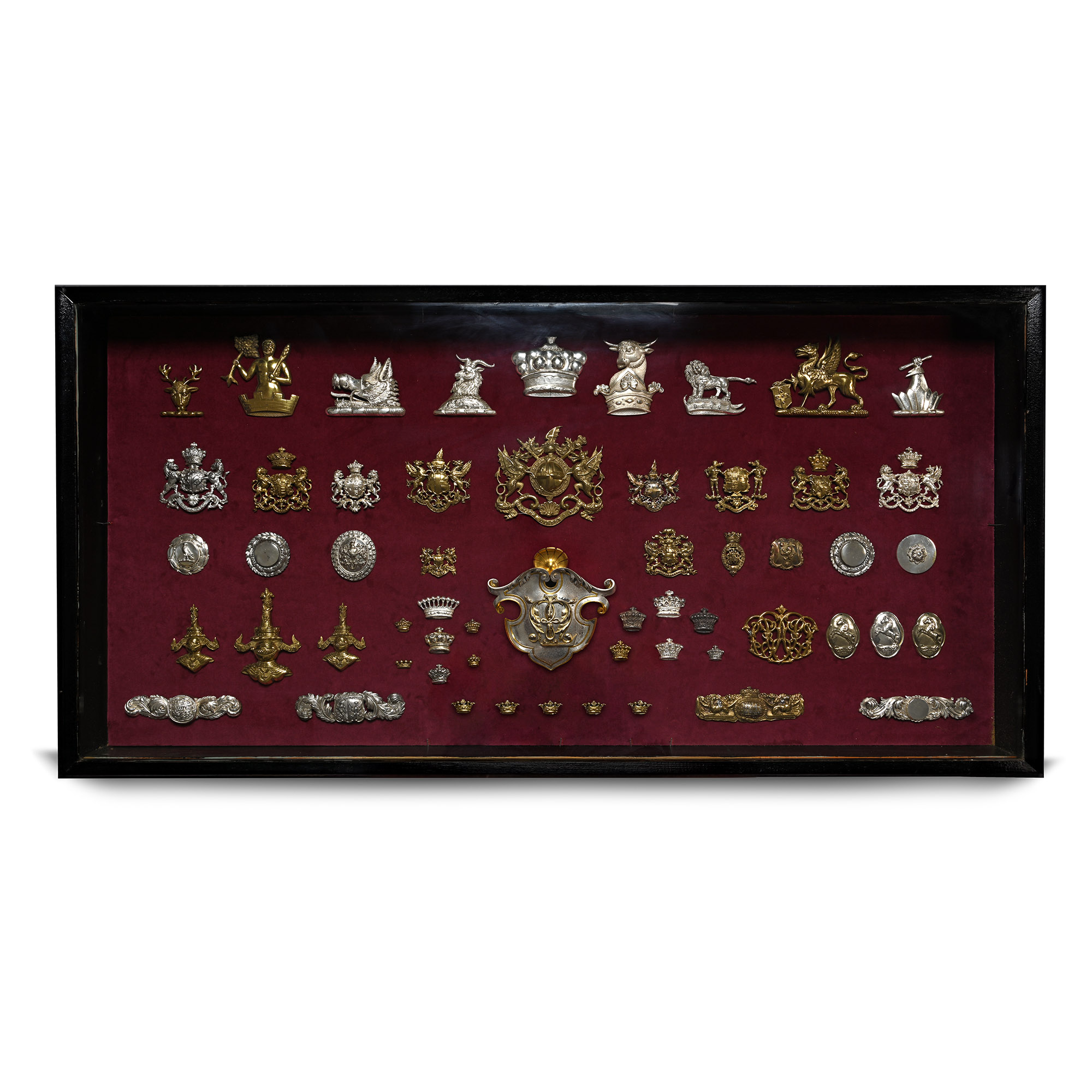
Wall Cabinet Containing an Assembly of Livery and Military Badges
24 x 48 3/8 x 4 3/4 in. (24.6 kg, 61 x 122 x 12 cm).
Fifty-six livery and military badges and metalled horse trappings, housed in a glazed wall cabinet with opening front.
ProvenanceEx Morningthorpe Manor, Norfolk, UK.
FootnotesThe parish of Morningthorpe is situated in south Norfolk, east of Long Stratton and west of Hempnall. The parish was certainly well established by the time of the Norman Conquest, its population, land ownership and productive resources being detailed in the Domesday Book of 1086.
CONDITIONTimeLine Auctions follows a vetting process to ensure the authenticity and legality of all items, reinforcing our commitment to integrity and responsible trading. Each antiquity, antique, and coin lot undergoes thorough examination by a vetting committee of at least ten external specialists, professional trade association members, scientists, and archaeologists: Our Vetting Process
AUCTIONS:
TimeLine is a leading auction house specialising in antiquities, ancient art, collectables, natural history, coins, medals, and books. Our auctions offer museums, collectors, historians, and enthusiasts the opportunity to acquire unique and historically significant pieces.
LOT 2029
Wall Cabinet Containing an Assembly of Livery and Military Badges
Sold for (Inc. bp): £845
-
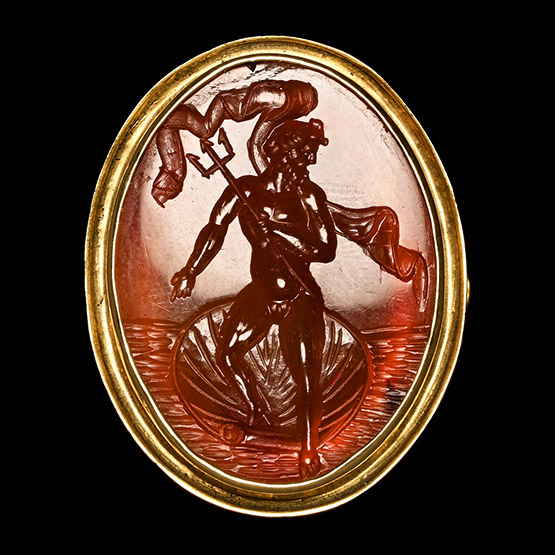
Post Medieval Gold Ring with Carnelian Gemstone Depicting the Roman God Neptune
Italy, 19th century A.D.Sold for (Inc. bp): £2,340
Depicting Neptune advancing nude from a scallop shell, holding a trident in one hand and pointing with the other; billowing banner to his rear; supplied with a museum-quality impression. 15.19 grams, 31.43 mm overall, 19.60 mm internal diameter (approximate size British R, USA 8 1/2, Europe 18 3/4, Japan 18)
Private collection, Europe. Acquired on the English art market. This lot has been checked against the Interpol Database of stolen works of art and is accompanied by search certificate number no.13053-248373.
Throughout Europe, and far beyond, talented gem-cutters were at work in the 19th century. Neptune was appreciated by Neoclassical cutters, as shown by a carnelian gemstone with the profile of Neptune, his face serene amidst a storm, by the American engraver George Hewitt Cushman (1814-1876). -
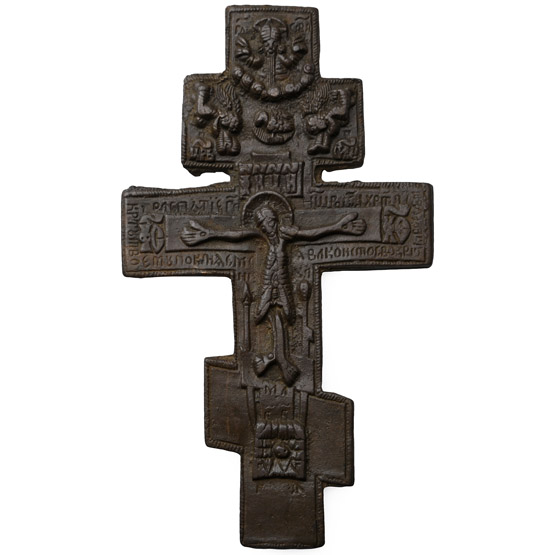
Eastern European Bronze Cross
Circa 18th-19th century A.D.Sold for (Inc. bp): £20
Formed with three horizontal bands, central figure of crucified Jesus; a pair of angels, dove and Jahve to the upper part; legend in azbuka on both faces. 66 grams, 11 cm
Ex Constable collection, 1990s. Ex P. Morris collection. -

Post-Classical Agate Gemstone with Sphinx
19th-20th century A.D. or earlierEstimate: £400 - 600 (+bp*)
Opening Bid: £200
Discoid in plan with intaglio sphinx in profile on a baseline, with wings spread and tail raised, in 1st century A.D. style; supplied with a museum-quality impression. 2.55 grams, 18 mm
Private collection, England.
