
Loading, please wait...
LOT 2035
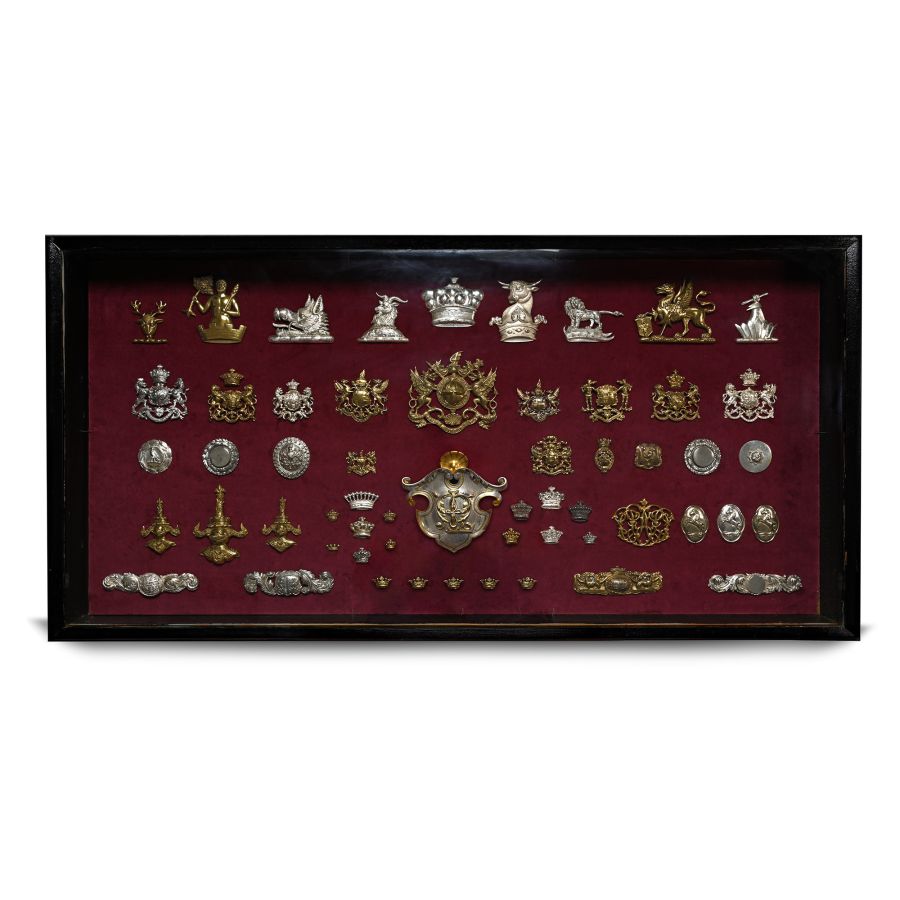
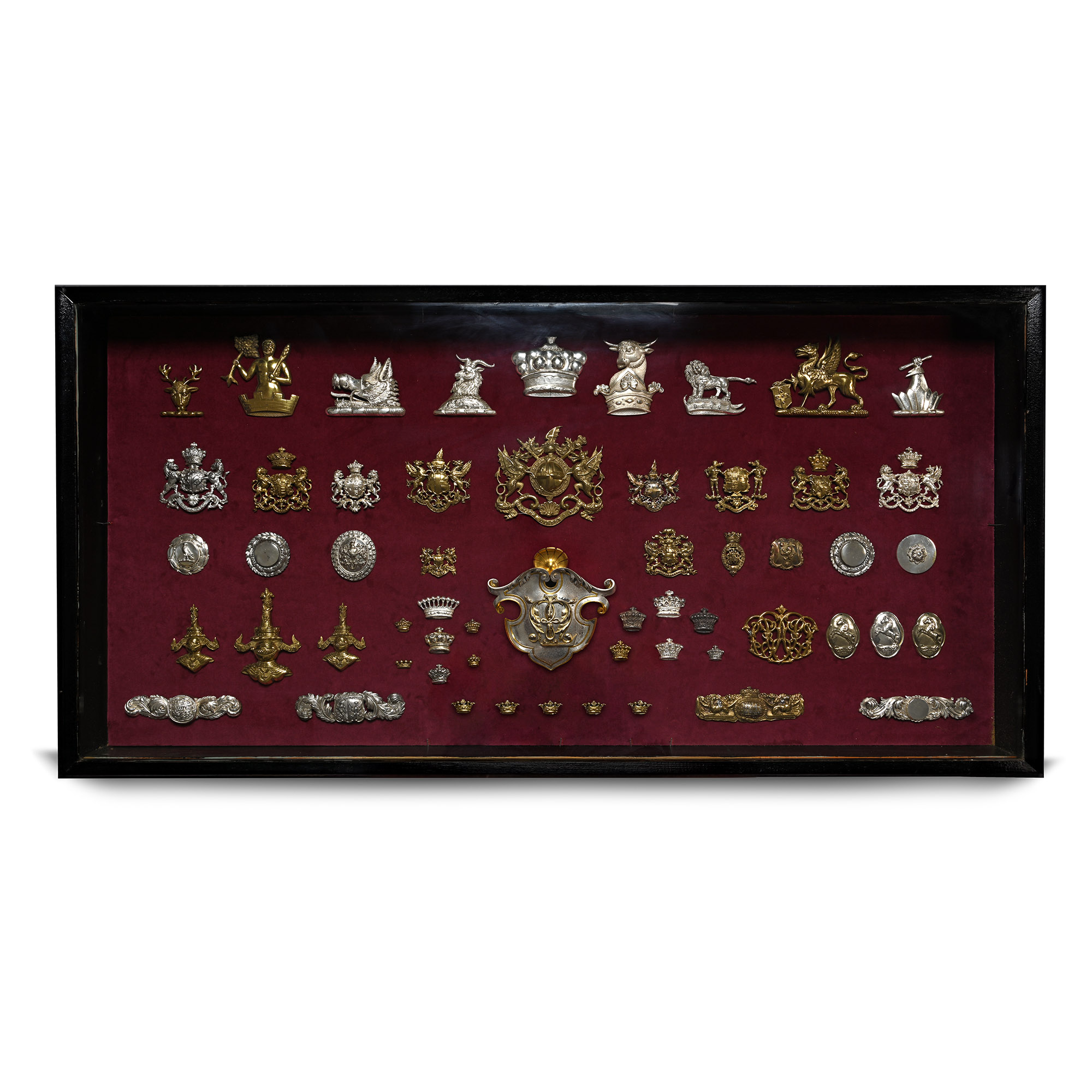
Wall Cabinet Containing an Assembly of Livery and Military Badges
24 x 48 3/8 x 4 3/4 in. (54 kg, 61 x 123 x 12 cm).
Fifty-six livery and military badges and metalled horse trappings, housed in a glazed wall cabinet with opening front.
ProvenanceEx Morningthorpe Manor, Norfolk, UK.
This lot is accompanied by an illustrated lot declaration signed by the Head of the Antiquities Department, Dr Raffaele D'Amato.
The parish of Morningthorpe is situated in south Norfolk, east of Long Stratton and west of Hempnall. The parish was certainly well established by the time of the Norman Conquest, its population, land ownership and productive resources being detailed in the Domesday Book of 1086.
CONDITIONTimeLine Auctions follows a vetting process to ensure the authenticity and legality of all items, reinforcing our commitment to integrity and responsible trading. Each antiquity, antique, and coin lot undergoes thorough examination by a vetting committee of at least ten external specialists, professional trade association members, scientists, and archaeologists: Our Vetting Process
AUCTIONS:
TimeLine is a leading auction house specialising in antiquities, ancient art, collectables, natural history, coins, medals, and books. Our auctions offer museums, collectors, historians, and enthusiasts the opportunity to acquire unique and historically significant pieces.
LOT 2035
Wall Cabinet Containing an Assembly of Livery and Military Badges
Estimate £800 - 1,000€930 - 1,160 (for guidance only)$1,080 - 1,350 (for guidance only)
-

Reproduction Roman Bronze Brooch Collection
20th century A.D.Sold for (Inc. bp): £33
Including a crossbow type with applied silver collars, headstud type and trumpet type with lobed baluster. 118 grams total, 57-77 mm
Acquired on the London, UK, art market. From the private collection of a Kent, UK, gentleman. This lot is accompanied by an illustrated lot declaration signed by the Head of the Antiquities Department, Dr Raffaele D'Amato. -
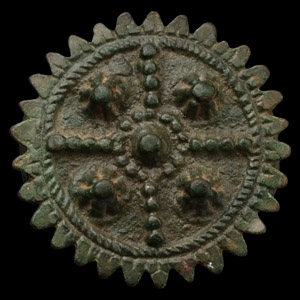
Stuart Period Bronze Ring with Cross and Bosses
17th-18th century A.D.Sold for (Inc. bp): £169
Flat-section hoop with integral filigree meander, drum-shaped bezel with dentilled rim, raised beaded cross, lateraldiscs. 13.22 grams, 31.00 mm overall, 18.93 mm internal diameter (approximate size British S, USA 9, Europe 20, Japan 19)
Acquired on the London art market in the late 1980s-1990s. From the family collection of an East London, UK, gentleman. This lot is accompanied by an illustrated lot declaration signed by the Head of the Antiquities Department, Dr Raffaele D'Amato. -

Bronze Grand Tour Egyptian Sphinx
Italy, late 19th century A.D.Sold for (Inc. bp): £338
Hollow-formed miniature of a sphinx couchant with forelegs extended, wearing the nemes crown and with tasseled braid placed along the spine; mounted on a wooden display stand. 1.44 kg total, 25 wide including stand
From the private collection of a S.W. London gentleman, acquired in the 1970s. This lot is accompanied by an illustrated lot declaration signed by the Head of the Antiquities Department, Dr Raffaele D'Amato.
The most celebrated Sphinx in Egyptian mythology is the monument built near the pyramids as a protective symbol, to wish the pharaoh a peaceful afterlife. It has a leonine body and a human head. The Sphinx could be shown as male or female, depending on the pharaoh or queen it had to protect. The inclusion of sphinxes in temple complexes became a tradition lasting into the Roman period and Late Antiquity. Many pharaohs had their heads carved atop the guardian statues of their tombs, in part to show their close relationship with the powerful solar deity Sekhmet, a lioness. This cast bronze sphinx is a fine example of neoclassical sculptural art under the influence of Egyptomania and the renewed interest in the culture of ancient Egypt sparked by Napoleon’s Egyptian Campaign from 1798. At a time when only few could afford a trip to Egypt during the peak of Egyptomania contact could be made with Egyptian culture through literature, architecture and art. Particularly influential were Vivant Denon’s Voyage dans la Basse et la Haute Égypte, the Institute of Egypt's Description de l'Égypte, Robert Adams's interior decoration, Verdi’s Aida and the pedestal sphinxes protecting the obelisk of Tuthmosis III (Cleopatra's Needle).
