
Loading, please wait...
LOT 2148
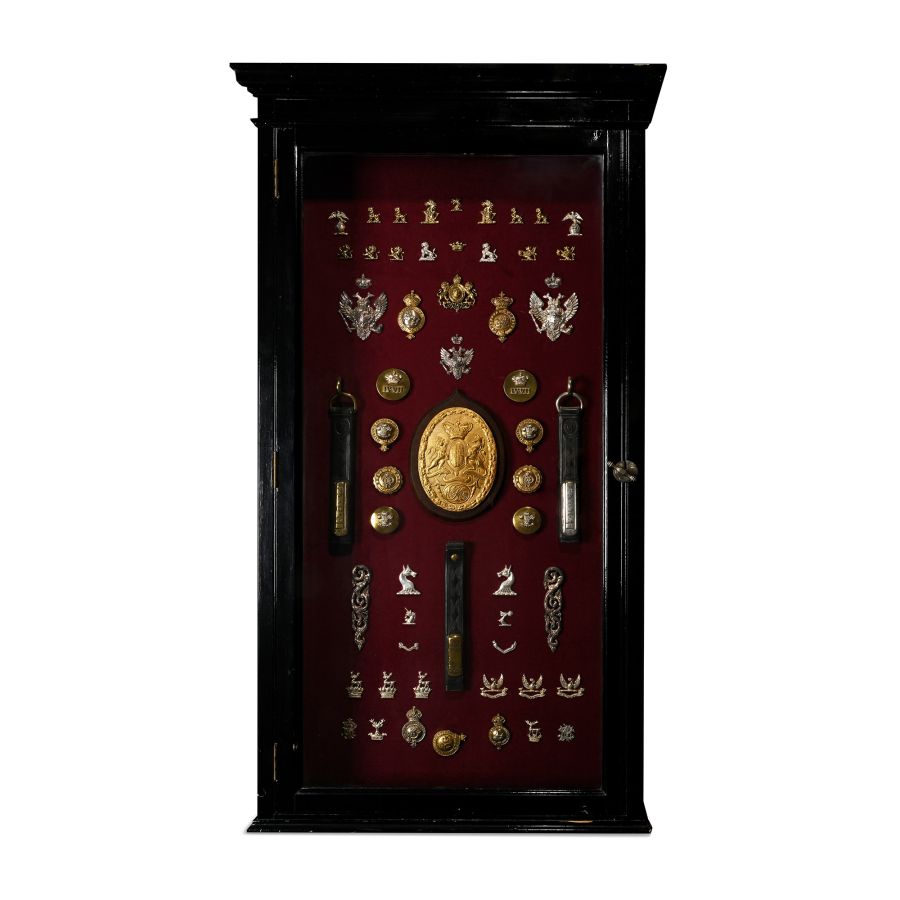
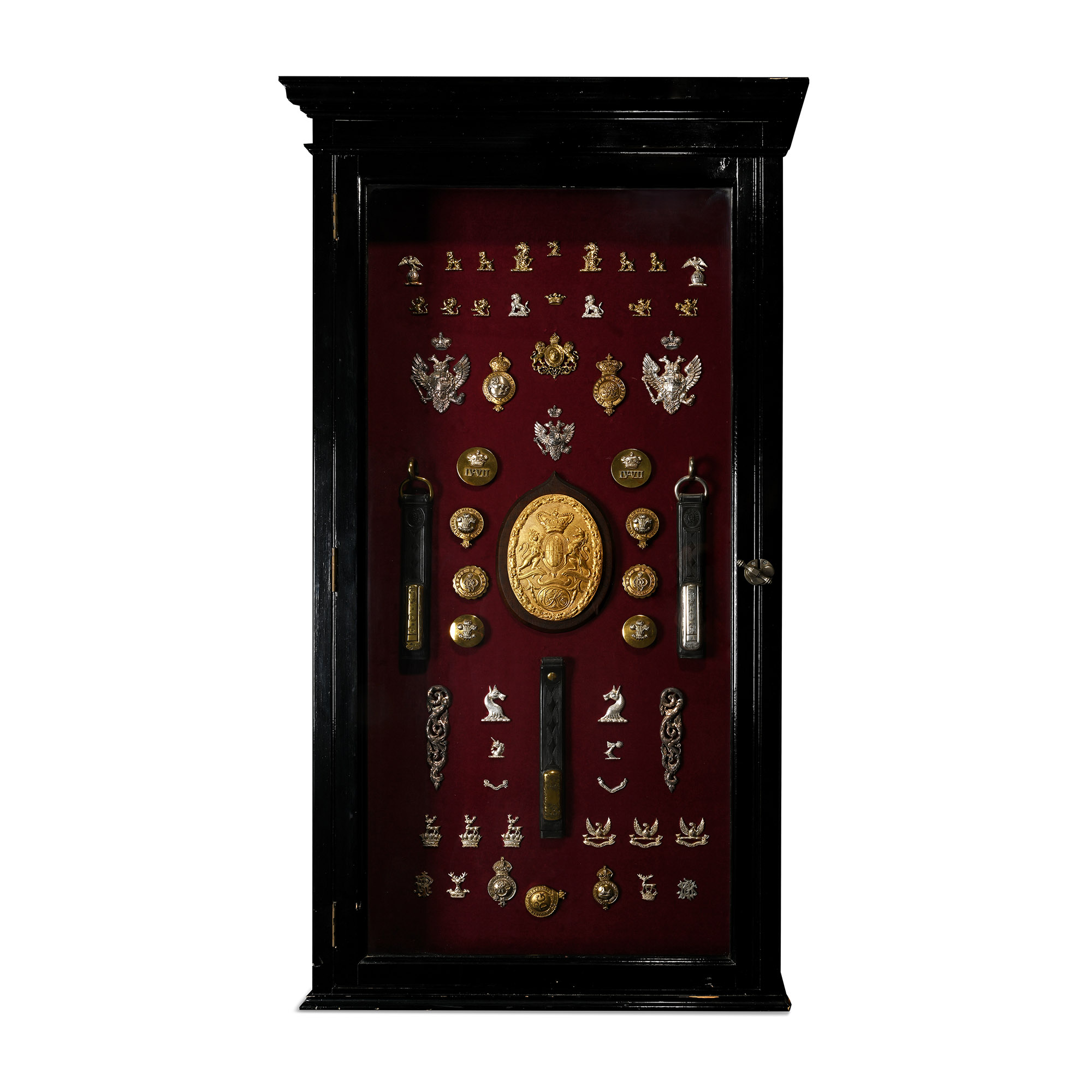
Wall Cabinet Containing a Queen Charlotte (1744-1818) Carriage Plate
18TH-19TH CENTURY A.D.
52 x 26 3/4 x 5 1/2 in. (21.75 kg, 132 x 68 x 14 cm).
Bearing the monogram of Queen Charlotte with her arms impaled by those of her husband, King George III (1738-1820) with his crest and supporters set amongst a display of some fifty-six livery and military badges and metalled horse trappings, housed in a glazed wall cabinet with opening front.
ProvenanceEx Morningthorpe Manor, Norfolk, UK.
FootnotesThe parish of Morningthorpe is situated in south Norfolk, east of Long Stratton and west of Hempnall. The parish was certainly well established by the time of the Norman Conquest, its population, land ownership and productive resources being detailed in the Domesday Book of 1086.
CONDITIONTimeLine Auctions follows a vetting process to ensure the authenticity and legality of all items, reinforcing our commitment to integrity and responsible trading. Each antiquity, antique, and coin lot undergoes thorough examination by a vetting committee of at least ten external specialists, professional trade association members, scientists, and archaeologists: Our Vetting Process
AUCTIONS:
TimeLine is a leading auction house specialising in antiquities, ancient art, collectables, natural history, coins, medals, and books. Our auctions offer museums, collectors, historians, and enthusiasts the opportunity to acquire unique and historically significant pieces.
LOT 2148
Wall Cabinet Containing a Queen Charlotte (1744-1818) Carriage Plate
Sold for (Inc. bp): £715
-

Post-Classical Green Glass Cameo of Man
19th century A.D. or earlierEstimate: £500 - 700 (+bp*)
Opening Bid: £250
Modelled in the half-round bust of a youth with curly locks of hair. 0.72 grams, 13 mm
Private English collection, formed between the late 1970s and early 1990s. Private collection, London, UK. -

Large Byzantine Style Agate Gemstone in Gold Pendant
18th-19th century A.D.Estimate: £2,000 - 3,000 (+bp*)
Opening Bid: £1,000
Discoid cell with scooped rim and faux-granulated segments; two granule-and-loop suspension points; incuse frieze of two facing figures, one crowned and holding an orb and sceptre, the other nimbate; exergue below; supplied with a museum-quality impression. 27.92 grams, 45 mm
Private collection, England. This lot has been checked against the Interpol Database of stolen works of art and is accompanied by search certificate number no.13174-249553. -
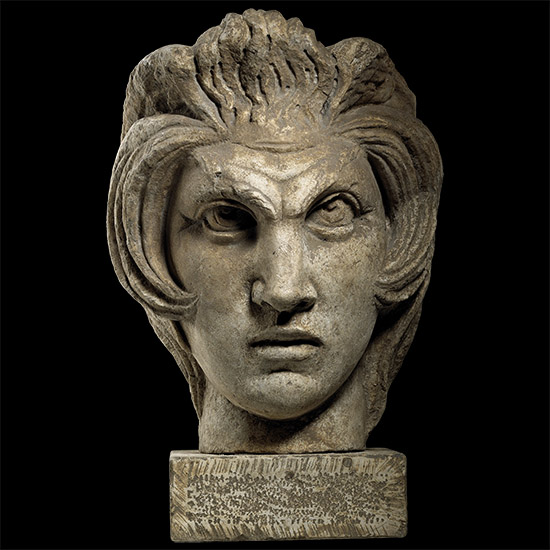
Post Medieval Marble Portrait of a Man
17th-18th century A.D.Estimate: £5,000 - 7,000 (+bp*)
Opening Bid: £2,500
Modelled in the round with a frowning expression, a triangular face with angular features and thick banded hair; recessed to the top of the head. 35.1 kg, 41 cm high including stand
Private collection, England. This lot has been checked against the Interpol Database of stolen works of art and is accompanied by search certificate number no.13082-249677.
From the late 17th century until around the 1760s, classical nostalgia and the viewing and recording of classical remains became major occupations for aristocratic young men who went on the ‘Grand Tour’. In Rome, for example, some British visitors counted and measured the huge number of ancient columns and obelisks still visible in the city. The wealthiest brought back antiquities, including stones with Latin inscriptions, and redesigned their gardens to display them. More significantly, such travels also encouraged those who went to redefine their own origins and native identities within a wider European context. The taste for the reproductions of ancient monuments involved also the sculptures of Middle Age.
