
Loading, please wait...
_900x900.jpg "Wall Cabinet Containing a Queen Charlotte (1744-1818) Carriage Plate")
_200x200.jpg "Wall Cabinet Containing a Queen Charlotte (1744-1818) Carriage Plate")
.jpg "Wall Cabinet Containing a Queen Charlotte (1744-1818) Carriage Plate")
LOT 2040
Wall Cabinet Containing a Queen Charlotte (1744-1818) Carriage Plate
18TH-19TH CENTURY A.D.
52 x 26 3/4 x 5 1/2 in. (47.7 kg, 132 x 68 x 14 cm).
Bearing the monogram of Queen Charlotte with her arms impaled by those of her husband, King George III (1738-1820) with his crest and supporters set amongst a display of some fifty-six livery and military badges and metalled horse trappings, housed in a glazed wall cabinet with opening front.
ProvenanceEx Morningthorpe Manor, Norfolk, UK.
This lot is accompanied by an illustrated lot declaration signed by the Head of the Antiquities Department, Dr Raffaele D'Amato.
The parish of Morningthorpe is situated in south Norfolk, east of Long Stratton and west of Hempnall. The parish was certainly well established by the time of the Norman Conquest, its population, land ownership and productive resources being detailed in the Domesday Book of 1086.
CONDITIONTimeLine Auctions follows a vetting process to ensure the authenticity and legality of all items, reinforcing our commitment to integrity and responsible trading. Each antiquity, antique, and coin lot undergoes thorough examination by a vetting committee of at least ten external specialists, professional trade association members, scientists, and archaeologists: Our Vetting Process
AUCTIONS:
TimeLine is a leading auction house specialising in antiquities, ancient art, collectables, natural history, coins, medals, and books. Our auctions offer museums, collectors, historians, and enthusiasts the opportunity to acquire unique and historically significant pieces.
LOT 2040
Wall Cabinet Containing a Queen Charlotte (1744-1818) Carriage Plate
Estimate £800 - 1,000€930 - 1,160 (for guidance only)$1,080 - 1,350 (for guidance only)
-
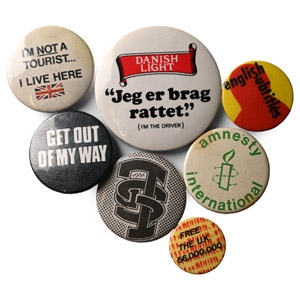
Miscellaneous Vintage Pin Badge Collection
Circa 1980s A.D.Estimate: £30 - 40 (+bp*)
Opening Bid: £5
Including 'Amnesty International', 'I'm Not a Tourist ... I Live Here' and other types. 33 grams total, 24-56 mm
From the private collection of a S.W. London gentleman, acquired in the 1970s. This lot is accompanied by an illustrated lot declaration signed by the Head of the Antiquities Department, Dr Raffaele D'Amato. -
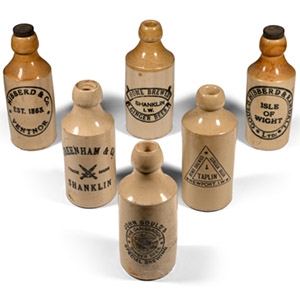
Antique Isle of Wight Ginger Beer Bottle Collection
Late 19th-early 20th century A.D.Sold for (Inc. bp): £65
Comprising: one stamped 'GOULD. HIBBERD & RANDALL LTD. ISLE OF WIGHT' with stopper; one stamped 'HIBBERD & CO. VENTNOR EST. 1863' with stopper; one stamped 'HOME BREWED GINGER BEER NEWPORT, I.W. TAPLIN'; one stamped 'JOHN GOULD'S SPECIAL BREWING. THE CARISBROOKE GINGER BEER'; one stamped 'HOME BREWED GINGER BEER SHANKLIN I.W.'; one stamped 'GREENHAM & CO. SHANKLIN'; accompanied by a booklet by Stephen H. Day, Castaways- collectable containers. 3.2 kg total, 17-19 cm
From the private collection of an East Anglian gentleman, 1970s-early 2000s. This lot is accompanied by an illustrated lot declaration signed by the Head of the Antiquities Department, Dr Raffaele D'Amato. -
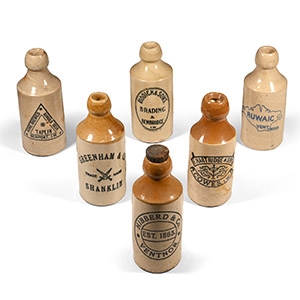
Antique Isle of Wight Ginger Beer Bottle Collection
Late 19th-early 20th century A.D.Sold for (Inc. bp): £59
Comprising: one stamped 'GREENHAM & CO SHANKLIN'; one stamped 'RIDDICK & SONS. BRADING & BEMBRIDGE I.W.'; one stamped 'HIBBERD & CO. VENTNOR EST. 1863' with a stopper; one stamped 'RUWAIC VENTNOR'; one stamped 'F. HARTRIDGE & SONS COWES I.W.'; one stamped 'TAPLIN HOME BREWED GINGER BEER NEWPORT, I.W.'; accompanied by a booklet by Stephen H. Day, Castaways - collectable containers. 3 kg total, 17.4-18.6 cm
From the private collection of an East Anglian gentleman, 1970s-early 2000s. This lot is accompanied by an illustrated lot declaration signed by the Head of the Antiquities Department, Dr Raffaele D'Amato.
