
Loading, please wait...
LOT 0079
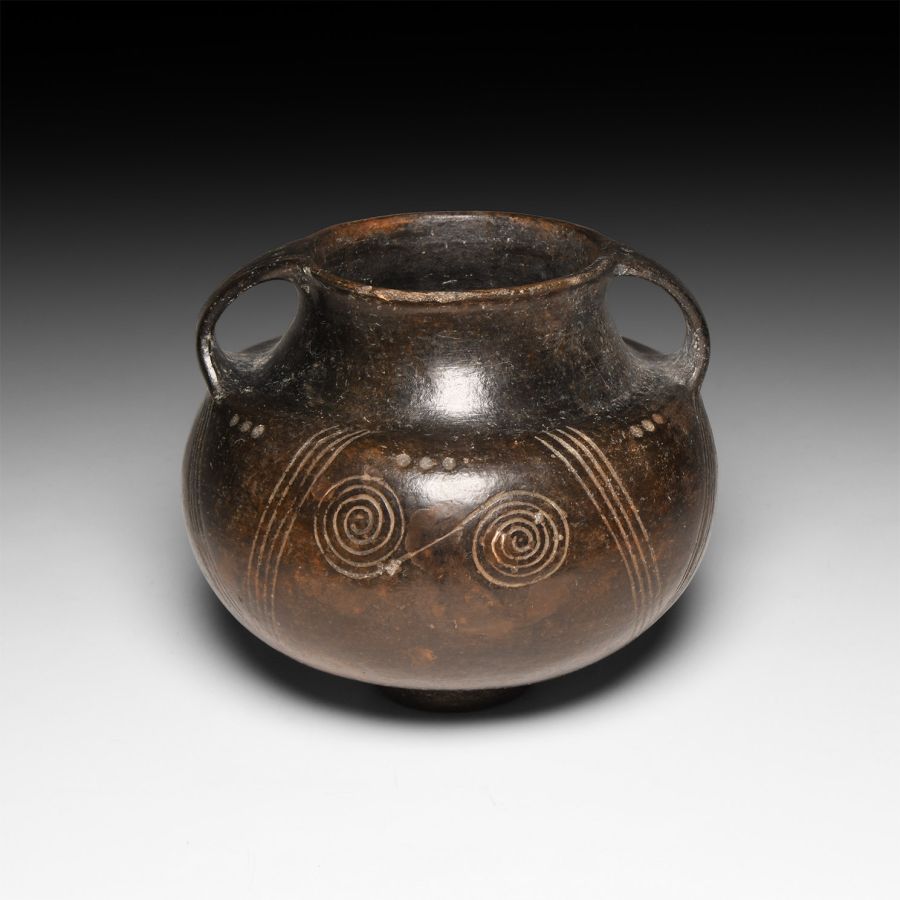
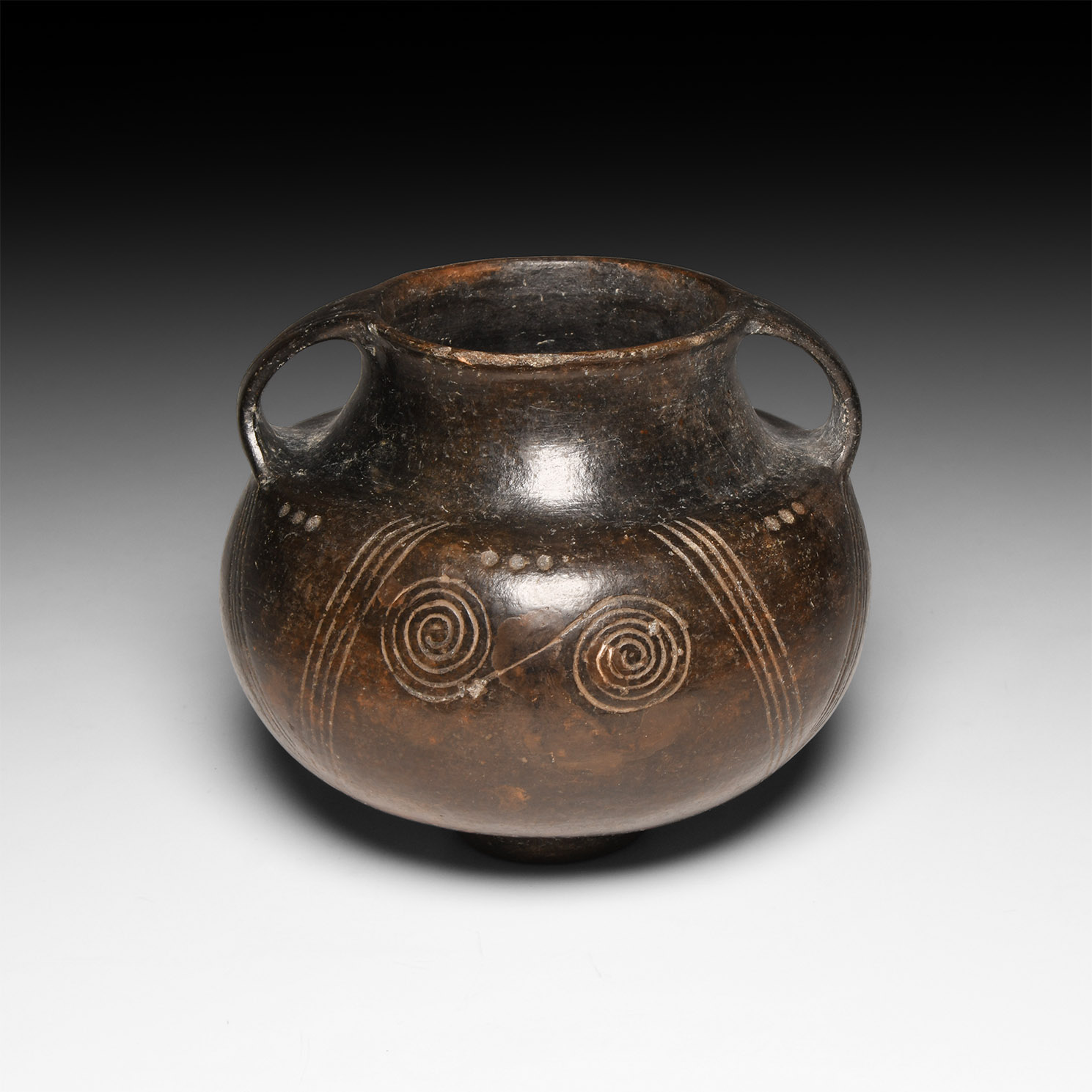
Villanovan Two-Handled Jar
7TH CENTURY B.C.
4 1/8 in. (145 grams, 10.5 cm wide).
A terracotta amphora composed of a squat bulbous body and rounded shoulder, waisted neck, integral loop handles and integral foot, decorated with scrolling S-motifs, clusters of dots and combed chevrons.
ProvenanceEx collection of P. Linders, Herrliberg, Zurich, Switzerland.
with Galleria Serodine SA, Ascona, Switzerland, 12 November 2008.
Cf. The Metropolitan Museum, New York, accession number 96.18.80, for similar.
CONDITIONTimeLine Auctions follows a vetting process to ensure the authenticity and legality of all items, reinforcing our commitment to integrity and responsible trading. Each antiquity, antique, and coin lot undergoes thorough examination by a vetting committee of at least ten external specialists, professional trade association members, scientists, and archaeologists: Our Vetting Process
AUCTIONS:
TimeLine is a leading auction house specialising in antiquities, ancient art, collectables, natural history, coins, medals, and books. Our auctions offer museums, collectors, historians, and enthusiasts the opportunity to acquire unique and historically significant pieces.
-
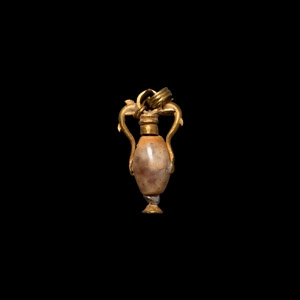
Greek Gold Dolphin Amphora Pendant
5th-3rd century B.C.Estimate: £450 - 650 (+bp*)
Opening Bid: £250
An amphora-shaped pendant composed of a jasper body, sheet-gold neck, two handles formed as leaping dolphins, ribbed loop between and free-running coiled loop above, pearl bead and foot to base. 1.85 grams, 23 mm
Fine condition.
Acquired 1970-2010. Collection of a late Japanese gentleman. -
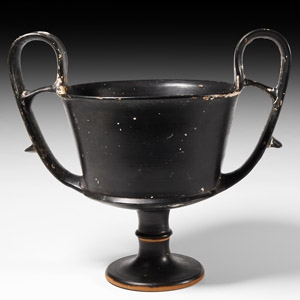
Greek Black Ware Kantharos
5th century B.C.Sold for (Inc. bp): £5,200
A black-glazed terracotta kantharos with two integral ear-shaped handles with internal bridges and ledges to the exterior, collar to stem and discoid foot; possibly Boeotian. 565 grams, 23 cm wide
Acquired 1980s-1990s. H.N. collection, Milton Keynes, UK.
A kantharos is a drinking cup with two handles. -
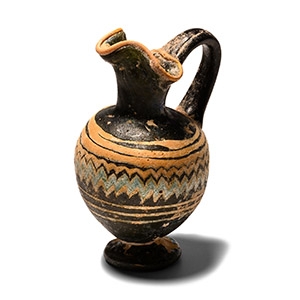
Greek Glass Trefoil Oinochoe
6th-3rd century B.C.Sold for (Inc. bp): £1,560
An opaque blue glass oinochoe with trefoil mouth, handle and discoid foot, polychrome bands and chevrons around the body and plain yellow band to lip; iridescent surfaces. 45 grams, 75 mm high
French collection, 1960s-early 2000s. From an important Paris gallery, France.
