
Loading, please wait...
LOT 0612
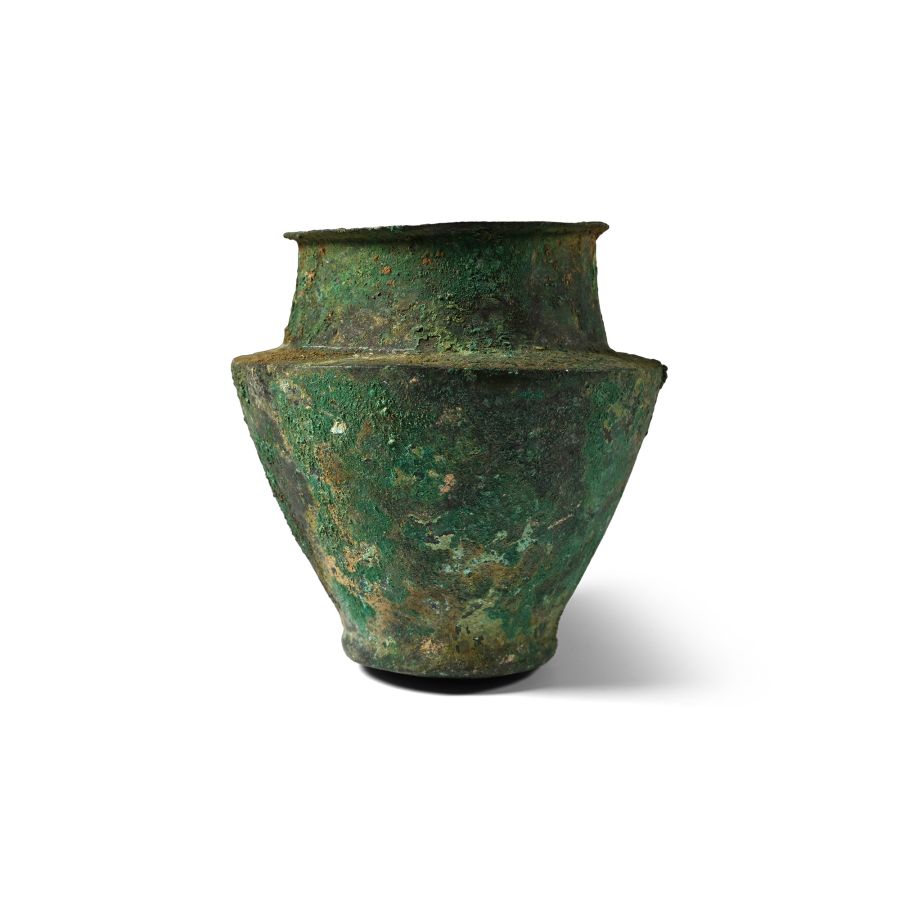
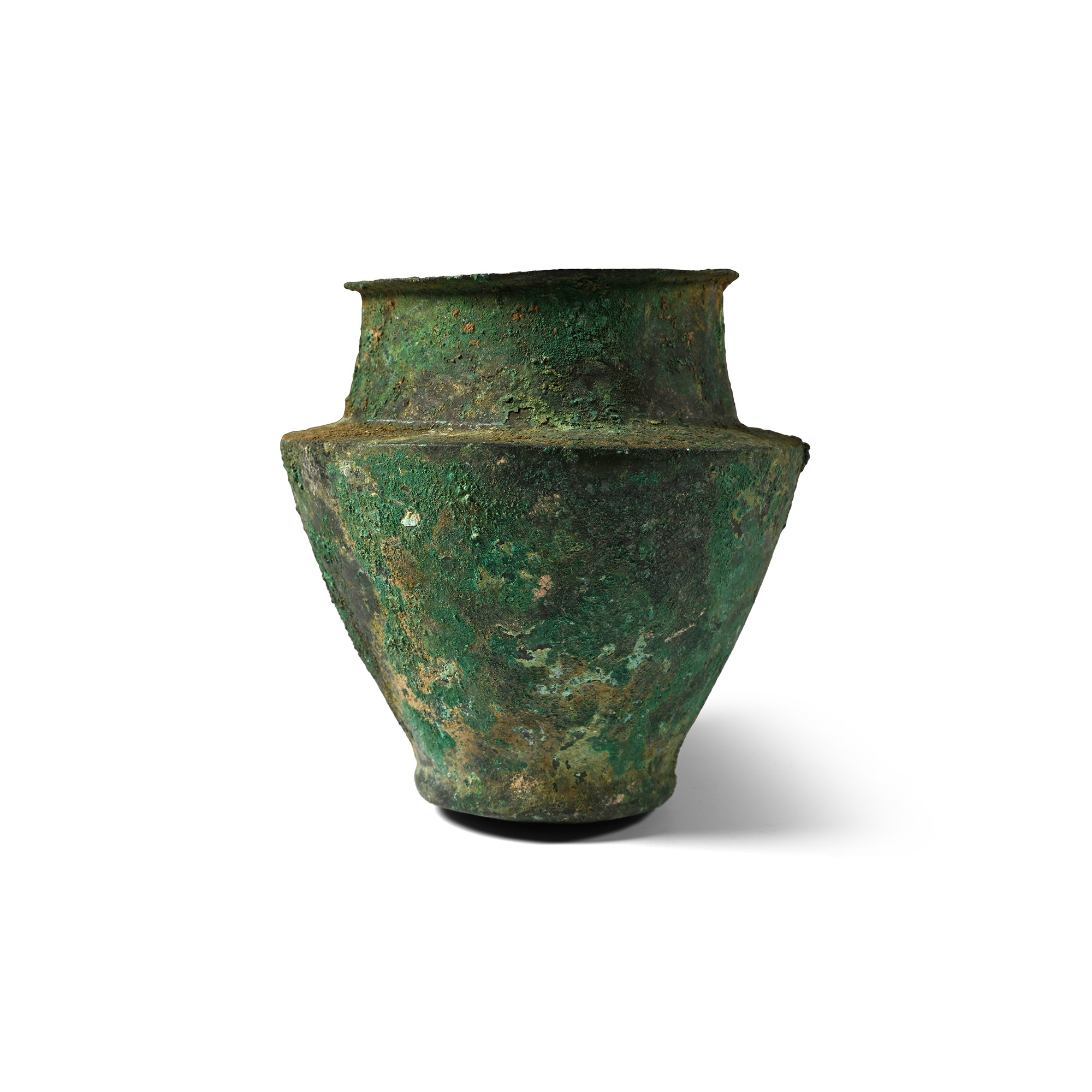
Villanovan Bronze Situla
7TH CENTURY B.C.
3 3/4 in. (143 grams, 94 mm).
Formed of hammered sheet, the concave body with a rounded narrow base, sharply carinated shoulders, short neck and a flaring rim. [No Reserve]
ProvenanceEx London, UK, collections, 1990s-2000s.
This lot is accompanied by an illustrated lot declaration signed by the Head of the Antiquities Department, Dr Raffaele D'Amato.
Cf. a similar but not identical cup in Various, Guerrieri Principi ed Eroi fra il Danubio e il Po dalla Preistoria all'Alto Medioevo, Trento, 2004, p.626, fig.5.35; see also pp.640, 643.
FootnotesSimilar cups were used as grave goods in the Villanovan necropolises of Northern Italy. They were imitations of the bronze embossed ossuary situlae, which contained the bones of the deceased. They were often closed with bronze cups that served as lids.
CONDITIONTimeLine Auctions follows a vetting process to ensure the authenticity and legality of all items, reinforcing our commitment to integrity and responsible trading. Each antiquity, antique, and coin lot undergoes thorough examination by a vetting committee of at least ten external specialists, professional trade association members, scientists, and archaeologists: Our Vetting Process
AUCTIONS:
TimeLine is a leading auction house specialising in antiquities, ancient art, collectables, natural history, coins, medals, and books. Our auctions offer museums, collectors, historians, and enthusiasts the opportunity to acquire unique and historically significant pieces.
-

Greek Apulian Red-Figure Lekanis with Ladies of Fashion
South Italic, circa 4th century B.C. or laterSold for (Inc. bp): £442
Black-glazed body and matching lid decorated with two heads of ladies of fashion, palmettes between, radial foliage motif on the knob handle and a hatching around the rim. 144 grams, 90 mm wide
From the private collection of a Canadian gentleman living in Essex, UK, formed since the 1920s-circa 1990. Property of an Essex lady until the late 1990s; thence by descent. From the private collection of an Essex gentleman since the late 1990s. This lot is accompanied by an illustrated lot declaration signed by the Head of the Antiquities Department, Dr Raffaele D'Amato. -
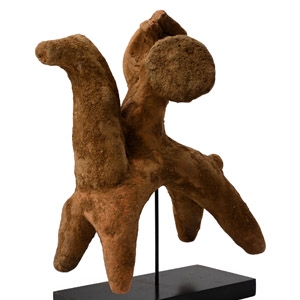
Archaic Greek Mounted Terracotta Warrior
7th-5th century B.C.Sold for (Inc. bp): £169
Modelled in the round as a mounted warrior, the stylised horse modelled standing on stub legs, with a long neck and detailing to its eyes; the warrior holding a shield in his left hand, right hand and arm raised to eye level, wearing a crested helmet; restored and mounted on a custom-made display stand. 410 grams total, 16 cm high including stand
Acquired before 1990. From an old German collection. From the private collection of John Meredith, acquired since the 1990s; thence by descent. This lot is accompanied by an illustrated lot declaration signed by the Head of the Antiquities Department, Dr Raffaele D'Amato.
Terracotta figurines of horse and rider were common grave offerings in Boeotia, northwest of Attica, particularly during the 6th century B.C. Representations of warriors on horseback were already widespread in the Geometric Period, and also widely employed in Cyprus in this same period. The image of our rider, although influenced by Cypriot designs, does not show typical Cypriot characteristics, and indeed his kausia cap suggests a northern Greek origin. -
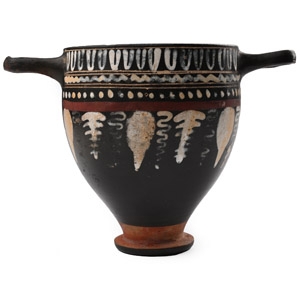
Greek Apulian Gnathian Ware Skyphos
Magna Graecia, 5th-3rd century B.C.Sold for (Inc. bp): £364
With mammiform body, pedestal base and two loop handles; ovolo patterns in white and pellets in ochre beneath, horizontal garland of flowers to one face, frond to reverse. 116 grams,13.5 cm wide
From the private collection of a Canadian gentleman living in Essex, UK, formed since the 1920s-circa 1990. Property of an Essex lady until the late 1990s; thence by descent. From the private collection of an Essex gentleman since the late 1990s. This lot is accompanied by an illustrated lot declaration signed by the Head of the Antiquities Department, Dr Raffaele D'Amato.
