
Loading, please wait...
LOT 0300
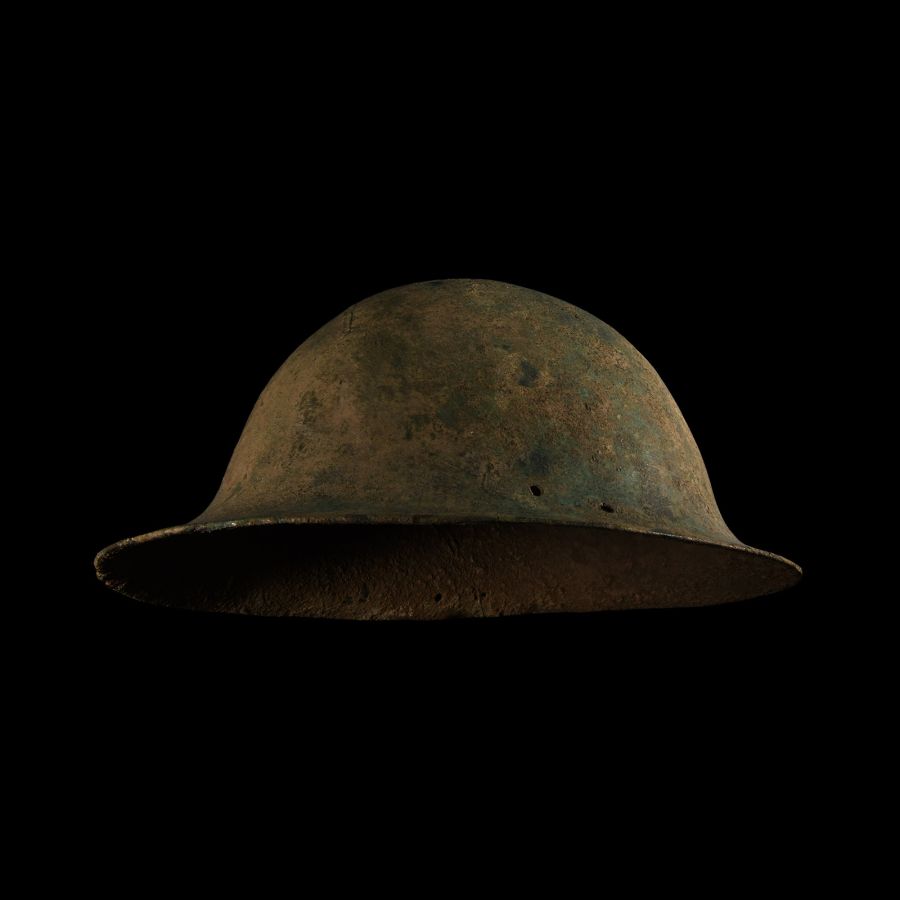
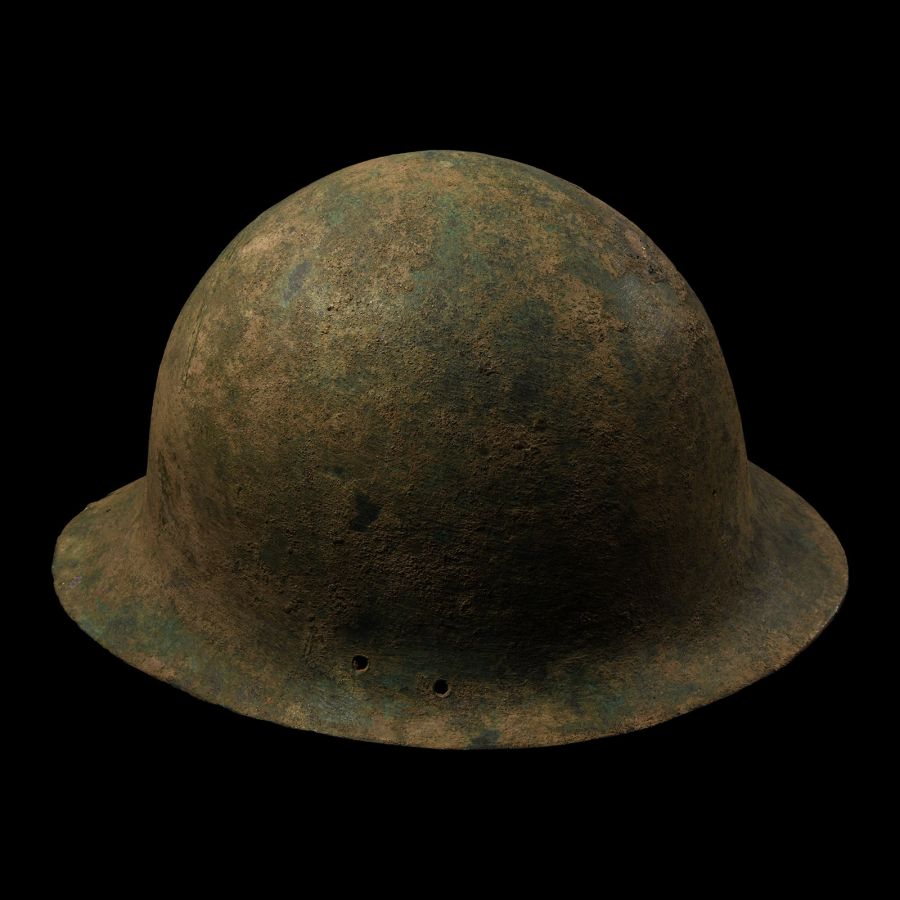
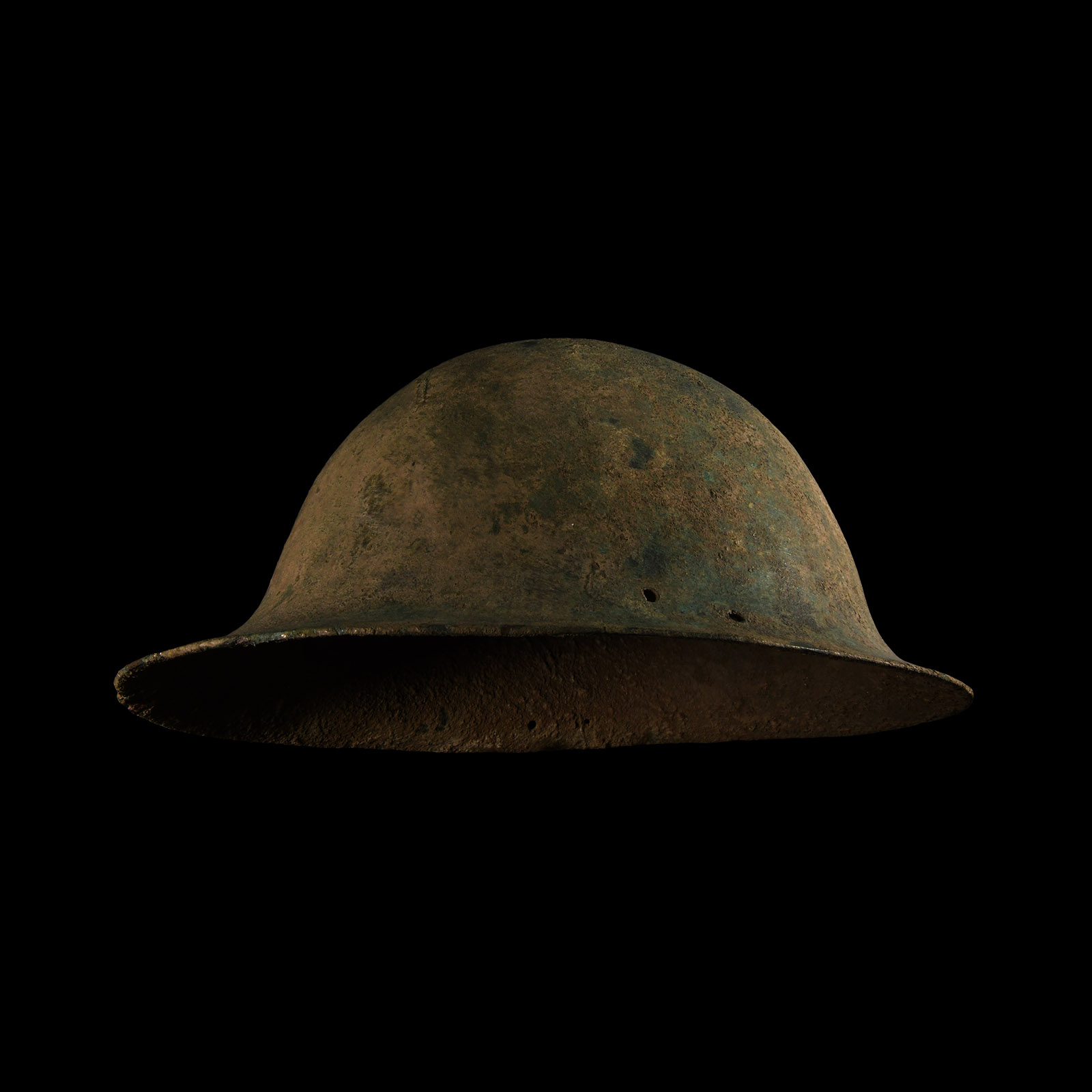
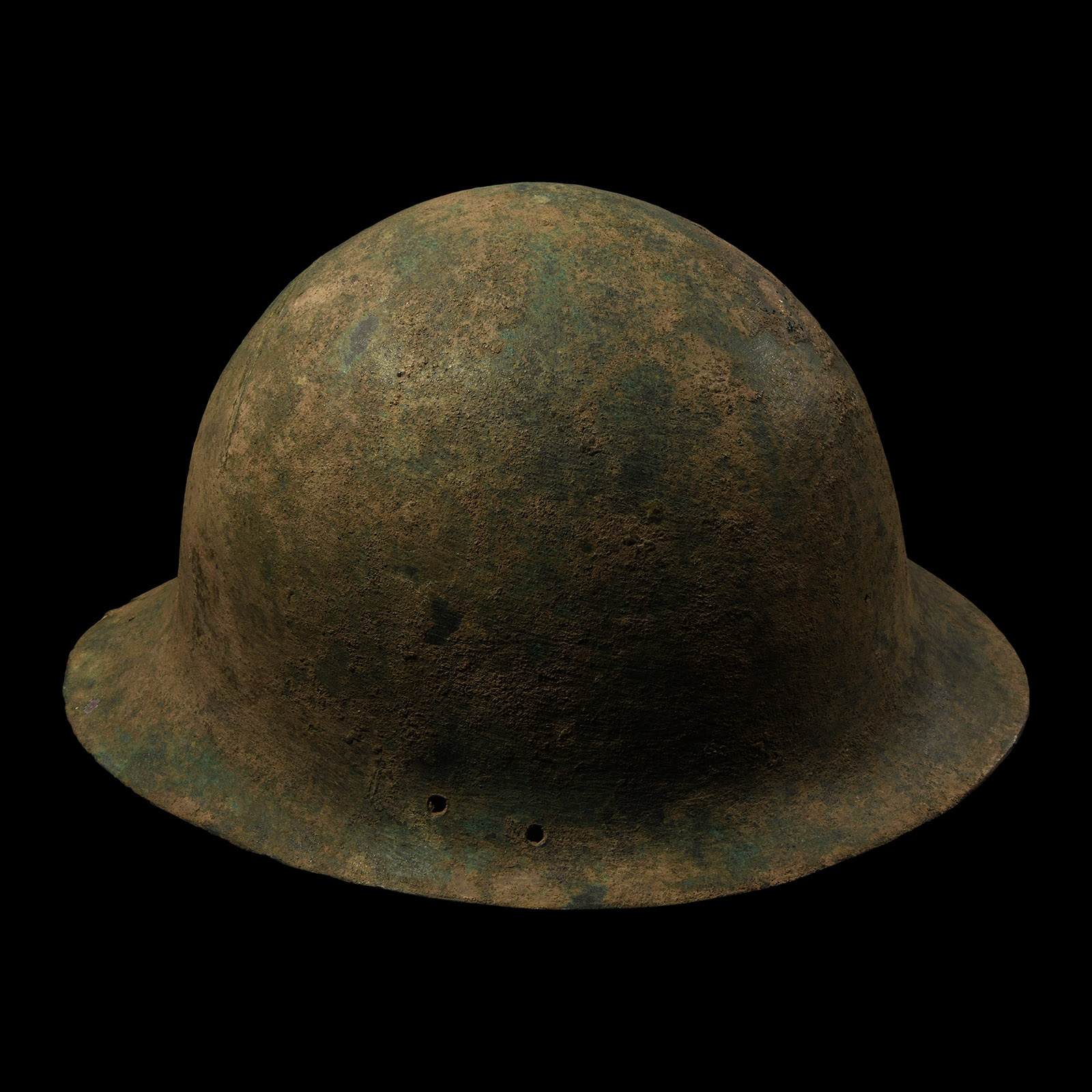
Villanovan Bronze Helmet
8TH CENTURY B.C.
12 in. (1.7 kg, 30.5 cm wide).
With rounded bowl and flared rim; three sets of paired piercings for attachment of leather cheek-flaps; cracked; accompanied by a custom-made display stand.
ProvenanceAcquired early 1990s.
Ex private American collection; thence by descent.
Private European collection since 1998.
Accompanied by an academic report by Dr Raffaele D'Amato.
This lot has been checked against the Interpol Database of stolen works of art and is accompanied by search certificate no.11573-199009.
Cf. Coussin, P., Les Armes Romaines, Paris, 1926; Connolly, P., Greece and Rome at War, London, 1981; Fossati, I., Etruscan Armies, Milano, 1987, p.50, fig.4; Egg, M., 'Italische Helme mit krempe' in Antike Helme, RGZM Monographien 14, Mainz, 1988, pp.222ff., figs.1, 2, 34 and items 58-59, for type; Sekunda, N., and Northwood, S., Early Roman Armies, Oxford, 1995; Connolly, P., Greece and Rome at War, London, 2006; D'Amato, R., Salimbeti, A., The Etruscans, Oxford, 2018, pp.21ff. and pl.B3; D’Amato, R., Negin, A., Decorated Roman Armour, London, 2017, pp.8ff. and fig.2.
FootnotesThe ‘pot’ or ‘bell’ helmet, found in contexts as early as the 8th century coffer grave (ad arca) from the Esquiline (Rome) and other graves (Coussin, 1926, p.88, fig.23; Sekunda, Northwood,1995, p.6, grave 94) was made from a single piece of bronze, while later Italic variants were fashioned from jointed plates (Connolly, 1981, p.102, figs.2-2a; Egg, 1988, p.223, variant Vetulonia). The skull was somewhat spherical, with a flared rim: in some Etruscan and Italic specimens, this was rivetted for strength.
CONDITIONTimeLine Auctions follows a vetting process to ensure the authenticity and legality of all items, reinforcing our commitment to integrity and responsible trading. Each antiquity, antique, and coin lot undergoes thorough examination by a vetting committee of at least ten external specialists, professional trade association members, scientists, and archaeologists: Our Vetting Process
AUCTIONS:
TimeLine is a leading auction house specialising in antiquities, ancient art, collectables, natural history, coins, medals, and books. Our auctions offer museums, collectors, historians, and enthusiasts the opportunity to acquire unique and historically significant pieces.
LOT 0300
Villanovan Bronze Helmet
Estimate £10,000 - 14,000€11,600 - 16,240 (for guidance only)$13,500 - 18,900 (for guidance only)
-
Amarlu Bronze Dagger with Bell-shaped Pommel
Late 2nd millennium B.C.Sold for (Inc. bp): £715
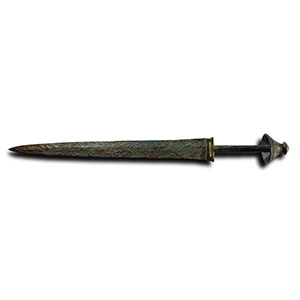
With solid cast hilt, straight horizontal guard with turquoise inlay; plain narrow grip with conical hollow cast mushroom pommel decorated with dots and lines; wide shallow midrib on the blade tapering to a sharp tip. 505 grams, 52 cm
Ex old English collection. London art market, pre 2000. Property of a London, UK, gentleman.
Moorey and Khorasani dated swords with mushroom pommels to the end of the second millennium B.C. The weapon belongs to Category IX of the Khorasani classification, the ones with a mushroom or bell-shaped pommel. A similar example is in the National Museum of Iran, Tehran. -
Byzantine 'Greek Fire' Ceramic Fire Bomb or Hand Grenade
9th-11th century A.D.Sold for (Inc. bp): £416
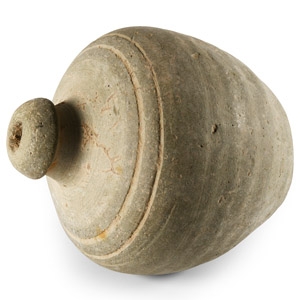
Piriform body with domed filler-hole, marked by horizontal lines to the shoulder; intended to be filled with explosive liquid and wick, used as a hand grenade. 355 grams, 10.3 cm
Acquired 1980-2015. Ex Abelita family collection. Accompanied by an academic paper by military specialist Dr Raffaele D'Amato, dated 15 July 2019 and titled 'Eastern Roman Empire - Greek Fire Bomb or Hand Grenade (μεσαίον kακάβιον) 9th-11th century AD'.
Apart from the use of siphons or manual flame-throwers called cheirosiphona, special corps of Roman soldiers employed terracotta grenades, in the form of small jars, abundantly evidenced in archaeological excavations. Such were the γανωτα, vessels (sometimes also of bronze) used for Greek fire. They were called μεσαία kακαβιά or κυτροκακάβια where the former had a bulbous shape and the latter a more cylindrical form. -
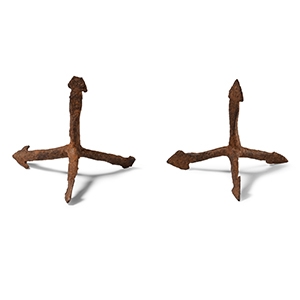
Medieval Iron Anti-Cavalry Caltrop Pair
11th-14th century A.D.Estimate: £100 - 140 (+bp*)
Opening Bid: £50
Each with four arms tipped with triangular spikes. 33 grams total, 62-64 mm
Acquired on the German art market before 2000. Property of a Surrey, UK, collector.
Caltrops were scattered on battlefields in an effort to stop or slow advancing enemy cavalry or foot soldiers; regardless of how a caltrop lands, one spike is always facing upwards. Caesar used widely them at Alesia (Caes., BG 7.73; 82): 'Stakes a foot long, with iron hooks attached to them, were entirely sunk in the ground before these, and were planted in every place at small intervals; these they called spurs'.
