
Loading, please wait...
LOT 0652
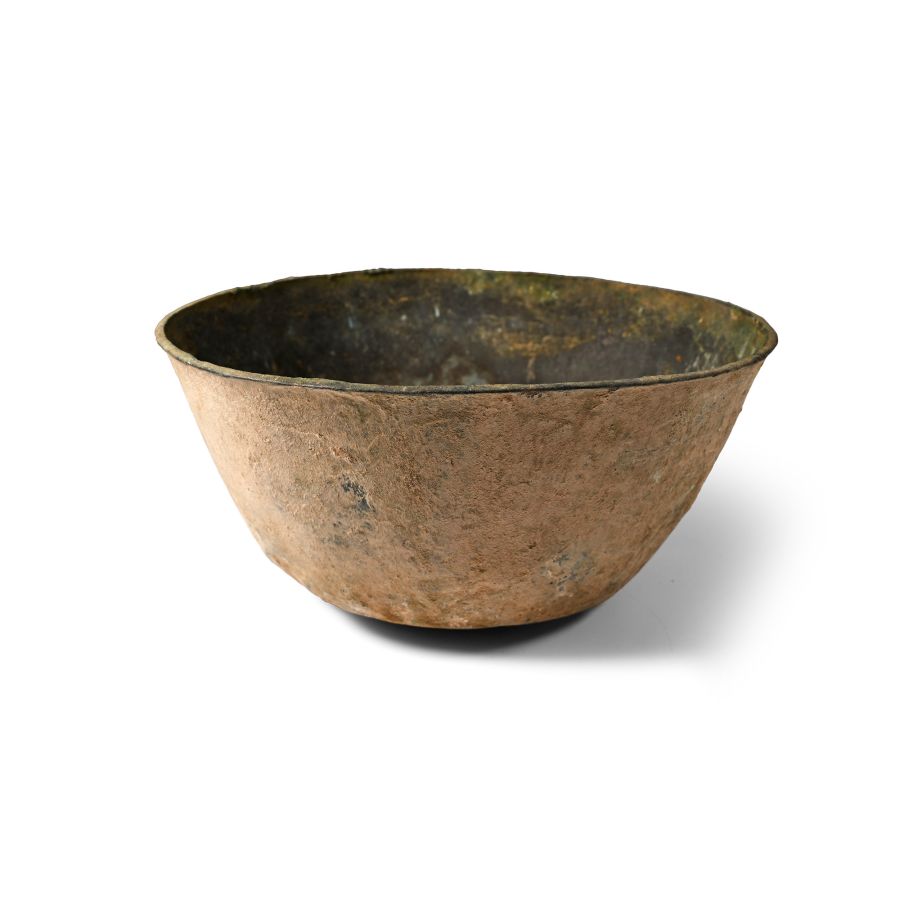
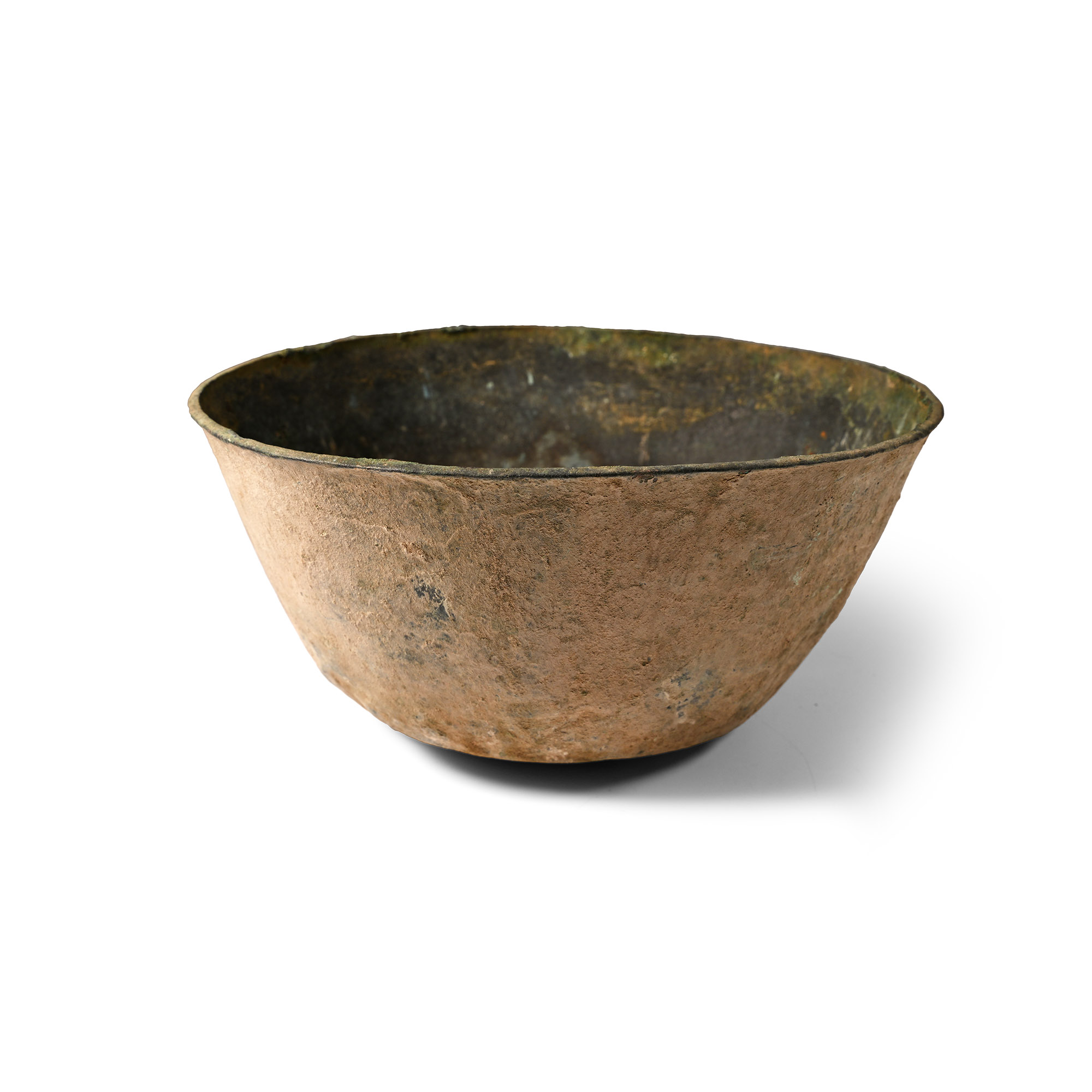
Villanovan Bronze Cup
750-730 B.C.
5 in. (183 grams, 12.9 cm).
Hemispherical in profile with flat rim. [No Reserve]
ProvenanceEx London, UK, collections, 1990s-2000s.
This lot is accompanied by an illustrated lot declaration signed by the Head of the Antiquities Department, Dr Raffaele D'Amato.
Cf. for a similar example in silver Torelli, M., Gli Etruschi, Monza, 2000, p.160.
FootnotesIn the necropolises of Southern Etruria, around the second half of the 8th century B.C., new technologies were used, which also involved metalworking. Alongside simple bronze cups intended for everyday use, similar magnificent examples containing a flourish of impressed or engraved geometric motifs were made.
CONDITIONTimeLine Auctions follows a vetting process to ensure the authenticity and legality of all items, reinforcing our commitment to integrity and responsible trading. Each antiquity, antique, and coin lot undergoes thorough examination by a vetting committee of at least ten external specialists, professional trade association members, scientists, and archaeologists: Our Vetting Process
AUCTIONS:
TimeLine is a leading auction house specialising in antiquities, ancient art, collectables, natural history, coins, medals, and books. Our auctions offer museums, collectors, historians, and enthusiasts the opportunity to acquire unique and historically significant pieces.
-
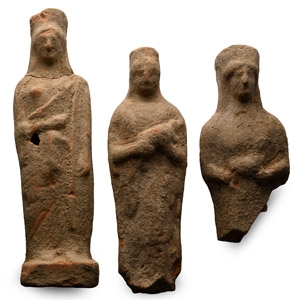
Greek Standing Terracotta Goddess Group
5th-4th century B.C.Sold for (Inc. bp): £338
Two hollow-formed standing figures with an infant held to the chest; the third similar, C-shaped in section. 769 grams total, 15-21 cm
with H.A.C., Basel, prior 1999. This lot is accompanied by an illustrated lot declaration signed by the Head of the Antiquities Department, Dr Raffaele D'Amato. -
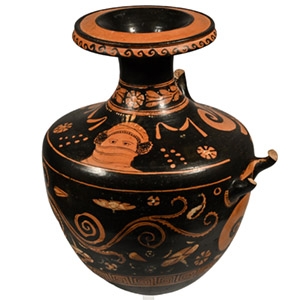
Greek Fragmentary Terracotta Red-Figure Hydria
Paestan or Apulian, 4th century B.C.Estimate: £5,000 - 6,000 (‡+bp*)
Opening Bid: £2,778
Comprising the upper two thirds of the vessel; on the shoulder a facing woman's head with diadem and half-veiled face; rosettes to left and right, with suspended ribbons and dots; vine motif around the body with floral ornaments; to the reverse, palmettes and vines; band of laurel with rosettes around the neck and wavy band at the mouth; reassembled from various fragments with three large areas of restoration, only the beginnings of the handles preserved; mounted on a custom-made stand. 1.95 kg, 31 cm (2.6 kg total, 47.5 cm high including stand)
Ex Herbert A. Cahn, Basel, 1990s. This lot has been checked against the Interpol Database of stolen works of art and is accompanied by search certificate number no.12475-228738. This lot has been cleared against the Art Loss Register database, and is accompanied by an illustrated lot declaration signed by the Head of the Antiquities Department, Dr Raffaele D'Amato.
The face-veiling gesture is a known marriage rite; the diadem may suggest that she is intended to represent Persephone. Alternatively, the veiled woman might be a dancer as many terracotta figurines of dancing women are shown with face-coverings. However, the floral ornaments could indicate a funeral or sepulchral context. -

Greek Terracotta Figure Fragment Group
6th-4th century B.C.Sold for (Inc. bp): £104
Including hollow-formed busts, body fragments and other types. 632 grams total, 3.8-15.5 cm
with H.A.C., Basel, prior 1999. This lot is accompanied by an illustrated lot declaration signed by the Head of the Antiquities Department, Dr Raffaele D'Amato.
