
Loading, please wait...
LOT 0251
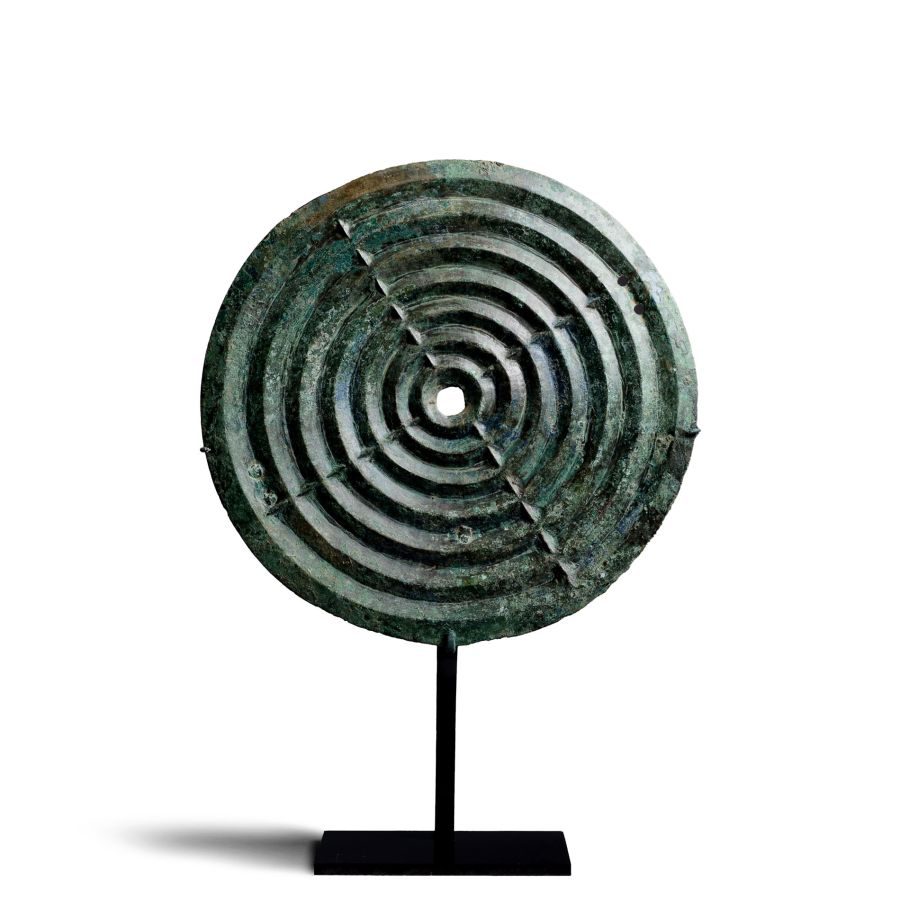
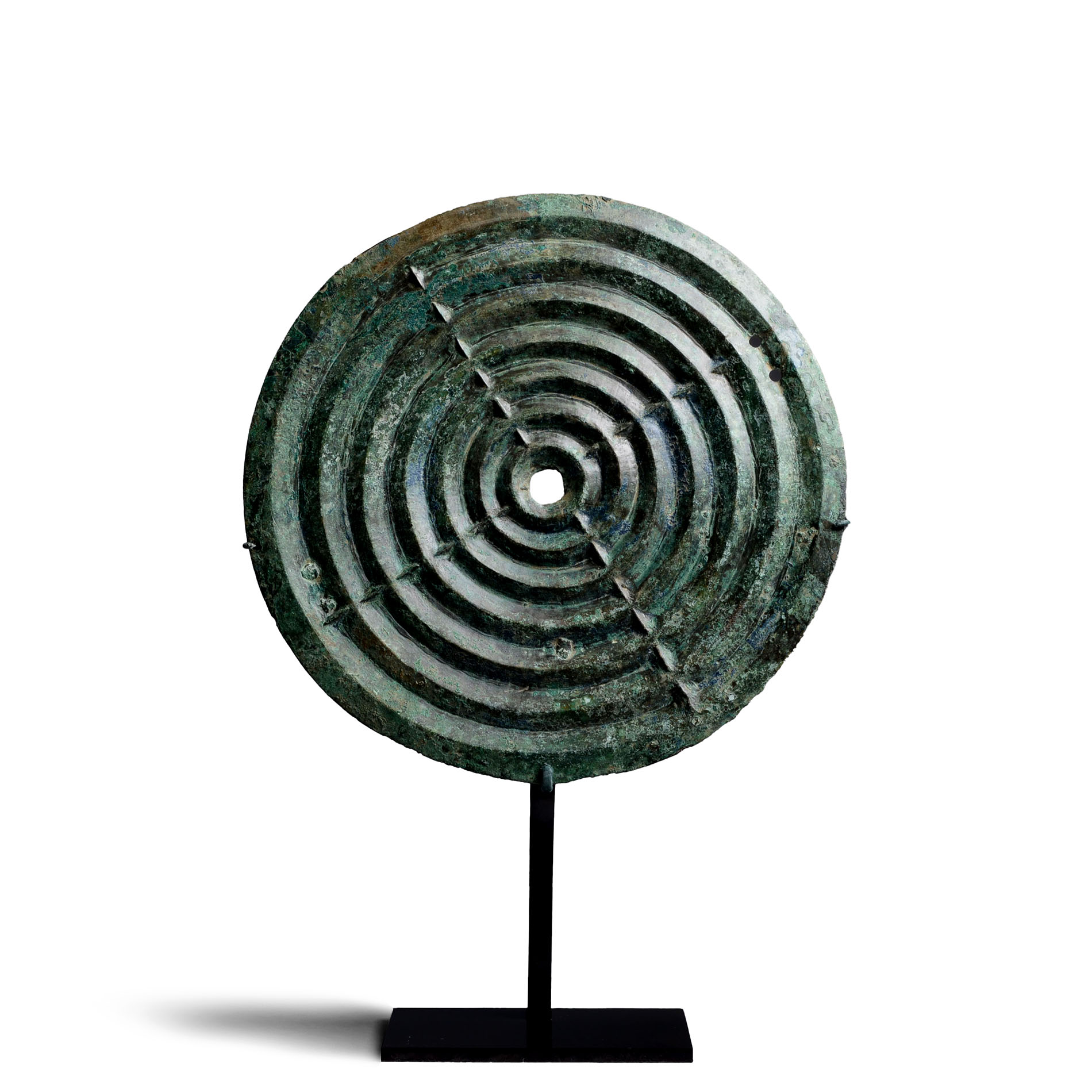
Villanovan Bronze Breast Plate
CIRCA 7TH CENTURY B.C.
12 7/8 in. (1.36 kg total, 32.6 cm high including stand).
Featuring a central circular void and a series of concentric triangular-section ridges and incorporating an X or cross motif; accompanied by a custom-made display stand.
Provenancewith H. Cahn, Basel.
Subsequently Tajan auction, 8 February 2008, lot 251.
TimeLine Auctions follows a vetting process to ensure the authenticity and legality of all items, reinforcing our commitment to integrity and responsible trading. Each antiquity, antique, and coin lot undergoes thorough examination by a vetting committee of at least ten external specialists, professional trade association members, scientists, and archaeologists: Our Vetting Process
AUCTIONS:
TimeLine is a leading auction house specialising in antiquities, ancient art, collectables, natural history, coins, medals, and books. Our auctions offer museums, collectors, historians, and enthusiasts the opportunity to acquire unique and historically significant pieces.
-
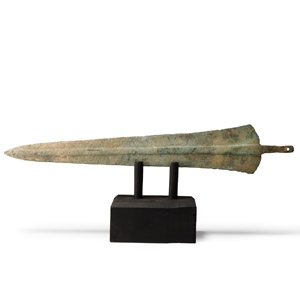
Luristan Short Sword Blade
Early 1st millennium B.C.Sold for (Inc. bp): £156
Triangular with thick rectangular-section midrib, rounded shoulders, narrow tip, short tang with hole for fixing pin for the organic grip; accompanied by a custom-made display stand. 285 grams total, 32 cm wide including stand
Acquired 1980s-1990s. From the H.N. collection, Milton Keynes, Bedfordshire, UK.
This tanged bronze blade from Luristan belongs to a category of Luristan swords still in use in the Achaemenid Period, as proved by a blade with a perished handle (probably bone or wood) of the same type, in the National Museum of Iran (2694/15633). Examples without inscriptions like our model have been classified by Grotkamp-Schepers in the Solingen Museum as pieces from Luristan. -
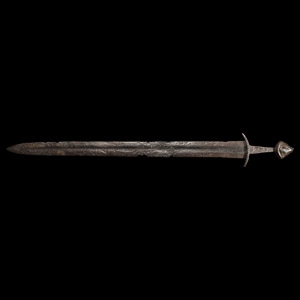
Viking Age Iron Sword with Cocked Hat Type Pommel
10th century A.D.Sold for (Inc. bp): £5,720
Petersen Type L variant with double-edged pattern-welded blade (waving pattern) showing evidence of being employed, tapering fullers and hefty tang; boat-shaped lower guard, cocked hat pommel with traces of silver inlay; some restoration. 996 grams, 90 cm
From the private collection of a London gentleman, from his grandfather's collection formed before the early 1970s. Accompanied by an academic report by Dr Raffaele D’Amato. This lot has been checked against the Interpol Database of stolen works of art and is accompanied by search certificate number no.11816-206858.
This sword shows evidence of beautiful pattern-welding. The great curvature of the hilt, stronger than any other type of Viking swords, characterises the typology of L swords. This is clearly visible on the specimens from Dolven and Nedre (Stokke) published by Petersen (1919, figs.94-95). -
.jpg)
Archaic Greek Modified Bronze Corinthian Helmet
Late 7th-early 6th century B.C.Estimate: £4,000 - 6,000 (+bp*)
Opening Bid: £2,222
Consisting of two sections joined with bronze rivets; above a domed section with row of rivets; below, a folded band with rolled rim, with rivets to the rear holding two halves; line of holes to the base for securing an inner lining. 2.2 kg total, 31.5 cm high including stand
Acquired in the 1970s. Ex private Austrian collection. The Kusmirek Collection, UK. Accompanied by an academic report by Dr Raffaele D'Amato. Accompanied by a metal analysis and appraisal by Dr Brian Gilmour. This lot has been checked against the Interpol Database of stolen works of art and is accompanied by search certificate number no.11764-203980.
The upper part of the helmet was probably modified in antiquity, the lower part of the eye holes and the cheek pieces have been cut away, and replacement cheek pieces, now lacking, were once crudely rivetted to the sides.
