
Loading, please wait...
LOT 0554
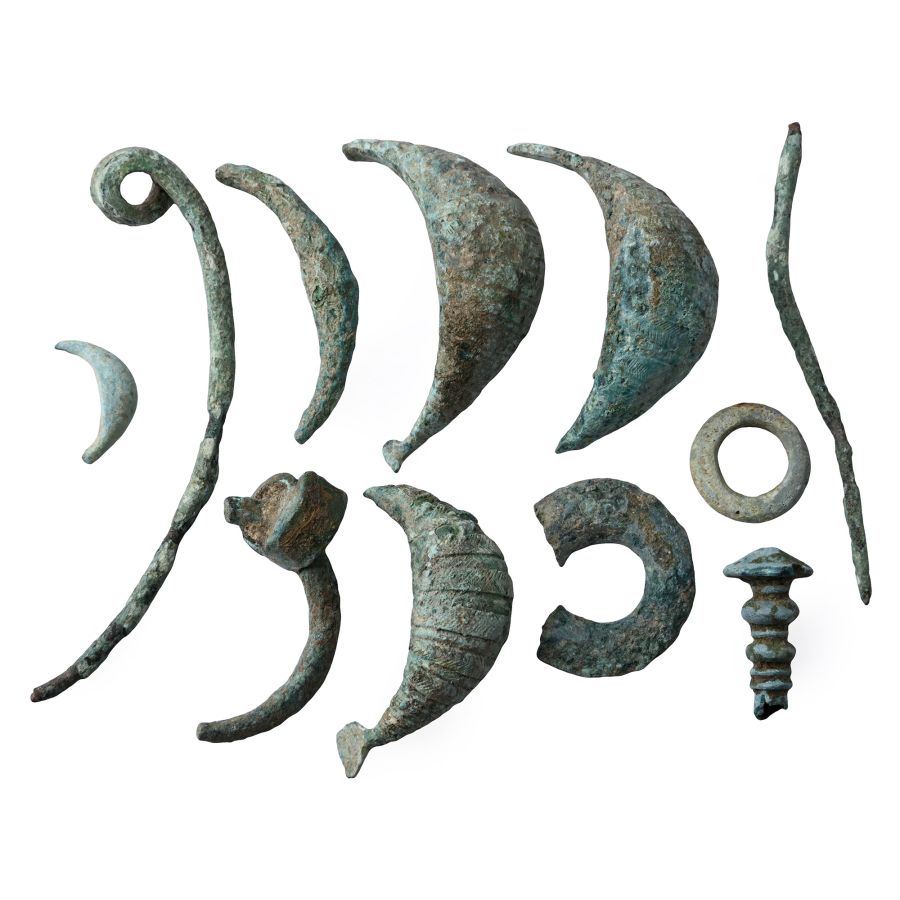
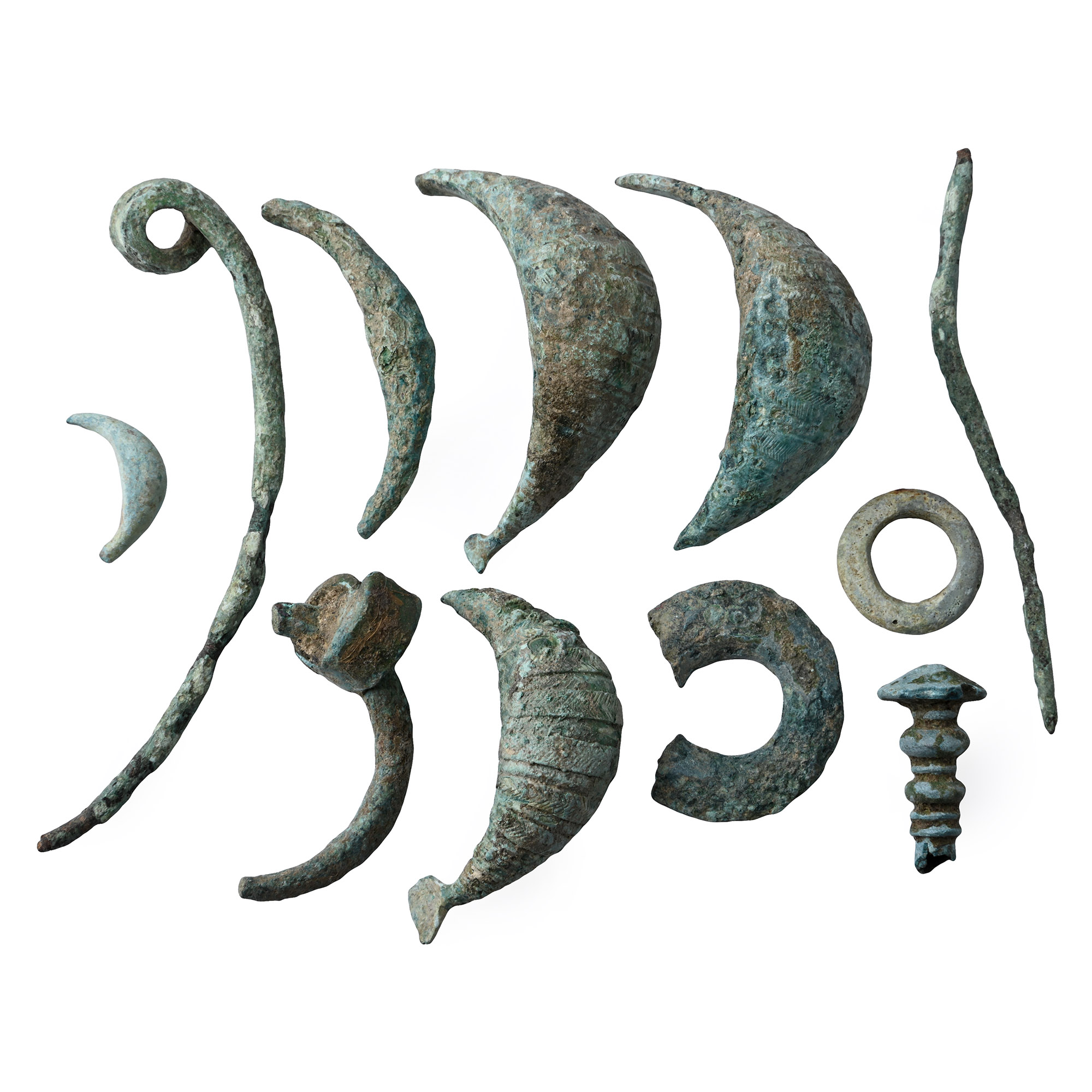
Villanovan Bronze Artefact Collection
IRON AGE, CIRCA 8TH CENTURY B.C.
3/4 - 3 1/2 in. (162 grams total, 18.5-90 mm).
Mixed group of fragmentary artefacts, including bows from leech brooches and pins. [12, No Reserve]
ProvenanceFrom the private collection of a European gentleman (1942-2024), formed since the 1970s.
CONDITIONTimeLine Auctions follows a vetting process to ensure the authenticity and legality of all items, reinforcing our commitment to integrity and responsible trading. Each antiquity, antique, and coin lot undergoes thorough examination by a vetting committee of at least ten external specialists, professional trade association members, scientists, and archaeologists: Our Vetting Process
AUCTIONS:
TimeLine is a leading auction house specialising in antiquities, ancient art, collectables, natural history, coins, medals, and books. Our auctions offer museums, collectors, historians, and enthusiasts the opportunity to acquire unique and historically significant pieces.
-
.jpg)
Greek Solid Gold Earring Pair
4th-2nd century B.C.Estimate: £3,000 - 4,000 (‡+bp*)
Opening Bid: £1,500
Each a thick braided hoop with a collar of twisted filigree and a lion's mask finial. 18.43 grams total, 27 mm each
Private London collection, 1980s. Private collection, acquired on the British art market in 1993. This lot has been checked against the Interpol Database of stolen works of art and is accompanied by search certificate number no.13185-249263.
The earrings belong to the hoop-type earrings, in which animal and human heads form the terminal as small miniature sculptures modelled in the round. The heads were attached to collars made from a single piece of gold. The group is characterised by lion heads. -
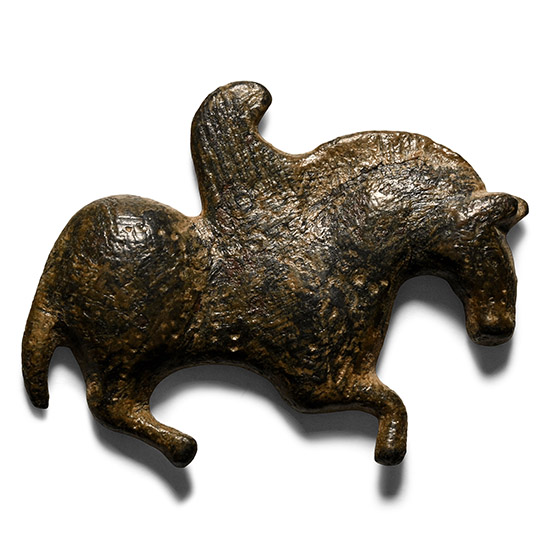
Greek Bronze Pegasus Belt Mount
Hellenistic, 2nd-1st century B.C.Sold for (Inc. bp): £117
The flying horse depicted in a dynamic pose with open wings. 6.71 grams, 34 mm
Ex German art market, 2000s. Acquired from an EU collector living in London. From the collection of a Surrey, UK, gentleman. -
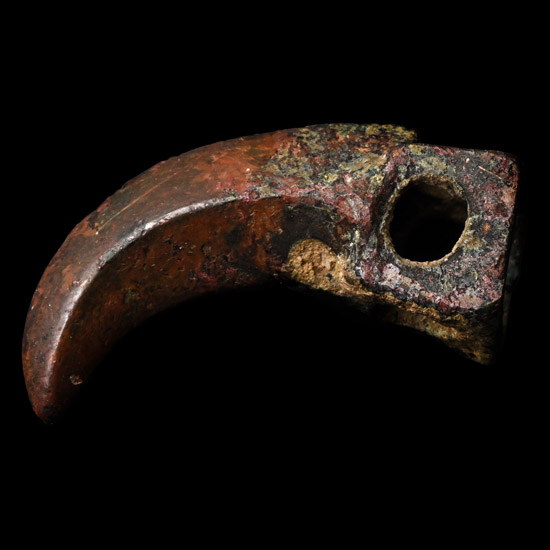
Scythian Bronze Eagle's Talon Pendant
Circa 6th century B.C.Sold for (Inc. bp): £156
Curved square-section hook with cuboid finial pierced on all four sides and to the top. 12.45 grams, 36.19 mm
From the private collection of a European gentleman (1942-2024), formed since the 1970s.
