
Loading, please wait...
LOT 1190
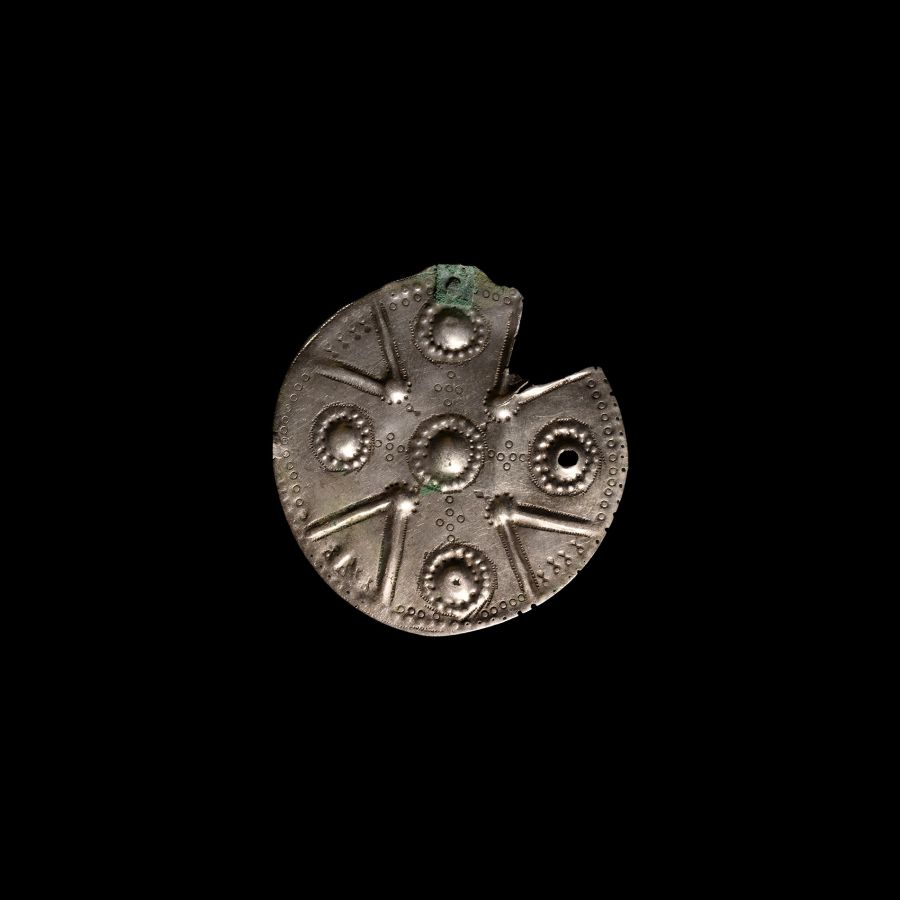
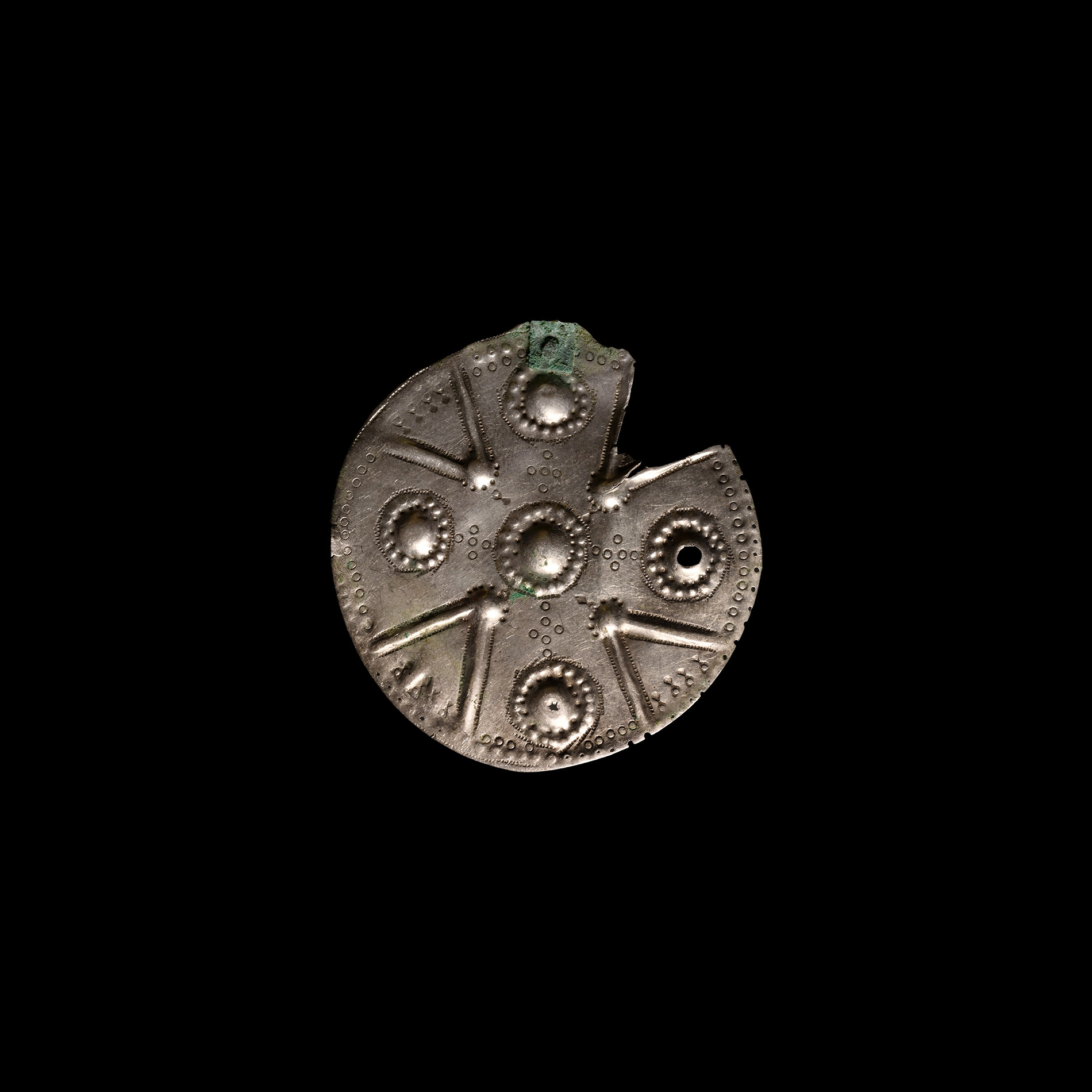
Viking Silver Pendant with Expanding Cross
9TH-11TH CENTURY A.D.
2 in. (6.56 grams, 51 mm).
Executed in repoussé technique, a dome to each arm likely representing the Five Wounds of Christ, together with punched annulets and other details. [No Reserve]
ProvenanceFrom the collection of a North American gentleman, formed in the 1990s.
CONDITIONTimeLine Auctions follows a vetting process to ensure the authenticity and legality of all items, reinforcing our commitment to integrity and responsible trading. Each antiquity, antique, and coin lot undergoes thorough examination by a vetting committee of at least ten external specialists, professional trade association members, scientists, and archaeologists: Our Vetting Process
AUCTIONS:
TimeLine is a leading auction house specialising in antiquities, ancient art, collectables, natural history, coins, medals, and books. Our auctions offer museums, collectors, historians, and enthusiasts the opportunity to acquire unique and historically significant pieces.
LOT 1190
Viking Silver Pendant with Expanding Cross
Estimate £250 - 350€290 - 410 (for guidance only)$340 - 470 (for guidance only)
-
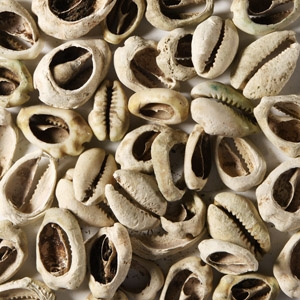
Viking Age Cowrie Shell Pendant Collection
Circa 9th-11th century A.D.Sold for (Inc. bp): £46
Comprising over thirty natural shell pendants. 46 grams total, 15-24 mm
UK gallery, early 2000s. -
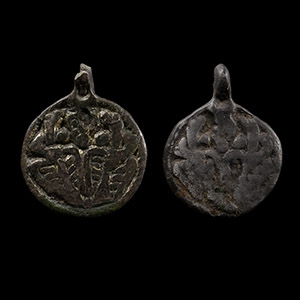
Viking Age Bronze Pendant Group
9th-11th century A.D.Sold for (Inc. bp): £98
Comprising two discoid pendants displaying Odin gripping two ravens; one with suspension loop. 3.51 grams total, 21 mm each
From the collection of a North American gentleman, formed in the 1990s. -
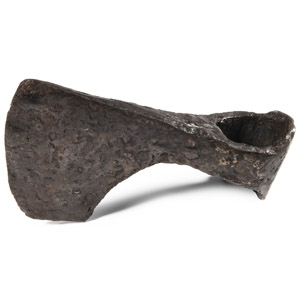
Viking Age Baltic Iron Bearded Axehead
9th-11th century A.D.Sold for (Inc. bp): £117
Hand-forged with triangular-section narrow blade widening to a broad bevelled edge with square chin, socket with rounded extensions to the rear. 782 grams, 17 cm
From the private collection of a London gentleman, from his grandfather's collection formed before the early 1970s.
The more commonly used weapons of the Finno-Ugrian people were axes, commonly found in all Finnic areas, as well as spears. Iron axeheads of this typology show a sub-trapezoidal asymmetrical blade, often perforated through the centre.
