
Loading, please wait...
LOT 1223
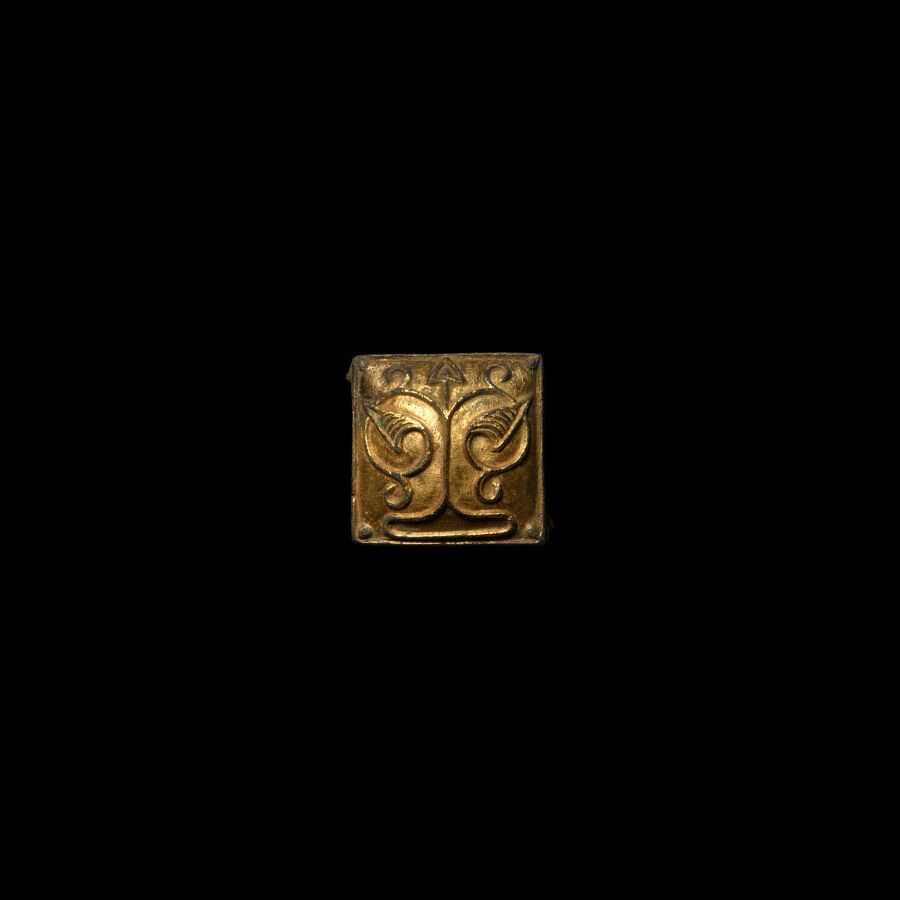
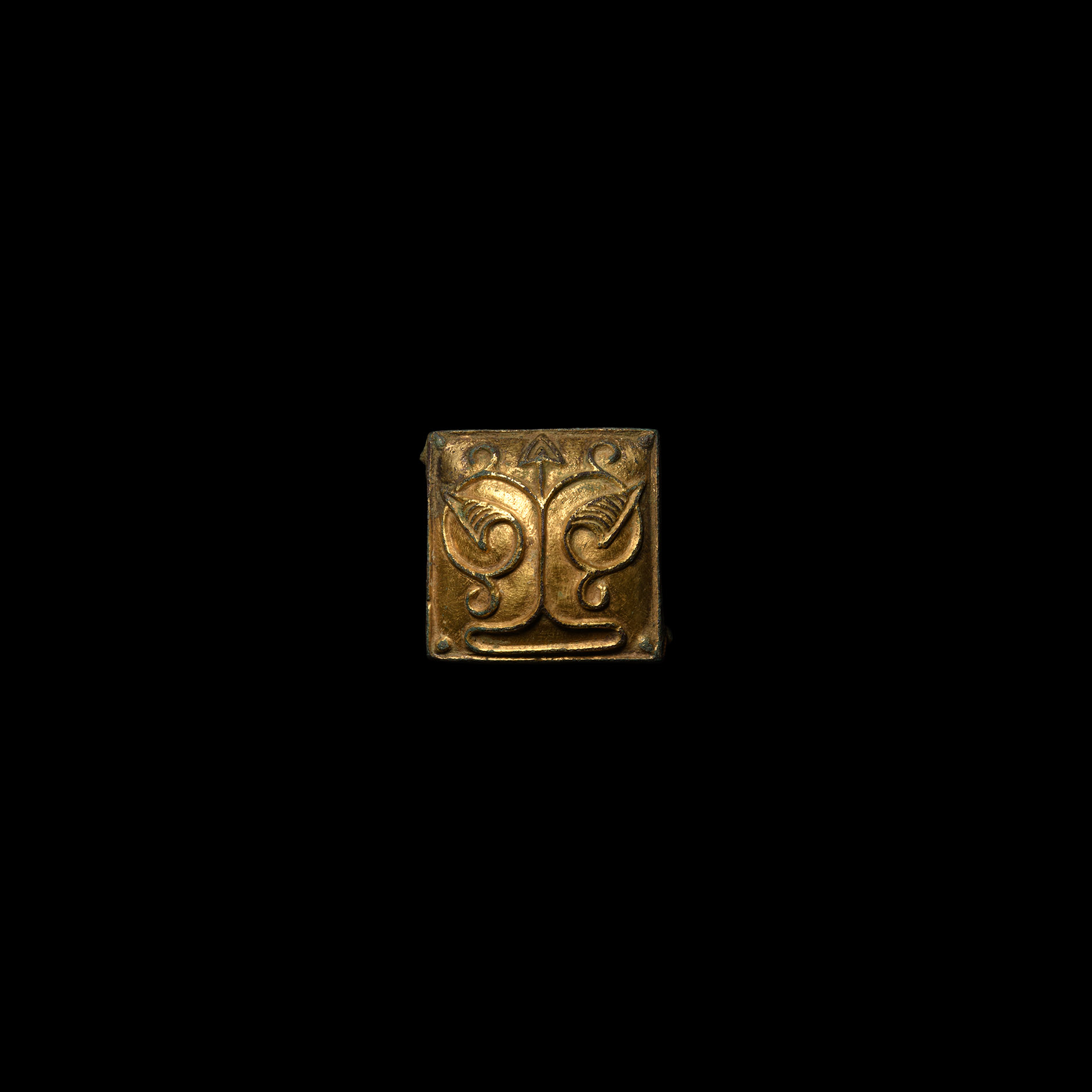
Viking Rus Gilt Brooch with Floral Motif
11TH-12TH CENTURY A.D.
1 1/4 in. (19.08 grams, 33 mm).
Square in plan with a convex underside and domed upper face, decorated with symmetrical scrolling vegetation in raised relief; pin lug and catchplate to reverse.
ProvenanceAcquired in the 1980s-1990s.
Ex an important central London gallery, London W1.
Cf. Avdusin D.A., Smolensk and Gnezdovo, to the history of the ancient Russian city, (in Russian) Moscow, 1991, fig.14, no.4, for similar decoration on metallic fittings.
FootnotesThese kind of appliques were used for belts, harnesses, quivers, saddles and various other Rus and Steppe warrior fittings.
CONDITIONTimeLine Auctions follows a vetting process to ensure the authenticity and legality of all items, reinforcing our commitment to integrity and responsible trading. Each antiquity, antique, and coin lot undergoes thorough examination by a vetting committee of at least ten external specialists, professional trade association members, scientists, and archaeologists: Our Vetting Process
AUCTIONS:
TimeLine is a leading auction house specialising in antiquities, ancient art, collectables, natural history, coins, medals, and books. Our auctions offer museums, collectors, historians, and enthusiasts the opportunity to acquire unique and historically significant pieces.
-
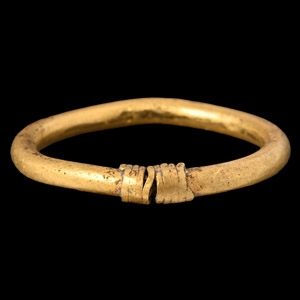
Viking Age Gold Ring with Wire
8th-10th century A.D. or earlierSold for (Inc. bp): £442
Round-section shank with butted joint and tightly-coiled wire sleeve. 308 grams, 20.72 mm overall, 16.11 mm internal diameter (approximate size UK K 1/2, USA 5 1/2, Europe 10.58, Japan 10)
Acquired 1980-2015. Ex Abelita family collection. -
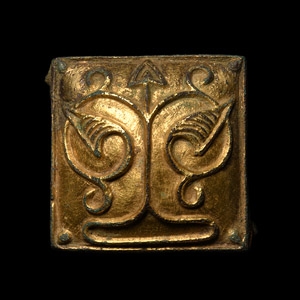
Viking Rus Gilt Brooch with Floral Motif
11th-12th century A.D.Sold for (Inc. bp): £312
Square in plan with a convex underside and domed upper face, decorated with symmetrical scrolling vegetation in raised relief; pin lug and catchplate to reverse. 19.08 grams, 33 mm
Fine condition.
Acquired in the 1980s-1990s. Ex an important central London gallery, London W1.
These kind of appliques were used for belts, harnesses, quivers, saddles and various other Rus and Steppe warrior fittings. -
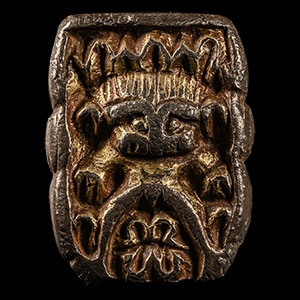
Viking Age Silver-Gilt Mount with Figure
Circa 10th century A.D.Estimate: £600 - 800 (+bp*)
Opening Bid: £300
Sub-rectangular with lip to the reverse; high-relief facing figure with band of straight hair, omega-shaped brow and pellet eyes, stubby body and arms, splayed legs above two omega-shaped elements forming a rosette; mounting plate absent. 15.2 grams, 32 mm
Acquired early 1990s. From an East Anglian private collection.
The identity of the facing figure is unknown. There is an earlier, probably 9th century, Anglo-Saxon strap end with a facing nude male in low-relief which might be comparable (Thomas, 2007, item 8).
