
Loading, please wait...
LOT 1244
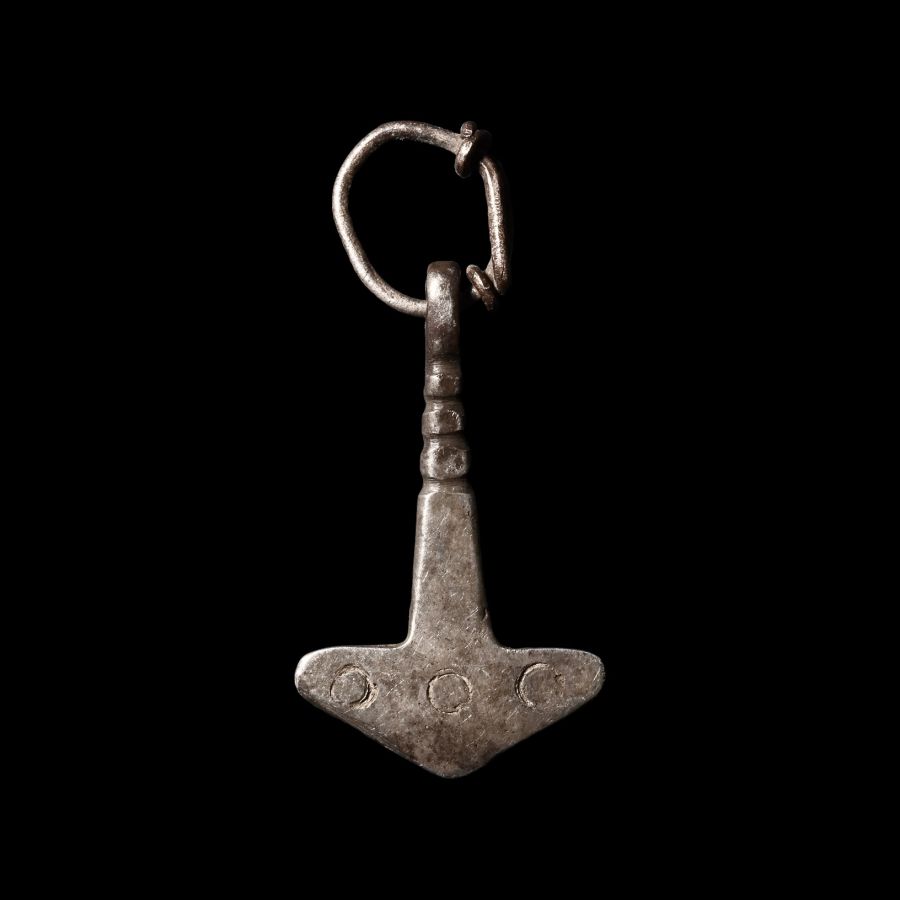
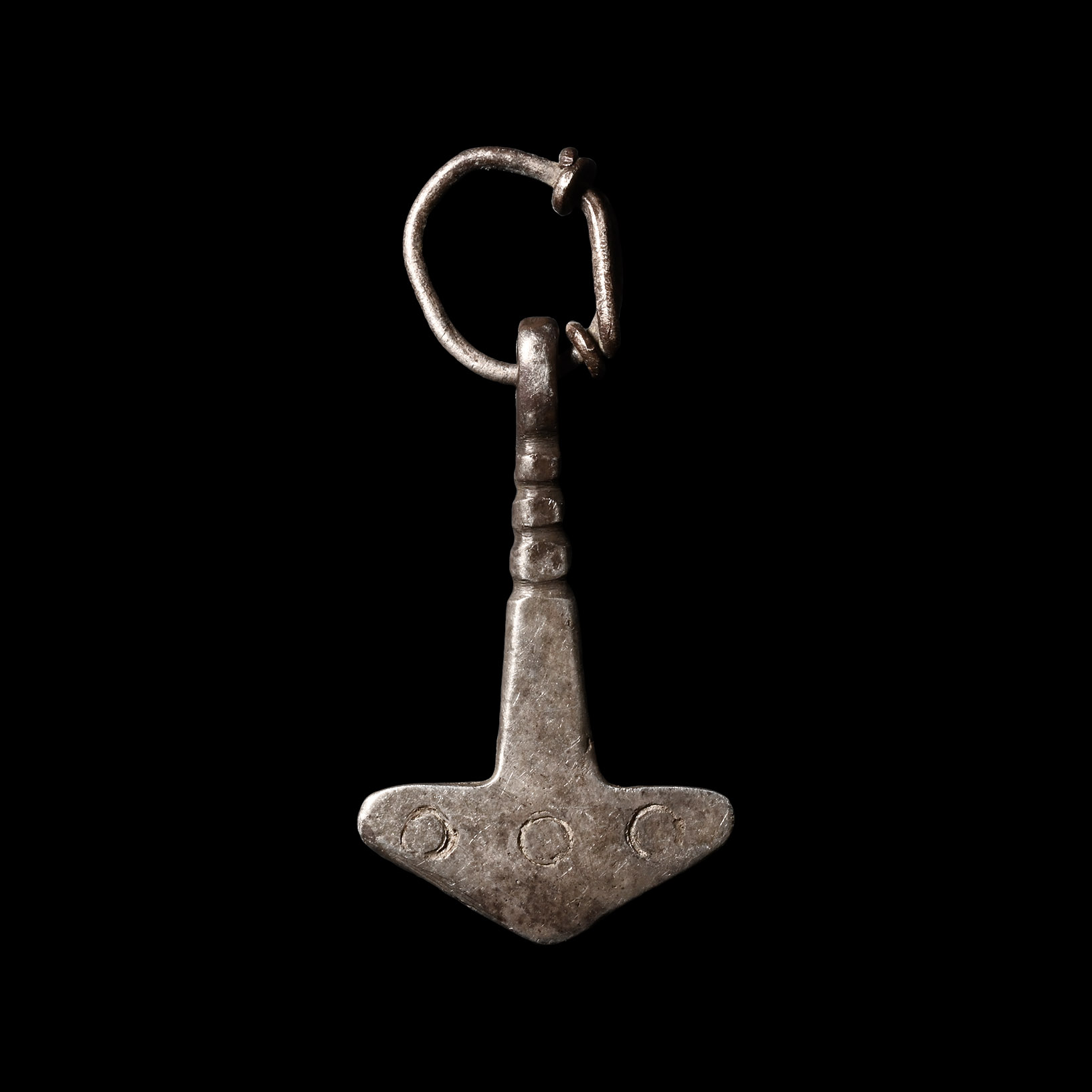
Viking Period Silver Hammer Pendant
8TH-10TH CENTURY A.D.
1 1/4 in. (2.23 grams, 33 mm).
A bifacial silver hammer pendant with notched detailing to the handle and a horizontal trio of annulets to the blade; free-running silver ring with overlapping coiled arms. [No Reserve]
ProvenanceAcquired in the late 1990s-2000.
Property of an East London gentleman.
Cf. Arbman, H., Birka I: Die Gräber, Uppsala, 1940, pl.104(6).
CONDITIONTimeLine Auctions follows a vetting process to ensure the authenticity and legality of all items, reinforcing our commitment to integrity and responsible trading. Each antiquity, antique, and coin lot undergoes thorough examination by a vetting committee of at least ten external specialists, professional trade association members, scientists, and archaeologists: Our Vetting Process
AUCTIONS:
TimeLine is a leading auction house specialising in antiquities, ancient art, collectables, natural history, coins, medals, and books. Our auctions offer museums, collectors, historians, and enthusiasts the opportunity to acquire unique and historically significant pieces.
-

Viking Age Silver Axe Amulet
9th-11th century A.D.Sold for (Inc. bp): £111
A silver amulet formed as a twibill double-bladed axehead. 2.2 grams, 18 mm
Acquired in the late 1990s-2000. Property of an East London gentleman. -

Viking Age Embossed Repoussé Bracelet
Circa 8th-10th century A.D.Sold for (Inc. bp): £111
A flat-section copper-alloy bracelet, the penannular body decorated with repoussé pellets to upper nad lower edges, medial band of pellets enclosed by incised circlets. 19 grams, 58 mm
Early 1990s London collection. Acquired on the UK art market. From a private collection, Lancashire, UK. -
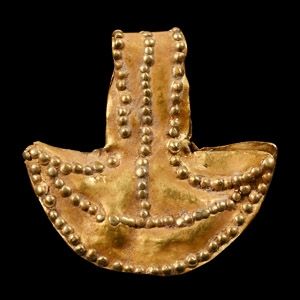
Viking Age Gold Hammer Amulet
9th-12th century A.D.Sold for (Inc. bp): £715
A sheet-gold hammer amulet formed by doubling a single gold sheet; bifacial pellet ornament tracing the perimeter of the hammer and a central motif mimicking the broad plan of the weapon; suspension loop formed within the fold at the neck. 1.57 grams, 20 mm
Acquired 1980-2015. Ex Abelita family collection.
The techniques used to manufacture this pendant (working sheet gold and granulation) had been in the repertoire of the Scandinavian goldsmith since the Iron Age and formed part of the manufacturing process for bracteate pendants and other jewellery items (Reynolds Brown, K. et al., From Attila to Charlemagne. Arts of the Early Medieval Period in the Metropolitan Museum of Art, New York, 2000, p.15-16, 310-1).
