
Loading, please wait...
LOT 1233
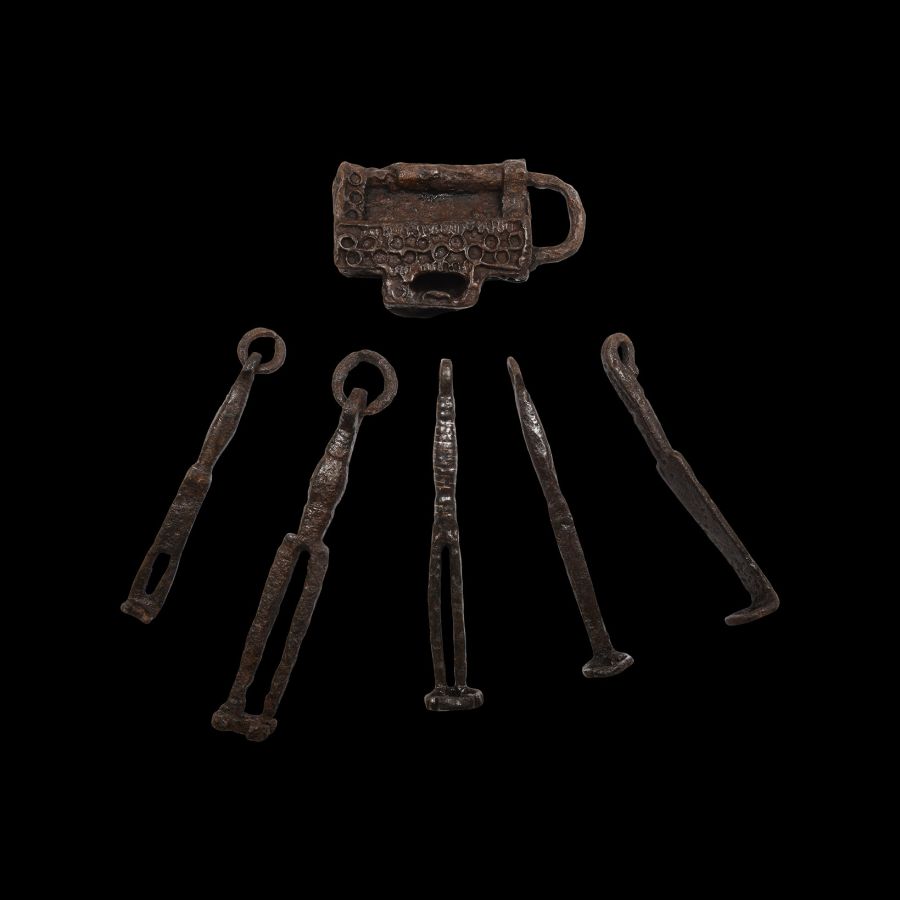
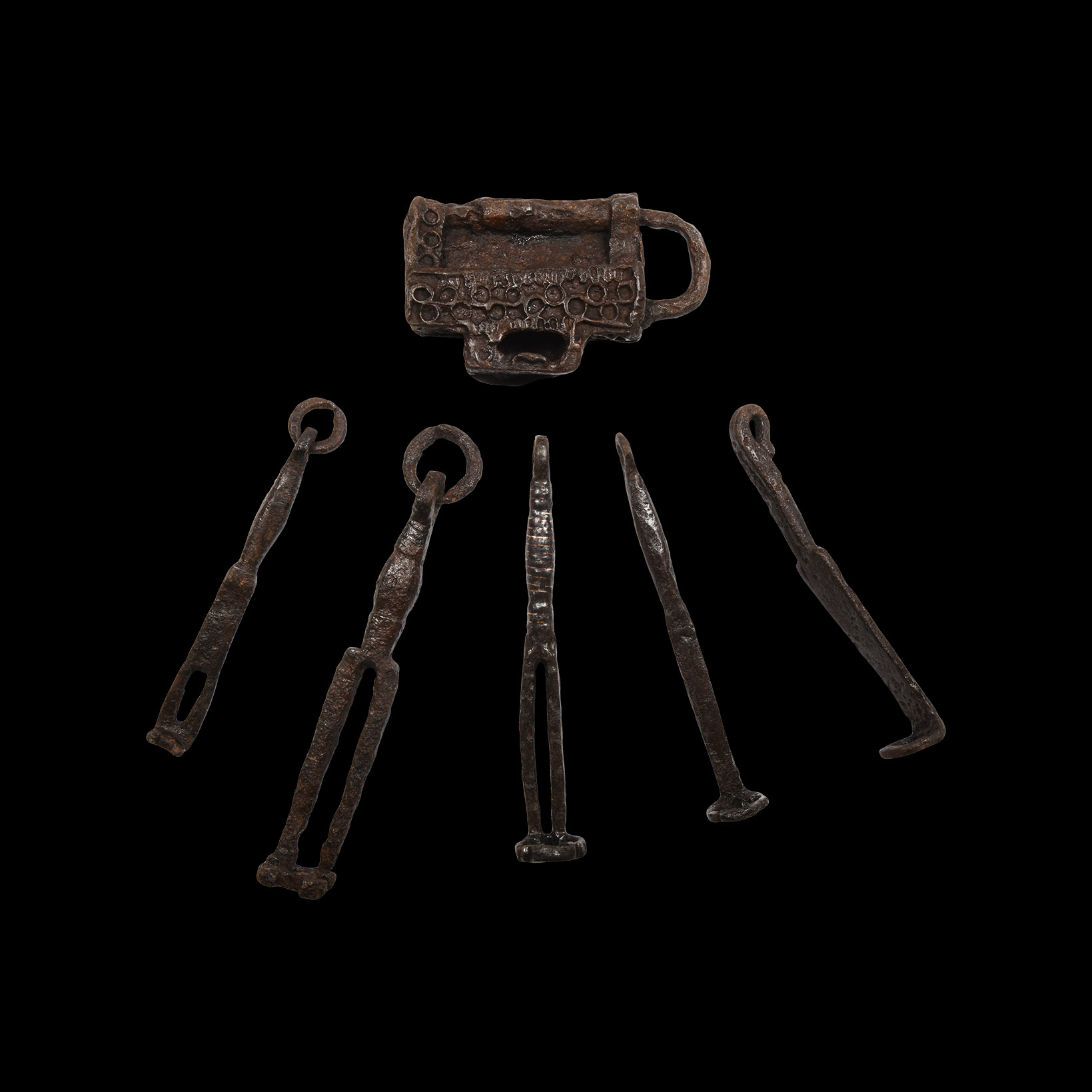
Viking Period Lock and Key Group
CIRCA 10TH-12TH CENTURY A.D.
3 3/4 - 6 1/8 in. (407 grams total, 9.5-15.5 cm).
A group of iron keys and a lock; two keys with sith a cruciform head, crimped edges and central void; one with a square head with spur to each angle; one with T-shaped head and vertical spurs; one with a disc finial, square void with rounded edges; one iron barrel padlock with hasp. applied decorative bands to the body. [6, No Reserve]
ProvenanceAcquired 1971-1972.
From the collection of the vendor's father.
Property of a London, UK, collector.
Cf. Arbman, H., Birka I: Die Gräber, Uppsala, 1940, pl.108.
CONDITIONTimeLine Auctions follows a vetting process to ensure the authenticity and legality of all items, reinforcing our commitment to integrity and responsible trading. Each antiquity, antique, and coin lot undergoes thorough examination by a vetting committee of at least ten external specialists, professional trade association members, scientists, and archaeologists: Our Vetting Process
AUCTIONS:
TimeLine is a leading auction house specialising in antiquities, ancient art, collectables, natural history, coins, medals, and books. Our auctions offer museums, collectors, historians, and enthusiasts the opportunity to acquire unique and historically significant pieces.
-
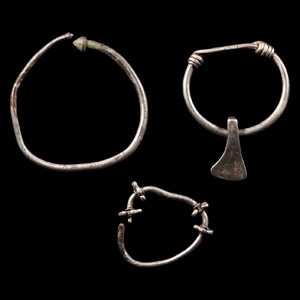
Viking Period Silver Jewellery Group
8th-10th century A.D.Estimate: £200 - 300 (+bp*)
Opening Bid: £100
A mixed group of silver jewellery items comprising: a free-running axehead pendant suspended on a silver ring with overlapping arms and coiled sleeves; an earring composed of a tapering round-section penannular hoop, graduated conical knops to each terminal; an incomplete and misshapen penannular hoop decorated with flowerhead collars, filigree rings to each upper and lower face. 19.9 grams total, 34-50 mm
Acquired in the late 1990s-2000. Property of an East London gentleman. -
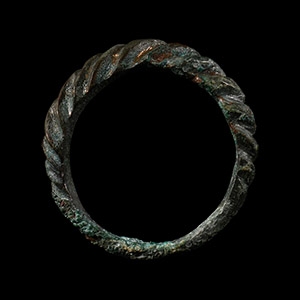
Viking Period Faux Twist Ring
Circa 10th century A.D.Sold for (Inc. bp): £46
A copper-alloy ring composed of a tapering hoop which is thickest at the bezel, decorated with a deep, faux-twist motif. 3.35 grams, 24.61 mm overall, 18.40 mm internal diameter (approximate size British P 1/2, USA 7 3/4, Europe 16.86, Japan 16)
Private collection formed since in the 1940s. UK art market. Property of an Essex gentleman. -
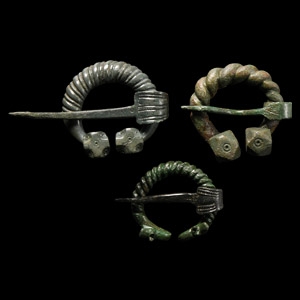
Viking Period Pennanular Brooch Collection
Circa 9th-11th century A.D.Sold for (Inc. bp): £390
A mixed group of bronze penannular brooches: one with polyhedral finials; one with domed square finials; one with everted dragon-head finials. 124 grams, 46-67 mm
Acquired 1971-1972. From the collection of the vendor's father. Property of a London, UK, collector.
