
Loading, please wait...
LOT 1736
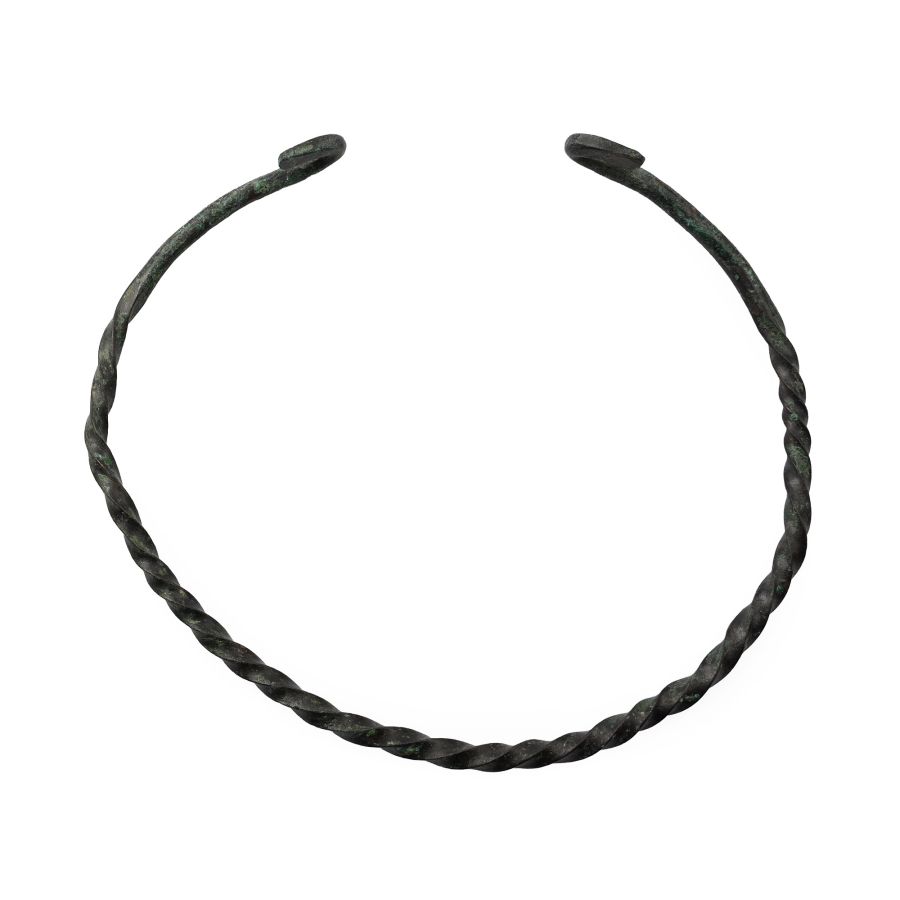
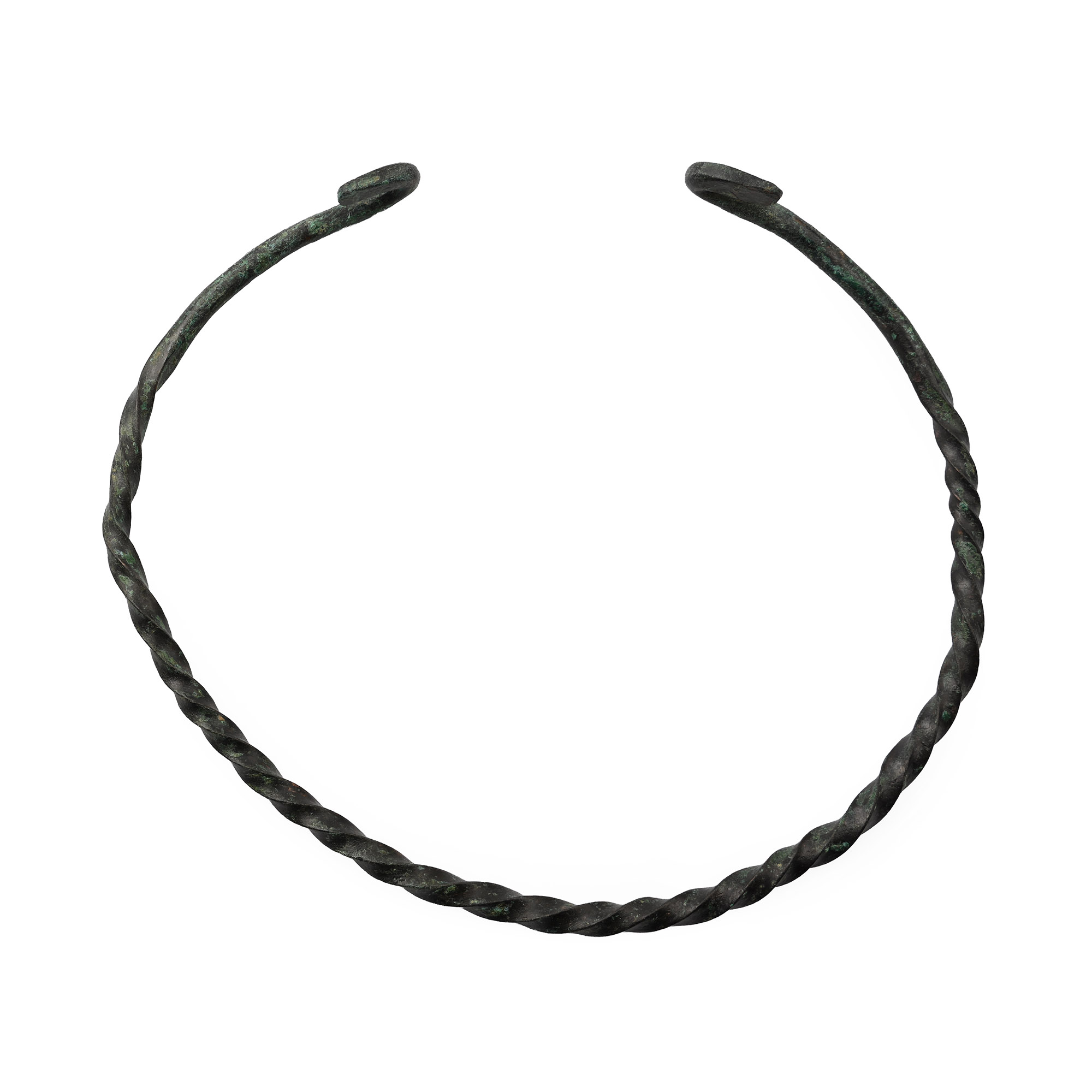
Viking Period Bronze Twisted Neck Torc
9TH-11TH CENTURY A.D. OR EARLIER
5 3/8 in. (46 grams, 13.6 cm).
Round-section penannular body with decorative twist, coiled flattened finials. [No Reserve]
ProvenanceUK private collection before 2000.
Acquired on the UK art market.
Private collection, London, UK.
This lot is accompanied by an illustrated lot declaration signed by the Head of the Antiquities Department, Dr Raffaele D'Amato.
TimeLine Auctions follows a vetting process to ensure the authenticity and legality of all items, reinforcing our commitment to integrity and responsible trading. Each antiquity, antique, and coin lot undergoes thorough examination by a vetting committee of at least ten external specialists, professional trade association members, scientists, and archaeologists: Our Vetting Process
AUCTIONS:
TimeLine is a leading auction house specialising in antiquities, ancient art, collectables, natural history, coins, medals, and books. Our auctions offer museums, collectors, historians, and enthusiasts the opportunity to acquire unique and historically significant pieces.
-
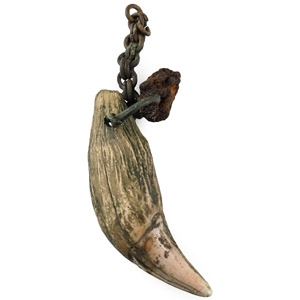
Viking Age Bear's Tooth Pendant with Bronze Fittings
9th-11th century A.D.Sold for (Inc. bp): £520
Comprising a large bear's tooth pierced with bronze coiled loop, remains of double-link chain and rusted iron ring. 36.3 grams, 95 mm
From the private collection of a London gentleman, from his grandfather's collection formed before the early 1970s. This lot is accompanied by an illustrated lot declaration signed by the Head of the Antiquities Department, Dr Raffaele D'Amato. -
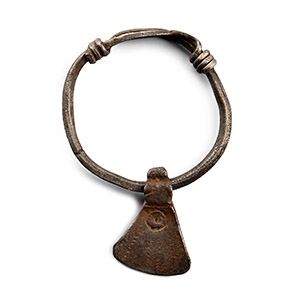
Viking Age Silver Axe Pendant
9th-11th century A.D.Sold for (Inc. bp): £182
With a hoop with overlapping terminals and coiled wire sleeves; free-running axehead pendant decorated with a single ring-and-dot motif from which radiate rows of pecked lines. 6.1 grams, 53 mm
Fine condition.
Dorset, UK, collection, 1990s. Ex property of a Sussex, UK, teacher. This lot is accompanied by an illustrated lot declaration signed by the Head of the Antiquities Department, Dr Raffaele D'Amato. -
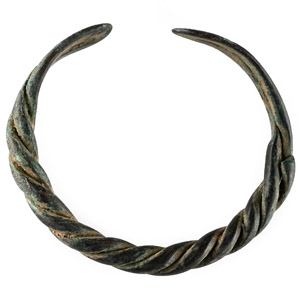
Viking Age Twisted Bronze Bracelet
9th-11th century A.D.Sold for (Inc. bp): £156
Penannular bracelet formed from two rods twisted about each other, flattened to each end with looped finials. 24.66 grams, 59 mm
From an East Sussex, UK, private collection; acquired 1980s-1990s. This lot is accompanied by an illustrated lot declaration signed by the Head of the Antiquities Department, Dr Raffaele D'Amato.
