
Loading, please wait...
LOT 1831
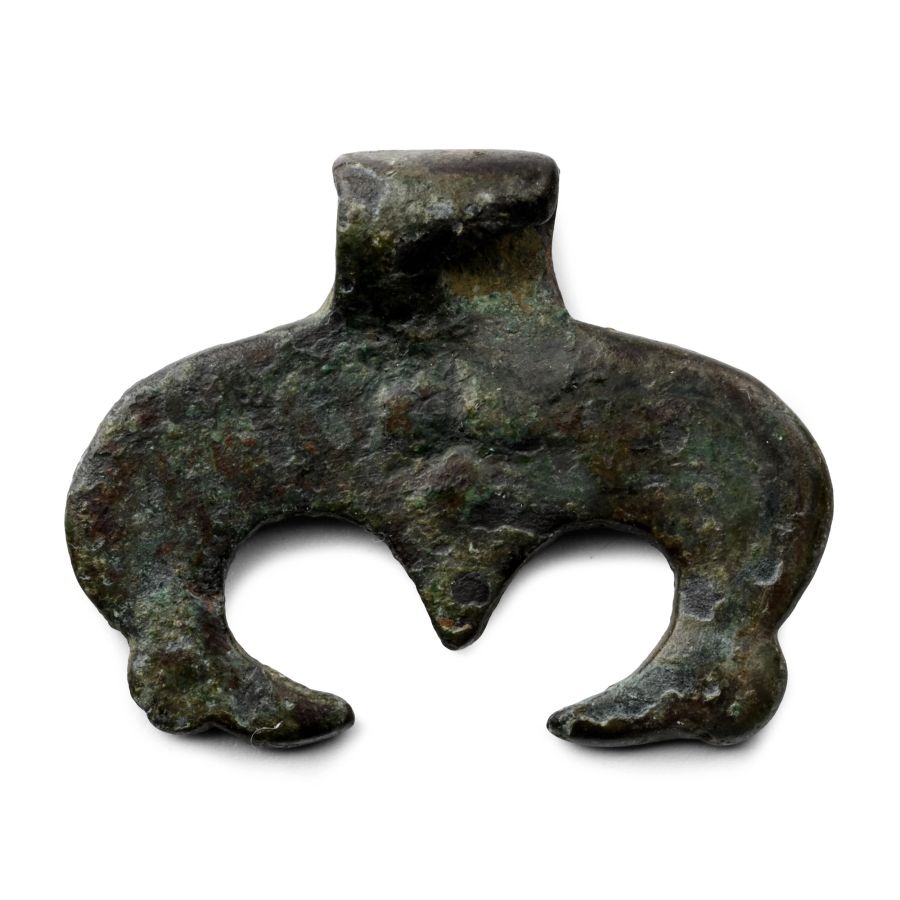
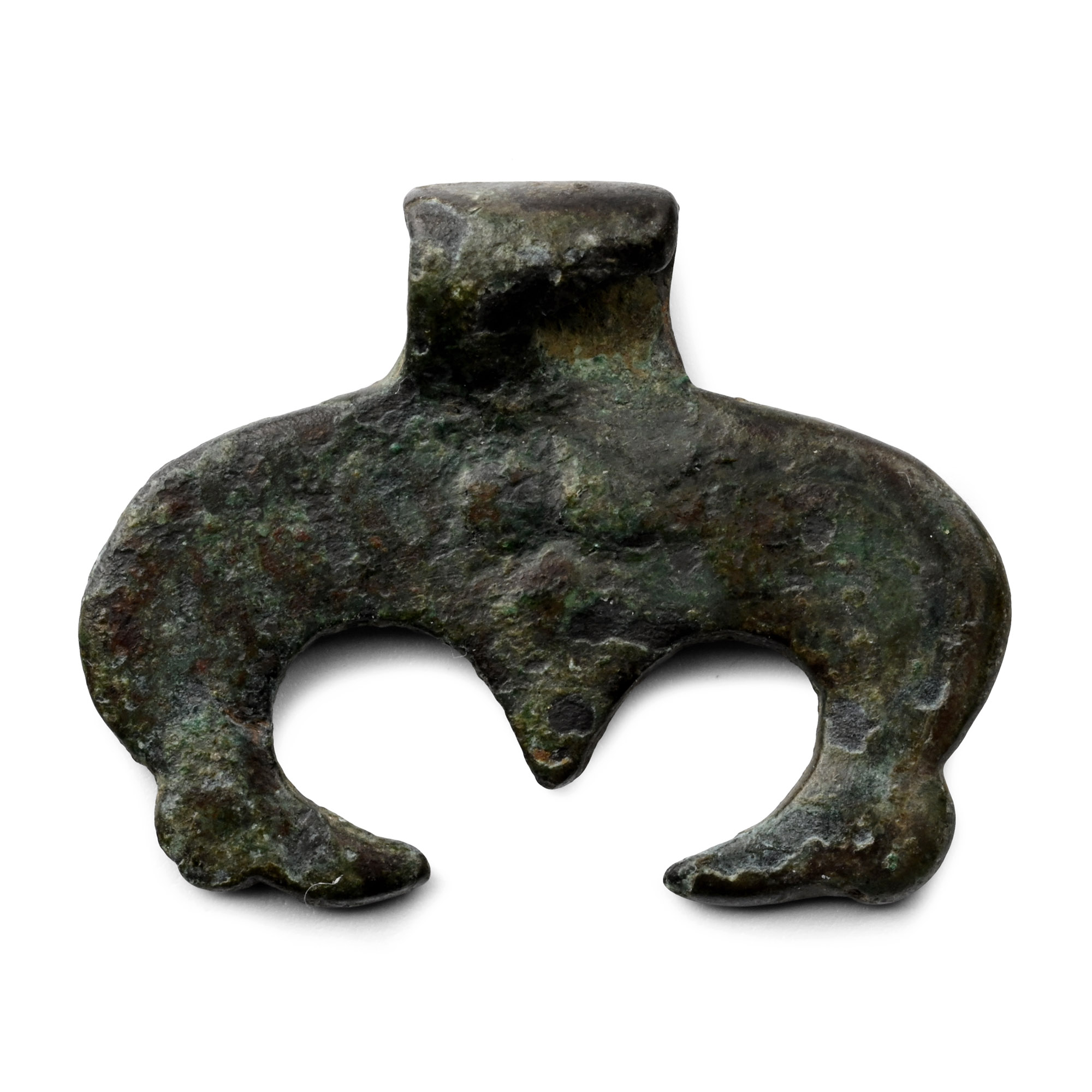
Viking Period Bronze Lunar Pendant with Bird Heads
9TH-11TH CENTURY A.D.
1 in. (2.89 grams, 24 mm).
Formed as a crescentic plaque with integral loop, each horn terminating in an avian head. [No Reserve]
ProvenanceEx German art market, 2000s.
Acquired from an EU collector living in London.
From the collection of a Surrey, UK, gentleman.
This lot is accompanied by an illustrated lot declaration signed by the Head of the Antiquities Department, Dr Raffaele D'Amato.
TimeLine Auctions follows a vetting process to ensure the authenticity and legality of all items, reinforcing our commitment to integrity and responsible trading. Each antiquity, antique, and coin lot undergoes thorough examination by a vetting committee of at least ten external specialists, professional trade association members, scientists, and archaeologists: Our Vetting Process
AUCTIONS:
TimeLine is a leading auction house specialising in antiquities, ancient art, collectables, natural history, coins, medals, and books. Our auctions offer museums, collectors, historians, and enthusiasts the opportunity to acquire unique and historically significant pieces.
-
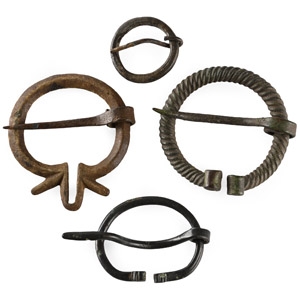
Viking Period Bronze Penannular Brooch Collection
Circa 8th-10th century A.D.Sold for (Inc. bp): £208
Including lozenge-section, ribbed and other types, most with their pins. 39 grams total, 22-44 mm
From the private collection of Kenneth Machin (1936-2020), Buckinghamshire, UK; his collection of antiquities and natural history was formed since 1948; thence by descent. This lot is accompanied by an illustrated lot declaration signed by the Head of the Antiquities Department, Dr Raffaele D'Amato. -
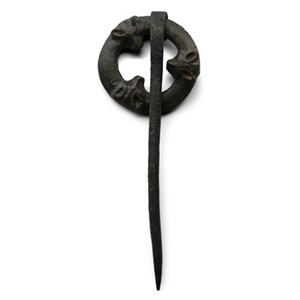
Viking Age Bronze Annular Brooch with Bear's Masks
10th century A.D.Sold for (Inc. bp): £234
Annular in form, D-shaped in section with three inward-facing bear-masks, sturdy pin with loop finial on the shank. 16.7 grams, 88 mm
From the private collection of a London gentleman, from his grandfather's collection formed before the early 1970s. This lot is accompanied by an illustrated lot declaration signed by the Head of the Antiquities Department, Dr Raffaele D'Amato. -
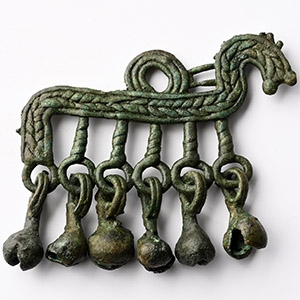
Viking Age Bronze Pendant with Bell Dangles
8th-10th century A.D.Sold for (Inc. bp): £494
Horizontal braided band with horse-head finial, suspension loop to the top; band of loops to lower edge, each with a bell dangle; Finno-Ugric type. 18.5 grams, 54 mm
From the private collection of a London gentleman, from his grandfather's collection formed before the early 1970s. This lot is accompanied by an illustrated lot declaration signed by the Head of the Antiquities Department, Dr Raffaele D'Amato.
