
Loading, please wait...
LOT 1075
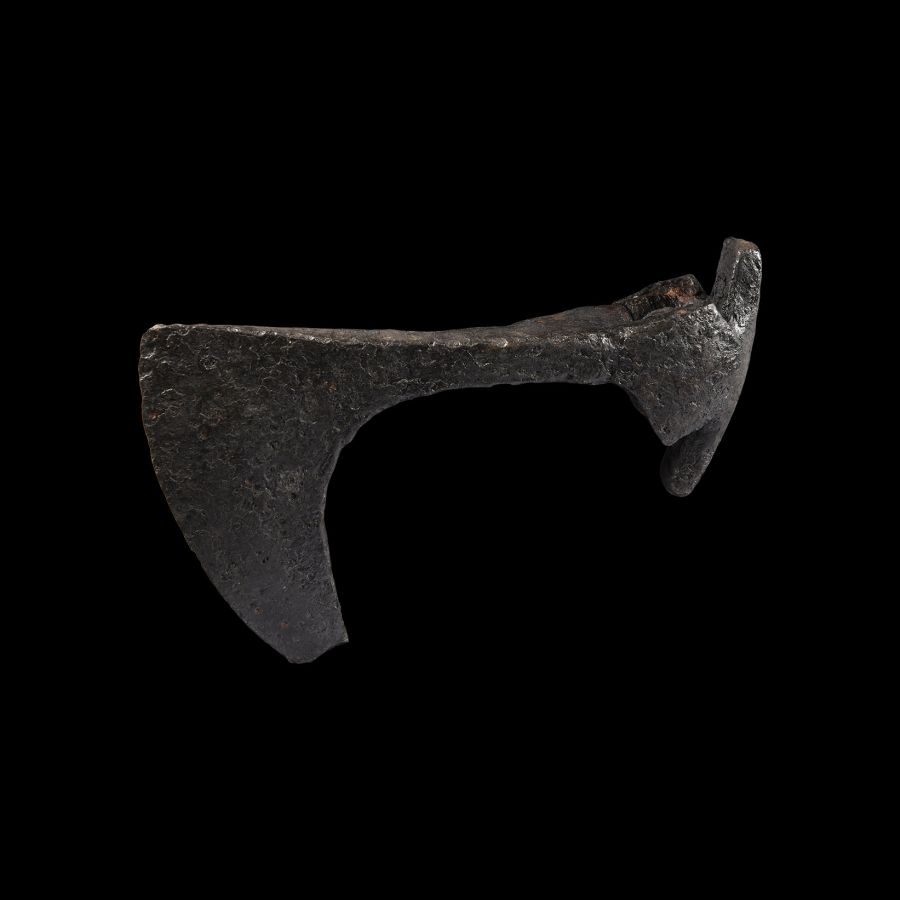
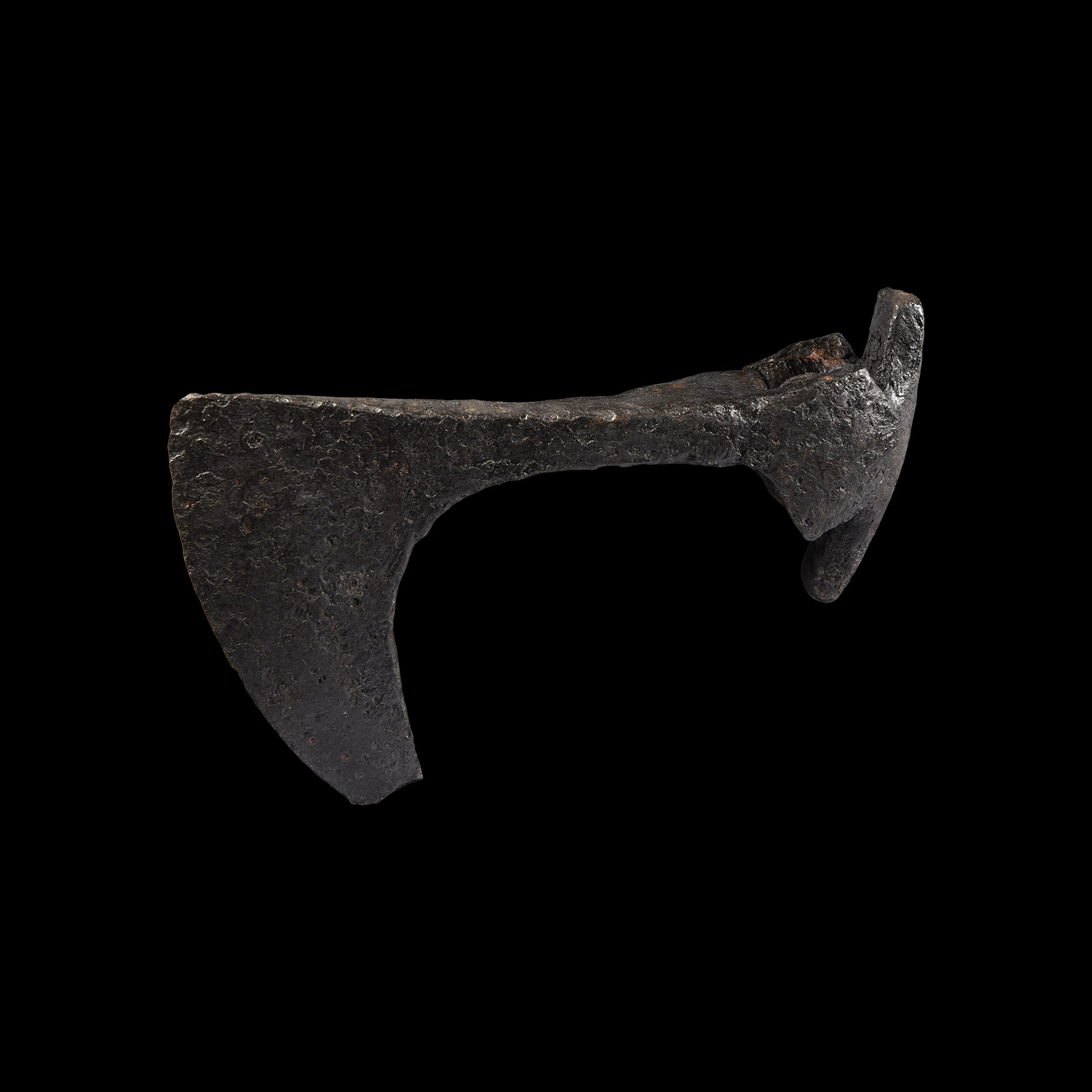
Viking Period Bearded Type Axehead
CIRCA 9TH-11TH CENTURY A.D.
7 7/8 in. (777 grams, 20 cm).
An iron axehead with broad curved blade and spur to the chin, narrow neck, deep socket with lateral spurs and extended plate to the reverse. [No Reserve]
ProvenanceAcquired 1971-1972.
From the collection of the vendor's father.
Property of a London, UK, collector.
Cf. Arbman, H., Birka I: Die Gräber, Uppsala, 1940, pl.14, item 3; Sedov, B.B., Finno-Ugri i Balti v Epokhi Srednevekovija, Moscow, 1987, table V, items 16, 17, 20.
FootnotesIron axeheads of this typology show a sub-trapezoidal asymmetrical blade, sometimes perforated through the centre. They are characterised by two projecting spurs to the back of the shaft-hole.
CONDITIONTimeLine Auctions follows a vetting process to ensure the authenticity and legality of all items, reinforcing our commitment to integrity and responsible trading. Each antiquity, antique, and coin lot undergoes thorough examination by a vetting committee of at least ten external specialists, professional trade association members, scientists, and archaeologists: Our Vetting Process
AUCTIONS:
TimeLine is a leading auction house specialising in antiquities, ancient art, collectables, natural history, coins, medals, and books. Our auctions offer museums, collectors, historians, and enthusiasts the opportunity to acquire unique and historically significant pieces.
-
Luristan Sword Blade
Late 2nd millennium B.C.Sold for (Inc. bp): £936
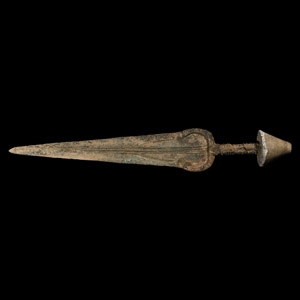
A bronze sword with solid cast hilt with penannular guard and a horizontally ribbed grip; a conical stone mushroom pommel and a multi-fullered blade tapering to a sharp tip; handle repaired. 876 grams, 56 cm
Acquired 1980-2015. Ex Abelita family collection.
According to Moorey, such category of swords were distributed in the Northern Iran area, as proved by the Amarlu finds. Based on the example from the Ashmolean Museum, he dated them to the end of the 2nd millennium B.C., more precisely to a period between 1400-1200 B.C. -
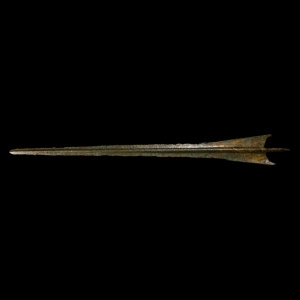
Western Asiatic Dagger Blade with Winged Guards
Late 2nd-mid 1st millennium B.C.Sold for (Inc. bp): £410
A bronze dagger with prominently curved or winged guard, extending out from the ricasso and partly framing the tang, once covered by an organic hilt; the thick midrib extending slightly above the ricasso. 484 grams, 60 cm
Acquired 1980-2015. Ex Abelita family collection.
Many examples of these blades have been excavated in the South Caspian area at Ghalekuti, and in the area of Talish. They have been found primarily in Iron Age graves, although the curves of the guards are reminiscent of the barbed arrow and javelin heads associated with Bronze Age Marlik. This is why some scholars (Dyson) dated them to the second millennium BC and others (Muscarella) to the recent Iron Age. It is possible that this style represents continuity from the Bronze to the Iron Age. -
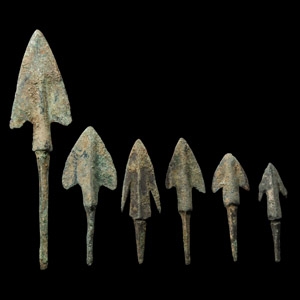
Luristan Arrowhead Group
2nd millennium B.C.Sold for (Inc. bp): £260
A group of six bronze arrowheads with deltoid form, a sharp barbed blade and prominent midrib extending to a long tang. 52 grams total, 4.3-10.9 cm
Acquired 1980-2015. Ex Abelita family collection.
A number of arrowheads of this type have been excavated from the Northern Iranian Plateau, in Luristan and in the South-Caspian region. Many parallels have a burial provenance, but a large hoard of them was found in a non-funerary context. This type of arrowhead has been in use from the 2nd millennium B.C. Godard claimed that barbed types of heads came from tombs from Luristan, like the ones found in Tang-i-Hamamlan.
