
Loading, please wait...
LOT 1055
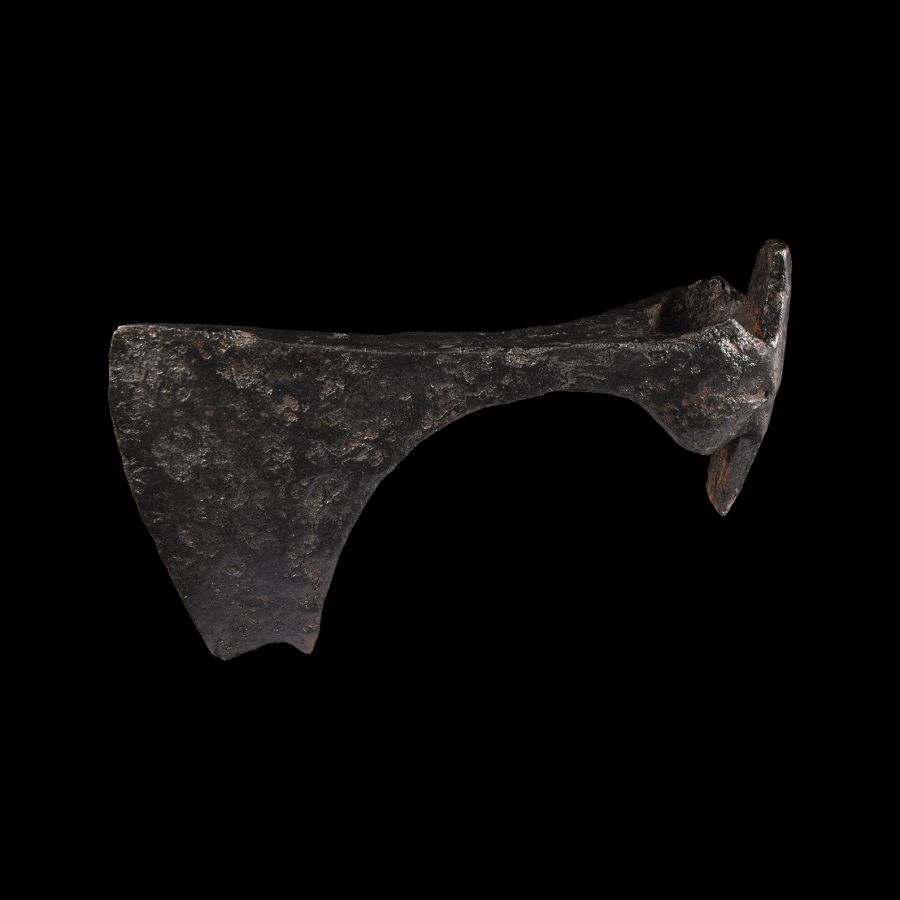
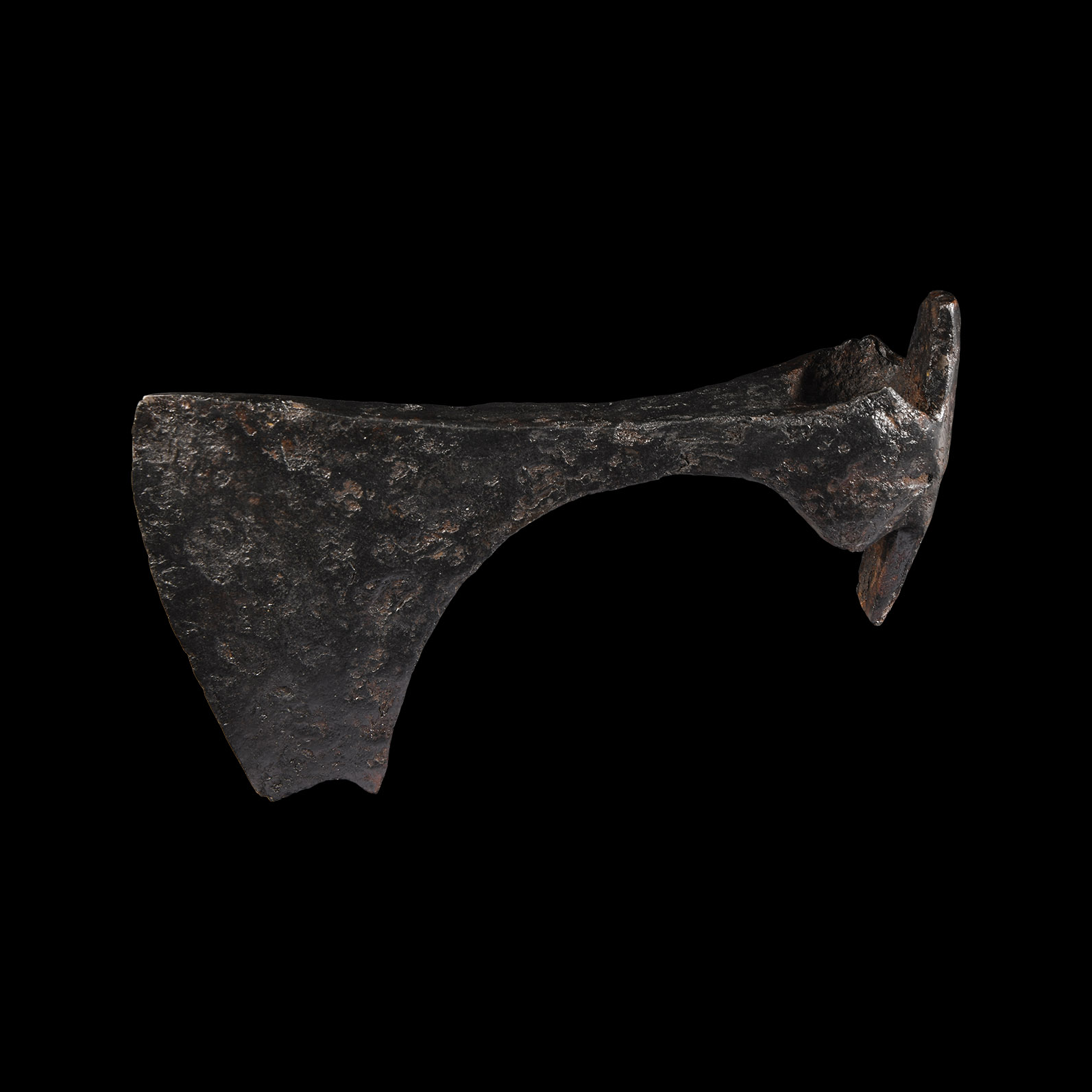
Viking Period Bearded Type Axehead
CIRCA 9TH-11TH CENTURY A.D.
7 7/8 in. (855 grams, 20 cm).
A hand-forged iron skeggöx (bearded axe) with asymmetrical triangular section narrow blade widening to a broad bevelled edge with square chin, curved edge, flared wings to the scooped socket and dorsal bar. [No Reserve]
ProvenanceAcquired 1971-1972.
From the collection of the vendor's father.
Property of a London, UK, collector.
Cf. Arbman, H., Birka I: Die Gräber, Uppsala, 1940, pl.14, item 3; Sedov, B.B., Finno-Ugri i Balti v Epokhi Srednevekovija, Moscow, 1987, table V, items 16, 17, 20.
FootnotesIron axeheads of this typology show a sub-trapezoidal asymmetrical blade, often perforated through the centre. They are characterised by two projections spurs from the top and the bottom of the back of the shaft-hole.
CONDITIONTimeLine Auctions follows a vetting process to ensure the authenticity and legality of all items, reinforcing our commitment to integrity and responsible trading. Each antiquity, antique, and coin lot undergoes thorough examination by a vetting committee of at least ten external specialists, professional trade association members, scientists, and archaeologists: Our Vetting Process
AUCTIONS:
TimeLine is a leading auction house specialising in antiquities, ancient art, collectables, natural history, coins, medals, and books. Our auctions offer museums, collectors, historians, and enthusiasts the opportunity to acquire unique and historically significant pieces.
-
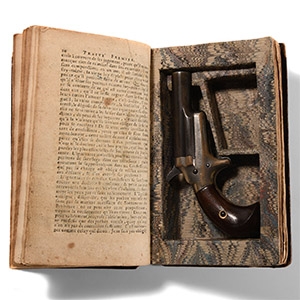
Colt .41 Rimfire Derringer Pistol and Book Case
19th century A.D.Sold for (Inc. bp): £715
A Colt .41 calibre single action rimfire single-shot derringer pocket pistol, the barrel top marked 'COLT' and the left frame '41 CAL'; with nickel-plated brass frame and steel rifled barrel (swivel to load) and bird's beak butt with plain wood grips; the pistol contained in an original case formed from a hollowed out leather-bound book Pratique du Sacrament de Penitence ou Methode pour L'Administrer Utilement, published Paris, 1714, the compartment lined with marbled paper with section for spare bullets; action in working order. 450 grams total, book 17 x 10 cm
Acquired Holts Auction, 2020, lot 899. Property of a Kent collector. Accompanied by lot ticket.
Sold as an exempt item under Section 58 (2) of the Firearms Act, 1968, to be held as a curiosity or ornament. No license required but buyer must be over 18 years of age. -
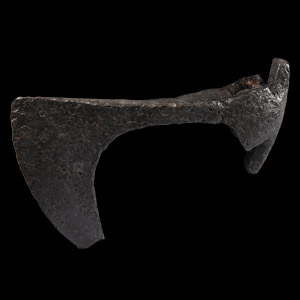
Viking Period Bearded Type Axehead
Circa 9th-11th century A.D.Sold for (Inc. bp): £546
An iron axehead with broad curved blade and spur to the chin, narrow neck, deep socket with lateral spurs and extended plate to the reverse. 777 grams, 20 cm
Acquired 1971-1972. From the collection of the vendor's father. Property of a London, UK, collector.
Iron axeheads of this typology show a sub-trapezoidal asymmetrical blade, sometimes perforated through the centre. They are characterised by two projecting spurs to the back of the shaft-hole. -
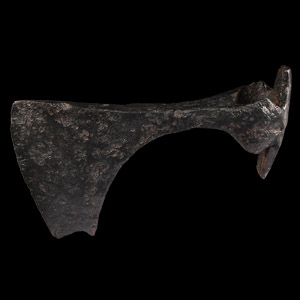
Viking Period Bearded Type Axehead
Circa 9th-11th century A.D.Sold for (Inc. bp): £598
A hand-forged iron skeggöx (bearded axe) with asymmetrical triangular section narrow blade widening to a broad bevelled edge with square chin, curved edge, flared wings to the scooped socket and dorsal bar. 855 grams, 20 cm
Acquired 1971-1972. From the collection of the vendor's father. Property of a London, UK, collector.
Iron axeheads of this typology show a sub-trapezoidal asymmetrical blade, often perforated through the centre. They are characterised by two projections spurs from the top and the bottom of the back of the shaft-hole.
