
Loading, please wait...
LOT 1083
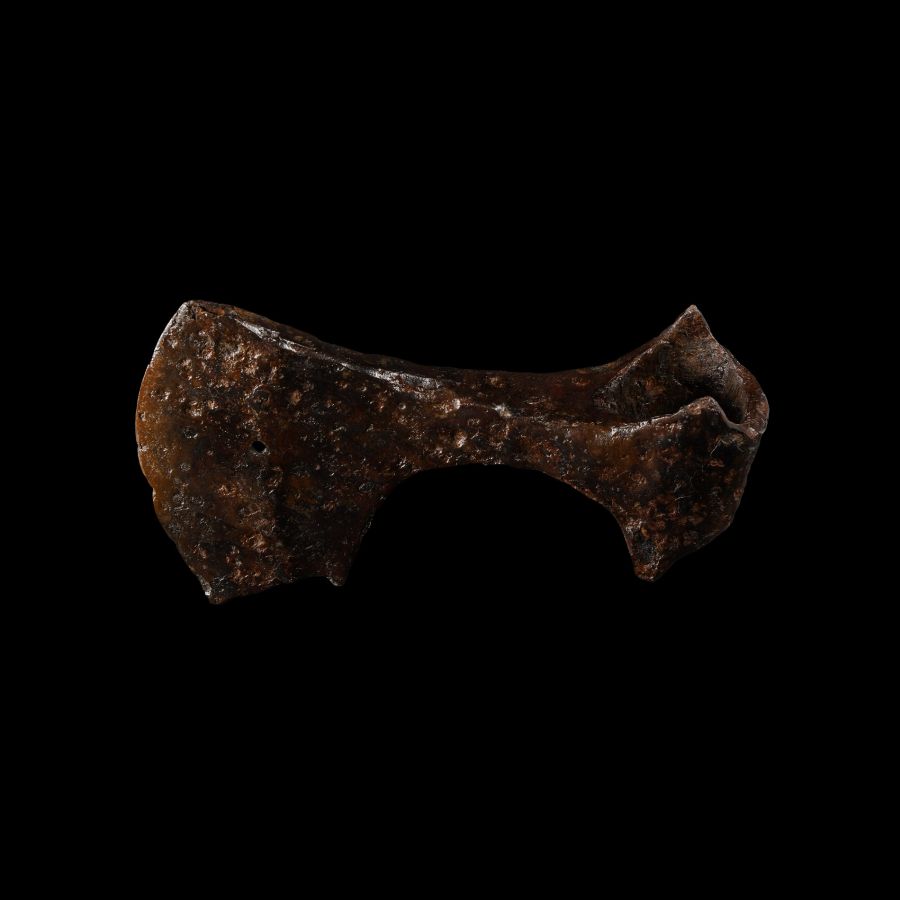
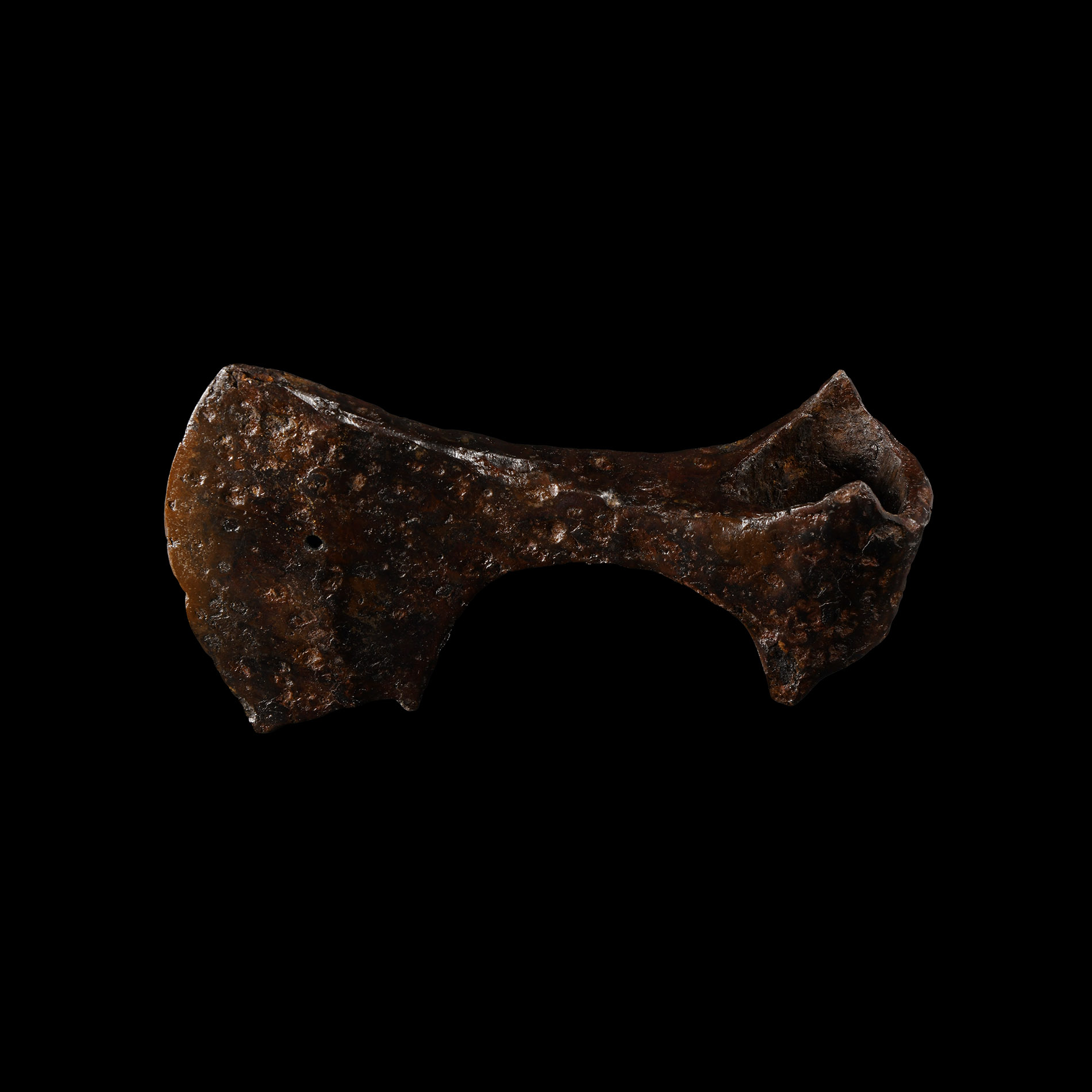
Viking Period Bearded Axehead
CIRCA 9TH-11TH CENTURY A.D.
6 in. (422 grams, 15.2 cm).
A hand-forged iron axehead with triangular-section narrow blade widening to a broad bevelled edge with square chin, socket with lateral flanges and rectangular panel to the rear. [No Reserve]
ProvenanceAcquired 1971-1972.
From the collection of the vendor's father.
Property of a London, UK, collector.
Cf. Thunmark-Nylén, L., Die Wikingerzeit Gotlands I.: Abbildungen der Graubfunde, Stockholm, 1992, plate 13, item 14.
FootnotesThe axe appears to belong to the typology of Viking side axes of Wheeler type B (Wheeler III / Rygh 559). Usually these bearded axeheads (skeggöks) had a longer edge, designed to split tree trunks into planks and beams, or heads during the battle. Some of the bearded axes were known as halfÞynna öx, the neck on such 'half thin axe' was thinly forged, to make it lighter.
CONDITIONTimeLine Auctions follows a vetting process to ensure the authenticity and legality of all items, reinforcing our commitment to integrity and responsible trading. Each antiquity, antique, and coin lot undergoes thorough examination by a vetting committee of at least ten external specialists, professional trade association members, scientists, and archaeologists: Our Vetting Process
AUCTIONS:
TimeLine is a leading auction house specialising in antiquities, ancient art, collectables, natural history, coins, medals, and books. Our auctions offer museums, collectors, historians, and enthusiasts the opportunity to acquire unique and historically significant pieces.
-
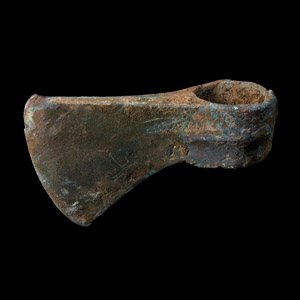
Western Asiatic Socketted Axehead
3rd millennium B.C.Sold for (Inc. bp): £89
A Bronze Age axehead with swept blade, large socket with raised circumferential rib and a vertical rib to the rear. 545 grams, 13 cm
Fine condition.
Private UK collection, 1980s-1990s. Acquired from a UK gallery, circa 2000.
This axe belongs to a group mainly including those of rectangular shape, the blades themselves rectangular or with slightly divergent edges, with a straight or rounded edges. -
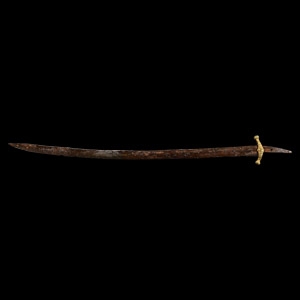
Khazar Sabre with Gilt Cross Guard with Face
9th century A.D.Sold for (Inc. bp): £2,286
A single-edged hand-forged sabre with a gently curving blade, an iron band welded beneath the cross guard, together with a tongue along the side of the blade; the separate gilt cross guard with spherical ornamented finials to the quillons, the central panel with a stylised face flanked by a pair of leaping lions biting the top of the head, the other side with a lozenge within a ropework frame. 610 grams, 80.5 cm
Fine condition.
Acquired 1971-1972. From the collection of the vendor's father. Property of a London, UK, collector. Accompanied by an academic report by military specialist Dr Raffaele D'Amato. This lot has been checked against the Interpol Database of stolen works of art and is accompanied by search certificate no.114437-196034.
This exceptional sabre shows similarity with examples from the Caucasus and Kuban regions. The blade could be Khazar-Magyar, and certainly its best parallels are the specimens from Verchne-Szaltovo area. According to M. Gorelik, some of these sabres were produced by the Kabarians, a breakaway tribe from the Khazar State, who formed an alliance with the Magyars. The extra band welded beneath the quillons, together with the side tongue, not only protected the scabbard from being cut by the blade but, more importantly, defended the warrior’s fingers which were wrapped around the quillons when fighting. -
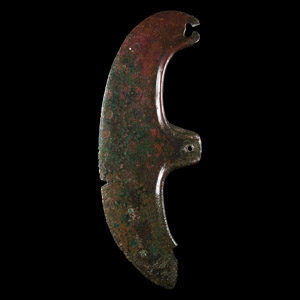
Western Asiatic Crescentic Axehead
1st millennium B.C.Sold for (Inc. bp): £338
A copper-alloy crescentic axehead, both faces with raised border to the upper edge, central pierced arm for attachment to haft; ancient nick to blade; one terminal lost in antiquity. 146 grams, 19 cm
Acquired 1980-2015. Ex Abelita family collection.
