
Loading, please wait...


LOT 0335
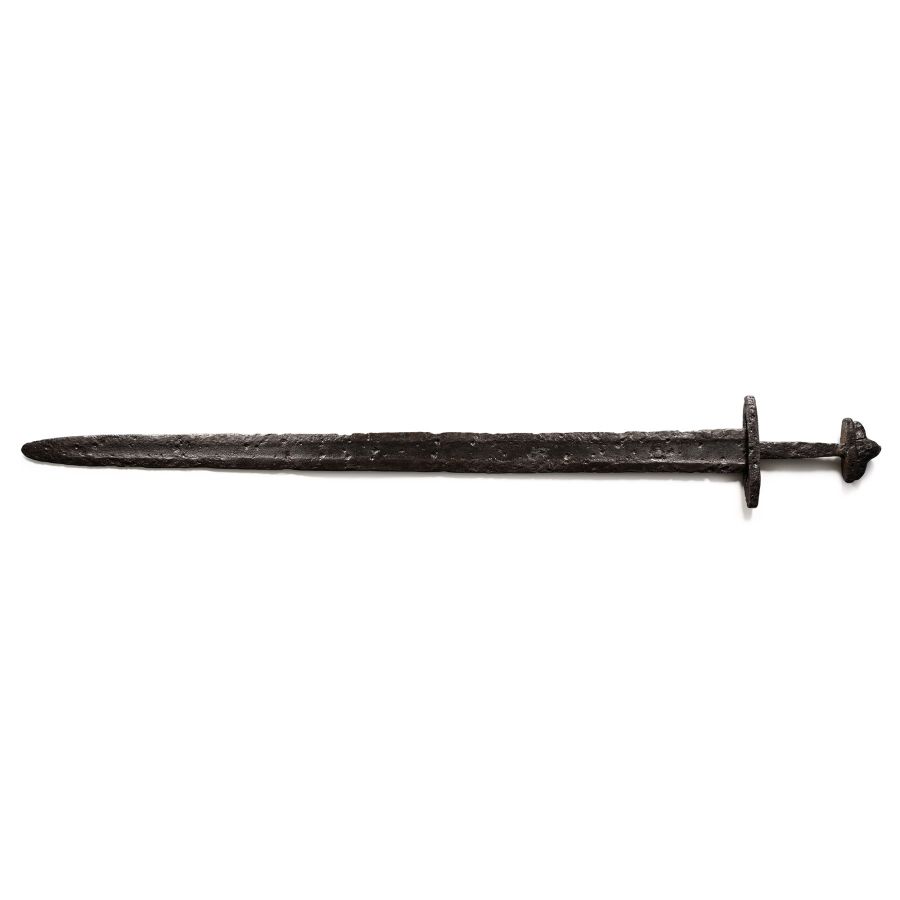
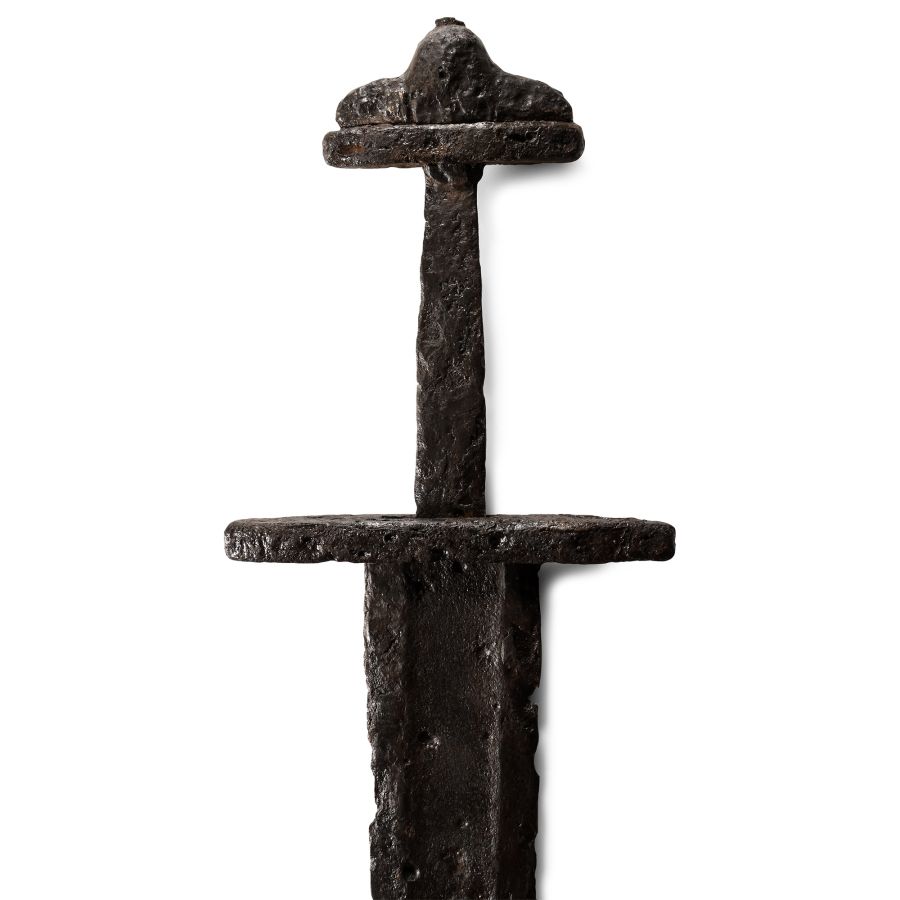
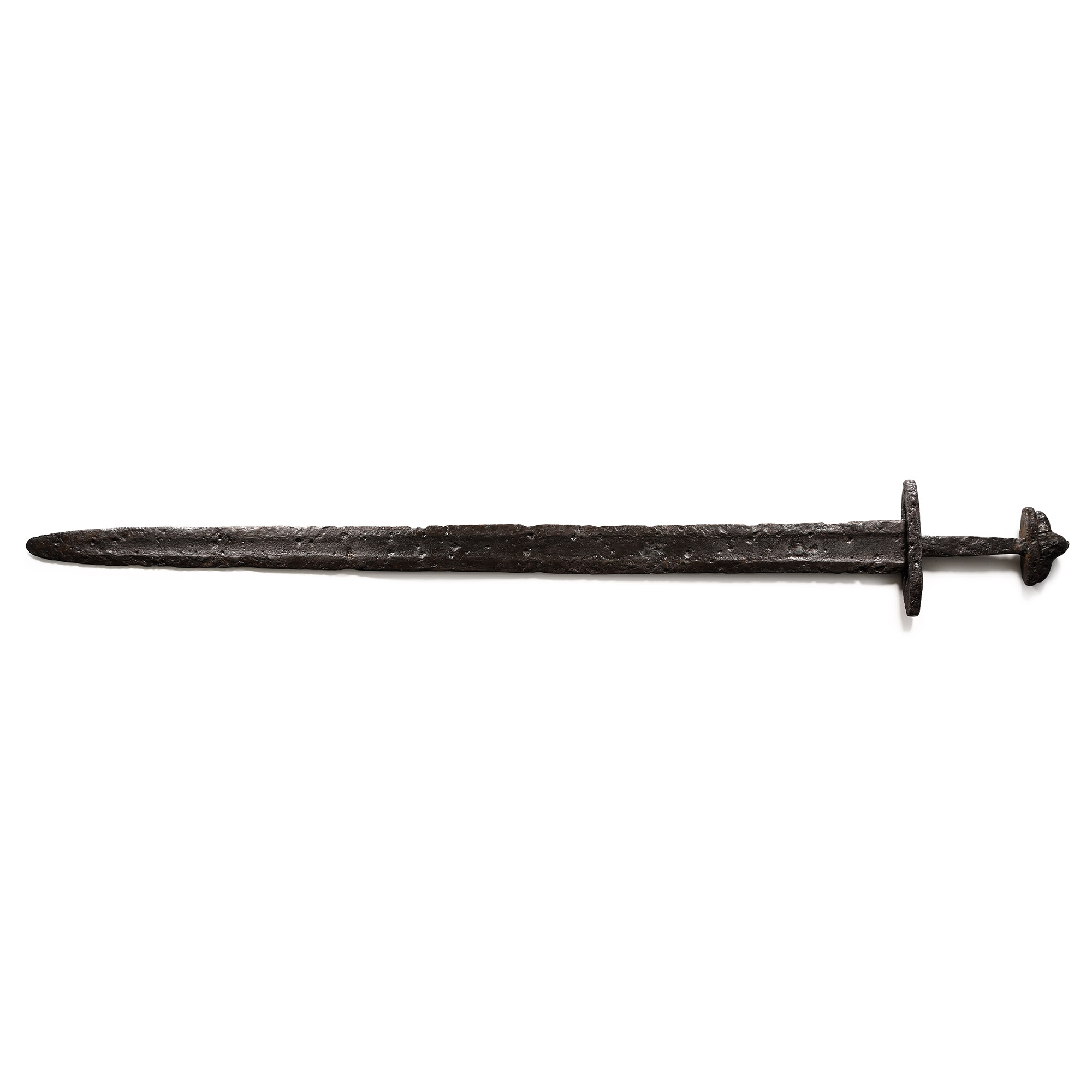
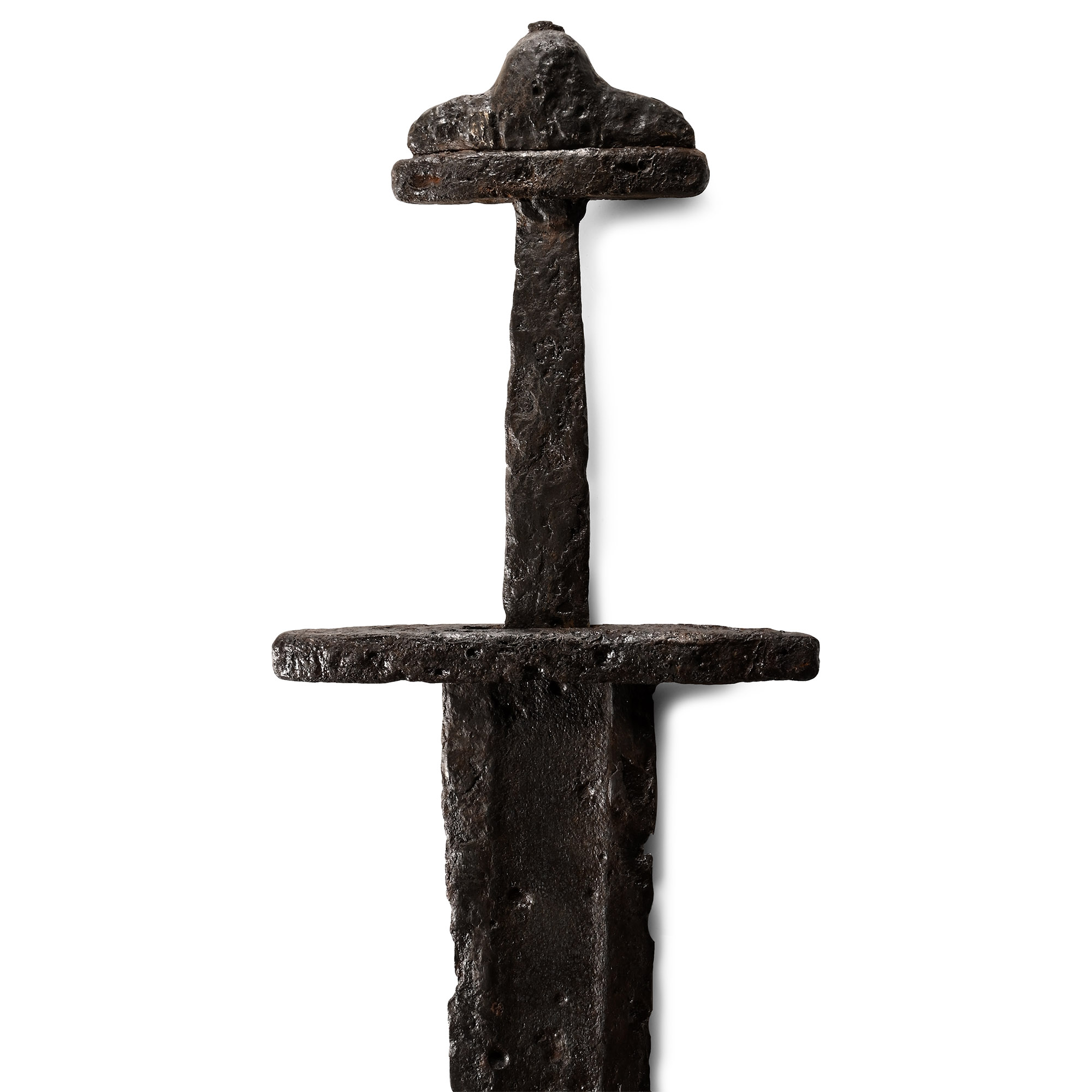
Viking Iron Sword with Three-Lobed Pommel
10TH-11TH CENTURY A.D.
36 1/2 in. (848 grams, 92 cm).
Comprising a two-edged blade with broad fuller and rounded tip, narrow lower guard with rounded outer ends, broad tang, lobed pommel of Type U with cocked-hat profile and lower guard, traces of silvering.
ProvenanceFrom the private collection of a London gentleman, from his grandfather's collection formed before the early 1970s.
Accompanied by an academic report by Dr Raffaele D’Amato.
This lot has been checked against the Interpol Database of stolen works of art and is accompanied by search certificate number no.12356-225922.
Cf. Petersen, J., De Norske Vikingsverd, Oslo, 1919; Peirce, I., Swords of the Viking Age, Suffolk, 2002; Sedov, B.B., Finno-Ugri i Balti v Epokhi Srednevekovija, Moscow, 1987; the sword finds parallels in various similar Viking age specimens of T variant, published by Petersen (especially with the sword from Utgården, Seliord, Telemark, p.151, fig.121), or types S and T published by Peirce (specimens C16430 and C18454-C3210 & C3211, pp.106-109) and Sedov (pl.CXXIII no.11).
FootnotesPetersen considered this type of Viking sword similar to the previous types R and S, but with differences in the pommel and cross-guard. The traces of silver ornaments on the guard and pommel are artistically consistent with archaeological examples of decorative work from the geographic region or estimated cultural point of origin, probably Eastern Scandinavia or the Baltic areas.
CONDITIONTimeLine Auctions follows a vetting process to ensure the authenticity and legality of all items, reinforcing our commitment to integrity and responsible trading. Each antiquity, antique, and coin lot undergoes thorough examination by a vetting committee of at least ten external specialists, professional trade association members, scientists, and archaeologists: Our Vetting Process
AUCTIONS:
TimeLine is a leading auction house specialising in antiquities, ancient art, collectables, natural history, coins, medals, and books. Our auctions offer museums, collectors, historians, and enthusiasts the opportunity to acquire unique and historically significant pieces.
-
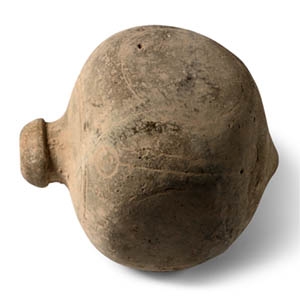
Byzantine 'Greek Fire' Ceramic Fire Bomb or Hand Grenade
9th-11th century A.D.Sold for (Inc. bp): £52
The missile with a rounded body flattened on four sides, the flat faces separated by two vertical lines with an annulet above and below, concentric circles surrounding the pointed base, domed filler-hole, intended to be filled with explosive liquid and wick, used as a hand grenade. 660 grams, 11.8 cm
From a specialist London, UK, arms and armour collection, 1990s. Accompanied by an academic paper by military specialist Dr Raffaele D'Amato, dated 15 July 2019 and titled 'Eastern Roman Empire - Greek Fire Bomb or Hand Grenade (μεσαίον kακάβιον) 9th-11th century AD'.
Apart from the use of siphons or manual flame-throwers called cheirosiphona, special corps of Roman soldiers employed terracotta grenades, in the form of small jars, abundantly evidenced in archaeological excavations. They were called μεσαία kακαβιά or κυτροκακάβια where the former had a bulbous shape and the latter a more cylindrical form. -
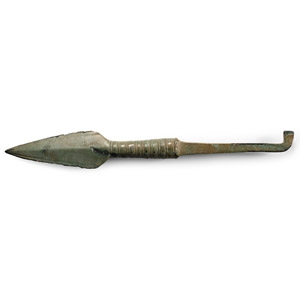
Luristan Decorated Bronze Spearhead
13th-6th century B.C.Estimate: £200 - 300 (+bp*)
Opening Bid: £80
With broad leaf-shaped blade and tapering square-section tang, ribbed neck. 147 grams, 21.5 cm
From the private collection of Mr K.A., acquired in the 1990s-early 2000s. -
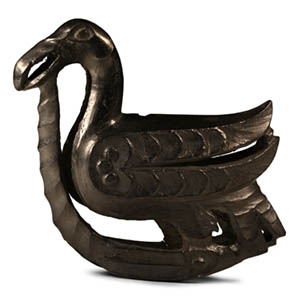
Eurasian Tinned Bronze Sword Chape
12th century A.D.Sold for (Inc. bp): £59
Modelled as an openwork duck perching with wings folded and bill open; integral feather and other detailing; broken. 110 grams total, 84-89 mm
UK gallery, early 2000s.
