
Loading, please wait...
LOT 0262
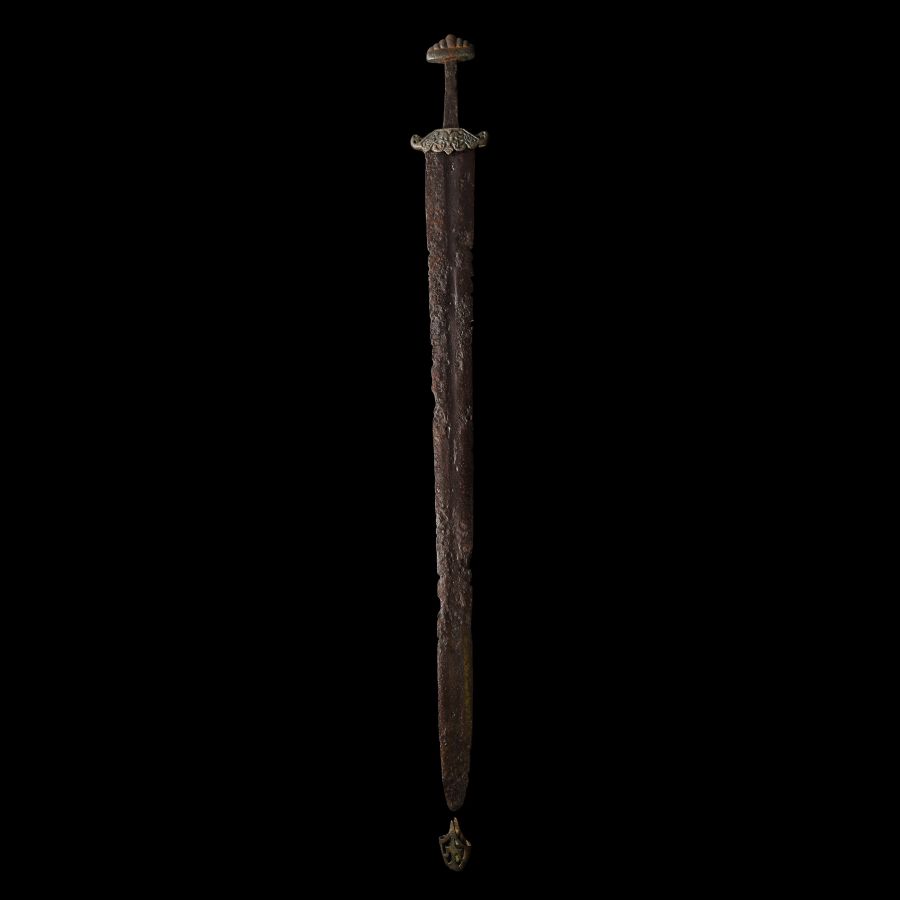
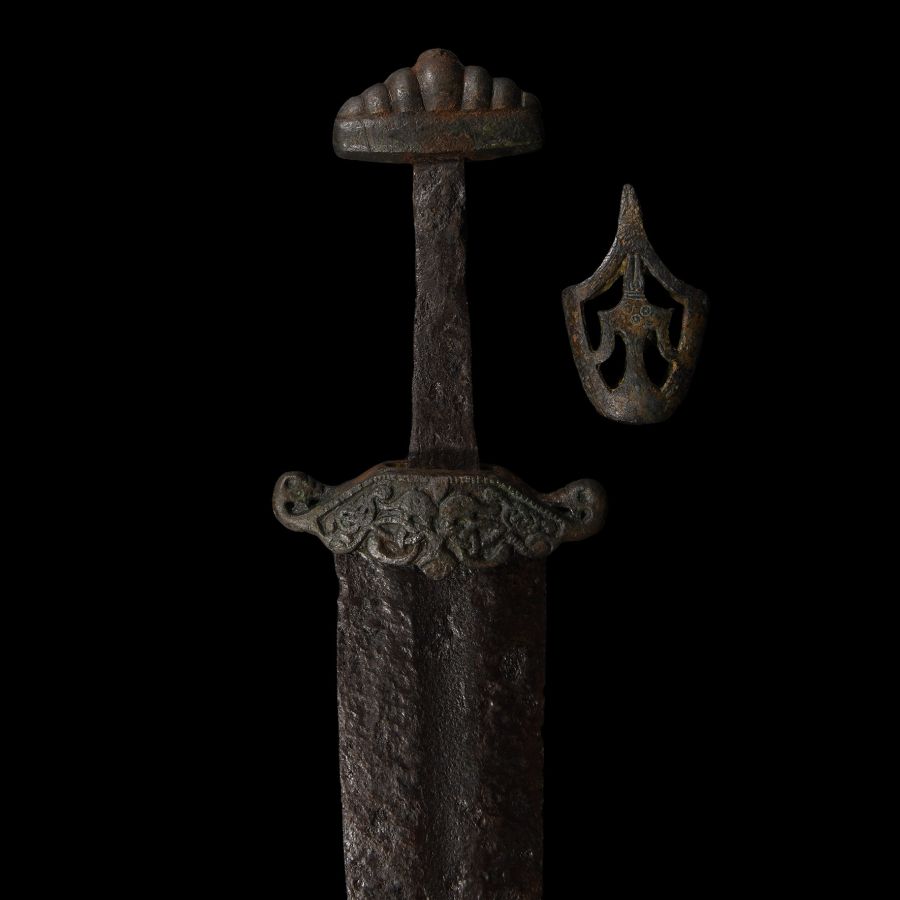
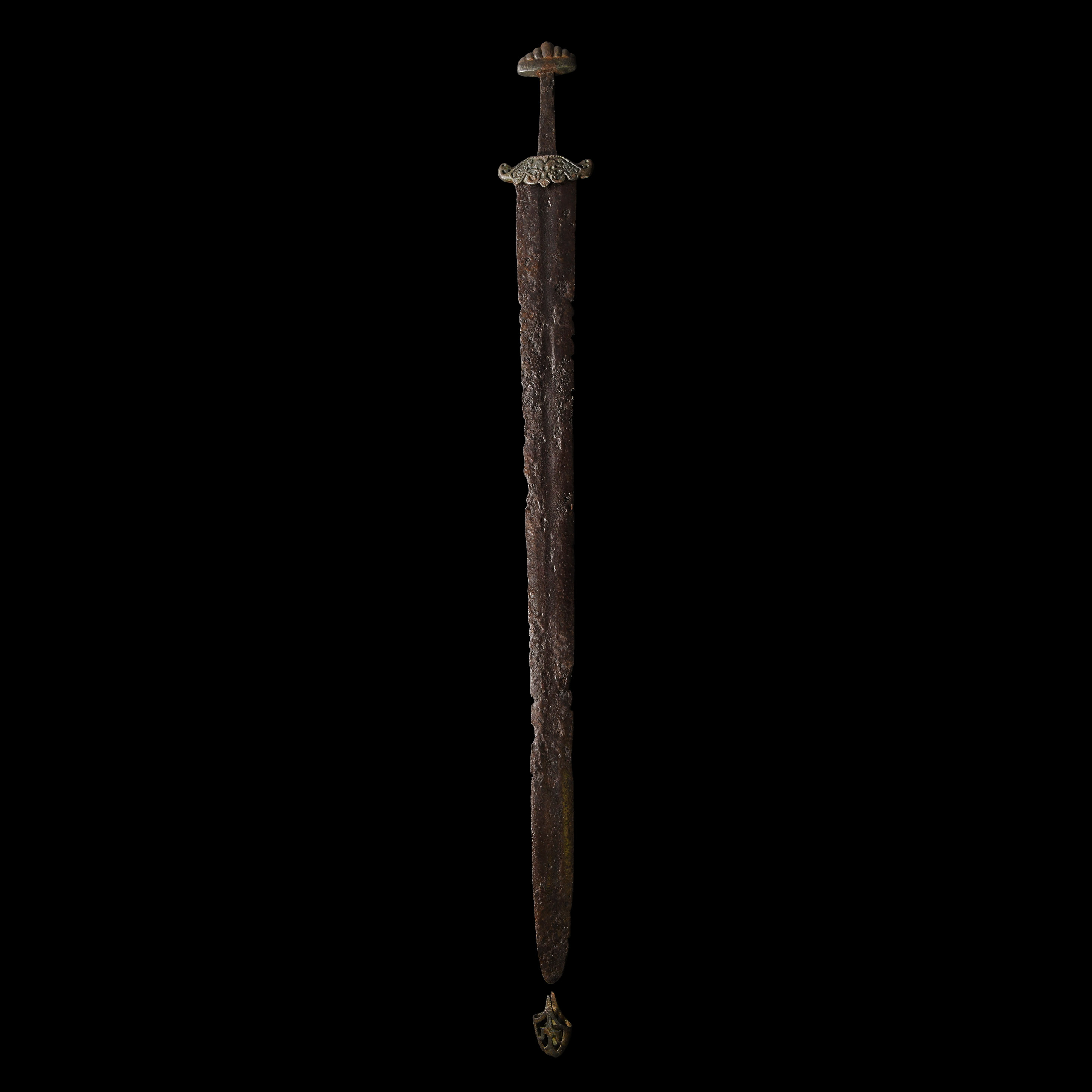
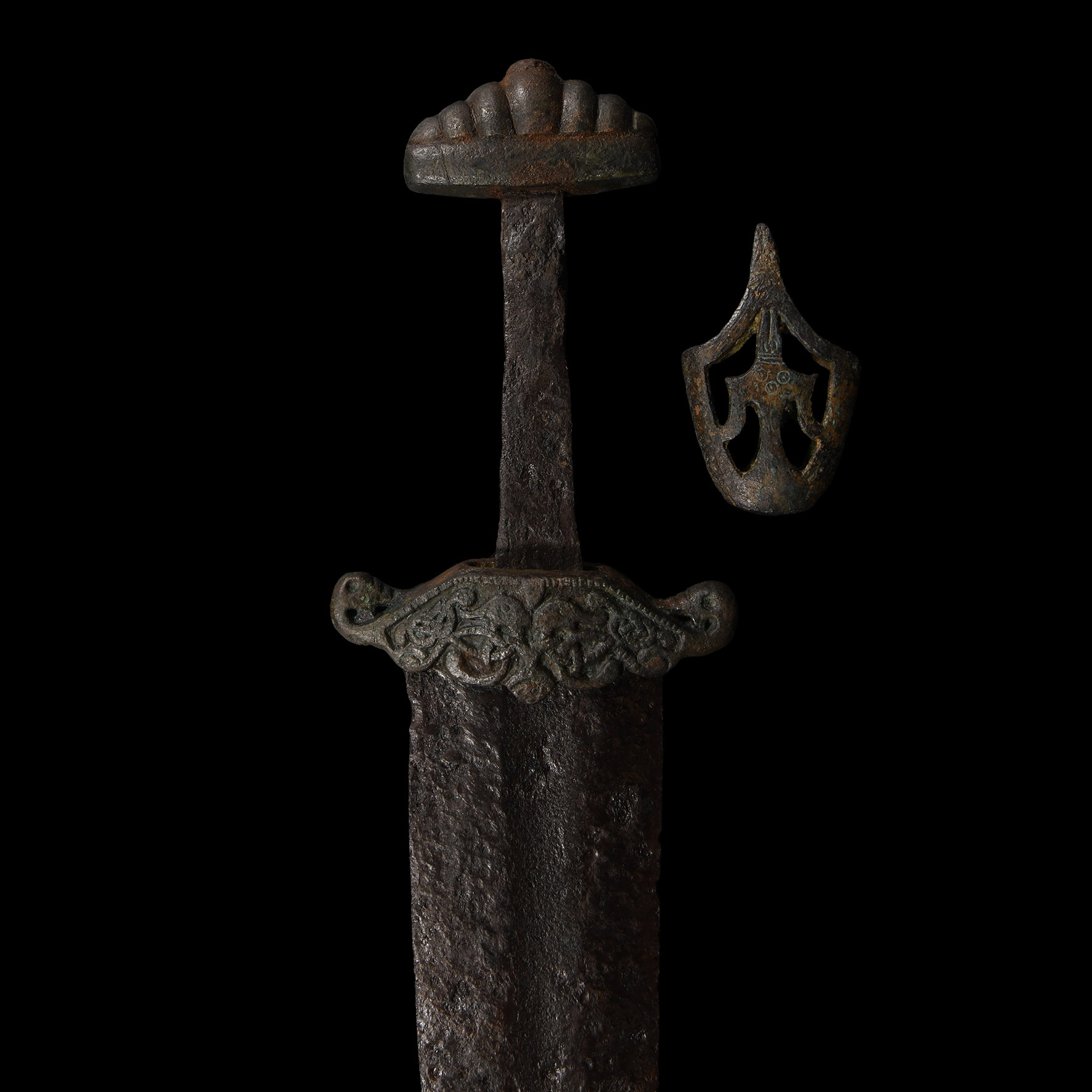
Viking Iron Sword with Cross Guard Surmounted by Interlaced Dragons
9TH-11TH CENTURY A.D.
35 1/4 in. (900 grams, 89.5 cm).
Comprising a double-edged cutting blade with tapering fullers and hefty tang; the bronze cross guard in Jellinge style with dragon head finials and a central human face to the lower edge; the pommel with seven lobes; accompanied by a bronze openwork chape with central bird motif decorated with stamped ring-and-dot design. [2]
ProvenanceFrom the private collection of a London gentleman, from his grandfather's collection formed before the early 1970s.
Accompanied by an academic report by Dr Raffaele D’Amato.
This lot has been checked against the Interpol Database of stolen works of art and is accompanied by search certificate number no.11821-206859.
See Peirce, I., Swords of the Viking Age, Suffolk, 2002; Żabiński, G., ‘Viking Age Swords from Scotland’, in Acta Militaria Mediaevalia III, Kraków, Sanok, 2007, pp.29–84; see a sword in the Musée de l’Armée published by Peirce (2002, pp.70-71), for a similar pommel; cf. Paulsen, P., Schwertortbänder der Wikingerzeit, Stuttgart, 1953, for the chape; see also Michalak, A., Socha, K., ‘A sword scabbard chape with a depiction of a bird of prey from the surroundings of Kostrzyn’ in Slavia Antiqua, 2017, LVIII, pp.159-174, figs.3-4.
FootnotesThe blade of the sword is very similar to Petersen Type K; the hilt is a typical Type K, but having seven rather than five lobes to the pommel. The chape, the parallels of which are mostly of late 10th and early 11th centuries, is probably a later addition, possibly reworked to be fitted to the sword.
CONDITIONTimeLine Auctions follows a vetting process to ensure the authenticity and legality of all items, reinforcing our commitment to integrity and responsible trading. Each antiquity, antique, and coin lot undergoes thorough examination by a vetting committee of at least ten external specialists, professional trade association members, scientists, and archaeologists: Our Vetting Process
AUCTIONS:
TimeLine is a leading auction house specialising in antiquities, ancient art, collectables, natural history, coins, medals, and books. Our auctions offer museums, collectors, historians, and enthusiasts the opportunity to acquire unique and historically significant pieces.
LOT 0262
Viking Iron Sword with Cross Guard Surmounted by Interlaced Dragons
Sold for (Inc. bp): £8,450
-
Luristan Bronze Arrowhead Group
12th-10th century B.C.Estimate: £100 - 140 (+bp*)
Opening Bid: £50
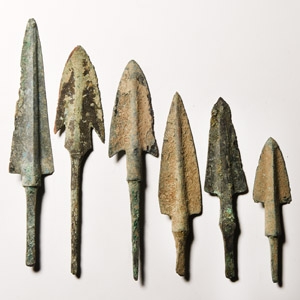
Comprising six tanged arrowheads, all with large elongated triangular blades and raised midrib, sharp central groove, cylindrical stem with handle for the shaft; three with barbed shoulders and convex or squared sides, two lanceolate with slightly rounded shoulders, one elongated triangular type. 105 grams total, 6.9-11.7 cm
Acquired 1980-2015. Ex Abelita family collection.
These arrowheads seem to belong to the type V, subcategory types A, B, C and D according to the classification of Khorasani and Negahban. In the four categories of triangular bronze arrowheads from Luristan, Marlik and Northern Iran individuated by Negahban, subtypes C and D of type V are larger arrow or javelin heads, C with barbed shoulders and D with round shoulders. -
Luristan Bronze Axehead
2nd-1st millennium B.C.Sold for (Inc. bp): £130
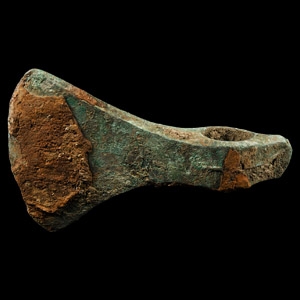
With wide swept blade, large socket with raised circumferential rib, hammer to the rear. 1.3 kg, 21 cm
Acquired 1980-2015. Ex Abelita family collection. -
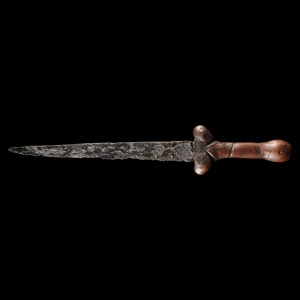
Medieval 'Thames' Iron Kidney Dagger
14th-15th century A.D.Sold for (Inc. bp): £260
The tapering blade with a single cutting edge; replica wooden handle with bulbous guard and pommel. 94 grams, 29.2 cm
Found on the Thames foreshore at Vintry, Southwark, London, UK.
