
Loading, please wait...
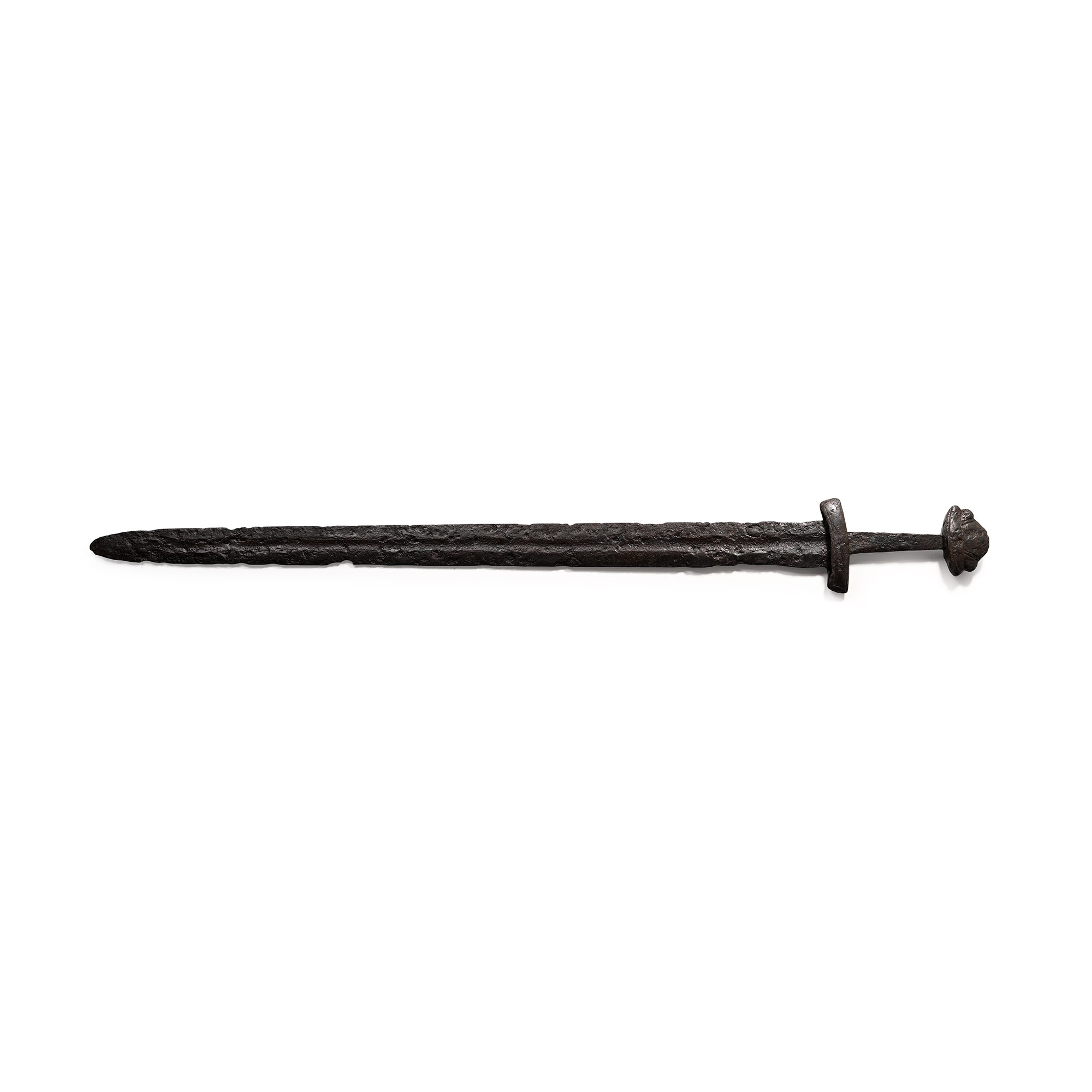
LOT 0324
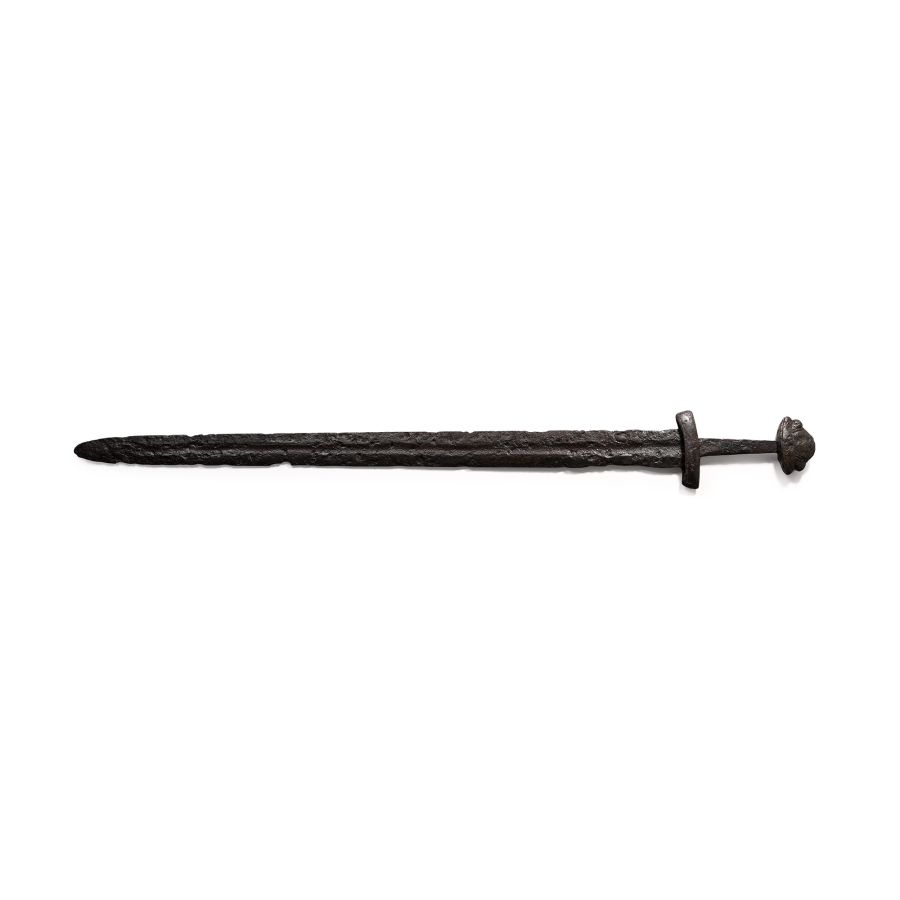
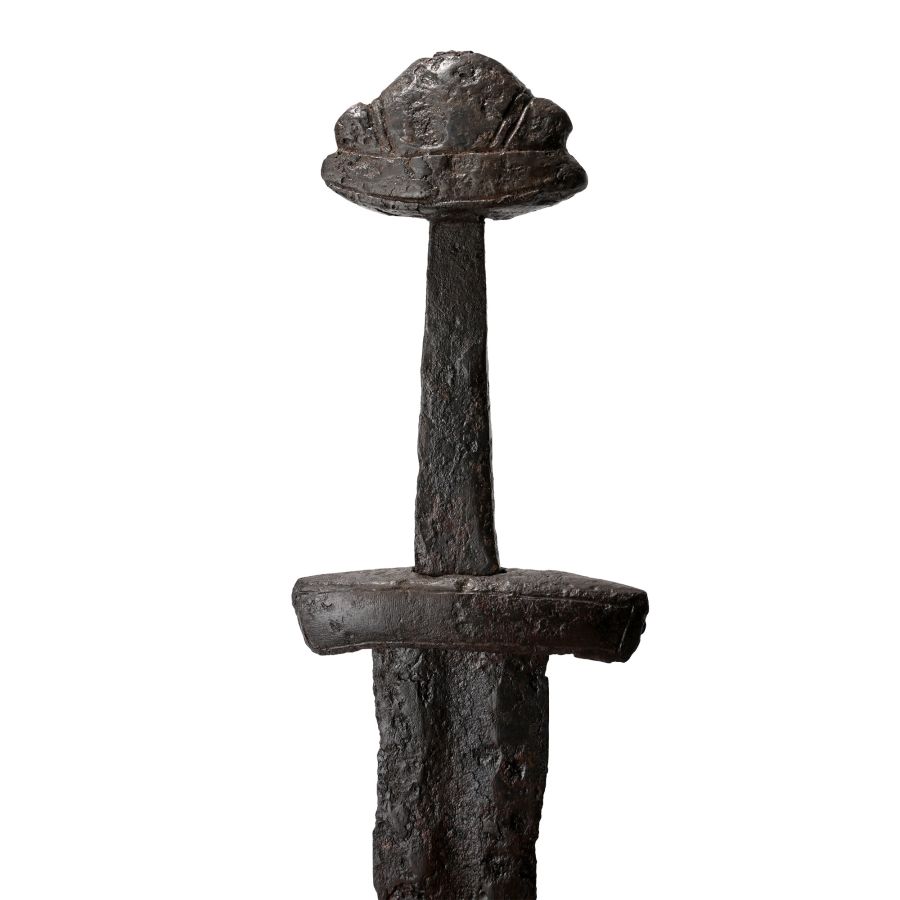
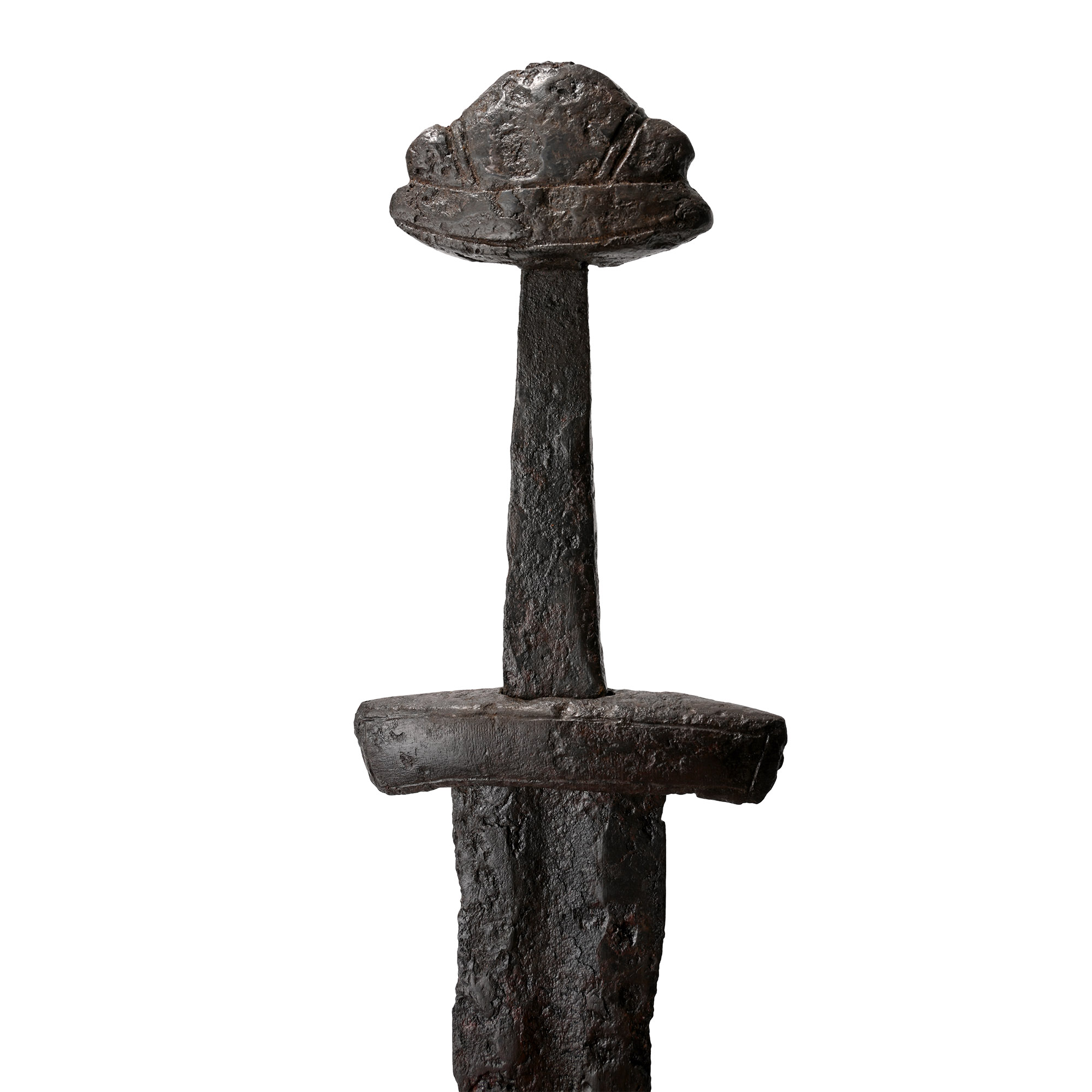
Viking Iron Sword of Petersen Type L
10TH CENTURY A.D.
34 in. (775 grams, 86.5 cm).
Double-edged cutting sword with tapering blade showing battle nicks along the length, tapering fullers showing shallow traces of pattern-welding, long tang, a boat-shaped lower guard and a three-lobed pommel.
ProvenanceFrom the private collection of a London gentleman, from his grandfather's collection formed before the early 1970s.
Accompanied by an academic report by Dr Raffaele D'Amato.
This lot has been checked against the Interpol Database of stolen works of art and is accompanied by search certificate number no.13261-254356.
Cf. Petersen, J., De Norske Vikingsverd, Oslo,1919, p.112ff.; Wilson, D., W. ‘Some Neglected Late Anglo-Saxon Swords,’ in Medieval Archaeology, 1965, pp.32-54; Peirce, I., Swords of the Viking Age, Suffolk, 2002; Żabiński, G., ‘Viking Age Swords from Scotland’, in Acta Militaria Mediaevalia III, Kraków, Sanok, 2007, pp.29–84; the sword finds parallels in various similar Viking age specimens of L variant; two very similar swords, both preserved at the British Museum, have been published by Peirce (2002, pp.77-81); similar boat-shaped guard and five-lobed pommel are visible on a sword from Mileham, Norfolk (Castle Museum, Norwich: inv. no. 2IO.949, see Wilson, 1965, pl.VI) the blade of which is pattern-welded.
FootnotesThis type, considered as Anglo-Saxon in origin, is usually dated to 850-975 A.D., and is considered to form a distinctive group of Viking Age swords. Although used by the Vikings, it is probable that these swords were of English manufacture or inspiration. Swords of Type L are remarkable for their crosspieces and pommel bases curved away from the grip and lobed pommels.
CONDITIONTimeLine Auctions follows a vetting process to ensure the authenticity and legality of all items, reinforcing our commitment to integrity and responsible trading. Each antiquity, antique, and coin lot undergoes thorough examination by a vetting committee of at least ten external specialists, professional trade association members, scientists, and archaeologists: Our Vetting Process
AUCTIONS:
TimeLine is a leading auction house specialising in antiquities, ancient art, collectables, natural history, coins, medals, and books. Our auctions offer museums, collectors, historians, and enthusiasts the opportunity to acquire unique and historically significant pieces.
-
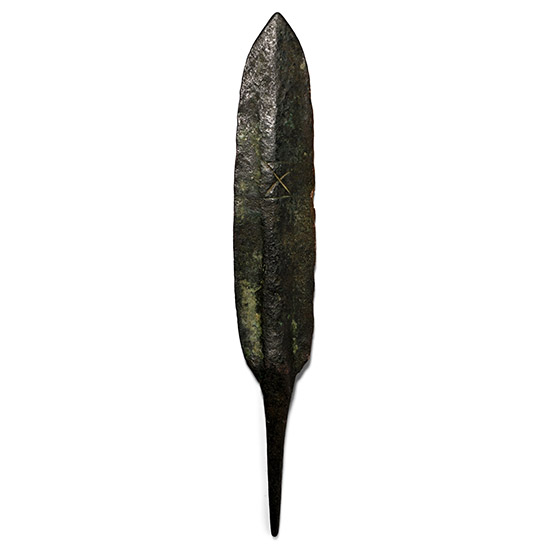
Western Asiatic Bronze Arrowhead or Javelin Head with Inscribed X
Late 2nd millennium B.C.Sold for (Inc. bp): £117
Leaf-shaped with two cutting edges and a broad point, low midrib, on the face an incised 'X' in a square. 15.17 grams, 11.34 cm
Ex Guttman collection, Germany. with Christie's, 28 April 2004, no.27 (part). Acquired from Bidancient and Artifacts UK, 2009. Ex important collection of Greek artefacts, London, UK.
The letter X has been found in various Semitic/Accadic or even Philistine Inscriptions in the Levant: dated between 13th-10th centuries B.C.: on the Lachish bowl no.1, on the Ruweiseh arrowhead, on a Byblian bronze spatula, on the Ahiram graffito, at Yehimilk. This suggests that the arrow or javelin head has been made in the Levant or the Fertile Crescent. -
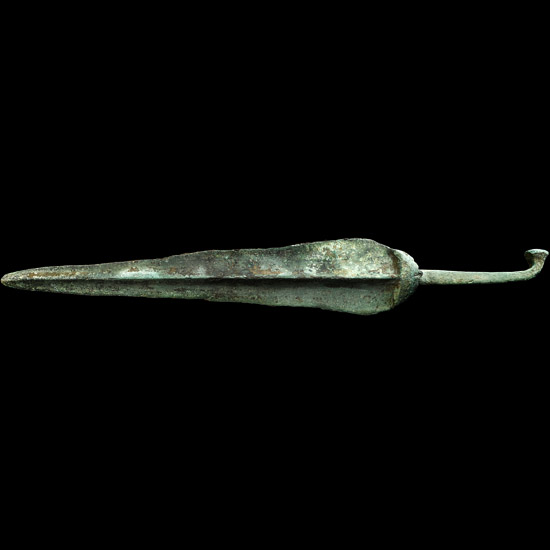
Western Asiatic Bronze Tanged Spearhead
Early 2nd millennium B.C.Sold for (Inc. bp): £182
Slender blade with raised midrib and rectangular-section tang with clubbed finial. 370 grams, 34 cm
Ex Abelita family collection, 1980s-2000s.
A certain number of similar blades, some considered to be spearheads and others to be daggers, all with bent tang, derived from Tepe Hissar Culture III. Some of them, like our specimen, have a button terminal, others have a plain, pointed terminal. The general dating of these specimens is fixed to the early 2nd millennium B.C. -
.jpg)
Greek Slingshot with Snake
4th-1st century B.C.Estimate: £200 - 300 (‡+bp*)
Opening Bid: £100
Lentoid in form with raised figure of a coiled snake to one face, possible legend to reverse. 31.2 grams, 31 mm
Private collection, Austria. Private collection, Europe.
