
Loading, please wait...
LOT 0299
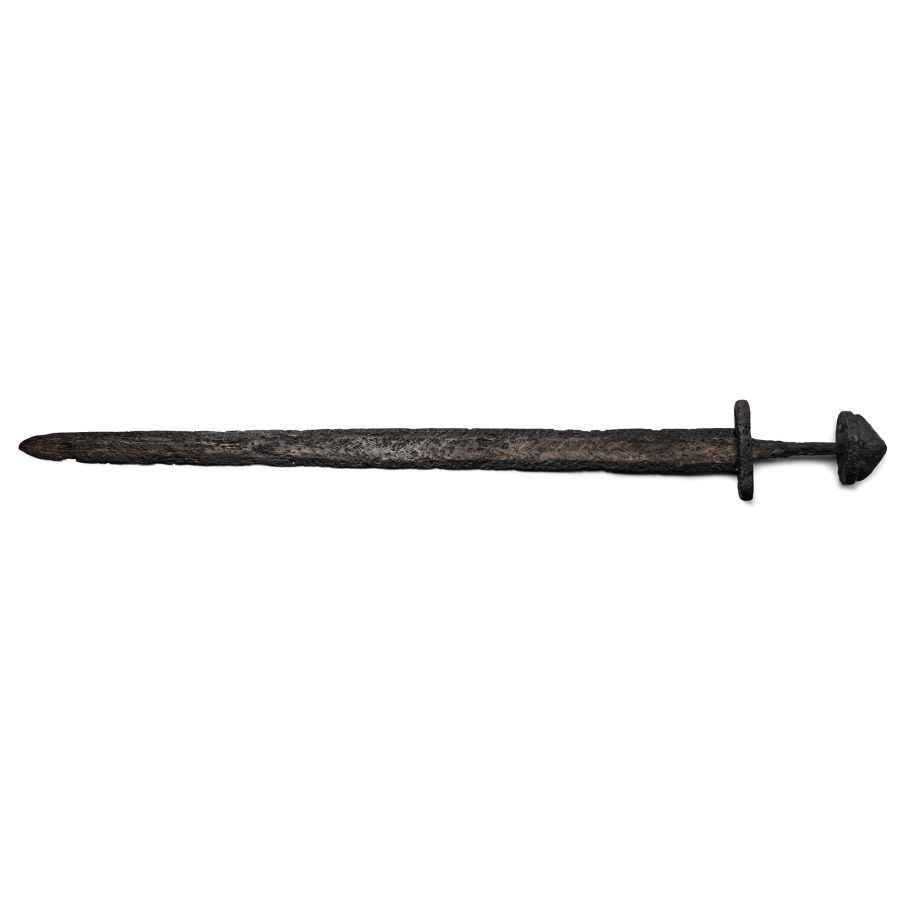
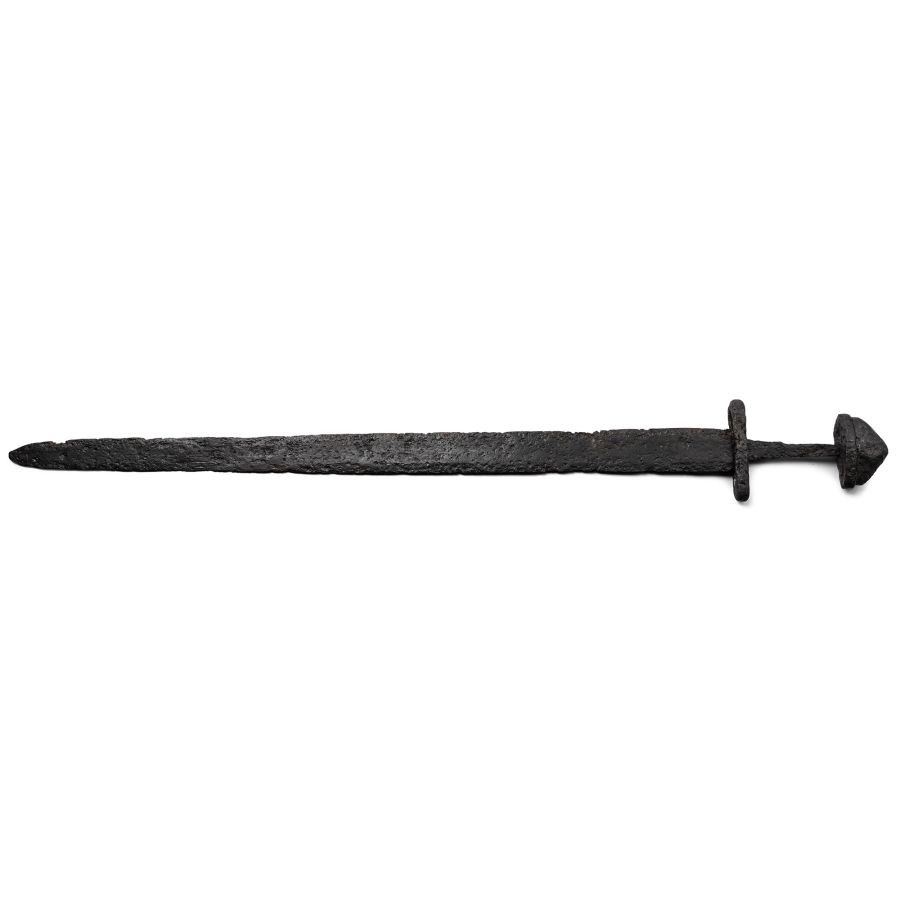
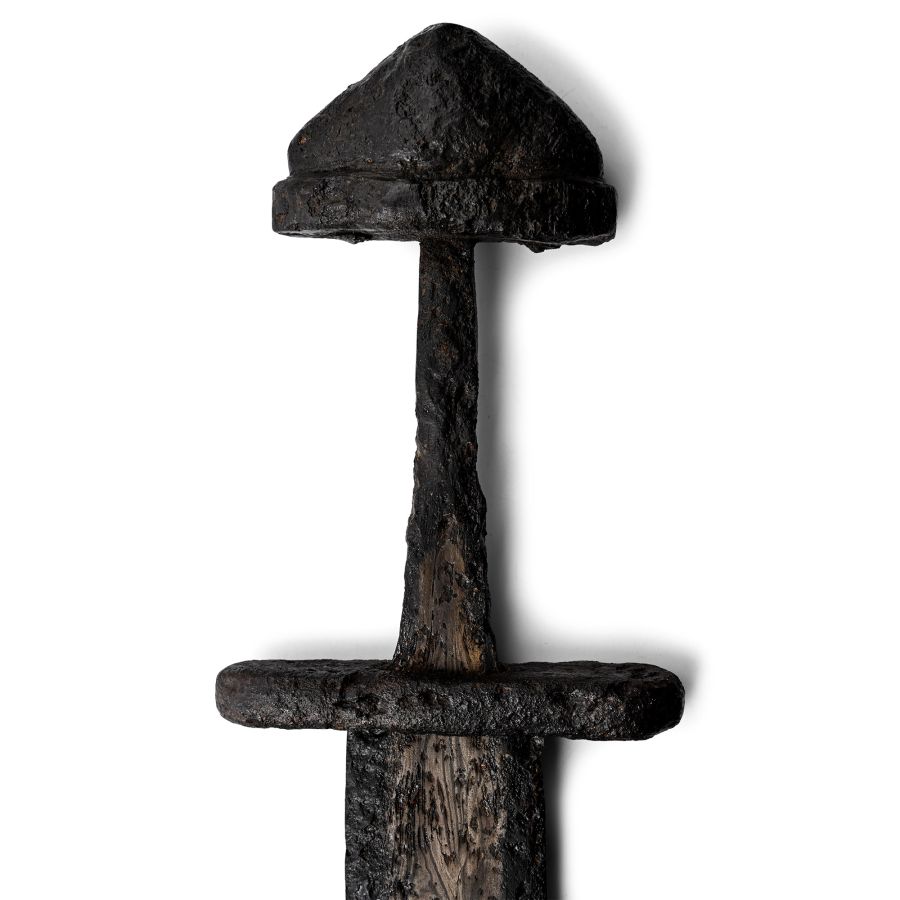
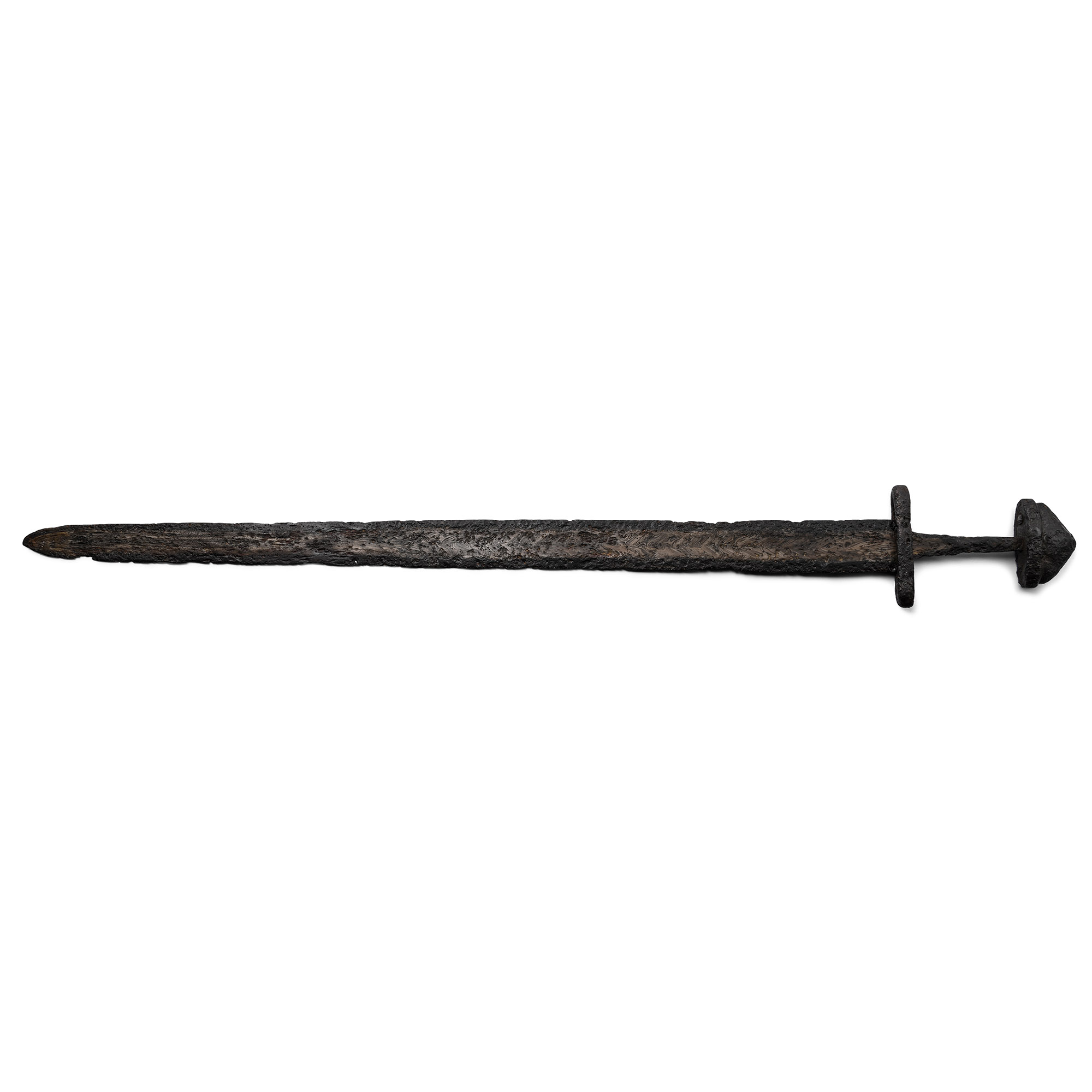
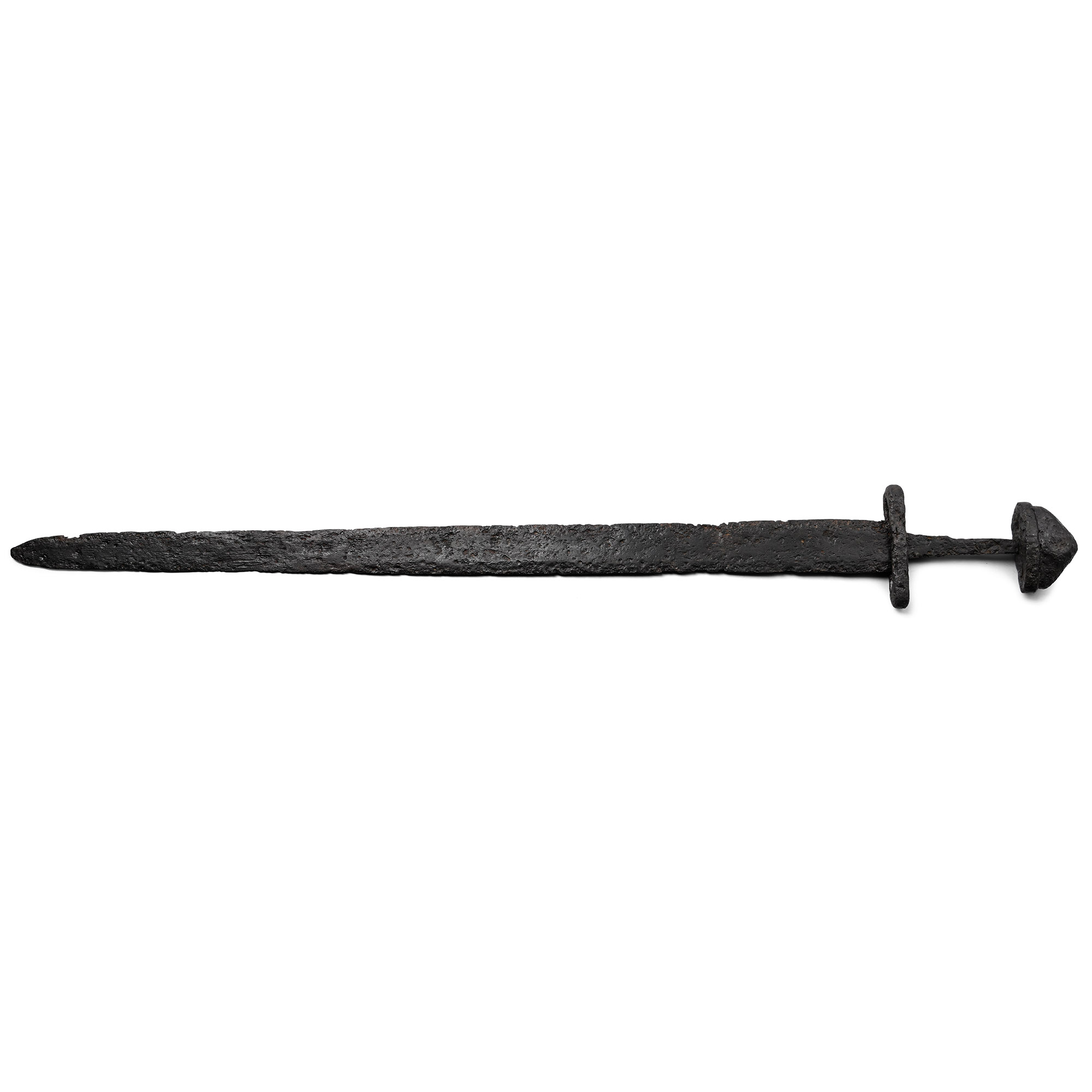
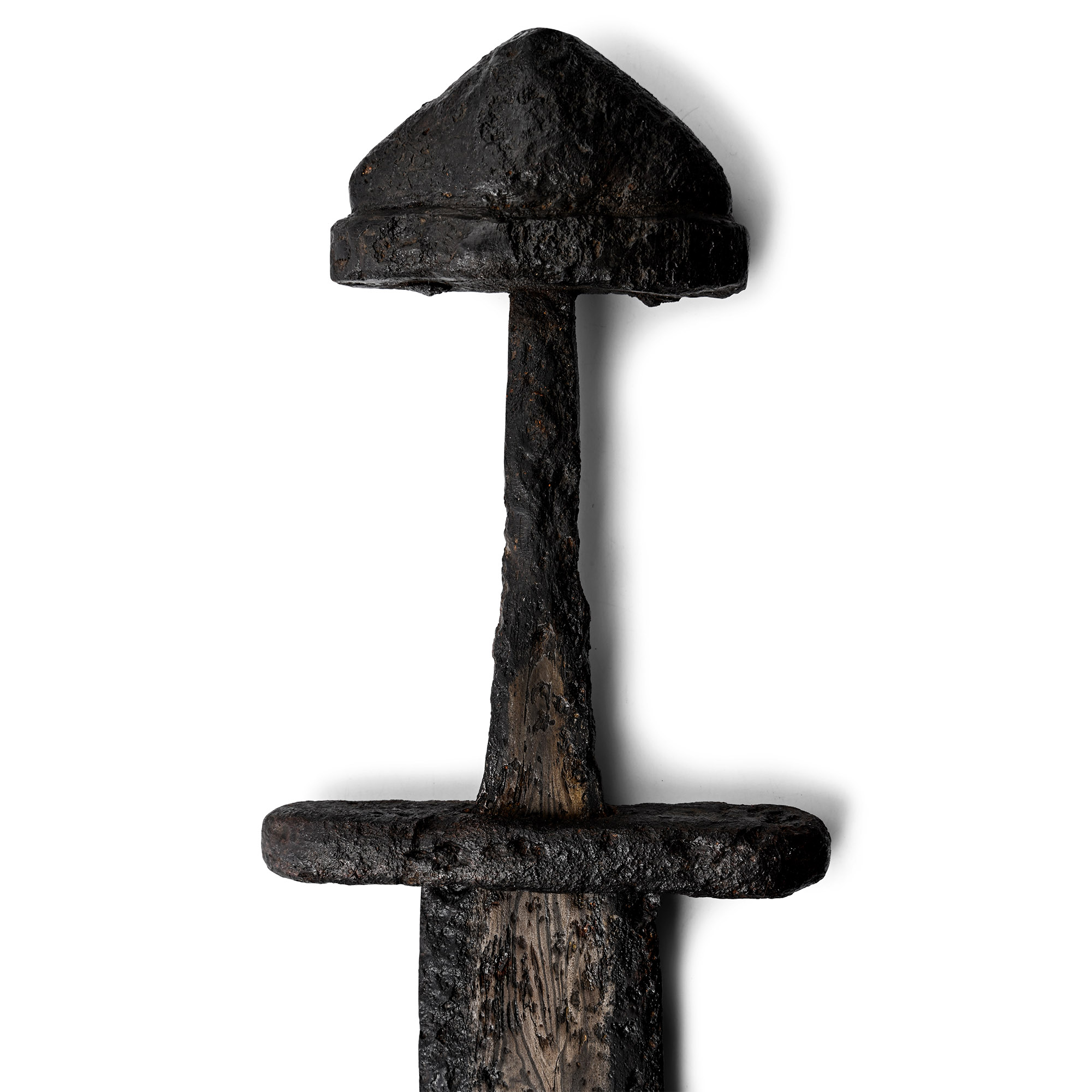
Viking Iron Pattern-Welded Sword
8TH-9TH CENTURY A.D.
33 5/8 in. (809 grams, 85.5 cm).
Double-edged cutting sword of Petersen type A with a finely tapering blade, showing pattern-welding; upper and lower guards with strongly curved sides; the cross-guard boat-shaped with an acute tapering tang; the pommel attached with two nails to the original boat-shaped upper guard.
ProvenanceFrom the private collection of a London gentleman, from his grandfather's collection formed before the early 1970s.
Accompanied by an academic report by Dr Raffaele D’Amato.
This lot has been checked against the Interpol Database of stolen works of art and is accompanied by search certificate no. 13064-249347.
Cf. Lorange, A.L., Den Yngre Jernalders Svaerd, Bergen, 1889, pl.I, fig.3a-4a, 2d, swords from Hellebust, Viks, Holden and Hevne; Petersen, J., De Norske Vikingsverd, Oslo, 1919, fig.52; Oakeshott, E., The Archaeology of Weapons, Arms and Armour from Prehistory to the Age of Chivalry, Woodbridge, 1960 (1999); Peirce, I., Swords of the Viking Age, Suffolk, 2002, pl.III (swords from Bergen Museum), pp.28-29; D’Amato, R., Salimbeti, A., The Normans in Italy, 1016-1194, Oxford, 2020.
FootnotesPetersen originally individuated eight examples of this sword’s typology, one of the first categories of Viking swords, although these swords were also widely used in the Carolingian Empire and widespread among the Italic population as well (frescoes from the Necropolis of S.Andrea Priu, Sardegna, 8th or 9th century AD), where specimens are still attested in the 10th century A.D (D’Amato-Salimbeti, 2020, p.23). The evenly wide, three-sided pommel, narrower than the guard, was the most characteristic element of such swords, and in some cases it was divided into three segments, or even seven segments (swords from Neri, Opstryn s., Stryn, Nordfjord). Thes tend to be confused with the similar pommels of the swords of H typology (Petersen, 1919, pp.89ff.), but in these latter swords the guards are wider and with an elliptical cross-section.
CONDITIONTimeLine Auctions follows a vetting process to ensure the authenticity and legality of all items, reinforcing our commitment to integrity and responsible trading. Each antiquity, antique, and coin lot undergoes thorough examination by a vetting committee of at least ten external specialists, professional trade association members, scientists, and archaeologists: Our Vetting Process
AUCTIONS:
TimeLine is a leading auction house specialising in antiquities, ancient art, collectables, natural history, coins, medals, and books. Our auctions offer museums, collectors, historians, and enthusiasts the opportunity to acquire unique and historically significant pieces.
-
.jpg)
Turco-Mongol 'Greek Fire' Ceramic Fire Bomb or Hand Grenade
14th-15th century A.D.Sold for (Inc. bp): £130
Piriform in profile with a domed mouth and stepped neck, raised vertical lugs on the body, linear decoration; intended to be filled with explosive liquid and a wick, and used as a hand grenade. 511 grams, 15.4 cm
From a specialist collection, London, UK, 1990-2000s.
Apart from the use of siphons or manual flame-throwers called cheirosiphona, special corps of Roman soldiers employed terracotta grenades, in the form of small jars, abundantly evidenced in archaeological excavations. They were called μεσαία kακαβιά or κυτροκακάβια, where the former had a bulbous shape and the latter a more cylindrical form. -
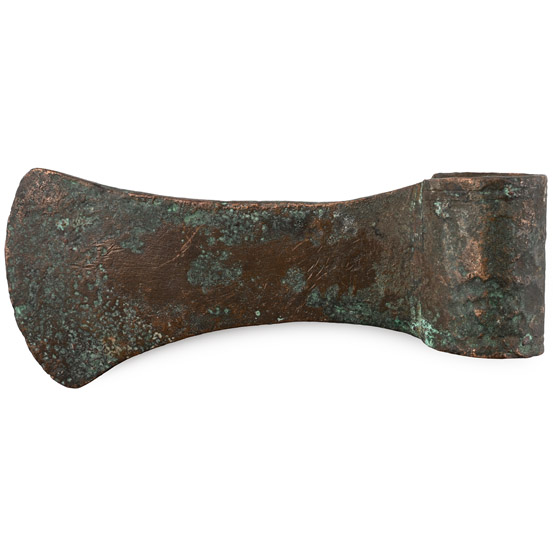
Western Asiatic Bronze Socketted Axehead
2nd-1st millennium B.C.Estimate: £100 - 140 (+bp*)
Opening Bid: £50
With flat blade a curved cutting edge, hammered round-section tubular socket. 112 grams, 10.8 cm
Ex Abelita family collection, 1980s-2000s. -
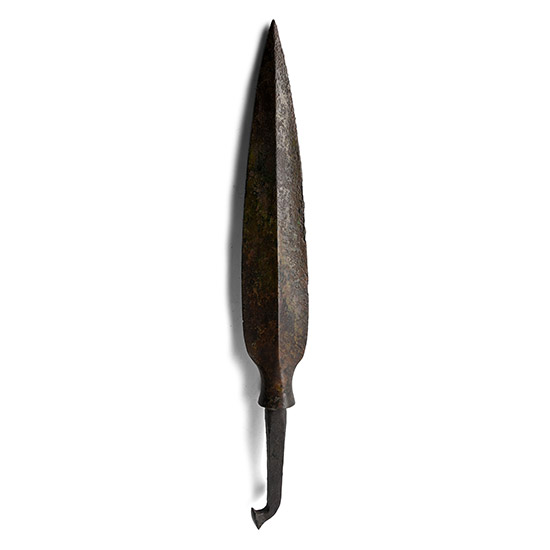
Luristan Bronze Spearhead
2nd-1st millennium B.C.Sold for (Inc. bp): £286
Comprising a leaf-shaped blade with a raised midrib extending to the shaft with a flared collar, rectangular-section tang with curved end and a button finial. 608 grams, 34.2 cm
Ex Abelita family collection, 1980s-2000s.
The type belongs to the category of tripartite lances with a long, pointed biconvex blade and single bevelled tang. In this typology, the blade, of rhomboidal section, is usually well balanced. The stem, medium or short, is widened at its base and forms a fairly clean stop. Elements of the shaft of a similar spear found at Tepe Hissar have allowed the reconstruction of the length of the spear reaching up to 1.40 m.
