
Loading, please wait...
LOT 1576
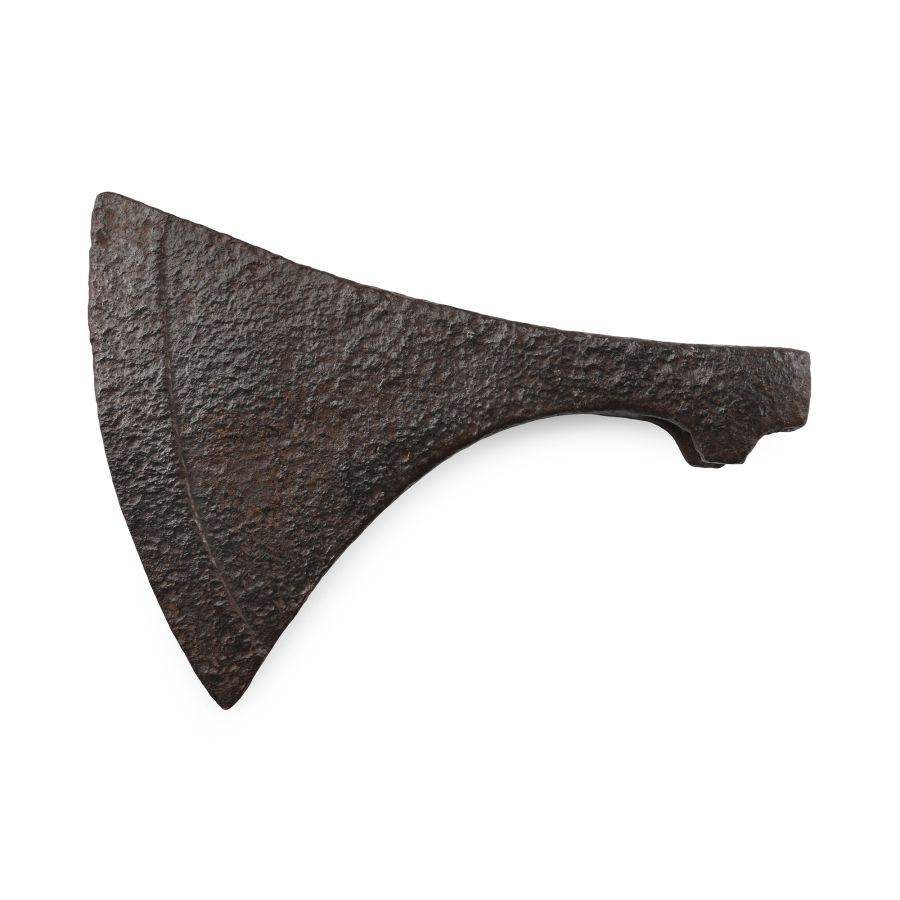
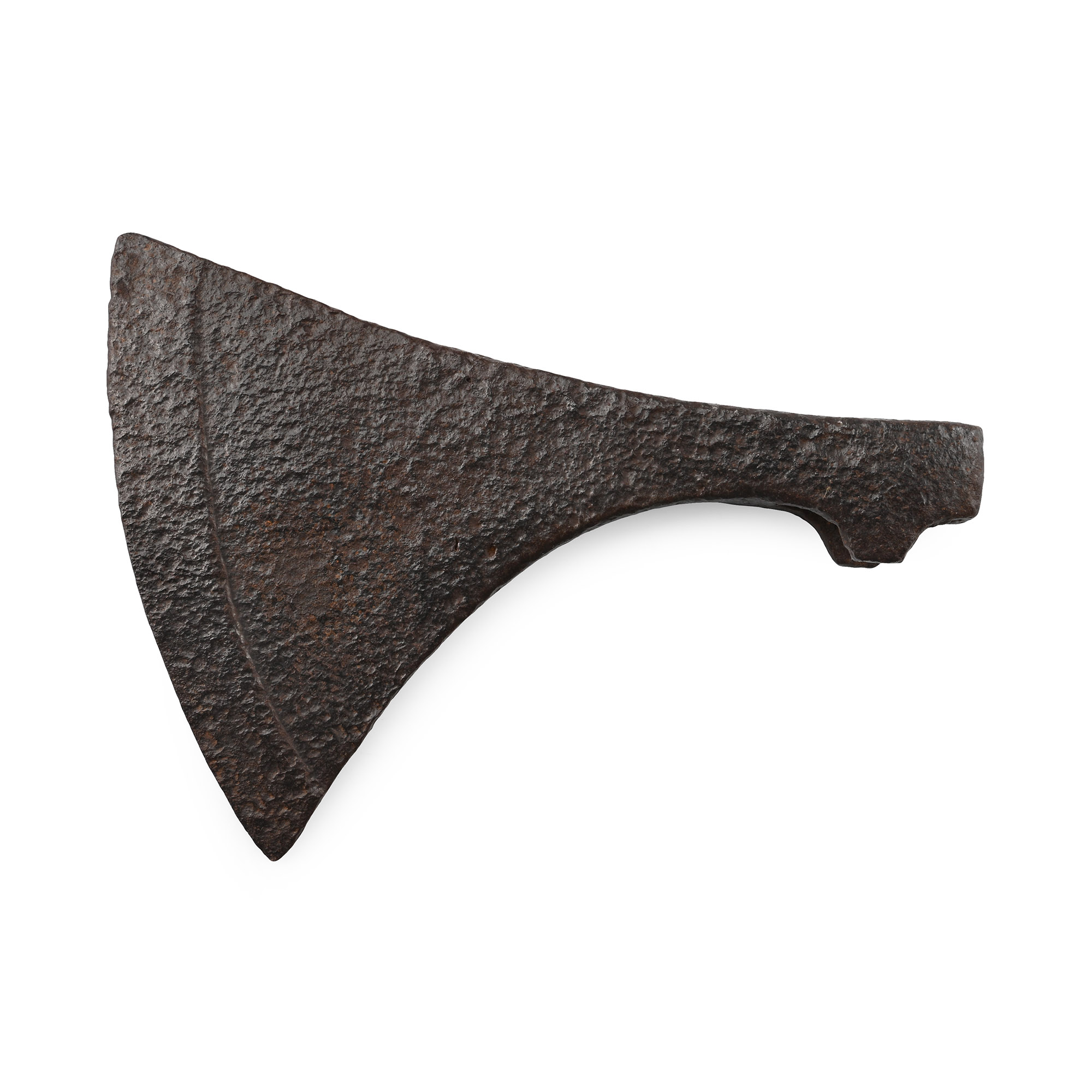
Viking Iron Fighting Broad Axehead
CIRCA 9TH-11TH CENTURY A.D.
5 7/8in. (280 grams, 15 cm).
With triangular spurs below the square socket, medium-broad flaring triangular-section blade extending to a curved edge, hammer extension to the rear. [No Reserve]
ProvenanceEx North American private collection, 1970s.
LiteratureCf. Williams, G., Pentz, P. & Wemhoff, M., Vikings Life and Legend, London, 2014, item 25, p.90, a similar axe from a male burial in Hellvi (Gotland, grave 222B).
CONDITIONTimeLine Auctions follows a vetting process to ensure the authenticity and legality of all items, reinforcing our commitment to integrity and responsible trading. Each antiquity, antique, and coin lot undergoes thorough examination by a vetting committee of at least ten external specialists, professional trade association members, scientists, and archaeologists: Our Vetting Process
AUCTIONS:
TimeLine is a leading auction house specialising in antiquities, ancient art, collectables, natural history, coins, medals, and books. Our auctions offer museums, collectors, historians, and enthusiasts the opportunity to acquire unique and historically significant pieces.
-
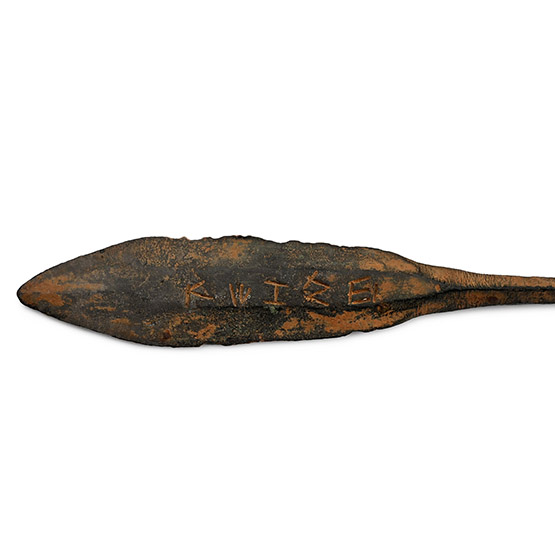
Aramaic Inscribed Bronze Arrowhead for Zscha..., Son of Adnb
1st millennium B.C.Sold for (Inc. bp): £1,105
Comprising a two-edged lentoid-section leaf-shaped blade and lozenge-section tang; each side with a short incised Aramaic inscription; ḥṣ zš bn ʾdnb = arrow of Zscha..., son of Adnb. 14 grams, 94 mm
From the collection of a gentleman, acquired on the London art market in the 1990s. -
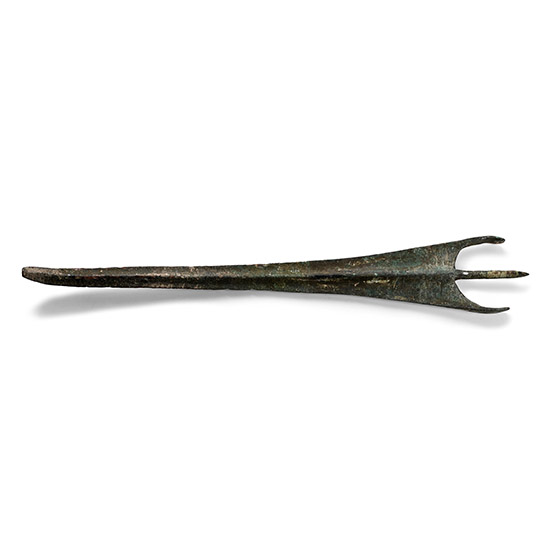
Western Asiatic Bronze Dagger Blade
2nd-1st millennium B.C.Sold for (Inc. bp): £117
With a prominently curved guard, extending out from the ricasso of the blade and partly frames the hilt, a thick midrib extending slightly above the ricasso where it held the hilt. 250 grams, 38.5 cm
Ex Abelita family collection, 1980s-2000s.
The hilt of such swords was made separately, and unfortunately, is nearly always missing from the archaeological records. Similar daggers had a northern Iranian background, and excavated examples have been recorded from the South Caspian Area from Tomadjan and Ghalekuti. -
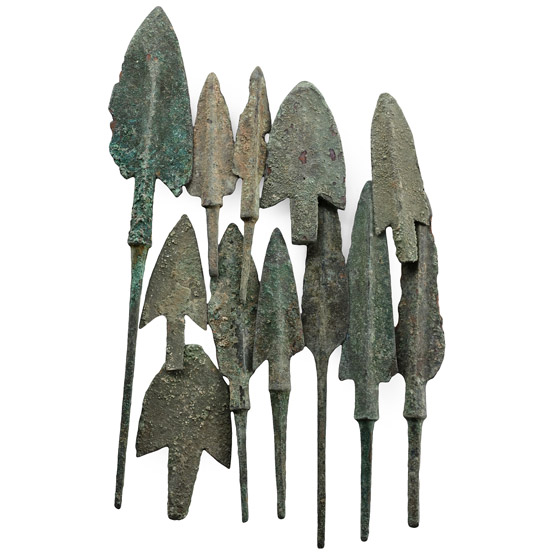
Western Asiatic Bronze Arrowhead Collection
1st millennium B.C.Sold for (Inc. bp): £117
Including triangular, barbed, leaf-shaped and other types. 266 grams total, 6-19.5 cm
Ex London, UK, collection, 1990s.
